
Life style
Off the Beaten Track

by Rajiva Wijesinha
The fourth in the series of travel books by Rajiva Wijesinha, written during the period of coronavirus restrictions, was published last month by S. Godage & Bros, and is now available at their bookshop next to Ananda College. The other three books are Exploring India which looks too at the other countries of South Asia; Around and About the Mediterranean which explores all the countries which abut on that inland sea, including two island countries, and also the countries of the Balkans; and To the Ends of the Earth which covers several countries in Latin America and in Sub-Saharan Africa and the four eastern Archipelagos of Asia.
This book, entitled Off the Beaten Track, looks at unusual travel destinations in the former Soviet Union, and then at former French and British colonies in South East Asia. Before these there is a vivid account, illustrated with beautiful photographs, of a visit to Iran in 2008, which covered the classic cities of Isfahan and Shiraz, but went further afield too to Susa and Ecbatana of the old Persian empire.
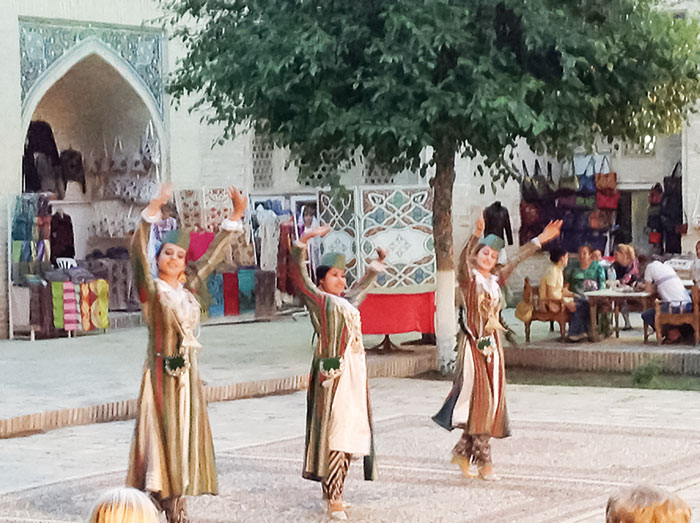
The ancient splendours of Kazakhstan follow, exquisite tombs and massive now ruined fortresses, and then the magnificent structures of Uzbekistan, the magical cities of Samarkand and Bukhara and the fortress city of Khiva, with an overnight journey back to Tashkent and then a drive into the mountains. Lesser known is Turkmenistan with the extensive ruins, only partially restored, of what had been massive centres of commerce in the Middle Ages.

From the eastern shores of the Caspian at Turkmenbashi, the narrative moves to Baku on its Western shore, and the various phases and beauties of Azerbaijan. These include, after a bus journey to the mountains in the north, the province of Nakchivan which has to be reached by air. In between is territory disputed with Armenia, the glorious monasteries of which are featured next, along with churches of different periods and stunning mountain scenery.
There follow brief descriptions of visits to the Soviet Union before it broke up, including an overnight train journey to Georgia and two visits by sea to the Ukrainian port of Odessa, where the writer wandered through a still sleepy city, with daily performances at the opera or the circus.
If these countries are well off the beaten track, the same is not true of the countries of Indo-China as it used to be known which are described next. But they were unusual destinations in the eighties and the early nineties. The writer was fortunate enough to get to Hanoi in 1984 when it was still suffering the after effects of the Vietnam War, and when he saw Angkor Wat in 1991 conditions were primitive and the Khmer Rouge lurked in the countryside beyond the walls of the enclaves.

The richness of the book is enhanced by the reproduction of the articles published after those visits in the Lanka Guardian and convey a range of reflections on the suffering the region had undergone and the resilience of its peoples. And the long account of several visits to Cambodia in the nineties records the aid programmes on offer and then the development of a political system that has relentlessly modernized while precluding any regime change. Contrasted with this is the sleepiness of Laos, where the central feature of the capital is a fountain with piped music of a period before the country was ravaged. And its old capital Luang Prabang, reached three decades ago in a tiny plane that swooped low over the hills, was even sleepier, offering a tranquil boat ride down the river and a exquisite little palace.
Malaysia too was relatively primitive when the writer first visited the place in 1969 and, though Singapore had begun to move forward, it was still possible to feel that Sri Lanka was infinitely better off, in those distant days. But then things changed rapidly, and the advance into modernity that has left us far behind is recorded through later visits. In between however were visits on the same ship that took the writer to Odessa, docking twice in Penang, with an earlier journey there by train when there still seemed danger from insurgent forces on the connecting train to Bangkok. In 1986 there was warnings about insurgents on the road across the central highlands of Malaysia, but by 1989 the train to Bangkok was comfortable and in 1990 travelling in Malaysia was absolutely safe.
Except in the extracts from earlier essays, this book is not a classic travelogue, but rather records simply a range of sights, with a host of evocative photographs. But there are also some human elements, an attempted seduction in the train to Tashkent, the variation on the theme of Romeo and Juliet in Kazakhstan, the drama of opera in Tbilisi and Yerevan; there are the difficulties of travel in a militaristic Burma in the mid-eighties, along with the joys of Pagan with evidence of the only international adventure of a Sri Lankan ruler, Parakramabahu of Polonnaruwa fame who also equipped a navy; there is the long friendship with a boy on a motorbike who picked the writer up in Phnom Penh, and then was transformed into a policeman in Sihanoukville where he also taught English. There are also two journeys with an eccentric English friend in the scenic highlands of Cambodia and then Laos, with the added bonus of the Preah Viharn temple on the drive back.
The pictures are all taken by the writer, except for records of Hanoi in the eighties supplied by his host there then, who also put him up in the nineties. Those capture the spirit of a country of cheerful youngsters, determined to leave the memory of the war behind them. There are few pictures of people otherwise, except for friends and travelling companions, but apart from the glorious architecture of the different countries there are also splendid scenes of sunrise and sunset, of rivers and waterfalls and mountains. The book does indeed bear witness to a wonderful world.



Institute of Hospitality Sri Lanka
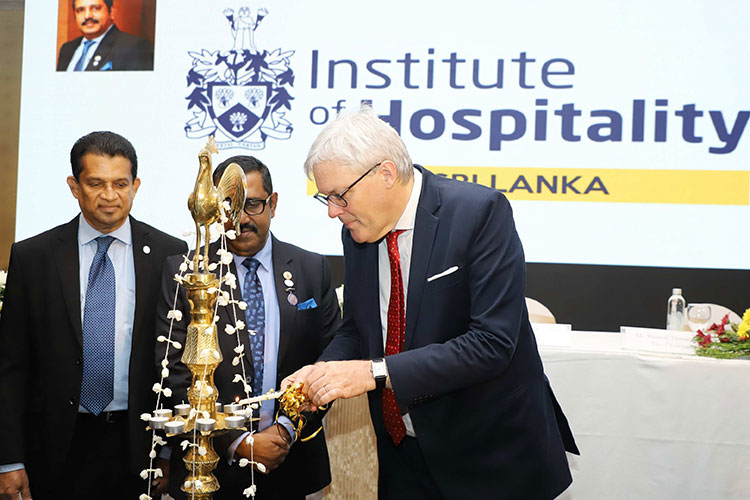
 The 32nd Annual General Meeting (AGM) of the UK-based Institute of Hospitality’s Sri Lanka Chapter was held recently at the Ramada Hotel Colombo,.The event provided an evening of camaraderie , reflection of the past and present achievements,setting new benchmarks for the future
The AGM had the presence of two distinguished guests, the Chief Guest Opposition Leader Sajith Premadasa, and the Guest of Honour British High Commissioner to Sri Lanka, Andrew Patrick. Their inspiring speeches were lauded by all hoteliers who were present at the occasion
A special thanks was extended to Robert Richardson, CEO of the Institute of Hospitality UK, along with his team, sponsors, committee members, and all attendees for making the event memorable.
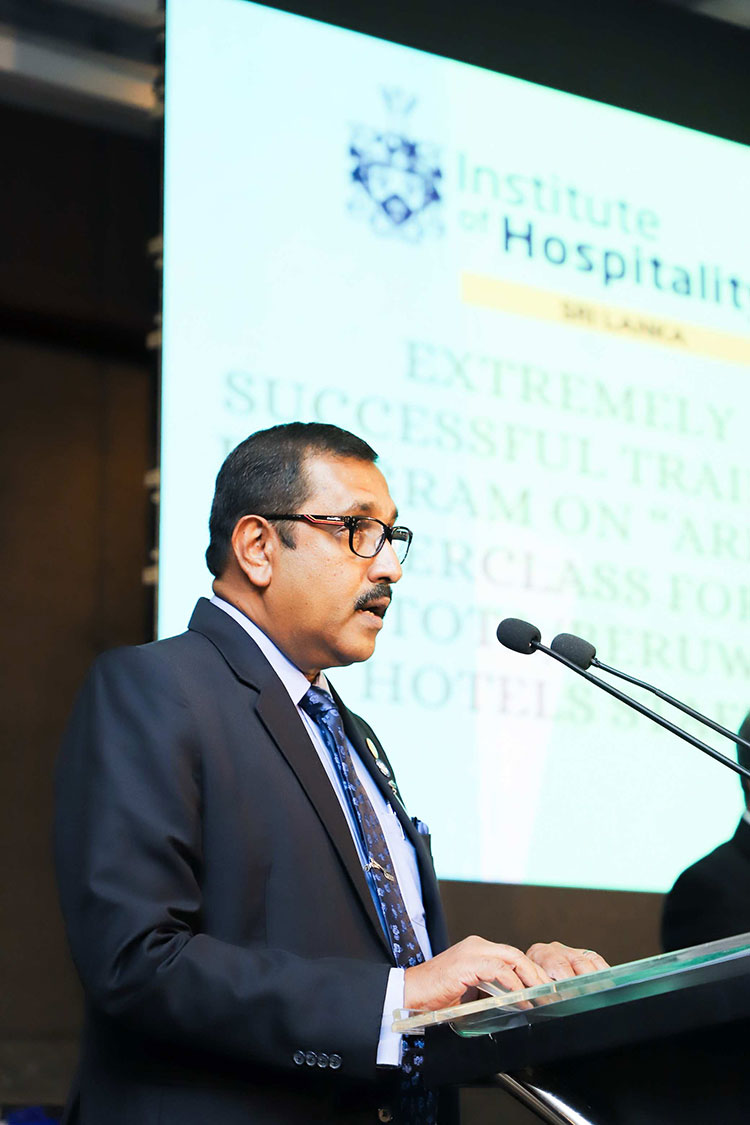
Dr. Harsha Jayasingh, Past President of the Institute of Hospitality (UK) Sri Lanka Chapter, emphasised the Institute’s longstanding history and the strength of its Sri Lankan branch. “The Institute of Hospitality (IH) UK has a history of 86 years, and we are proud to be the Sri Lanka Branch. IH Sri Lanka is much stronger now with many members from all areas of the hospitality industry,” he stated.
Dr. Jayasingh highlighted the significant role of tourism in Sri Lanka’s economy,. He said tourism it is the third-largest source of revenue for the country. “Tourism accounts for about 13.3% of total foreign exchange earnings and employs 450,000 people directly and indirectly. The hospitality industry in this island of pearl holds tremendous potential for economic growth, job creations, and cultural exchange,” he added.
He also pointed out more women should be attracted to the industry and advocated for the use of technology in hospitality sector to attract the younger generation.
The newly appointed Chairman Ramesh Dassanayake spoke about the challenges faced by the industry, including the reluctance of youth to join the sector. . Dassanayake expressed concerns over the migration of staff between hotels and the overall ‘brain drain’ in the sector. ” We must maintain high standards in the hotel We must try to attract tourists to Sri Lanka, we must have with many facilities Hence, hotel schools and other professional institutions involved in skills development mustincrease their intakes,” he pointed out.
Chief Guest Sajith Premadasa emphasised the importance of eco tourism and said “We need to have an environmental policy related to tourism in place,” . .
The 32nd AGM of the Institute of Hospitality UK, Sri Lanka Chapter, was a testament to the strength and potential of Sri Lanka’s hospitality industry. The insights and commitments shared during the event set a new benchmark for the future.(ZC)



Pix by Thushara Attapathu
Life style
He recognizes human identity beyond boundaries of gender, race, nationality and religion.
Visit of Sri Gurudev to Sri Lanka
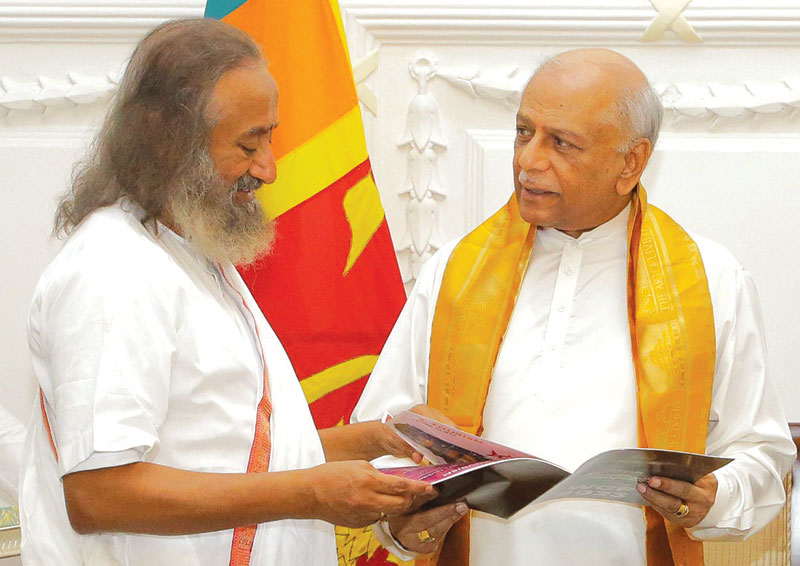
Humanitarian, spiritual leader and Global Ambassador of Peace Gurudev Sri Sri Ravi Shankar (Sri Gurudev) was in Sri Lanka on a three day tour on the invitation of the Prime Minister of Sri Lanka Dinesh Gunewardene. Gurudev who inspired a wave of volunteerism and service to moot one of the largest volunteer-based organisations in the world – The Art of Living – visited the various projects under the aegis of the foundation and launched twelve vocational and technical centers around the island. He was accompanied by thousands of followers from Sri Lanka and around the world.
Gurudev who visited Sri Lanka for the sixth time also had a first day cover launched in honour of his visit. He is a strong proponent of spreading happiness, using the unique Sudarshan Kriya, yoga, meditation and practical wisdom to unite people, empower individuals and transform communities. His programmes provide techniques and tools to live a deeper, more joyous life, while his non-profit organisations recognize the human identity beyond the boundaries of gender, race, nationality and religion.
The Art of Living which has more than 30,000 teachers and over one million volunteers across 180 countries has touched in excess of five hundred million people around the world. CNN called it “Life Changing” and The Washington Post headlined it, “Fresh air to millions”.
In Trincomalee, Gurudev met with war victims and had a heartwarming engagement with the children from the children’s homes run by the Foundation. He also visited the Koneswara Temple in Trincomalee and graced the Kumbhabhishekam at Seetha ecogPnize the human identity beyond the boundaries of gender, race, nationality and religion. Amman temple at Nuwara Eliya. He held discussions with the trustees on the progress of the foundation’s social service projects, while also holding a special event – Ekamuthuwa – attended by a large number of dignitaries and his devotees from around the world.
His time with the Prime Minister was spent discussing the prospects of unity in diversity and uniting Sri Lanka by adding happiness into the formula of living. In addition he had discussions with the Speaker of the Parliament of Sri Lanka Mahinda Yapa Abeywardena, prominent business stewards and civil society leaders.
by Zanita Careem
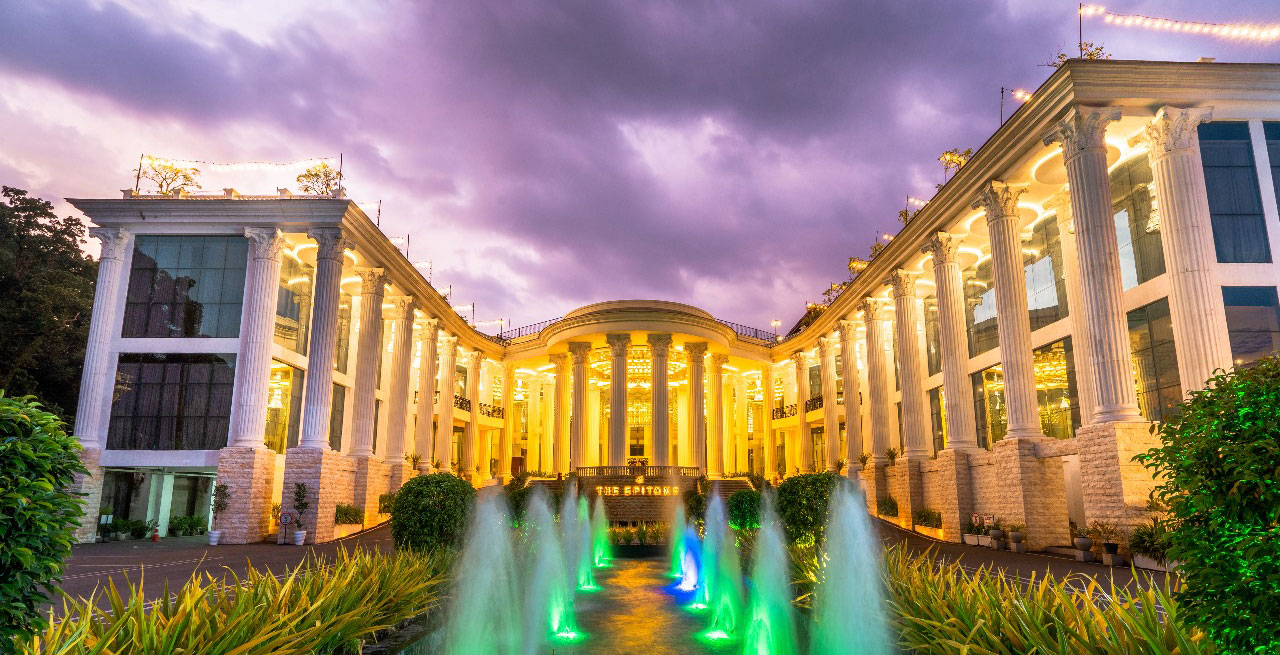
Envison your dream wedding day come to life at the Epitome Hotel, a prestigious city hotel in Kurunegala offering an unrivalled luxury rendors experience for weddings.
The venue is designed to embody opulence and luxury from all quarters for a spectacular wedding in kurunegala,Thier ballroom is the largest banquet facility in Sri Lanka It can be divided into six luxurious pillarless wedding halls on the ground floor and 25pax smaller banquet halls.
It can be easily named as a five star heaven in the heart of the city contributing to a myriad of immense experiences tailored to inspire and delight wedding experiences.
From opulent décor set up to exquisite table decor, lavish food, every detail is meticulously curated to spark your imagination and ignite creativity for a perfect wedding. The previous prestigious wedding shows season one and season two attracted large crowds
were unique events which gave the wedding vendors and potential clients had an opportunity to connect and interact with each other. Beyond being a showcase it was a chance for the wedding vendors to unite and contribute to the vibrancy of the wedding industry. The wedding show covered all area of the bridal industry providing a comprehensive variety of bridal supplies from Sri lanka and became the most popular bridal exhibitions in Kurunegala.This bridal exhibitions allowed brides and grooms to experience first hand the products and services available from suppliers in Sri Lanka
These wedding shows held at The Epitome created a benchmark and gave an opportunity for vendors to create connections to the utmost satisfaction said Harshan Lakshita Executive Director. of the magnificent Hotel
Our wedding shows featured experts and professionals in every field‘ It covered all areas of the bridal industry provided a comprehensive variety of bridal supplies from Sri lanka and became most popular bridal exhibition in this region.We are always open to everyone to join us at our wedding shows in the future. It is an opportunity to discover the incredible talent within our local wedding and bridal vendors to make meaningful relationships and plan thier special day at our breathtaking hotel The Epitome said General Manager Kavinda Caldera
The Epitome Hotel’s bridal show which will be held end of June will buzz with great ideas,advice and inspiration for all those who plan thier dream wedding
…….
The Hotel Epitome’s Wedding Season 3 will marked excellence, celebration and inspiration for those in the wedding industry. The exhibition halls will resonate with ideas on exquisite bridal wear to decor, florists , photography etc and showshowcase the rich tapestry of talent within the local wedding industry. .





US sports envoys to Lanka to champion youth development

Rahuman questions sudden cancellation of leave of CEB employees


