
Sports
Novak Djokovic back on top Down Under, win Australian Open


MELBOURNE, Australia — Novak Djokovic found this trip to Australia far less complicated, and far more successful, than that of a year ago.
Unable to enter his best event in 2022 after being deported from the country because he was not vaccinated against COVID-19, Djokovic accomplished all he could have wanted in his return: He resumed his winning ways at Melbourne Park and made it back to the top of tennis.
Only briefly challenged in the final on Sunday night, Djokovic was simply better at the most crucial moments and beat Stefanos Tsitsipas 6-3, 7-6 (4), 7-6 (5) for a record-extending 10th Australian Open championship and record-tying 22nd Grand Slam title overall. As a bonus, Djokovic will vault from No. 5 to No. 1 in the ATP rankings, a spot he already has held for more weeks than any other man.
“He’s the greatest that has ever held a tennis racket,” Tsitsipas said.
Djokovic stretched his unbeaten streak in Melbourne to 28 matches, the longest run at the tournament for a man in the Open era, which dates to 1968. He adds trophy No. 10 there to the seven from Wimbledon, three from the U.S. Open — where he also was absent last year because of no coronavirus shots — and two at the French Open, to match rival Rafael Nadal for the most by a man in tennis history.
Margaret Court, with 24, Serena Williams, with 23, and Steffi Graf, with 22, have the most among women.This was also the 93rd ATP tour-level title for Djokovic, allowing the 35-year-old from Serbia to break a tie with Nadal for the fourth-most. Jimmy Connors holds that mark, at 109.
Djokovic was participating in his 33rd major final, Tsitsipas in his second — and the 24-year-old from Greece’s other one also ended in a loss to Djokovic, at the 2021 French Open.
He was superior throughout against Tsitsipas, but especially so in the two tiebreakers. He took a 4-1 lead in the first and after it was 4-all, pulled off three points in a row. He led 5-0 in the closing tiebreaker and, when it finished, he pointed to his temple then climbed into the stands, pumped his fist and jumped with his coach, Goran Ivanisevic, and other members of the entourage, and collapsed, crying.
Little doubt this is of no solace to Tsitsipas, but there is no shame in failing to defeat Djokovic in Melbourne. Challenging his dominion on those blue hard courts is every bit the monumental task that taking on Nadal on the red clay at Roland Garros is.
Perhaps surprisingly, Tsitsipas was willing to engage in the kind of leg-wearying, lung-searing back-and-forths upon which Djokovic has built his superlative career. How did that work out? Of points lasting at least five strokes, Djokovic won 43, Tsitsipas 30,
Then again, on those rare occasions that Tsitsipas did charge the net, he likely regretted the choice, because Djokovic often conjured up a passing shot that was too tough to handle.
One of Djokovic’s many other strengths is his return game, and he accumulated three break points within 17 minutes, converting the last for a quick 3-1 lead when Tsitsipas double-faulted.
The trophy for which they were playing was displayed on a pedestal near a corner of the court, and both men would get within reach of it whenever wandering over to towel off between points at that end.So close, yes, but for Tsitsipas, never truly close enough.
It’s not as though Tsitsipas played all that poorly, other than a rash of early miscues that seemed to be more a product of tension than anything.
It’s that Djokovic was, put simply, too good. Too accurate with his strokes — making merely 22 unforced errors, 20 fewer than his foe — and anticipation. Too speedy and flexible chasing shots (other than on one second-set point, when, running to his left, Djokovic took a tumble). Too dangerous with his returns and damaging enough with his serves.
Djokovic pushes and pushes and pushes some more, until it’s the opponent who is something less than perfect on one shot, either missing or providing an opening to pounce.There has been more than forehands and backhands on Djokovic’s mind over the past two weeks.
There was the not-so-small matter of last year’s legal saga — he has alternately acknowledged the whole thing served as a form of motivation but also said the other day, “I’m over it” — and curiosity about the sort of reception he would get.He heard a ton of loud support, but also dealt with some persistent heckling while competing, including applause after the faults Sunday.
There was the sore left hamstring that has been heavily bandaged for every match — until the final, that is, when only a single piece of beige athletic tape was visible — and had worried him at the beginning of Week 1, prompting him to turn to what he said was “a lot” of pain-killing pills and other treatments he didn’t detail.
And then there was the more complicated matter of his father, Srdjan, being filmed with a group of people with Russian flags — one with an image of Vladimir Putin — after Djokovic’s quarterfinal victory. The tournament banned spectators from bringing in flags of Russia or Belarus, saying they would cause disruption because of the ongoing invasion of Ukraine. Both Djokovic and his father said it was a misunderstanding, based on Srdjan thinking he was with a group of Serbian fans.
Because of that episode, Srdjan Djokovic did not attend his son’s semifinal victory over Tommy Paul on Friday, and was not seen in the Djokovic guest box on Sunday.No matter any of it, Djokovic managed to excel as he so often does, winning 17 sets in a row after ceding one in the second round last week.
(ESPN)



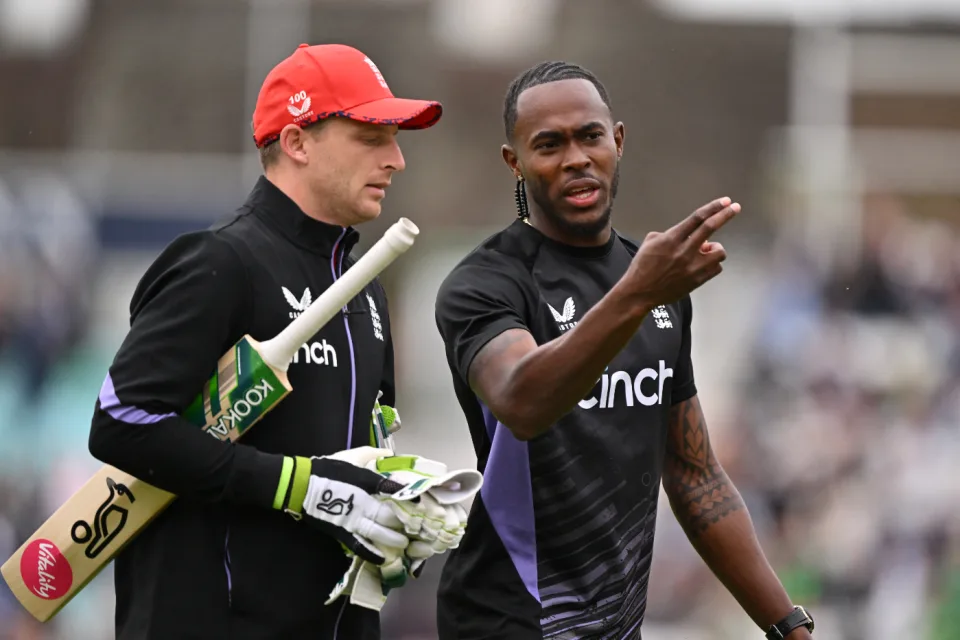
The first truly heavyweight clash of this expanded T20 World Cup format comes freighted with both history and subplots. A rematch of the 2010 World T20 final at Kensington Oval, the match pits Jos Buttler’s defending champions – who are aiming to become the first team to retain the trophy – against the Australian winning machine, victors at the 2021 edition and current world title-holders in Test and ODI cricket. And that’s before you throw in the Ashes for afters.
Already there is added pressure on England, after the rain in Bridgetown led to a share of the points in their opener against Scotland (and that having conceded 90 runs from 10 overs without taking a wicket in a tepid bowling display). Lose to their oldest rivals and it will leave their Super 8 prospects open to being waylaid by the perils of net run-rate calculations, or worse.
The Scotland match was the third abandonment in five suffered by England, after a rain-affected home series against Pakistan, which has clearly hampered their readiness for this campaign after almost six months without playing T20 together. It does not take much for a side to click in this format – and England looked in decent shape when they did get on the field against Pakistan – but Buttler will be anxious for things to go their way on Saturday, if only to avoid further questions referencing the team’s disastrous ODI World Cup defence last year.
Australia, under the laidback leadership of Mitchell Marsh would love nothing more than to add to the English sense of jeopardy – having helped bundle them out of the tournament in India on the way to taking the crown. Their head to head record is less impressive in T20 however, with England having won six of the last seven completed encounters, as well as that 2010 final.
Despite a wobble with the bat, Australia avoided mishap against Oman earlier in the week, the experience of David Warner and Marcus Stoinis shining through in difficult batting conditions. Surfaces in the Caribbean – not to mention those games staged in the USA – have already had teams scratching their heads; rather than the “slug-fest” England had prepared for, following a high-scoring tour of the Caribbean in December, it looks as if boxing smart may be the way to go.
Speaking of Warner, this could be the last time he faces up against England in national colours – and another match-winning contribution would likely reduce the chances of them meeting again in the knockouts. On the other side of the card is Jofra Archer, fresh from an emotional maiden outing at Kensington Oval and ready to take on Australia for the first time in any format since 2020. Can Mark Wood fire up England’s campaign, as he did during last summer’s Ashes? Will Pat Cummins be back to harass the old enemy once again? Seconds out, it’s almost time to rumble.
Cummins is set to return after being rested for the Oman game, which saw Mitchell Starc leave the field with cramp. Starc is understood to be fine and could keep his place – which would likely see Nathan Ellis miss out. Marsh is still not fit to bowl, with Australia likely to continue with the allrounder combination of Stoinis and Maxwell to give them cover.
Australia (probable XI): David Warner, Travis Head, Mitchell Marsh (capt), Glenn Maxwell, Marcus Stoinis, Josh Inglis (wk), Tim David, Pat Cummins, Nathan Ellis/Mitchell Starc, Adam Zampa, Josh Hazlewood
The one change England may consider is Reece Topley coming in for Wood, with the expectation that there will be some rotation among the seamers through the course of the tournament.
England (probable XI): Phil Salt, Jos Buttler (capt & wk), Will Jacks, Jonny Bairstow, Harry Brook, Liam Livingstone, Moeen Ali, Chris Jordan, Jofra Archer, Adil Rashid, Reece Topley/Mark Wood
[Cricinfo]
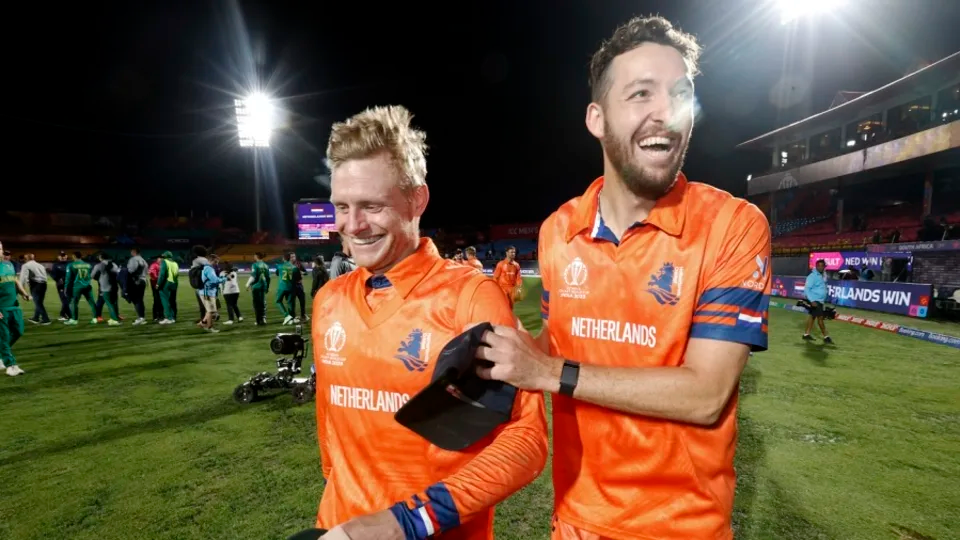
Once is coincidence, twice is a clue, and three times is proof.
To paraphrase Agatha Christie, that is the narrative around South Africa’s meeting with Netherlands at this T20 World Cup.
The Dutch beat South Africa at the 2022 tournament and ended their semi-final hopes in a match where South Africa appeared to be sleep walking, and then beat them again at the 2023 ODI World Cup, where they exposed South Africa’s vulnerability in the chase. If they to do the treble, not only will Netherlands take the lead in Group D, but they will offer conclusive evidence of the threat they pose to Full Members, especially South Africa.
Of course, it will take some doing after South Africa’s opening performance against Sri Lanka, where they reduced their opposition to their lowest T20I total and chased it down in fairly straightforward fashion thanks to the most stable middle-order of their white-ball era. In Aiden Markram, Tristan Stubbs, Heinrich Klaasen and David Miller, South Africa have bankers and big-hitters and, for this match, they also have the advantage of experience. They’ve already played at Eisenhower Park, and have first-hand knowledge that run-scoring doesn’t come easily;Klassen said they are prepared to use their “cricket brains” and play “smarter cricket”.
But the conditions could be good news for Netherlands, who are not naturally a line-up of big hitters and build their innings on a foundation of turning ones into twos. In other words, they tend to take a slightly more conservative approach to batting, which may work well here, but they’ll be wary of the uneven bounce of the surface and will have to come up with plans to counterattack especially against South Africa’s seamers. Their own bowlers were exemplary in Dallas and will look to build on that performance against a line-up that will likely be more proactive than Nepal’s, but who they have managed to keep quiet not once, but twice in the past. Third time’s the charm, they say.
Anrich Nortje’s stunning return to form against Sri Lanka means South Africa may not have to tinker with the bowling combination, and Gerald Coetzee and Tabraiz Shamsi may have to wait their turns to get a game. The batting line-up should be unchanged, with no space for Ryan Rickelton yet.
South Africa: Quinton de Kock (wk), Reeza Hendricks, Aiden Markam, Tristan Stubbs, Heinrich Klaasen (wk), David Miller, Marco Jansen, Keshav Maharaj, Kagiso Rabada, Ottneil Baartman, Anrich Nortje
Conditions in New York may tempt Netherlands to include an extra seamer and they have Kyle Klein in their squad. But it could come at the expense of a shortened batting line-up and they may not want to risk that.
Netherlands: Michael Levitt, Max O’Dowd, Vikramjit Singh, Sybrand Engelbrecht, Scott Edwards (capt, wk), Bas de Leede, Teja Nidamanuru, Logan van Beek, Tim Pringle, Paul van Meekeren, Vivian Kingma
[Cricinfo]
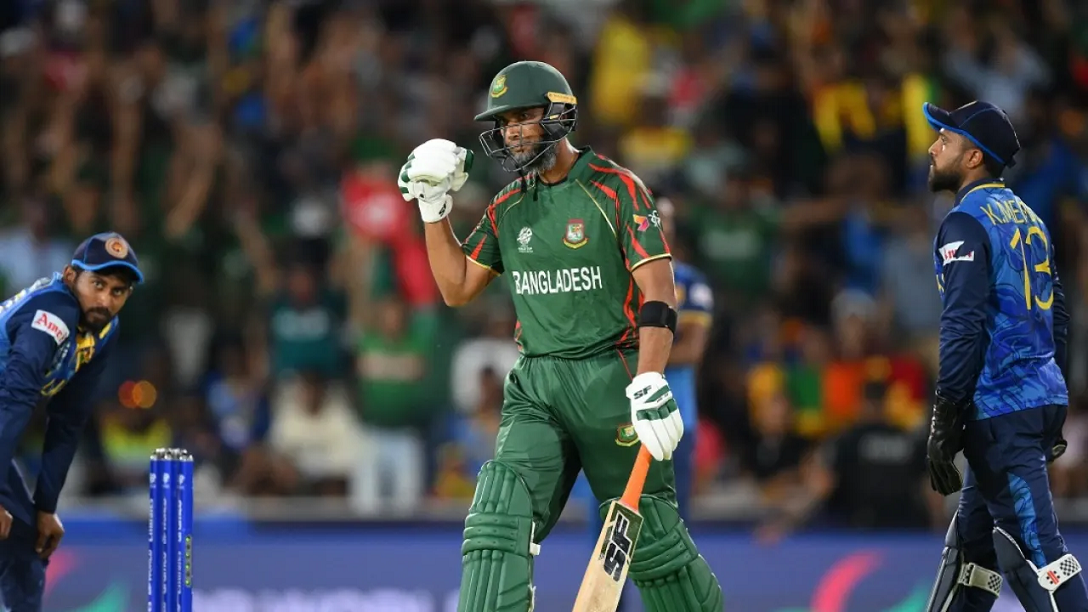
Nuwan Thushara’s last over brought Sri Lanka screaming back into the match,as he first bowled Rishad Hossain, and then nailed Taskin Ahmed in front of the stumps with a pinpoint swinging yorker. This left Bangladesh eight wickets down, with 12 runs still to get.
However, the experienced Mahmudullah was at the crease for Bangladesh, and despite some further nervy moments, pushed Bangladesh across the line off the last ball of the 19th over.
But this was a match chiefly decided by Bangladesh’s own outstanding bowling. Mustafizur Rahman was the best among them, using shorter lengths and his cutters efficiently, to claim figures of 3 for 17. Rishad Hossain’s three-for through the middle overs also kept Sri Lanka quiet.
Mustafizur was instrumental in Sri Lanka’s downward spiral through the middle overs, which culminated in a crash-and-burn end. Ultimately, their inability to find boundaries, or even rotate strike against good Bangladesh bowling resulted in their downfall. A score of 125 for 9 always seemed poor on a decent pitch, even if their bowlers made a match of it in the end.
Brief scores:
Bangladesh 125 for 8 in 19 overs (Towhid Hridoy 40, Litton Das 36; Dhanajaya de Silva 1-11, Nuwan Thushara 4-18, Wanidu Hasaranga 2-32, Matheesha Pathirana 1-27) beat Sri Lanka124 for 9 in 20 overs (Pathum Nissanka 47, Dhananjaya de Silva 21; Tanzim Hasan Sakib 1-24, Taskin Ahmed 2-25, Mustafizur Rahman 3-17, Rishad Hossain 3-22) by two wickets
[Cricinfo]



US sports envoys to Lanka to champion youth development

Rahuman questions sudden cancellation of leave of CEB employees


