
News
NMSJ Chief urges Prez to take decisions through consensus


Former Speaker and Chairman of the National Movement for Social Justice (NMSJ) Karu Jayasuriya has urged President Gotabaya Rajapaksa to take tangible measures to bring all political parties together as the country faces the Covid-19 challenge.
The NMSJ, in a statement issued, attributed the following comments to its leader Karu Jayasuriya: “Different political ideologies or aspirations for power should not be prioritized. First and foremost, we must save the country and its people from this catastrophe before us.
The whole country must unite for that. We made an appeal towards this for the first time in Kandy recently. I called on the Most Venerable Mahanayake Theras to discuss these matters. It was then that we realised that we also had the blessings of the chief prelates towards our endeavours. Accordingly, we call on the President and the people of this country to come forward. We make this appeal with the utmost sincerity. If you have love for the country, all political forces and all communities must join hands and face this challenge without delay and the President should extend an invitation to all to join hands in this regard. This is also the opinion of the majority of the people in the country. Otherwise, this country will suffer dire consequences.
In fact, this endeavour should not be limited to the efforts taken to control the Covid-19 pandemic. As a country, we have to make decisions by consensus, even on matters of national importance, such as the government’s decision to ban chemical fertilizers at once as well as the Colombo Port City Project. This is also the position of the National Movement for Social Justice.
We are conducting this press briefing today to reaffirm our position. We hope that all political leaders as well as the civil society will pay attention to this.
If we are to take such an approach, there are a number of factors to consider. The legislature has been weakened due to the transfer of power to the executive by the 20th amendment. There is no discussion in Parliament today on matters of national importance. There is no participation of the people’s representatives.
In countries like the United States, the UK, and Europe where democracy reigns, all important political decisions are made taking into account the advice and guidance of experts. There are special committees and procedures for this purpose. In Sri Lanka, such matters are taken up through sectoral oversight committees. This is a very strong democratic process that is accepted throughout the world.
Our Honorable President is an experienced person after having lived in the United States for a long time. We are of the view that we do not need to explain in detail the importance of such committees to the US Congress with regard to the crucial decisions such committees make. We believe that perhaps he has a better understanding of it than many others.
If so, we propose to activate public representation through parliamentary sectoral oversight committees. Despite not being able to achieve accepted results from all sectoral oversight committees that were initiated in 2015 mainly due to the lack of interest of committee members, we must acknowledge that the sectoral oversight committees on education, justice and national security have been very active. It was through these committees that proposals to increase the number of attorneys in the Attorney General’s Department from 118 to 218, increase the number of High Court Judges from 70 to 108 and to establish two special courts to hear cases of corruption and bribery came to fruition. In addition the wages of judges and officials of the Attorney General’s Department were significantly increased on the proposals made by those committees.
Further, the University of Batticaloa was taken over and the long standing salary anomalies were rectified while the SAITM and Kotelawala faculties of education were merged according to the recommendations made by the parliamentary sectoral committee on education. We should also understand that a great deal was done to bring about unity among the Sinhala and Muslim communities after the Easter Sunday attacks.
Therefore, a sectoral oversight committee on health can be established to find solutions to the pandemic. It would be prudent to explore the possibility of allowing foreign and local experts to submit their views in addition to Opposition members as this is a national endeavour. We see this as a very timely step and can be set up in a few weeks.
A similar approach to the Port City Project would be the most appropriate course of action for the President and the Government. A peaceful solution to the present problem is to set up an All-Party Oversight Committee and seek expert local and foreign opinions and advice in order to finalise this project. No one has objected to the creation of special trade zones. The question arises with regard to the powers that are vested in it, and whether or not the institutions that govern them are in accordance with the constitution of the country. It is important to listen to the views of eminent legal academics such as Prof. Suri Ratnapala as well as institutions such as the Bar Association of Sri Lanka.
President J.R. Jayewardene launched the Public Private Partnership (PPP) concept for the first time in Asia under the Greater Colombo Economic Commission. A state-owned corporation dealing with leather products collaborated with two well-known Korean companies and established the largest export oriented footwear factory in Asia. Despite some difficulties at the inception, it later became a successful business venture.
The then Prime Minister of Malaysia Mahathir Mohamad and his wife visited Sri Lanka to study this. Deng Xiaoping, the then leader of China sent the Mayor of Shanghai to Singapore and Sri Lanka as his special envoy. They wanted to study how we operated.
Also, former President J.R. Jayewardene gave special powers and facilities to the factories of the Greater Colombo Economic Commission. These institutions also enjoyed administrative and commercial independence. The functions of the Customs Department were also streamlined while providing special facilities for selected imports. I responsibly state these facts based on the experience gained as the chairperson of those companies and a member of the Presidential Commission on Privatization.
We opine that the decision taken by the Government to completely stop the use of chemical fertilizers should be referred to a sectoral oversight committee. Important decisions like these should be made only after having extensive discussions with all relevant stakeholders. The safety of the environment, the safety of the people, the food security of the country, and the living standards of the farmers as well as the overall consumer needs of the country should be taken into consideration.
No one has objected to the promotion of compost or organic fertilizer. At an online forum with over 1200 participants, I listened to the various observations made by them. Everyone at the forum was of the view that the proposal to stop the importation of chemical fertilizer was correct but it would be difficult to implement for at least another few years. It is clear that all stakeholders of the agriculture industry have the same views. The protests carried out by members of the farming community in many parts of the country today illustrate this reality.
As such, these issues can be resolved amicably by subjecting these proposals to a lengthy study through oversight committees over a period of several months. Instead of criticizing one another in and out of Parliament, we strongly believe that the burning issues of the country can be resolved through such a cordial approach.
We present these proposals with the noble intention of resolving the issues affecting our country. I hope that these matters will be brought to the attention of the authorities and the public.”



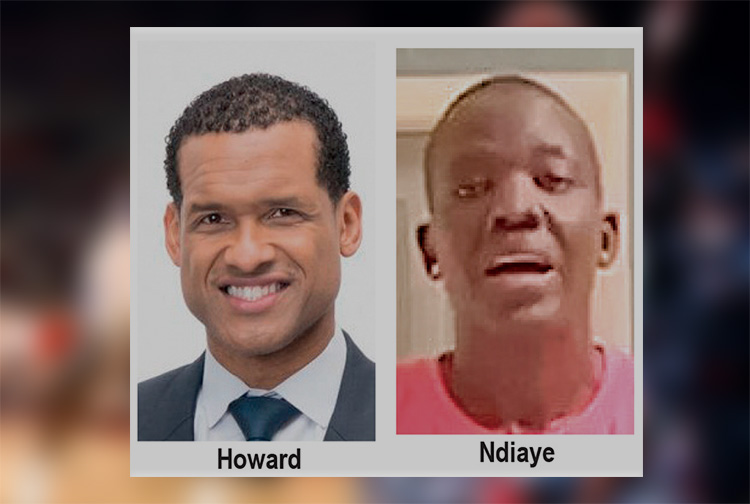
The U.S. Embassy in Colombo welcomed the U.S. Sports Envoys to Sri Lanka, former National Basketball Association (NBA) and Women’s National Basketball Association (WNBA) players Stephen Howard and Astou Ndiaye, from June 8 through 14.
The Public Diplomacy section of the U.S. Embassy said that it would launch a weeklong basketball program intended to harness the unifying power of sports, made possible through collaboration with Foundation of Goodness and IImpact Hoop Lab.
While in Sri Lanka, Howard and Ndiaye, both retired professional basketball players, will conduct a weeklong program, Hoops for Hope: Bridging Borders through Basketball. The Sports Envoys will lead basketball clinics and exhibition matches and engage in leadership sessions in Colombo and Southern Province for youth aged 14-18 from Northern, Uva, Eastern and Western Provinces, offering skills and leadership training both on and off the court. The U.S. Envoys will also share their expertise with the Sri Lanka Basketball Federation, national coaches, and players, furthering the development of basketball in the country. Beyond the clinics, they will collaborate with Sri Lankan schoolchildren to take part in a community service project in the Colombo area.
“We are so proud to welcome Stephen and Astou as our Sports Envoys to Sri Lanka, to build on the strong people-to-people connections between the United States and Sri Lanka,” said U.S. Ambassador Julie Chung. “The lessons that will be shared by our Sports Envoys – communication, teamwork, resilience, inclusion, and conflict resolution – are essential for leadership development, community building, equality, and peace. The U.S. Sports Envoy program is a testament to our belief that sports can be a powerful tool in promoting peace and unity.”
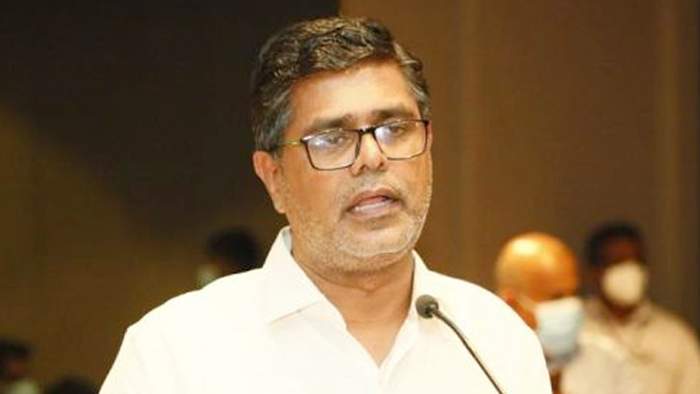
SJB Colombo District MP Mujibur Rahuman in parliament demanded to know from the government the reasons for CEB suspending the leave of all its employees until further notice from Thursday.
MP Rahuman said that the CEB has got an acting General Manager anew and the latter yesterday morning issued a circular suspending leave of all CEB employees with immediate effect until further notice.
“We demand that Minister Kanchana Wijesekera should explain this to the House. This circular was issued while this debate on the new Electricity Amendment Bill was pending. There are many who oppose this Bill. The Minister must tell parliament the reason for the urge to cancel the leave of CEB employees,” the MP said.However, Speaker Mahinda Yapa Abeywardena prevented Minister Wijesekera responding to the query and said that the matter raised by MP Rahuman was not relevant.
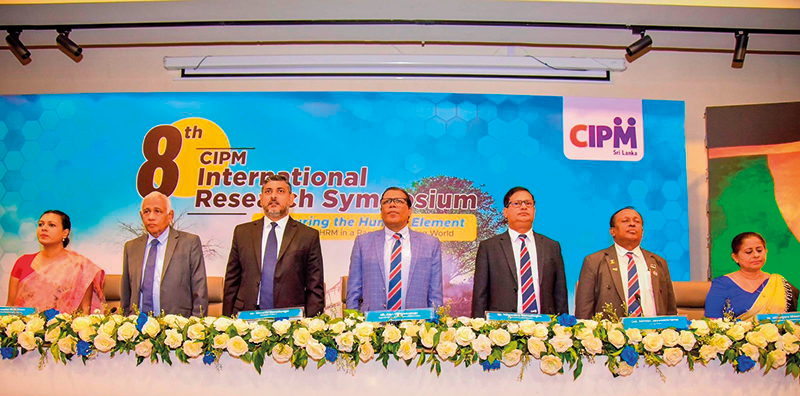
The Chartered Institute of Personnel Management (CIPM) successfully concluded the 8th Annual CIPM Symposium, which took place on 31st May 2024. Themed “Nurturing the Human Element—Redefining HRM in a Rapidly Changing World,” the symposium underscored the pivotal role of human resource management (HRM) in today’s dynamic global landscape. Since its inception in 1959, CIPM has been dedicated to advancing the HR profession through education, professional development, and advocacy, solidifying its position as Sri Lanka’s leading professional body for HRM.
Ken Vijayakumar, the President of the CIPM, graced the occasion as the chief guest. The symposium commenced with the welcome address by the Chairperson, Prof. Arosha Adikaram, followed by the Web Launch of the Symposium Proceedings and Abstract Book by the CIPM President. The event featured distinguished addresses, including a speech by Chief Guest Ken Vijayakumar, President of CIPM, and an address by Guest of Honor Shakthi Ranatunga, Chief Operating Officer of MAS Holdings Pvt. Ltd., Sri Lanka.
The symposium also featured an inspiring keynote address by Prof. Mario Fernando, Professor of Management and Director of the Centre for Cross Cultural Management (CCCM) at the University of Wollongong, Australia.
Vote of Thanks of the inauguration session was delivered by Dr. Dillanjani Weeratunga, Symposium Co-chair.
The symposium served as a comprehensive platform for researchers to present their findings across a wide range of critical topics in HRM. These included Cultural Diversity and Inclusion, Talent Development and Retention, Ethical Leadership and Corporate Social Responsibility, Adapting to Technological Advancements, Mental Health and Well-being at Work, Global Workforce Challenges, Employee Empowerment, and Reskilling and Upskilling.
The plenary session was led by Prof. Wasantha Rajapakse. Certificates were awarded to the best paper presenters during the valedictory session, followed by a vote of thanks delivered by Kamani Perera, Manager of Research and Development.
The annual symposium of CIPM was a truly inclusive event, attracting a diverse audience that spanned undergraduates, graduates, working professionals, research scholars and lecturers. This widespread interest highlights the symposium’s significance in the field of HRM, offering a unique opportunity for everyone to network and learn from scholarly brains.The CIPM International Research Symposium was sponsored by Hambantota International Port, Sri Lanka Institute of Information Technology (SLIIT), E B Creasy & Co. PLC, and Print Xcel Company.



US sports envoys to Lanka to champion youth development

Rahuman questions sudden cancellation of leave of CEB employees


