
News
NJC sets preconditions for abolition of Executive Presidency


The National Joint Committee (NJC) has said that the Executive Presidential system should not be abolished unless the 13th Amendment to the Constitution is abolished. The NJC also called for the introduction of ‘the first-past-the-post system.’ The nationalist group declared a set of preconditions.
The following is the full text of the NJC statement:
The SJB has proposed an amendment to the Constitution to abolish the Executive Presidential system without changing the current electoral system or repealing the 13th Amendment. The Bar Association proposal to abolish the Executive Presidential System is on similar lines.
The Need to Change the Electoral System.
The proportional representation system was introduced by the UNP to fulfil their political aspirations. Under the existing proportional representation system so introduced there is no space for honest and independent professionals and intellectuals to contest an election. Even though the popular demand is that all existing 225 members of Parliament should “go home”, with the expectation of electing honest men and women there is no way that an honest citizen can contest outside the existing party system at the next General Election. There is no internal democracy in any of these parties and only those who are supported by the corrupt leaders of these political parties could get nominations. The public have now unequivocally expressed the view that they have no faith in the existing party system. Therefore it is a sine qua non that we revert to the “First-Past-the-Post System” that existed prior to the promulgation of the present Constitution so that independent candidates not representing any political party could contest. At least 2/3rd of the Members of Parliament should be elected to represent electorates if we are to change the colour and culture of the legislature and ensure a cleaner Parliament.
Abolition of Executive Presidency
SJB and BASL proposes the abolition of the Executive Presidency, introducing a clause to the effect that the President should “always act on the advice of the Prime Minister” (not the Cabinet). What difference would it make by replacing the President with a Prime Minister? Although it may be said that when executive power is vested with the Cabinet of Ministers the Prime Minister implement the collective will of the Cabinet. We know however that the reality is that when a powerful party leader is appointed Prime Minister he runs the show. The Ministers of the Cabinet will be beholden to the Prime Minister for appointing them and it would be unlikely, that any Minister would go against the Prime Minister’s decisions.
In the seventies, over 20,000 youth got killed and, the country was governed under emergency without any press freedom not under a Presidential system but under a Cabinet form of Government. Many a country, particularly in East Asia, recorded remarkable economic and social advancement under various forms of Presidential systems. Therefore, it is evident that the autocracy, mismanagement and corruption in Government stem not from the Presidential system, but due to the lack of an appropriate legal framework to curb corruption, and concentration of power in one power centre, without appropriate checks and balances. The abolition of the Executive Presidency, in effect, is synonymous to concentrating all executive and legislative power in one power centre, namely the Parliament, which the NJC considers as inappropriate.
Besides, it is now obvious that, after the next General Election, it is likely that there would be a hung Parliament, with which, a future Prime Minister will be compelled to satisfy the political demands of his coalition partners and will not be acting in the national interest. This will be an ideal environment for extremists to flourish, and take control of the State as it has happened in the past. In this respect, it may be pertinent to underline that the Provincial Council System has given Provincial Councils powers with regard to 73 different subjects and functions of Government, including Police and Land powers. If any of these provincial administrators act in a manner detrimental to the national interest, it could not be possible to rectify any mischief with no Executive President and a hung Parliament manipulated by extremists.
Therefore, we are strongly of the view that the Executive Presidency should be retained.
A set of 13 proposals have been submitted by the BASL. We appreciate their initiative to bring the Opposition to the negotiation table to resolve the present crisis. We understand that at an emergency meeting of the Bar Council had been hurriedly called and these set of proposals, including the Proposal to abolish the Executive Presidency, had been adopted without adequate notice to the members. The proposals were issued under the signature of the President of the Bar Association Mr. Saliya Peries, President’s Counsel and former Chairman of the controversial office of missing persons established by the Yahapalana Government. Whether a country needs an Executive Presidential System or a Cabinet form of Government cannot be decided by the Bar Association. The general membership of the Bar Association had no opportunity of expressing their views on this question. Whilst we recognise that the Bar Association should be vigilant to safeguard the rights of the ordinary citizen it has no role to play in deciding disputed political issues in the country. We would not be surprised if the present management of the Bar Association would next agitate to convert Sri Lanka from a unitary form of Government to a federal form of Government, a project which the Yahapalana Government was carrying through so enthusiastically. The Bar Association should stop pursuing objectives of political parties their leaders sympathise with.
No Attempt to Seriously Address Corruption
The SJB through their proposed Constitutional Amendment has proposed the reintroduction of the provisions in the 19th Amendment. We have not forgotten the mess it created. The National Procurement Commission created by the 19th Amendment had no teeth they have no power to stop a corrupt deal. Corrupt deals continued under the 19th Amendments. The Hambantota port was handed over for 99 years without competitive bidding.
The conduct of the Election Commission and the Bribery and Corruption Commission was equally repulsive. Although allegation after allegation is made against the Rajapaksa administration not a single successful prosecution was done. The reason for its failure is because the 19th Amendment in fact created politically motivated Commissions replacing Public Officers from the SLAS. Their sole objective was to satisfy the political needs of their masters and not to address corruption.
Therefore the National Joint Commission wish to reiterate the following;
(i)
The Presidential System of Government should not be changed. Any constitutional reform to abolish it, should be adopted only if
(a) The 13th Amendment is abolished and
(b) The “First-Past-the-Post System” introduced to enable a Member of Parliament to represent an electorate. However not more than 1/3 of the Members of Parliament can be accommodated under the proportional representation system to accommodate minority interest.
(ii)
Police and Land powers should be removed from the Provincial Council List
(iii)
Provincial Statutes should be subject to laws enacted by Parliament.
Parliament should be able to repeal Provincial Statutes if they so wish.
(iv)
Alienation of State land to foreigners, foreign states and foreign companies should be prohibited.
(v)
No Government contract or agreement relating to strategic enterprises and land should be permitted without approval of the Supreme Court and the Parliament. However, when such contracts or agreements on
strategic assets or lands being considered would have effective duration beyond the unexpired legitimate tenure of an incumbent Government, such contracts or agreements should also obtain 2/3rd majority of the Parliament, in addition to the approval of the Supreme Court, where the latter may even instruct to refer the matter for a referendum, if the said deal/contract/agreement could possibly have national (economic or political) sovereignty implications.
(vi)
All Government procurement contracts which fall within the categories, referred to under (v), should be based on competitive bidding, but with a transparent margin of local preference given for Sri Lankan bidders, stipulated to encourage domestic industrialization and national economic value addition.
22nd Amendment of 11 Parties
We also observe that the 22nd amendment proposed by the Group of 11 parties (submitted on their behalf by Mr. Wijeyadasa Rajapakse) fortifying the 13th Amendment and to ensure that the Provincial Police Commissions introduced by the 13th Amendment is untouched. The PHU, JNP and Yuthukama
Sansandaya was against the 13th Amendment. It is unfortunate that they have forgotten these principles in such a short period.
Therefore, we urge the proponents of the 21st and 22nd Amendments to reconsider these proposals without taking this country towards further ruination.
In an address to the Nation yesterday the President said that he will take necessary action to abolish the executive presidency. However as for the present Constitution he does not have the mandate to do so.



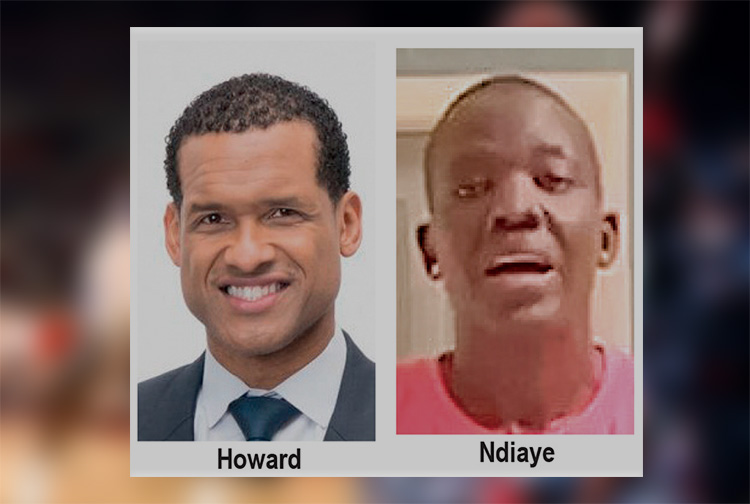
The U.S. Embassy in Colombo welcomed the U.S. Sports Envoys to Sri Lanka, former National Basketball Association (NBA) and Women’s National Basketball Association (WNBA) players Stephen Howard and Astou Ndiaye, from June 8 through 14.
The Public Diplomacy section of the U.S. Embassy said that it would launch a weeklong basketball program intended to harness the unifying power of sports, made possible through collaboration with Foundation of Goodness and IImpact Hoop Lab.
While in Sri Lanka, Howard and Ndiaye, both retired professional basketball players, will conduct a weeklong program, Hoops for Hope: Bridging Borders through Basketball. The Sports Envoys will lead basketball clinics and exhibition matches and engage in leadership sessions in Colombo and Southern Province for youth aged 14-18 from Northern, Uva, Eastern and Western Provinces, offering skills and leadership training both on and off the court. The U.S. Envoys will also share their expertise with the Sri Lanka Basketball Federation, national coaches, and players, furthering the development of basketball in the country. Beyond the clinics, they will collaborate with Sri Lankan schoolchildren to take part in a community service project in the Colombo area.
“We are so proud to welcome Stephen and Astou as our Sports Envoys to Sri Lanka, to build on the strong people-to-people connections between the United States and Sri Lanka,” said U.S. Ambassador Julie Chung. “The lessons that will be shared by our Sports Envoys – communication, teamwork, resilience, inclusion, and conflict resolution – are essential for leadership development, community building, equality, and peace. The U.S. Sports Envoy program is a testament to our belief that sports can be a powerful tool in promoting peace and unity.”
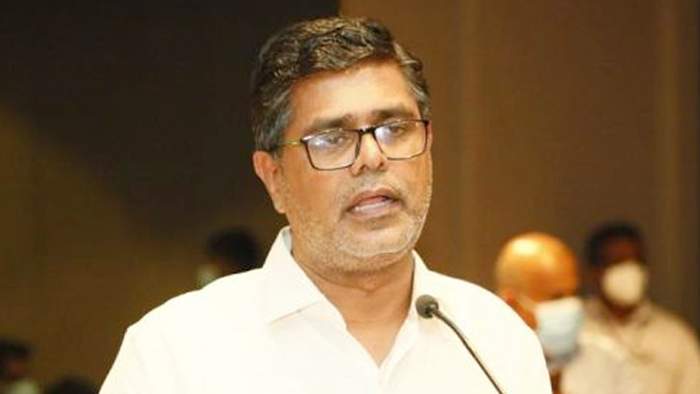
SJB Colombo District MP Mujibur Rahuman in parliament demanded to know from the government the reasons for CEB suspending the leave of all its employees until further notice from Thursday.
MP Rahuman said that the CEB has got an acting General Manager anew and the latter yesterday morning issued a circular suspending leave of all CEB employees with immediate effect until further notice.
“We demand that Minister Kanchana Wijesekera should explain this to the House. This circular was issued while this debate on the new Electricity Amendment Bill was pending. There are many who oppose this Bill. The Minister must tell parliament the reason for the urge to cancel the leave of CEB employees,” the MP said.However, Speaker Mahinda Yapa Abeywardena prevented Minister Wijesekera responding to the query and said that the matter raised by MP Rahuman was not relevant.
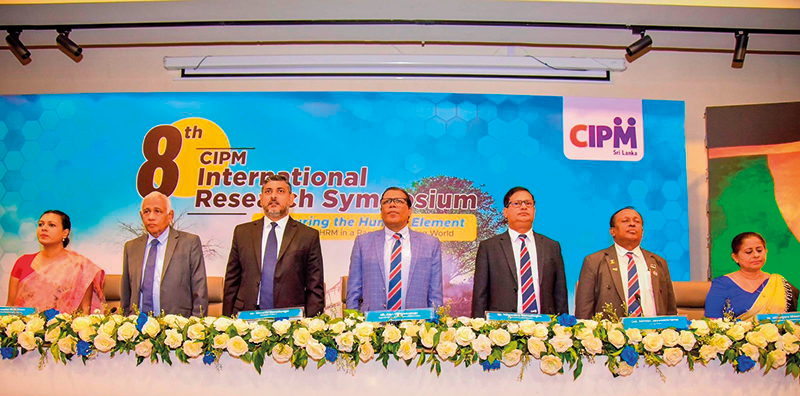
The Chartered Institute of Personnel Management (CIPM) successfully concluded the 8th Annual CIPM Symposium, which took place on 31st May 2024. Themed “Nurturing the Human Element—Redefining HRM in a Rapidly Changing World,” the symposium underscored the pivotal role of human resource management (HRM) in today’s dynamic global landscape. Since its inception in 1959, CIPM has been dedicated to advancing the HR profession through education, professional development, and advocacy, solidifying its position as Sri Lanka’s leading professional body for HRM.
Ken Vijayakumar, the President of the CIPM, graced the occasion as the chief guest. The symposium commenced with the welcome address by the Chairperson, Prof. Arosha Adikaram, followed by the Web Launch of the Symposium Proceedings and Abstract Book by the CIPM President. The event featured distinguished addresses, including a speech by Chief Guest Ken Vijayakumar, President of CIPM, and an address by Guest of Honor Shakthi Ranatunga, Chief Operating Officer of MAS Holdings Pvt. Ltd., Sri Lanka.
The symposium also featured an inspiring keynote address by Prof. Mario Fernando, Professor of Management and Director of the Centre for Cross Cultural Management (CCCM) at the University of Wollongong, Australia.
Vote of Thanks of the inauguration session was delivered by Dr. Dillanjani Weeratunga, Symposium Co-chair.
The symposium served as a comprehensive platform for researchers to present their findings across a wide range of critical topics in HRM. These included Cultural Diversity and Inclusion, Talent Development and Retention, Ethical Leadership and Corporate Social Responsibility, Adapting to Technological Advancements, Mental Health and Well-being at Work, Global Workforce Challenges, Employee Empowerment, and Reskilling and Upskilling.
The plenary session was led by Prof. Wasantha Rajapakse. Certificates were awarded to the best paper presenters during the valedictory session, followed by a vote of thanks delivered by Kamani Perera, Manager of Research and Development.
The annual symposium of CIPM was a truly inclusive event, attracting a diverse audience that spanned undergraduates, graduates, working professionals, research scholars and lecturers. This widespread interest highlights the symposium’s significance in the field of HRM, offering a unique opportunity for everyone to network and learn from scholarly brains.The CIPM International Research Symposium was sponsored by Hambantota International Port, Sri Lanka Institute of Information Technology (SLIIT), E B Creasy & Co. PLC, and Print Xcel Company.



US sports envoys to Lanka to champion youth development

Rahuman questions sudden cancellation of leave of CEB employees


