Life style
New National Trust – Sri Lanka publication Jaffna Heritage

This publication completes the National Trust- Sri Lanka series on the North and East with publications on Mannar, Batticaloa and Island of Islands in response to many requests from the public. The orange-red cover reminds of Jaffna’s chaya root heritage as well as its distinctive font. It is however not just another coffee table book with beautiful images although the opening pages with Devaka Seneviratne’s stunning photography suggests it is so. This book celebrates Jaffna as a multicultural city, a “meeting point of cultures and languages” where the old “grid city” is almost lost in the urban sprawl.
Here is gathered a collection of articles from experts, mostly academics from the University of Jaffna together with several contributions from overseas , stretching from the west coast of the US to Europe and Australia, making it quite difficulty for the editorial team of Sarala Fernando, Stefan D’Silva and Dr Malik Fernando to hold the project together over the three years of gestation.
The substantive chapters are divided into two parts, first, the archaeology, architecture, art, culture, religion, philosophy, sociology, the diaspora, entrepreneurship and tourism and second, the biodiversity covering water, freshwater fishes, mangroves, marine resources, fisheries, palmyra, mango, birds, ponds and homegardens.
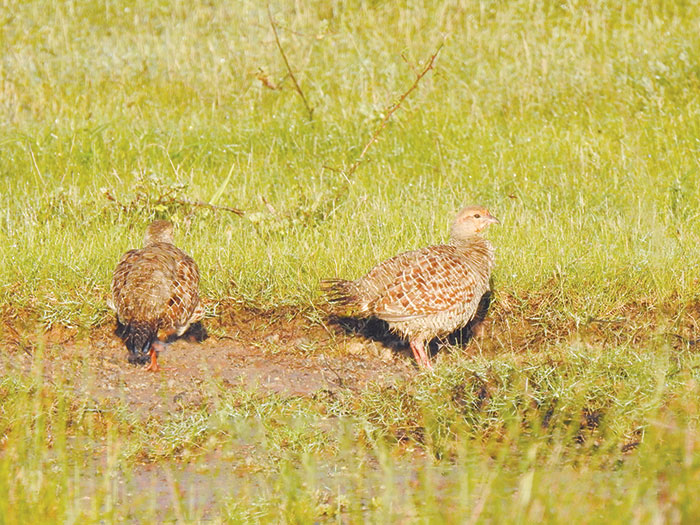
Gray Francolin Photo S. Wijayamohan
Each of the authors had been was left free to chose their own style of writing and some provided their accompanying photographs with the end result that the publication serves as a free flowing reference book despite some loss of conformity. The editors came with no preconceived objectives and their wish was simply to add to existing knowledge and stimulate more interest and publications on Jaffna.
A starting point was the acknowledgement that since ancient times, Jaffna has been connected to the outside world. This is illustrated by the opening section on Glimpses of History displaying the earliest maps including one rare version from 1587, as well as various archaeological sites, inscriptions, flags and paintings. Jaffna’s strategic location at the intersection of the ancient trans-oceanic routes enabled linguistic, cultural and trade links with south India through its string of seaports before 400 years of European colonial rule linked Jaffna with European cultures. Yet the Sri Lankan Tamils would boast of “a distinctive culture of their own which originated and flourished in Sri Lanka.” Professor Pushparatnam’s opening article on numismatics as related to Murukan worship in Sri Lanka suggests a bridge of connection between the North and South of the island.
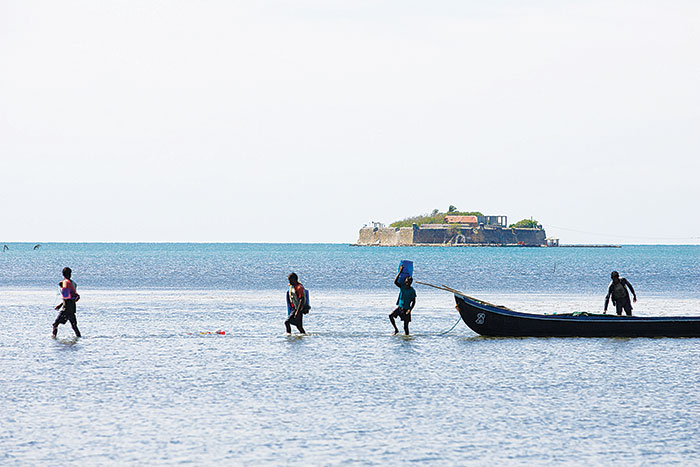
Fishermen with Fort Hammenheil in background Photo Devaka Seneviratne
The people of Jaffna find reflection in several articles, from migrating communities to the clash between tradition and modernity and the drive today for entrepreneurship and digital business. Although traditional house design in Jaffna guarded the privacy of women members of the family, today they are seen to be empowered, free to show their long tresses and ride bicycles without hindrance, unlike elsewhere in the region.
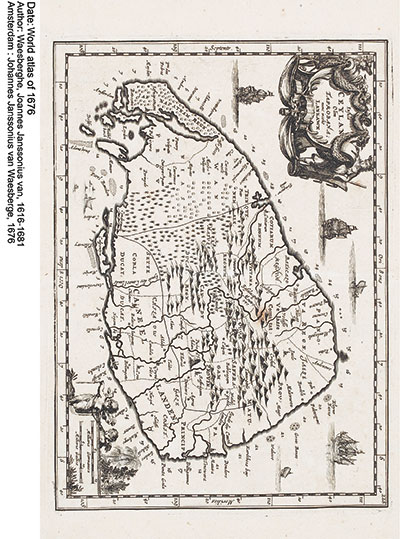
World Atlas 1676
For the diaspora which left during the years of conflict, Jaffna is an “ïmagined space” a place of natural beauty and warm sunshine where the palmyra and home gardens beckon those who have gone to take refuge in cold far-off lands and dream of return. For many, the Nallur Kovil and its annual festival performs the role of intermediary, bringing together thousands of celebrants from overseas and around Sri Lanka, probably the most important event in Jaffna today. Yet unlike elsewhere in the island, here strict regulation is maintained, punctuality observed and the pooja offering still costs only one rupee.
The second part of Jaffna Heritage focuses on the biodiversity and natural assets from fresh water fishes to mangroves, marine creatures and agricultural products like palmyra, banana and mango.
It is the heart of the book which pleads for the protection of Jaffna’s unique biodiversity in this era of rapid development ignoring the challenges of global climate change. Jaffna’s geography with singular characteristics, comprising both the mainland peninsula, 22 coastal islands, five coastal stretches and four lagoons offer critical habitats for many species of fauna and flora. The National Trust’s earlier publication Island of Islands describes how many of these islands have their own special history and natural heritage and have played a role since ancient times when local kingdoms and ports were part of a thriving network of Indian Ocean trade and cultural exchanges.
A central theme that runs through the book is a question – how will this proud heritage meet the challenges of the strong influences from our Big Neighbour across the water and from Colombo in the
South, and will cooperation or conflict prevail?
Authors: Jekhan Aruliah, Arumugam Kandiah, Gehan de Silva Wijeyeratne, Somasiri Devendra, Sarala Fernando, Raji
Gnaneswaran, Kristina Renee Hodelin, Asiff Hussein, Nahmagal Krishnapillai, R. Mayooranathan, P. Pushparatnam,
Pathmanathan Raghavan with Gayathri Pathmanathan, Arunthathy Ranganathan with Suhanya Aravinthon, Thulasitha
William Shanthakumar, Piratheepa Sivakumar, Hiranya Sudasinghe, Sanathanan Thamotherampillai, Mahendran Thiruvarangan,
S. Wijeyamohan with S. Jayasingam and G. Mikunthan.
Editorial Team: Sarala Fernando, Stefan D’Silva (photography),Dr Malik Fernando (Scientific Consultant)
Principal Photographers: Stefan D’Silva, Devaka Seneviratne, Studio Times, Luxshmanan Nadaraja, Steve Persighetti.
Available at National Trust office tel:2682730 and leading bookstores.