Features
Navy provides 9,000,000 litres of drinking water daily to people, free of charge

By Admiral Ravindra C Wijegunaratne
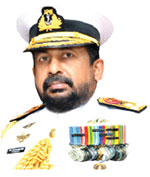

The project was inspired by a conversation that took place at the funeral of the father of a sailor, in Medawachchiya, who died of Chronic Kidney Disease of Unknown etiology (CKDu), a deadly disease which is spreading fast in the North Central Province of Sri Lanka, known as the Rice Bowl of our country. The use of contaminated water for drinking and cooking is believed to be the main cause of the disease.
The Navy took the initiative by designing a low cost RO plant at its Research Wing. The architect of the project was then Commander, M. C. P. Dissanayake, (Dissa), an Indian trained Marine Engineer. He has since been promoted to Commodore (one star) and heads the Marine Engineering Department at KDU. An imported RO plant with a 10,000 litre daily output would have cost approximately Rs 3.8 million. Building and full installation cost would have amounted to approximately Rs. 5 million. Dissa’s indigenously built a plant at a cost of Rs 1.4 million.
Every officer and sailor contributed Rs. 30 from their pay each month and this money went into a non-public fund known as ‘Naval Social Responsibility Fund’ (NSRF). The first plant was installed in Rambewa, Kadawatha, on December 22, 2015. In 2015, 250 CKDu patients were reported from this small village alone.
The project is to provide 900 RO plants, mainly covering the North Central Province, where CKDu is most widespread, with over 30,600 patients reported in 2015. Most of them were farmers in their early 50s, the rice producers to our country.
The Navy took six years to complete the project, under five Navy Commanders, namely, Admiral Ravi Wijegunaratne, Admiral Travis Sinniah, Admiral Sirimevan Ranasinghe, Admiral Piyal De Silva and present Commander Vice Admiral Nishantha Ulugetenna. The total cost of the project is approximately Rs 1,260 million (1.260 billion). The main contributors to the project were the Presidential Task Force on Prevention of Chronic Kidney Disease (under then President Maithripala Sirisena), NSRF and MTV Gammedda, in addition to individual local and foreign donors and various organisations. Their contributions are for a very worthy cause to save the lives of innocent people.
The Navy’s untiring effort has shown the world what it is capable of. The Navy is a silent force. What they do at sea is seen only by a few. This great effort by the Navy is also noticed by a few but appreciated by the humble people who have benefited from it.
The reverse osmosis process requires power. Each plant consumes approximately Rs 11,500 worth of power from the main grid, monthly. This amount was brought down to an affordable Rs 250 per month by installing solar panels at the RO plants. Another project was to install 50 medical RO plants at hospitals with dialysis machines. The cost for each unit was Rs 1.5 million, whereas an imported plant would have cost Rs. 13 million each.
Commodore (E) MCP Dissanayake won the award for the best paper presentation at KDU-14th International Research Conference 2021 for his research paper to enhance RO plant recovery from 50 percent to 75 percent. He will make this modification to RO plants in the near future, further enhancing their efficiency. Clean drinking water is precious to mankind and the Navy recognises this fact.
King Dutugemunu, who reigned from 161 BC to 137 BC, united the country after 40 years and developed agriculture and Buddhism. But King Dutugemunu was never considered a god or was idealised. However King Mahasen (277 to 304 AD), who built more than 16 major tanks, was considered a god (Minneriya Deviyo) after building the Minneriya tank.
The Navy can be proud as the people of North Central Province already are ever grateful to it for providing clean drinking and cooking water absolutely free of charge. That gratitude is for saving them and their children from deadly CKDu.
Well done Navy! Bravo Zulu!
(The writer is Former Chief of Defence Staff, retired from Sri Lanka Navy)