
Features
My Decision to Leave Home, 1970 A fateful decision

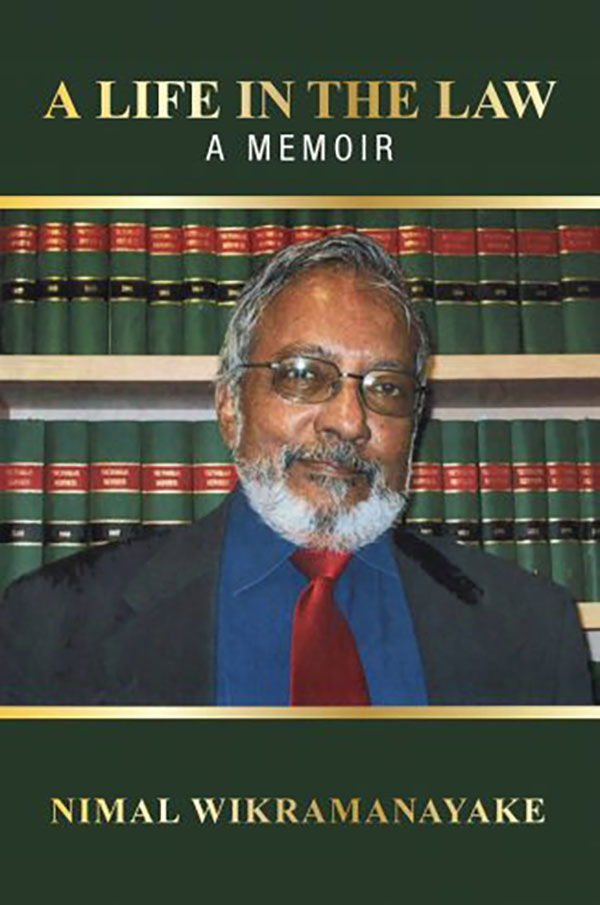
By Nimal Wikremanayeke
(Excerpted from A Life In The Law)
I will now turn to the events that made me leave my wonderful country, my beautiful home and my large practice at the Ceylon Bar in order to emigrate to Australia, a land where I knew no one. Today, looking back, I cannot understand what fit of insanity must have overtaken me to make such a stunning, life-changing decision.
It was May 27, 1970, the day when our prime minister, Dudley Senanayake, decided to fight an election against the combined might of Mrs Sirimavo Bandaranaike’s Sri Lanka Freedom Party, Dr Colvin R De Silva’s Trotskyite Lanka Sama Samaja Party, Mr Pieter Keuneman’s Communist Party and several other miscellaneous parties. We were all extremely confident that Mr Senanayake would triumph and we would have stability in our country for another five years.
My father decided to hold a card party on election night so that we could have an enjoyable night while listening to the election results. Dad was an extremely generous host and he was to provide dinner – a gourmet’s dinner – yellow rice with numerous curries washed down with large quantities of French wines.I woke early that morning, shaved, showered, had my breakfast and went off to vote. The polling booths were filled with supporters of the various parties loudly touting their wares. I took my place in the queue and when it came for my turn to vote, the electoral officer brushed the first joint of my right thumb with indelible ink to prevent me from voting again, took my particulars and gave me my ballot papers. I returned home after voting, confident that our party would be returned to power.
Shortly after 12 noon I left with my wife to go to my club the Twentieth Century Club in Dawson Road, Havelock Town, Colombo. This was a ritual we followed every Saturday morning. When we arrived there, a group of my friends had already commenced their usual Saturday afternoon drinking session. They were seated in a semi-circle outside on the club house lawn and my wife and I joined them.
Life in those days was gracious and we were attended to by solicitous, subservient attendants. After many rounds of fairly heavy drinking, we left for home. We arrived at our well-appointed air-conditioned three-bedroom apartment, with a sitting cum dining room which had French windows opening out onto a covered veranda, and an impressive courtyard. We had two servants, a female cook and a houseboy.
Shortly after three o’clock the cook warmed up our lunch which the houseboy laid out on the dining table. We had our lunch and retired to bed where we were joined by our German shepherd, Sweetheart.We got up later that afternoon, made ourselves ready and went to my parents’ home. My father was one of the leading Queen’s Counsel at the Ceylon Bar. He had a large and spacious home which was built on a quarter of an acre of land over 11,000 square feet together with a quarter-acre of garden.
In addition to his study, the house had five well-appointed bedrooms, with en suite bathrooms in four of them. The home had a large entrance hall, a sitting room, an open-air patio in the middle of the home, a fountain filled with goldfish, an exceptionally large dining room, and attached to it was the billiard room, with a full-sized billiard table and sufficient room to accommodate a large card table.By 7 pm all my father’s guests had arrived and we indulged ourselves in a rousing game of Down the River. This was seven-card stud poker, together with as many jokers as there were players -eleven of us. At about 8.30 pm we sat down to dinner, which we finished by 10 pm. We returned to the card room and sat down to resume playing cards when someone turned on the radio to listen to the election results.
It was customary in Ceylon for the election results to start flooding in at about 10 pm. We did not hear any election results for several hours; all we heard from the local radio station was music, and this went on till about 1 am. We were all extremely puzzled as to why no election results were being declared. Our suspicions should have been aroused by the fact that every half hour, the local radio station kept playing Roger Whittaker’s “New World in the Morning.”
This should have been a warning, a portent of things to come. The local radio station kept repeating this piece of music every half hour until around 1 am, when the election results started flooding in. It was not a defeat, it was not a rout – it was a massacre. As I recall, the Ceylon Parliament consisted of 160 seats in 1970 prior to the election, with the UNP (United National Party) holding 90 seats and the other parties 70 among them. This time, the UNP lost 65 seats and the other parties won 65 seats.The poker game came to an end by 1.30 am and all of us, save for my parents, left for our respective homes. We were shattered. We were completely unaware of the extent to which our lives would change dramatically in the next 12 months as a result of this election.
Astrology
An interesting feature of this election was that Mr Dudley Senanayake’s astrologer was horribly wrong when he predicted that the prime minister would win the election if it was held on May 27, 1970. As a result of the prediction, the prime minister held the election and lost. Some Westerners may scoff at such primitive superstitions, but then why are whole pages devoted in their daily newspapers to astrological predictions?
Regrettably, I too have had my fair share of astrological predictions. In 1960 when I returned to Ceylon and went to the Bar, things were extremely difficult for me. Although my father was chairman of the Associated Motorways Group and a large insurance company, he had sent the secretaries of these companies a directive that I should not be given work.
I knew the secretary, Salman, who told me that there was a brilliant astrologer working as a clerk in the Associated Motorways Group. Salman suggested that I go and see him to obtain an astrological prediction about my future. I went to see him wearing dishevelled clothes and a pair of slippers. I told him what my date and time of birth was and he told me to come a week later. I turned up a week later to see him with Salman. This man looked at me sadly and said, “You poor man. You have no future at all. You are poor and you will always be poor. You have a Kemathrama Yoga.” Salman looked at him and said, “You idiot. This is the chairman’s son!”
One day in the middle of 1964, I was in the Law Library where the advocates normally congregated when they were not in court. I was chatting with two friends of mine, Satyendra and Navaratnarajah, when Satyendra told us that he knew a brilliant astrologer in Jaffna who could read horoscopes and accurately predict the future.
A few days later Nava and I gave Satyendra our respective birth details etc. to pass on to the astrologer who would make up our horoscopes and predict our futures. A couple of weeks later Satyendra turned up with our horoscopes. Satyendra told Nava that the astrologer had predicted a brilliant future for him. Saty then looked at me sadly and said that my horoscope predicted that I had no future. Although it terrified me at the time, this story had both a sad and a happy ending. A month later Nava, contracted hepatitis and died. The happy ending was that I believe the astrologer mixed up our dates of birth, for Nava now had no future and I ended up with a good future.
In fairness to astrology, I must relate an incident that occurred during the middle of 1971. The die was cast and I had crossed the Rubicon. There was a venerable old gentleman at the Ceylon Bar, a Mr M. Somasunderam. He was a contemporary of Dad’s. Someone at the Bar told me that Soma was excellent at reading palms and was an exceptional palmist. I buttonholed him in the Law Library and asked him whether I could speak to him on a personal matter. I told him that I was going to live out my days in Australia so could he please read my palm and tell me what my future was.
He took my palm in his hand and studied it for quite some time. He smiled a gentle smile, then said, “Wikramanayake, you have nothing to worry about. You will have a brilliant future in Australia” I was flabbergasted. I told him that this was impossible as I knew no one in Australia. He patted me on the shoulder smiled, saying, “Remember me when you are famous.” So, Soma, I am having a glass of Blue Label Scotch whisky in remembrance of you while I type this memoir.
Post-election horror
Elections in Ceylon were gory events. As one of the leaders of the Gauls said, when addressing the Roman Senate well over 2,000 years ago, “Vae ago, ae victis – woe to the conquered” The supporters of the successful winning party always exacted their revenge on the supporters of the losing party. A large number of supporters of the losing party were usually viciously beaten up while the police watched on without interfering, and houses belonging to members of the United National Party were torched.
The country was quiet on Sunday, but on Monday, the assaults and beatings started. I remember what happened to a cousin of mine, Michael Wikramanayake. He was the manager of a large government cooperative store. Michael had been known for the fact being a UNP sympathiser. He was seated in his office on Monday morning when the workers stormed in. They tied him to his chair and poured blue and red paint over him. Blue paint symbolised the Sri Lankan Freedom Party (SLFP), the red paint the Communist Party. Michael was badly beaten and lost an eye. The poor man was devastated; he not only lost his job but received no help from the police.
Yet this was only the beginning. Mrs Bandaranaike had more than a two-thirds majority in Parliament, and she amended the constitution. She announced that Sinhalese was to be the national language, and that cases in the law courts would shortly be conducted in the Sinhalese language and not in English, as had been done for over 150 years. Court documents were also to be written in the Sinhalese language. Up to that time, the work in the courts was conducted in English. The government created a High Court, a new court midway between the District Court and the Supreme Court. The government appointed seventeen new judges from lawyers who were members of Mrs Bandaranaike’s party, the SLFP. Lawyers from her party who were competent in Sinhalese were tasked with translating the Civil Procedure Code and the laws of the country into Sinhalese.
My attempt at coping
I took on two extremely competent young Sinhalese-educated lawyers as my readers to help me cope with conducting my cases in Sinhalese. Regrettably, I must confess that although I could speak my mother tongue, I could scarcely read or write it. I would now have to learn to think in Sinhalese. How was I to do this? I was thirty-seven years old.
My father had been a classics scholar before he studied law. He had introduced me to The Iliad, The Odyssey, Sophocles, Aeschylus, Euripides and the like when I was ten years old. English was the language we spoke at home and Sinhalese was used only to speak to the servants. I am not proud of this fact. While I was growing up, the British were in power and my language was suppressed by the British, who called it “the vernacular” This continued until I was fifteen years old.
In school, we had one period a week in Sinhalese before Ceylon received independence. I excelled in all the other subjects, save for my mother tongue. In 1948, when we received our independence the scene changed dramatically. From this time, we had a period of two hours of Sinhalese every day and I just could not cope with it. I was slapped regularly by my Sinhalese master, Mr Jayasekere, for not knowing Sinhalese. I excelled in Latin but failed miserably in Sinhalese. I never received less than 190 marks out of 200 in Latin but no more than 40 out of 200 in Sinhalese. This went on for several years until I went off to England to study, to widen my repertoire and broaden my horizons.
My lack of knowledge of my mother tongue had now returned to haunt me. After the election in May 1970, I mentioned my displeasure at this new turn of events in the Law Library to a Sinhalese-educated advocate. He sniggered and said sarcastically, “The dogs bark, but the caravan moves on” Yes, the caravan was moving on and leaving me behind barking madly.
I thought to myself, how the hell am I going to think and address the court in Sinhalese? I was at my wits’ end wondering what to do. As the situation continued like this for a few months I was beginning to despair. The two new Sinhala-educated lawyers I had employed tried to help me cope with my lack of knowledge of the Sinhalese language but to no avail.
I happened to go to the Magistrates’ Court in Colombo South in August 1970 and met a friend of mine, Clarence Fernando. We were discussing our situation and pondering what we were to do. Clarence told me that all was not lost. A friend of his, Frank Pereira, had recently migrated to Australia. He told me that Frank was in the legal profession and was doing extremely well. Heartened by this little titbit, I decided to emigrate to Australia. Had I known the truth about Frank Pereira, I certainly would not have abandoned my large practice at the Ceylon Bar and migrated to Australia. I could still have conquered the Sinhalese language and have had a gracious life in Ceylon.
I returned home and asked my dear wife Anna Maria, “Shall we go to Australia?” Anna Maria, bless her, was always game for anything I wanted to do. It was only many years later that she told me she was terrified when I had asked her whether we should go to Australia.When I came to Australia I learned that Frank Pereira was a law clerk earning a relatively small income of $30 a week. In 1970, secretaries in Australia were earning $60 a week.
Napoleon Bonaparte
In desperation I turned for guidance to my Emperor, Napoleon Bonaparte. Napoleon had been a great source of inspiration to me ever since my school days. One of my classmates, Ralph Deraniyagala, was an avid disciple of Napoleon. He suffered from a bad case of Napoleonitis and was an eccentric young boy. When we were young lads in our early teens, he had selected most of us, in class, to be Napoleon’s marshals and I was fortunate to be chosen as Marshal Ney.
Ralph was not only eccentric but also extremely impulsive. He would disrupt our lessons in class by springing up from his seat and shouting out to one of his marshals to charge. He would seriously upset the equilibrium in the class but the masters tolerated his bizarre behaviour. As a result of Ralph, I started devouring whatever books I could read on the life of Napoleon Bonaparte, starting with Abbott’s magnificent treatise on the life of Napoleon. Napoleon was of the view that there was always a “Career open to talent” He proclaimed that he was “a Corsican by birth, a Frenchman by adoption and an Emperor by conquest”. It was his belief that if one had ability, one could succeed anywhere in the world. So I decided to take up the challenge and emigrate to Australia.
Ronnie de Kretser
One of my father’s readers, Ivor Misso, had left for Australia in the 1950s. Misso had a substantial practice in the District Court of Colombo but had left for what he thought would be greener pastures. Dad wrote to him to ask him whether he could help me in my new adventure. Ivor Misso wrote back, suggesting that Dad write to Ronnie de Kretser, a partner in the solicitors’ firm of Weigall & Crowther in Melbourne. Ronnie had qualified as a proctor of the Ceylon Supreme Court in 1948 and left for Australia at the same time as Ivor Misso in 1956. Dad then wrote to Ronnie who advised me to put in my application for immigration and send him a copy, as the Minister for Immigration, Mr Phillip Lynch, was a good friend of his.
We duly made our application for immigration in November and we were successful due to the efforts of Ronnie de Kretser. I received a warm letter from Phillip Lynch congratulating me on my application and wishing me all the best in my new country. We were passed for immigration in December and it was only then I began to have second thoughts about migrating to Australia.However, Melbourne, my intended destination, was not unfamiliar to me as Dad had brought us out to Australia on a one-month holiday in 1952.1 had liked it then.
Distribution of work
Late in 1970, all the government corporation work was given to friends of the SLFP, Mrs Bandaranaike’s party. This was nothing new. Each successive government in Ceylon repaid its loyal supporters by giving them government legal work. (I was to be unpleasantly surprised many years later to also find that some work in Australia is handed out on patronage and privilege.)
One of the privileged few was P Herat who did work on the “motion roll”, which consisted of the list of summary matter applications to be heard in the Motion Court. That was the extent of his practice. The five District Courts had an hour’s work on the motion roll every morning before the trials for the day were heard. These summary matters were determined by the judge. Herat had never conducted a trial prior to Mrs Bandaranaike coming to power in 1970, and did not know how a trial should be conducted.
As I mentioned earlier, I had a large and a lucrative commercial practice. I was briefed for the defendant in a “mortgage bond” case. In Ceylon, a mortgage under Roman-Dutch law could only be enforced by court proceedings, unlike in Australia, where proceedings for possession could be issued after the mortgage had been terminated by appropriate notice. I had no defence to the action as my client was seriously in default of his obligations under the mortgage.
Herat was briefed to appear for the plaintiff, the State Mortgage Bank, a government institution. When we went to court, he was gloating and told me that the days of the English-speaking advocates were over for it was now the turn of the Sinhala-educated lawyers.
The case was called on for hearing before Judge Vaitialingam. Herat opened his case with bravado and then led his evidence. He kept smirking as he knew my client had no defence. The evidence he led was short and sweet. He led evidence that the mortgage had not been paid, then sat down. He did not lead any evidence that my client was in default. He did not lead any evidence that a demand had been paid for the arrears. Nor did he lead any evidence that my client had failed to cure his default. He then closed his case.
I asked him whether he had finished. He said “yes” I asked him several times whether he had finished and he kept getting angrier and angrier. The judge then asked him whether he had finished and he again replied “yes” I then made a No Case submission upon which Herat sought to re-open his case. The judge refused his application, saying that I had asked him sever-at times whether he had finished to which Herat had replied “yes” The judge had also asked him the same question and got an answer in the affirmative. He refused Herat’s application and dismissed his case.
It cost the bank Rs 150,000 or the equivalent of $30,000, a substantial sum of money in 1970.1 gave Herat the two-finger salute which Henry V’s longbowman gave the French at the Battle of Agincourt and walked out of court.Suffice it to say that Herat did not get another government brief. This case was not included here for the purpose of skiting about my forensic ability, but for the purpose of illustrating that patronage can occasionally go wrong.


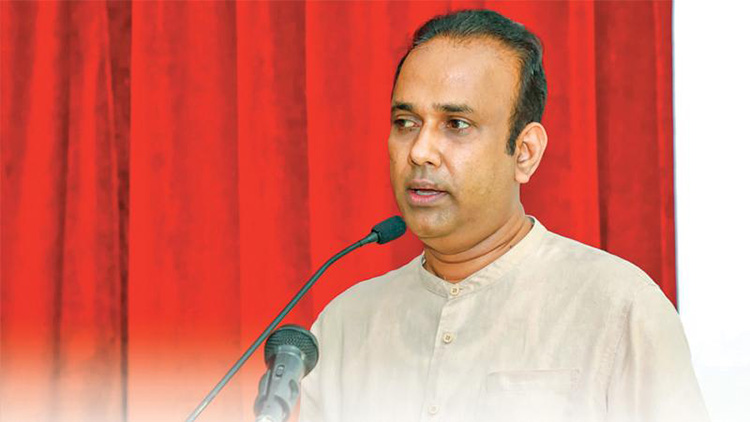
by Dr Gotabhya Ranasinghe
Senior Consultant Cardiologist
National Hospital Sri Lanka
When we sought a meeting with Hon Dr. Ramesh Pathirana, Minister of Health, he graciously cleared his busy schedule to accommodate us. Renowned for his attentive listening and deep understanding, Minister Pathirana is dedicated to advancing the health sector. His openness and transparency exemplify the qualities of an exemplary politician and minister.
Dr. Palitha Mahipala, the current Health Secretary, demonstrates both commendable enthusiasm and unwavering support. This combination of attributes makes him a highly compatible colleague for the esteemed Minister of Health.
Our discussion centered on a project that has been in the works for the past 30 years, one that no other minister had managed to advance.
Minister Pathirana, however, recognized the project’s significance and its potential to revolutionize care for heart patients.
The project involves the construction of a state-of-the-art facility at the premises of the National Hospital Colombo. The project’s location within the premises of the National Hospital underscores its importance and relevance to the healthcare infrastructure of the nation.
This facility will include a cardiology building and a tertiary care center, equipped with the latest technology to handle and treat all types of heart-related conditions and surgeries.
Securing funding was a major milestone for this initiative. Minister Pathirana successfully obtained approval for a $40 billion loan from the Asian Development Bank. With the funding in place, the foundation stone is scheduled to be laid in September this year, and construction will begin in January 2025.
This project guarantees a consistent and uninterrupted supply of stents and related medications for heart patients. As a result, patients will have timely access to essential medical supplies during their treatment and recovery. By securing these critical resources, the project aims to enhance patient outcomes, minimize treatment delays, and maintain the highest standards of cardiac care.
Upon its fruition, this monumental building will serve as a beacon of hope and healing, symbolizing the unwavering dedication to improving patient outcomes and fostering a healthier society.We anticipate a future marked by significant progress and positive outcomes in Sri Lanka’s cardiovascular treatment landscape within the foreseeable timeframe.

by Fr. Emmanuel Fernando, OMI
Jesuit Fr. Aloysius Pieris (affectionately called Fr. Aloy) celebrated his 90th birthday on April 9, 2024 and I, as the editor of our Oblate Journal, THE MISSIONARY OBLATE had gone to press by that time. Immediately I decided to publish an article, appreciating the untiring selfless services he continues to offer for inter-Faith dialogue, the renewal of the Catholic Church, his concern for the poor and the suffering Sri Lankan masses and to me, the present writer.
It was in 1988, when I was appointed Director of the Oblate Scholastics at Ampitiya by the then Oblate Provincial Fr. Anselm Silva, that I came to know Fr. Aloy more closely. Knowing well his expertise in matters spiritual, theological, Indological and pastoral, and with the collaborative spirit of my companion-formators, our Oblate Scholastics were sent to Tulana, the Research and Encounter Centre, Kelaniya, of which he is the Founder-Director, for ‘exposure-programmes’ on matters spiritual, biblical, theological and pastoral. Some of these dimensions according to my view and that of my companion-formators, were not available at the National Seminary, Ampitiya.
Ever since that time, our Oblate formators/ accompaniers at the Oblate Scholasticate, Ampitiya , have continued to send our Oblate Scholastics to Tulana Centre for deepening their insights and convictions regarding matters needed to serve the people in today’s context. Fr. Aloy also had tried very enthusiastically with the Oblate team headed by Frs. Oswald Firth and Clement Waidyasekara to begin a Theologate, directed by the Religious Congregations in Sri Lanka, for the contextual formation/ accompaniment of their members. It should very well be a desired goal of the Leaders / Provincials of the Religious Congregations.
Besides being a formator/accompanier at the Oblate Scholasticate, I was entrusted also with the task of editing and publishing our Oblate journal, ‘The Missionary Oblate’. To maintain the quality of the journal I continue to depend on Fr. Aloy for his thought-provoking and stimulating articles on Biblical Spirituality, Biblical Theology and Ecclesiology. I am very grateful to him for his generous assistance. Of late, his writings on renewal of the Church, initiated by Pope St. John XX111 and continued by Pope Francis through the Synodal path, published in our Oblate journal, enable our readers to focus their attention also on the needed renewal in the Catholic Church in Sri Lanka. Fr. Aloy appreciated very much the Synodal path adopted by the Jesuit Pope Francis for the renewal of the Church, rooted very much on prayerful discernment. In my Religious and presbyteral life, Fr.Aloy continues to be my spiritual animator / guide and ongoing formator / acccompanier.
Fr. Aloysius Pieris, BA Hons (Lond), LPh (SHC, India), STL (PFT, Naples), PhD (SLU/VC), ThD (Tilburg), D.Ltt (KU), has been one of the eminent Asian theologians well recognized internationally and one who has lectured and held visiting chairs in many universities both in the West and in the East. Many members of Religious Congregations from Asian countries have benefited from his lectures and guidance in the East Asian Pastoral Institute (EAPI) in Manila, Philippines. He had been a Theologian consulted by the Federation of Asian Bishops’ Conferences for many years. During his professorship at the Gregorian University in Rome, he was called to be a member of a special group of advisers on other religions consulted by Pope Paul VI.
Fr. Aloy is the author of more than 30 books and well over 500 Research Papers. Some of his books and articles have been translated and published in several countries. Among those books, one can find the following: 1) The Genesis of an Asian Theology of Liberation (An Autobiographical Excursus on the Art of Theologising in Asia, 2) An Asian Theology of Liberation, 3) Providential Timeliness of Vatican 11 (a long-overdue halt to a scandalous millennium, 4) Give Vatican 11 a chance, 5) Leadership in the Church, 6) Relishing our faith in working for justice (Themes for study and discussion), 7) A Message meant mainly, not exclusively for Jesuits (Background information necessary for helping Francis renew the Church), 8) Lent in Lanka (Reflections and Resolutions, 9) Love meets wisdom (A Christian Experience of Buddhism, 10) Fire and Water 11) God’s Reign for God’s poor, 12) Our Unhiddden Agenda (How we Jesuits work, pray and form our men). He is also the Editor of two journals, Vagdevi, Journal of Religious Reflection and Dialogue, New Series.
Fr. Aloy has a BA in Pali and Sanskrit from the University of London and a Ph.D in Buddhist Philosophy from the University of Sri Lankan, Vidyodaya Campus. On Nov. 23, 2019, he was awarded the prestigious honorary Doctorate of Literature (D.Litt) by the Chancellor of the University of Kelaniya, the Most Venerable Welamitiyawe Dharmakirthi Sri Kusala Dhamma Thera.
Fr. Aloy continues to be a promoter of Gospel values and virtues. Justice as a constitutive dimension of love and social concern for the downtrodden masses are very much noted in his life and work. He had very much appreciated the commitment of the late Fr. Joseph (Joe) Fernando, the National Director of the Social and Economic Centre (SEDEC) for the poor.
In Sri Lanka, a few religious Congregations – the Good Shepherd Sisters, the Christian Brothers, the Marist Brothers and the Oblates – have invited him to animate their members especially during their Provincial Congresses, Chapters and International Conferences. The mainline Christian Churches also have sought his advice and followed his seminars. I, for one, regret very much, that the Sri Lankan authorities of the Catholic Church –today’s Hierarchy—- have not sought Fr.
Aloy’s expertise for the renewal of the Catholic Church in Sri Lanka and thus have not benefited from the immense store of wisdom and insight that he can offer to our local Church while the Sri Lankan bishops who governed the Catholic church in the immediate aftermath of the Second Vatican Council (Edmund Fernando OMI, Anthony de Saram, Leo Nanayakkara OSB, Frank Marcus Fernando, Paul Perera,) visited him and consulted him on many matters. Among the Tamil Bishops, Bishop Rayappu Joseph was keeping close contact with him and Bishop J. Deogupillai hosted him and his team visiting him after the horrible Black July massacre of Tamils.
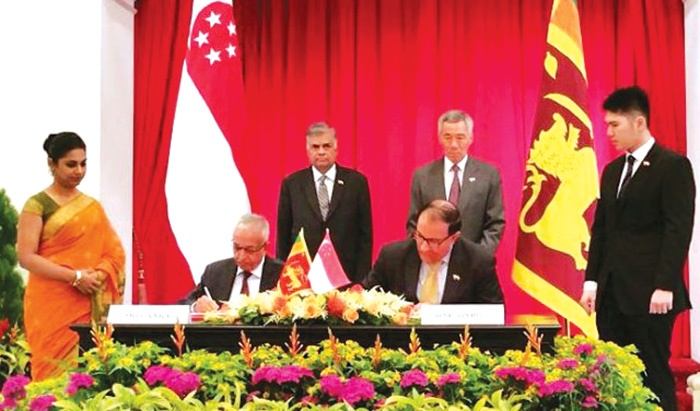
Sri Lanka-Singapore Free Trade Agreement
By Gomi Senadhira
senadhiragomi@gmail.com
“You might tell fairy tales, but the progress of a country cannot be achieved through such narratives. A country cannot be developed by making false promises. The country moved backward because of the electoral promises made by political parties throughout time. We have witnessed that the ultimate result of this is the country becoming bankrupt. Unfortunately, many segments of the population have not come to realize this yet.” – President Ranil Wickremesinghe, 2024 Budget speech
Any Sri Lankan would agree with the above words of President Wickremesinghe on the false promises our politicians and officials make and the fairy tales they narrate which bankrupted this country. So, to understand this, let’s look at one such fairy tale with lots of false promises; Ranil Wickremesinghe’s greatest achievement in the area of international trade and investment promotion during the Yahapalana period, Sri Lanka-Singapore Free Trade Agreement (SLSFTA).
It is appropriate and timely to do it now as Finance Minister Wickremesinghe has just presented to parliament a bill on the National Policy on Economic Transformation which includes the establishment of an Office for International Trade and the Sri Lanka Institute of Economics and International Trade.
Was SLSFTA a “Cleverly negotiated Free Trade Agreement” as stated by the (former) Minister of Development Strategies and International Trade Malik Samarawickrama during the Parliamentary Debate on the SLSFTA in July 2018, or a colossal blunder covered up with lies, false promises, and fairy tales? After SLSFTA was signed there were a number of fairy tales published on this agreement by the Ministry of Development Strategies and International, Institute of Policy Studies, and others.
However, for this article, I would like to limit my comments to the speech by Minister Samarawickrama during the Parliamentary Debate, and the two most important areas in the agreement which were covered up with lies, fairy tales, and false promises, namely: revenue loss for Sri Lanka and Investment from Singapore. On the other important area, “Waste products dumping” I do not want to comment here as I have written extensively on the issue.
1. The revenue loss
During the Parliamentary Debate in July 2018, Minister Samarawickrama stated “…. let me reiterate that this FTA with Singapore has been very cleverly negotiated by us…. The liberalisation programme under this FTA has been carefully designed to have the least impact on domestic industry and revenue collection. We have included all revenue sensitive items in the negative list of items which will not be subject to removal of tariff. Therefore, 97.8% revenue from Customs duty is protected. Our tariff liberalisation will take place over a period of 12-15 years! In fact, the revenue earned through tariffs on goods imported from Singapore last year was Rs. 35 billion.
The revenue loss for over the next 15 years due to the FTA is only Rs. 733 million– which when annualised, on average, is just Rs. 51 million. That is just 0.14% per year! So anyone who claims the Singapore FTA causes revenue loss to the Government cannot do basic arithmetic! Mr. Speaker, in conclusion, I call on my fellow members of this House – don’t mislead the public with baseless criticism that is not grounded in facts. Don’t look at petty politics and use these issues for your own political survival.”
I was surprised to read the minister’s speech because an article published in January 2018 in “The Straits Times“, based on information released by the Singaporean Negotiators stated, “…. With the FTA, tariff savings for Singapore exports are estimated to hit $10 million annually“.
As the annual tariff savings (that is the revenue loss for Sri Lanka) calculated by the Singaporean Negotiators, Singaporean $ 10 million (Sri Lankan rupees 1,200 million in 2018) was way above the rupees’ 733 million revenue loss for 15 years estimated by the Sri Lankan negotiators, it was clear to any observer that one of the parties to the agreement had not done the basic arithmetic!
Six years later, according to a report published by “The Morning” newspaper, speaking at the Committee on Public Finance (COPF) on 7th May 2024, Mr Samarawickrama’s chief trade negotiator K.J. Weerasinghehad had admitted “…. that forecasted revenue loss for the Government of Sri Lanka through the Singapore FTA is Rs. 450 million in 2023 and Rs. 1.3 billion in 2024.”
If these numbers are correct, as tariff liberalisation under the SLSFTA has just started, we will pass Rs 2 billion very soon. Then, the question is how Sri Lanka’s trade negotiators made such a colossal blunder. Didn’t they do their basic arithmetic? If they didn’t know how to do basic arithmetic they should have at least done their basic readings. For example, the headline of the article published in The Straits Times in January 2018 was “Singapore, Sri Lanka sign FTA, annual savings of $10m expected”.
Anyway, as Sri Lanka’s chief negotiator reiterated at the COPF meeting that “…. since 99% of the tariffs in Singapore have zero rates of duty, Sri Lanka has agreed on 80% tariff liberalisation over a period of 15 years while expecting Singapore investments to address the imbalance in trade,” let’s turn towards investment.
Investment from Singapore
In July 2018, speaking during the Parliamentary Debate on the FTA this is what Minister Malik Samarawickrama stated on investment from Singapore, “Already, thanks to this FTA, in just the past two-and-a-half months since the agreement came into effect we have received a proposal from Singapore for investment amounting to $ 14.8 billion in an oil refinery for export of petroleum products. In addition, we have proposals for a steel manufacturing plant for exports ($ 1 billion investment), flour milling plant ($ 50 million), sugar refinery ($ 200 million). This adds up to more than $ 16.05 billion in the pipeline on these projects alone.
And all of these projects will create thousands of more jobs for our people. In principle approval has already been granted by the BOI and the investors are awaiting the release of land the environmental approvals to commence the project.
I request the Opposition and those with vested interests to change their narrow-minded thinking and join us to develop our country. We must always look at what is best for the whole community, not just the few who may oppose. We owe it to our people to courageously take decisions that will change their lives for the better.”
According to the media report I quoted earlier, speaking at the Committee on Public Finance (COPF) Chief Negotiator Weerasinghe has admitted that Sri Lanka was not happy with overall Singapore investments that have come in the past few years in return for the trade liberalisation under the Singapore-Sri Lanka Free Trade Agreement. He has added that between 2021 and 2023 the total investment from Singapore had been around $162 million!
What happened to those projects worth $16 billion negotiated, thanks to the SLSFTA, in just the two-and-a-half months after the agreement came into effect and approved by the BOI? I do not know about the steel manufacturing plant for exports ($ 1 billion investment), flour milling plant ($ 50 million) and sugar refinery ($ 200 million).
However, story of the multibillion-dollar investment in the Petroleum Refinery unfolded in a manner that would qualify it as the best fairy tale with false promises presented by our politicians and the officials, prior to 2019 elections.
Though many Sri Lankans got to know, through the media which repeatedly highlighted a plethora of issues surrounding the project and the questionable credentials of the Singaporean investor, the construction work on the Mirrijiwela Oil Refinery along with the cement factory began on the24th of March 2019 with a bang and Minister Ranil Wickremesinghe and his ministers along with the foreign and local dignitaries laid the foundation stones.
That was few months before the 2019 Presidential elections. Inaugurating the construction work Prime Minister Ranil Wickremesinghe said the projects will create thousands of job opportunities in the area and surrounding districts.
The oil refinery, which was to be built over 200 acres of land, with the capacity to refine 200,000 barrels of crude oil per day, was to generate US$7 billion of exports and create 1,500 direct and 3,000 indirect jobs. The construction of the refinery was to be completed in 44 months. Four years later, in August 2023 the Cabinet of Ministers approved the proposal presented by President Ranil Wickremesinghe to cancel the agreement with the investors of the refinery as the project has not been implemented! Can they explain to the country how much money was wasted to produce that fairy tale?
It is obvious that the President, ministers, and officials had made huge blunders and had deliberately misled the public and the parliament on the revenue loss and potential investment from SLSFTA with fairy tales and false promises.
As the president himself said, a country cannot be developed by making false promises or with fairy tales and these false promises and fairy tales had bankrupted the country. “Unfortunately, many segments of the population have not come to realize this yet”.
(The writer, a specialist and an activist on trade and development issues . )



US sports envoys to Lanka to champion youth development

Rahuman questions sudden cancellation of leave of CEB employees


