Features
Musings in the winter – a compilation of thoughts

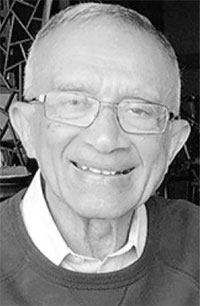
by Dr Nihal D Amerasekera
It is once again the time of the year when the winter storms batter my windows. I snuggle up in my rocking chair allowing my mind to wander. Those thoughts reflect lazily on the twists and turns of my life’s fandango. It is also a time to appreciate the good things in life also to be critical of the things that are wrong. The chair provides a perfect posture to meditate, ruminate and cogitate about the world around me. I am partial to a tot of whisky, in medicinal amount, to help lubricate my thoughts, just taken neat as the makers recommended.
This is my second stint in London. After spending eight gruelling but fulfilling years studying Radiology in the 1970’s I moved away to a leafy suburb in Hertfordshire. As my professional tenure ended, leaving my rural idyll was a heartbreak. Still, there is fun to be had in the big city with a kaleidoscope of culture, museums, art galleries and music venues. In the words of Wordsworth: “An eye to perceive, a heart to enjoy.” Being retired I now live in an apartment in a block of flats. Living in a flat requires a different mind-set. The block is a community, although not a close one. Everyone is busy with their own lives. We hardly know our neighbours. There are house rules – some written and others implied. There are also civic and social responsibilities. We must respect others’ privacy while sharing the space. Looking through the window at night, I see the geometrically arranged lights of the surrounding blocks. This creates its own beauty. Each light represents people with their own lives, joys and sorrows – we are all a part of the rich tapestry of life.

Politics is the bane of society. But we need politicians. Despite political upheavals, coup d’état and insurrections, Sri Lanka has remained a democracy. The quality of life has improved for the majority including healthcare and education. The villagers now have a voice. But as a country we are not where we should be and yet much still needs to be done. The origins of the art and science of governance is not clear. But sleaze, corruption and criminality in politics is old as the hills. Extreme power and control over people corrupt and destroys societies and lives. But we never seem to learn from history. As I look around there is not a single country in the world where politics is clean as intended. In the West there is unacceptable political corruption, but it lies below the surface and far less conspicuous. In some countries bribery, deceit and deception are accepted as the norm. This causes tremendous hardship to the people. Some Politicians aren’t true to their conscience. They will in the fullness of time lose their power and with it the respect, recognition and reverence which they yearn and crave for so much.
There is a high level of economic inequality in the world which is shocking and obscene, and it is getting worse. People have long dreamt of an egalitarian society. Despite the human existence for thousands of years, all the religions and the philosophies of this world have failed to inspire and encourage us to live in peace and share our wealth. Karl Marx and Friedrich Engels’ political philosophy and thinking had a tremendous influence on politics and society. But even Marxism, Socialism and Communism have failed to live up to their tenets. We now accept inequality as a part of life. Covid-19 has brought to the forefront the problems of inequality between the developed and the developing countries. This has indeed deepened the existing inequalities hitting the poorest the hardest.
Despite the huge numbers of new cases of Covid every day in Europe and so many deaths, people get about their business, with no masks, no distancing and some even no vaccination. This nasty lurgy has been with us for over two years and people are tired of the lockdowns, restrictions, and the never-ending government dictates. There is a feeling in the air “we want to be free”. But freedom comes at a price. A new variant, Omicron, has emerged from South Africa. There is mounting scientific worry about the characteristics of this variant. A failure to share the vaccines seem ‘cold and callous’. No one is safe until we are all safe.
Cricket, the game played by gentlemen, is in turmoil in the country where it all began. Yorkshire Cricket Board is accused of racism. It is alleged the governing body, the England and Wales Cricket Board, has not done enough to stamp out this evil. They got bowled over by a wrong’un from Azeem Rafiq. Now the country seems to have woken up and the government has stepped in to sort out this unholy mess. Religious, ethnic and gender inequality and intolerance are unacceptable although they exist in every country. Although much has improved with the passage of years not enough is done to stamp it out completely. The ethnic trouble that broke out into an all-out war in Sri Lanka was a tragedy to many thousands of innocent people. This remains a stain on the history of our country. Fairness, equality and tolerance should be taught young, in schools. The government must be impartial and provide proper leadership and guidance. The religious leaders should encourage the public to be more tolerant and to show fairness and humanity to prevent another catastrophe and suffering.
Being a septuagenarian, It is so wonderful to look through the mist of a lifetime of joy and grief and the full spectrum of emotions. What props up often are those happy days of my youth. Then I had nothing of value to call my own. My future was beyond the horizon and out of view. The 1950s and sixties now seem like a distant fantasyland. There is now a never-ending desire to make that journey to the past and there is no better vehicle than music. The music of my teenage years and early twenties has greater and more lasting impact than songs in later life due to the psychological phenomenon called the reminiscence bump. Friday nights remain my music nights when I listen to the music of my childhood. To my mind that was the golden age of cinema and radio in Ceylon. In 1955 we were hit by the typhoon of Rock and Roll music. Bill Haley redefined music and created the magic and we all felt its energy. Then came Elvis Presley the King of Rock and Roll. He mesmerised us all with his songs and his cult. Despite the puritanical warnings we emulated our icon’s distinctive pompadour hairstyle, Cuban collar shirts and pleated trousers.
Post- independence the Sinhala songs and cinema came of age. The stories and songs from the Sinhala films had a dark and dramatic edge to it. There were songs about our country, culture and the natural beauty. We sang those songs at school and at home. The best-loved singers of that bygone years were Sunil Santha, Chitra and Somapala, Rukmani Devi, Mohideen Beig, C.T Fernando and several more. Probably none of them are alive today. Many of those old Sinhala favourites have been given a new lease of life. With clever musical arrangements and sound, those songs retain the magic and the romance of the days gone. When there is a generous flow of the amber nectar, music has the amazing ability to transfer emotions through time. They bring back memories of events and people from long ago and that of my beloved country. As I age tears come far more easily now. I Just hold fast to those memories and what memories they are.
In the Northern hemisphere, as the days move towards Christmas, the mellow light of the evening sky soon merges with the darkness of the night. Christmas has morphed into a global festival. It is the season of goodwill, a time for giving and for meeting with family. Selecting presents is indeed part of the fun. In the whirlwind of consumerism, the prestigious shops on London’s Oxford Street have beautiful displays enticing passes by. My needs now are few. I get books as presents. My Christmas shopping is to give some happiness to others. This is also the time we think of the dawn of a new year and what that may bring.
We are all aware of the lively imagery and the immense power of poetry. I have been so taken up with a poem by Piers Plowright which speaks volumes, more than the 15 lines, it shows on paper. He taught English in Khartoum in Sudan in the 1960’s and handed this poignant poem to a friend when he was flying back home to England. I leave it to your imagination to interpolate its deeper echoes to different situations we will face in the future.
ON GOING
At the corner, I turned
And looked back
There was nothing unfamiliar
Only streets and trees
Which I believed would vanish
When I had gone.
The people no longer moved
They belonged to a frieze
Remembered even as I looked at them
For a particular moment
Which was done
But such going
Needs no tears
It is merely a way of showing
That life is being, not going.