
Life style
Musical ‘choon paan’bread trucks

by Zinnara Ratnayake
For years, the sound of Beethoven meant bread in Sri Lanka. Now, years after the island’s mobile bread vendors disappeared, they’re being revived to help during the pandemic.
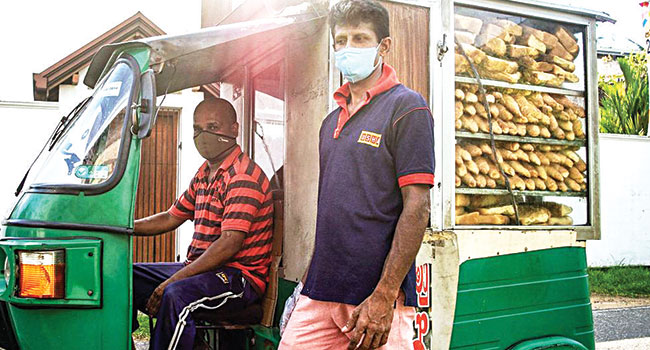
I was young when I first heard the music. It came from the earthen road outside where a man was selling bread from a tuk tuk. Unlike other colourful three-wheeled vehicles, the back of this one held a glass display cabinet piled high with neatly stacked baked goods. “It’s the choon paan man,” my father told me.
“Choon paan” loosely translates to “music bread” in Sinhala. During my childhood, the fresh-off-the-oven kimbula (“crocodile”) bun we bought from the choon paan man for evening tea gave me bliss. This beautifully fluffy, buttery, home-baked bun was sprinkled with sugar and twisted into a slender, crocodile-like shape. Half of it was for me, the other for my father.
Twice a day starting at 06:30, choon paan trucks would drive along the dusty path near the paddy fields of my family’s rural village in Kurunegala, 120km north-east of Colombo, selling loaves of bread. Early in the morning, the men circled the roads with fish buns and sausage rolls made at small bakeries. They reappeared in the afternoon around 16:00, bringing sweet buns for tea. Some were buttery, round-shaped buns dotted with raisins. Others were stuffed with jam or sprinkled with sugar.
For us growing up on the tropical island, Beethoven meant bread
For years, these small trucks all played the same, tinny recorded music. When I heard the faint hum of the breadman from a distance, I would run to the dusty path and call my father. Years later, during music classes in school, I realised that this familiar tune that we Sri Lankans just called “choon paan music” was actually Beethoven’s 1810 classic Für Elise.
So, how did this classical composition written in Austria come to symbolise fresh-baked confections in Sri Lanka?
When tuk tuks became increasingly popular in Sri Lanka in the early 2000s, many bakers used the three-wheeled vehicles to take their bun business on the road and sell to distant neighbourhoods and villages. This was also around the time when mobile phones became popular. Just as an ice cream truck’s jingle alerts residents that it’s approaching, these mobile bakers started playing their mobile phone’s ringtone through a horn speaker to let residents know the choon paan truck was near.
Of course, one of the most popular ringtones from the early 2000s was Beethoven’s iconic masterpiece, Für Elise. So, whenever people in Sri Lanka would hear it, we’d head out to wait for the “music bread” truck to arrive. Ever since, for us growing up on the tropical island, Beethoven meant bread.
After relocating to the city of Kandy for high school, I still heard Für Elise every day. Even when I was already late for class, with my school tie loosely hanging around my neck and my hair braided into two with white ribbons, I ran after the choon paan truck to catch it for morning fish buns. Stuffed with canned fish, spiced potato and chopped vegetables, they were a treat with a cup of piping-hot ginger tea.
Six years ago, I moved again, to Sri Lanka’s capital, Colombo. In the six years I’ve been here, I’ve seldom seen a choon paan truck nor heard the familiar tune I grew up with.
Sri Lanka’s famous music bread trucks have made a comeback, thanks to an unlikely reason: the coronavirus pandemic
According to Colombo-based baker Padmini Marasinghe, that’s because it has recently become much more fashionable – and even a status symbol – to be able to buy baked goods at a traditional bakery than to buy bread from a truck. As a result, Sri Lanka’s once-ubiquitous music bread trucks have now largely disappeared.
As Marasinghe explained, many urbanites were convinced that breads from chain bakeries were of better quality than those from mobile trucks. “But choon paan products are from home bakers. They are better than mass-produced food in large bakeries,” Marasinghe said.
She also added that people complained choon paan goods were too expensive given their small, mobile operation. “They reduced prices and curtailed the quality to make marginal profits. There was less filling in a fish bun or little butter in a kimbula bun, so they lost their clientele,” Marasinghe said.
Then in 2017, the former government banned loud music from mobile bakeries, which further led to their demise. Some trucks circled the roads without music but failed to make a profit. Without Beethoven notifying the neighbourhood that bread was coming, it seemed that residents wouldn’t rush to the street.
In recent years, cities and tourist towns have also seen a rise in home delivery services. “People would rather order fish buns from an upmarket bakery on Uber Eats” Marasinghe said. “This put choon paan out of business.”
Marasinghe admits that the idea of starting a choon paan truck had always seemed tempting to her, but by the time she started her small bakery in 2019, nearly all the bread trucks were gone.
Yet, in recent months, Sri Lanka’s famous music bread trucks have made a comeback, thanks to an unlikely reason: the coronavirus pandemic.
As the virus began sweeping across Asia, Sri Lanka imposed an island-wide curfew to slow its spread. The government ordered restaurants, bakeries and all “non-essential” businesses to close. Marasinghe had to shutter her business, too. Yet, the government did permit the door-to-door sales of baked goods.
Many of these mobile bakeries are now back on Sri Lanka’s streets, with residents listening for the familiar ringtone sounds of Für Elise
“With no way to salary my bakery staff, I decided to start a choon paan truck as home delivery of bakery products [was] termed an ‘essential service’,” she said.
Unable to find a tuk tuk, Marasinghe’s husband borrowed a friend’s mini lorry and turned it into a makeshift choon paan truck to operate in Hanwella, about 30km from Colombo. “We played Für Elise so it would send the message: the choon paan man is back!” Marasinghe said.
She is not alone. Many of these mobile bakeries are now back on Sri Lanka’s streets, with residents listening for the familiar ringtone sounds of Für Elise and rushing to their gates for loaves of bread. In fact, almost overnight, bakers dusted off their old choon paan trucks and created a delivery network of tuk tuk bread to ensure that housebound islanders could get their buns.
“They’ve found a new appreciation,” said Colombo-based journalist Amalini De Sayrah. “Perhaps we didn’t realise how valuable it was, but now stuck at home with no way to go out, people are realising the value of choon paan.”
Arul Kogilan, a physician volunteering as part of a Covid-19 prevention task force, appreciates the return of choon paan drivers as essential-service providers. “With bakery goods being delivered to their gates, people can stay home avoiding the risk,” he said. “But we need to acknowledge that they are putting themselves out there at risk for us.”
While the curfew was relaxed late last month, islanders are advised to stay home except for obligatory work.
Now that I’m sheltering in place back home where I grew up, at around 07:00 am every morning, I wake up to the sound of choon paan. The truck travels past our house as the rattling Fur Elise eventually fades into a vague hiss. When I get up, my father has already bought bread. In the late afternoon, when I hear Fur Elise from a distance, I cry out for my father.
It’s as though I’m young again, waiting for the classical ringtone and the simple joy of a sugar-sprinkled choon paan kimbula bun.
One half for me, the other for my father.



Institute of Hospitality Sri Lanka
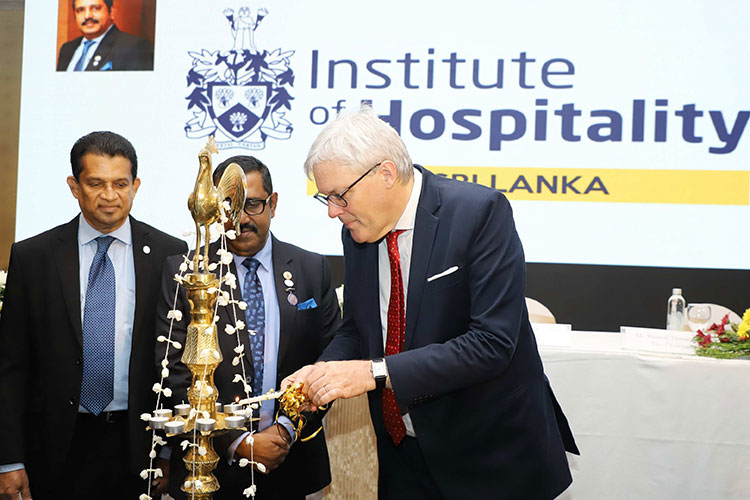
 The 32nd Annual General Meeting (AGM) of the UK-based Institute of Hospitality’s Sri Lanka Chapter was held recently at the Ramada Hotel Colombo,.The event provided an evening of camaraderie , reflection of the past and present achievements,setting new benchmarks for the future
The AGM had the presence of two distinguished guests, the Chief Guest Opposition Leader Sajith Premadasa, and the Guest of Honour British High Commissioner to Sri Lanka, Andrew Patrick. Their inspiring speeches were lauded by all hoteliers who were present at the occasion
A special thanks was extended to Robert Richardson, CEO of the Institute of Hospitality UK, along with his team, sponsors, committee members, and all attendees for making the event memorable.
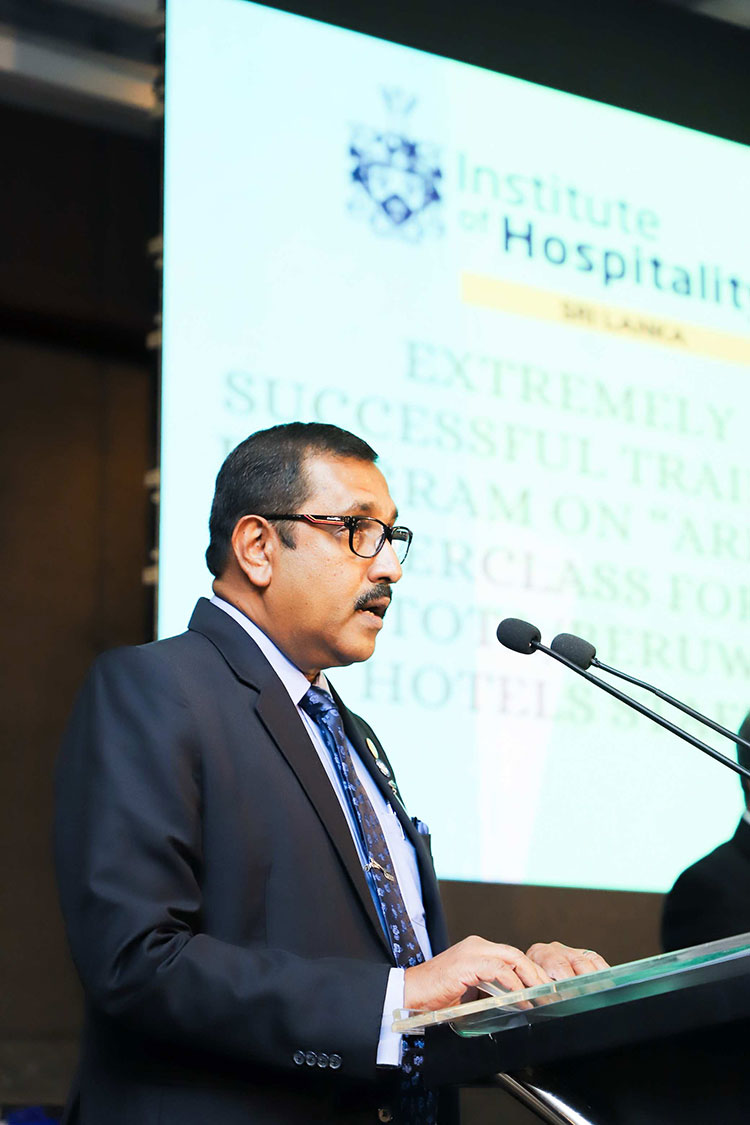
Dr. Harsha Jayasingh, Past President of the Institute of Hospitality (UK) Sri Lanka Chapter, emphasised the Institute’s longstanding history and the strength of its Sri Lankan branch. “The Institute of Hospitality (IH) UK has a history of 86 years, and we are proud to be the Sri Lanka Branch. IH Sri Lanka is much stronger now with many members from all areas of the hospitality industry,” he stated.
Dr. Jayasingh highlighted the significant role of tourism in Sri Lanka’s economy,. He said tourism it is the third-largest source of revenue for the country. “Tourism accounts for about 13.3% of total foreign exchange earnings and employs 450,000 people directly and indirectly. The hospitality industry in this island of pearl holds tremendous potential for economic growth, job creations, and cultural exchange,” he added.
He also pointed out more women should be attracted to the industry and advocated for the use of technology in hospitality sector to attract the younger generation.
The newly appointed Chairman Ramesh Dassanayake spoke about the challenges faced by the industry, including the reluctance of youth to join the sector. . Dassanayake expressed concerns over the migration of staff between hotels and the overall ‘brain drain’ in the sector. ” We must maintain high standards in the hotel We must try to attract tourists to Sri Lanka, we must have with many facilities Hence, hotel schools and other professional institutions involved in skills development mustincrease their intakes,” he pointed out.
Chief Guest Sajith Premadasa emphasised the importance of eco tourism and said “We need to have an environmental policy related to tourism in place,” . .
The 32nd AGM of the Institute of Hospitality UK, Sri Lanka Chapter, was a testament to the strength and potential of Sri Lanka’s hospitality industry. The insights and commitments shared during the event set a new benchmark for the future.(ZC)



Pix by Thushara Attapathu
Life style
He recognizes human identity beyond boundaries of gender, race, nationality and religion.

Visit of Sri Gurudev to Sri Lanka
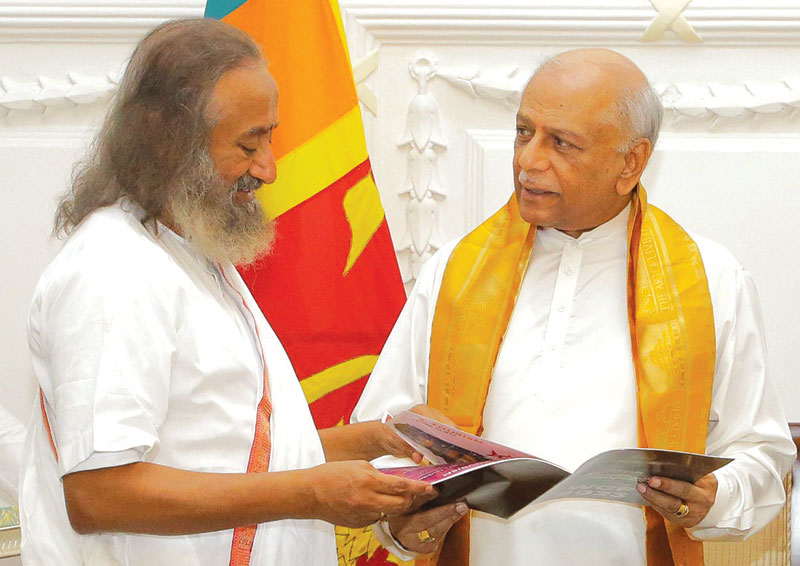
Humanitarian, spiritual leader and Global Ambassador of Peace Gurudev Sri Sri Ravi Shankar (Sri Gurudev) was in Sri Lanka on a three day tour on the invitation of the Prime Minister of Sri Lanka Dinesh Gunewardene. Gurudev who inspired a wave of volunteerism and service to moot one of the largest volunteer-based organisations in the world – The Art of Living – visited the various projects under the aegis of the foundation and launched twelve vocational and technical centers around the island. He was accompanied by thousands of followers from Sri Lanka and around the world.
Gurudev who visited Sri Lanka for the sixth time also had a first day cover launched in honour of his visit. He is a strong proponent of spreading happiness, using the unique Sudarshan Kriya, yoga, meditation and practical wisdom to unite people, empower individuals and transform communities. His programmes provide techniques and tools to live a deeper, more joyous life, while his non-profit organisations recognize the human identity beyond the boundaries of gender, race, nationality and religion.
The Art of Living which has more than 30,000 teachers and over one million volunteers across 180 countries has touched in excess of five hundred million people around the world. CNN called it “Life Changing” and The Washington Post headlined it, “Fresh air to millions”.
In Trincomalee, Gurudev met with war victims and had a heartwarming engagement with the children from the children’s homes run by the Foundation. He also visited the Koneswara Temple in Trincomalee and graced the Kumbhabhishekam at Seetha ecogPnize the human identity beyond the boundaries of gender, race, nationality and religion. Amman temple at Nuwara Eliya. He held discussions with the trustees on the progress of the foundation’s social service projects, while also holding a special event – Ekamuthuwa – attended by a large number of dignitaries and his devotees from around the world.
His time with the Prime Minister was spent discussing the prospects of unity in diversity and uniting Sri Lanka by adding happiness into the formula of living. In addition he had discussions with the Speaker of the Parliament of Sri Lanka Mahinda Yapa Abeywardena, prominent business stewards and civil society leaders.
by Zanita Careem
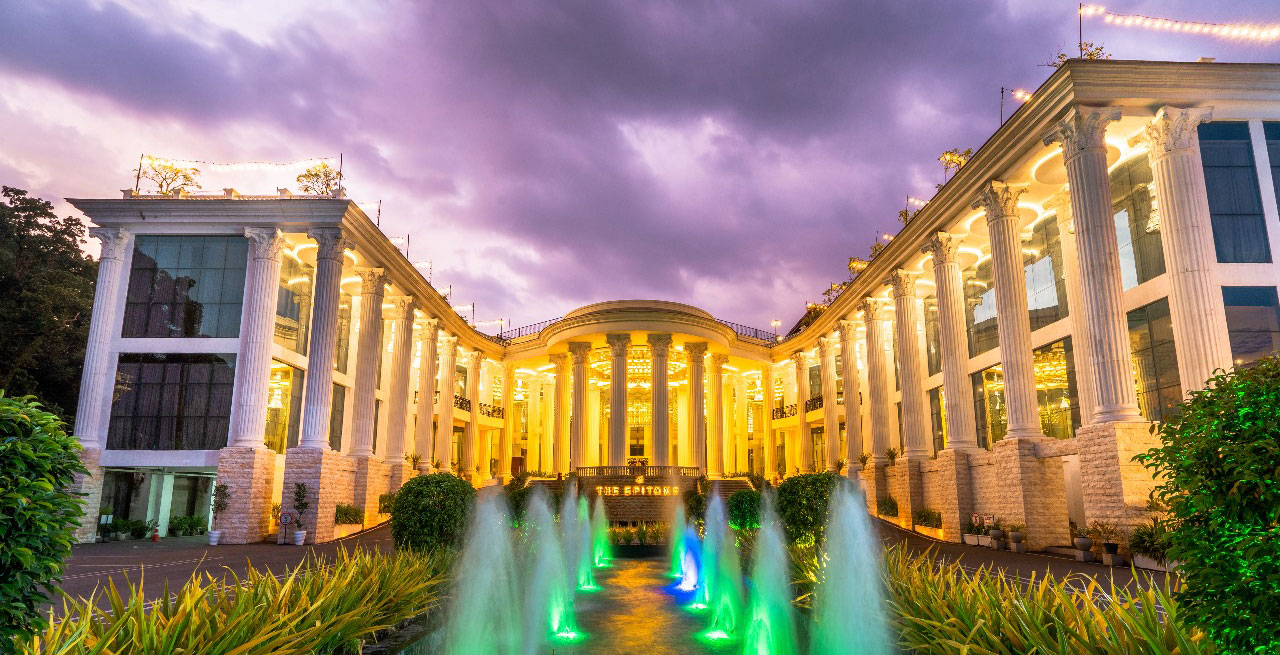
Envison your dream wedding day come to life at the Epitome Hotel, a prestigious city hotel in Kurunegala offering an unrivalled luxury rendors experience for weddings.
The venue is designed to embody opulence and luxury from all quarters for a spectacular wedding in kurunegala,Thier ballroom is the largest banquet facility in Sri Lanka It can be divided into six luxurious pillarless wedding halls on the ground floor and 25pax smaller banquet halls.
It can be easily named as a five star heaven in the heart of the city contributing to a myriad of immense experiences tailored to inspire and delight wedding experiences.
From opulent décor set up to exquisite table decor, lavish food, every detail is meticulously curated to spark your imagination and ignite creativity for a perfect wedding. The previous prestigious wedding shows season one and season two attracted large crowds
were unique events which gave the wedding vendors and potential clients had an opportunity to connect and interact with each other. Beyond being a showcase it was a chance for the wedding vendors to unite and contribute to the vibrancy of the wedding industry. The wedding show covered all area of the bridal industry providing a comprehensive variety of bridal supplies from Sri lanka and became the most popular bridal exhibitions in Kurunegala.This bridal exhibitions allowed brides and grooms to experience first hand the products and services available from suppliers in Sri Lanka
These wedding shows held at The Epitome created a benchmark and gave an opportunity for vendors to create connections to the utmost satisfaction said Harshan Lakshita Executive Director. of the magnificent Hotel
Our wedding shows featured experts and professionals in every field‘ It covered all areas of the bridal industry provided a comprehensive variety of bridal supplies from Sri lanka and became most popular bridal exhibition in this region.We are always open to everyone to join us at our wedding shows in the future. It is an opportunity to discover the incredible talent within our local wedding and bridal vendors to make meaningful relationships and plan thier special day at our breathtaking hotel The Epitome said General Manager Kavinda Caldera
The Epitome Hotel’s bridal show which will be held end of June will buzz with great ideas,advice and inspiration for all those who plan thier dream wedding
…….
The Hotel Epitome’s Wedding Season 3 will marked excellence, celebration and inspiration for those in the wedding industry. The exhibition halls will resonate with ideas on exquisite bridal wear to decor, florists , photography etc and showshowcase the rich tapestry of talent within the local wedding industry. .







US sports envoys to Lanka to champion youth development

Rahuman questions sudden cancellation of leave of CEB employees


