
News
MONLAR: Agriculture output has dropped by between 30 and 50 percent

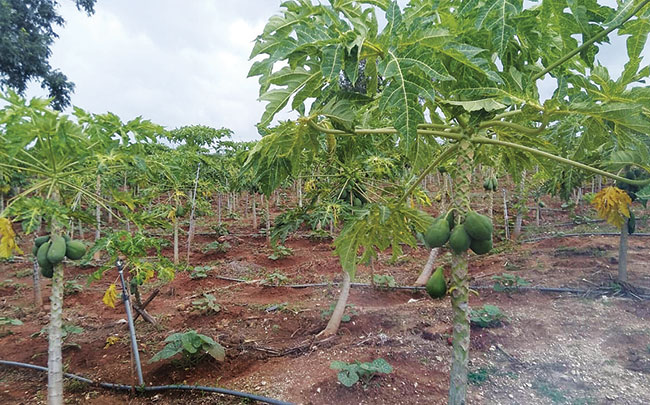
By Rathindra Kuruwita
There had been a 30%- 50% drop in the country’s agricultural output, Chinthaka Rajapakshe, Convener of the Movement for Land and Agricultural Reform (MONLAR) told The Island yesterday.
“The farmers, like almost everyone else in this country, are uncertain of their future and they have only sold a portion of their produce. So, for example, if a farmer produced 100 kilos of paddy, he would keep 50 kilos for his own consumption and sell only 50 kilos,” Rajapakshe said.
According to Rajapakshe widespread hoarding coupled with a steep drop in production means that there will be a food shortage in the coming months. “The government is already importing rice from India, Pakistan, Myanmar, and China has donated rice to us rice,” he said.
“Given the dollar crunch, I am not sure if we can spend hundreds of millions of dollars on food imports. The main problem with the government’s organic drive was that there was no planning. The Ministry of Agriculture, Ministry of Agrarian Services and the Mahaweli Authority failed to give proper directions to the farmers.”
The situation would have been better if the government had given cash directly to the farmers to produce compost and other inputs. However, the government insisted on handing over the production of compost and other inputs to businessmen who were their political supporters. These businessmen had produced low-quality fertiliser that was rejected by farmers, Rajapakshe said.
“Farmers had no faith in the government or organic agriculture because they realised that it was not done in good faith. It was done either because of the dollar shortages or because the government wanted to enrich its cronies,” he said.
MONLAR Convenor said that the other problem plaguing agriculture was the fuel shortage. Many farmers used pumps to irrigate their farms that ran on diesel and there had been a severe diesel shortage for months, he said.
“The current crisis in farming is a reflection of the chaotic nature in the country. The main problem is not the fertiliser or fuel shortage alone, it is that the farming community has lost its faith in the government.
Meanwhile, Dr. Lionel Weerakoon, former senior scientist at the Department of Agriculture said that the switch-over to organic agriculture could not be effected by fiat overnight. It had to be done over a period of time.
“27% workers, out of a labour force of eight million, are engaged in agricultural and related industries. There is a belief that the government banned agrochemicals due to the belief that excessive use and elevated exposure to fertilisers and agrochemicals might be a contributing factor to Chronic Kidney Disease. But this is not what scientists, economists or farmers believe,” he said.
In 2020, Sri Lanka imported through both state and private sector, fertilisers worth $259 million and this was 1.6% of the country’s total imports.
“The 2021 bill could have been anything between $300 and $400 million given international prices. The situation is even worse now because Russia, Belarus and China have limited their fertiliser exports. If we are to purchase a similar quantity of fertiliser as we did in 2020, we might have to spend 600 million US dollars,” Dr. Weerakoon said.
In 2019, the fertiliser subsidy programme cost the government around 46 billion rupees or $253 million, which is roughly 2% of the government’s recurring expenditure. Fully-subsidised fertiliser for smallholder rice production was one of the reasons why people overused fertiliser.
“The fertiliser subsidy was extended to other crops, including tea, vegetables, coconut, rubber, potatoes, fruit, and minor export crops. The government subsidises anywhere from 48-to-88 percent of the market price of a 50-kilo bag of fertiliser. In 2019, the government distributed around 300,000 MT of subsidised imported fertiliser among the cultivators of other crops. 44% went to tea plantations, 24% to vegetable producers, and 12% to coconut plantations with the balance being allocated to rubber, fruit, potatoes, and minor export crops,” Dr. Weerakoon said.
“There have been many attempts by the government and NGOs to promote more effective use of chemicals in agriculture for decades. These have not been successful and our agricultural systems are unsustainable. Given this context the decision to go organic was a very bad idea.
“There was a better plan in 2015. It was a soft shift to organic agriculture. The overall management of the country under the incumbent government has been disastrous. The current chaos in agriculture sector is a good example,” the senior scientist said.



The U.S. Embassy in Colombo welcomed the U.S. Sports Envoys to Sri Lanka, former National Basketball Association (NBA) and Women’s National Basketball Association (WNBA) players Stephen Howard and Astou Ndiaye, from June 8 through 14.
The Public Diplomacy section of the U.S. Embassy said that it would launch a weeklong basketball program intended to harness the unifying power of sports, made possible through collaboration with Foundation of Goodness and IImpact Hoop Lab.
While in Sri Lanka, Howard and Ndiaye, both retired professional basketball players, will conduct a weeklong program, Hoops for Hope: Bridging Borders through Basketball. The Sports Envoys will lead basketball clinics and exhibition matches and engage in leadership sessions in Colombo and Southern Province for youth aged 14-18 from Northern, Uva, Eastern and Western Provinces, offering skills and leadership training both on and off the court. The U.S. Envoys will also share their expertise with the Sri Lanka Basketball Federation, national coaches, and players, furthering the development of basketball in the country. Beyond the clinics, they will collaborate with Sri Lankan schoolchildren to take part in a community service project in the Colombo area.
“We are so proud to welcome Stephen and Astou as our Sports Envoys to Sri Lanka, to build on the strong people-to-people connections between the United States and Sri Lanka,” said U.S. Ambassador Julie Chung. “The lessons that will be shared by our Sports Envoys – communication, teamwork, resilience, inclusion, and conflict resolution – are essential for leadership development, community building, equality, and peace. The U.S. Sports Envoy program is a testament to our belief that sports can be a powerful tool in promoting peace and unity.”
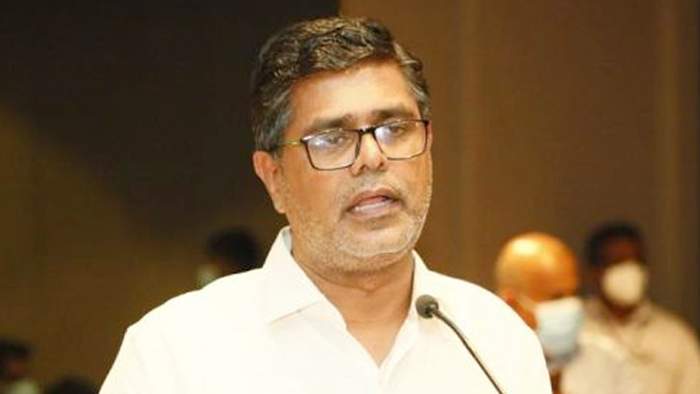
SJB Colombo District MP Mujibur Rahuman in parliament demanded to know from the government the reasons for CEB suspending the leave of all its employees until further notice from Thursday.
MP Rahuman said that the CEB has got an acting General Manager anew and the latter yesterday morning issued a circular suspending leave of all CEB employees with immediate effect until further notice.
“We demand that Minister Kanchana Wijesekera should explain this to the House. This circular was issued while this debate on the new Electricity Amendment Bill was pending. There are many who oppose this Bill. The Minister must tell parliament the reason for the urge to cancel the leave of CEB employees,” the MP said.However, Speaker Mahinda Yapa Abeywardena prevented Minister Wijesekera responding to the query and said that the matter raised by MP Rahuman was not relevant.
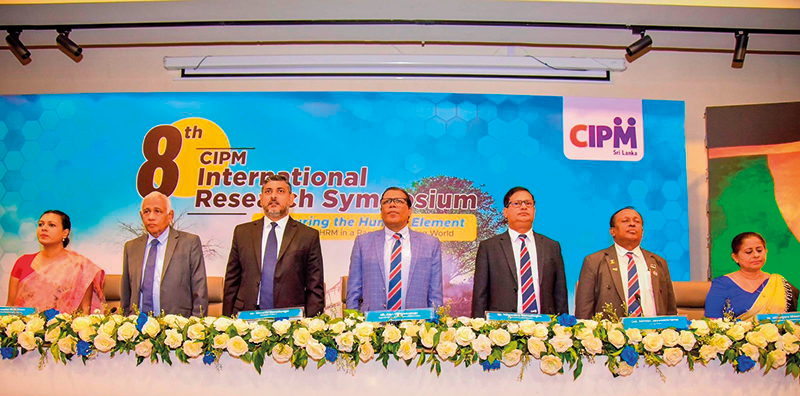
The Chartered Institute of Personnel Management (CIPM) successfully concluded the 8th Annual CIPM Symposium, which took place on 31st May 2024. Themed “Nurturing the Human Element—Redefining HRM in a Rapidly Changing World,” the symposium underscored the pivotal role of human resource management (HRM) in today’s dynamic global landscape. Since its inception in 1959, CIPM has been dedicated to advancing the HR profession through education, professional development, and advocacy, solidifying its position as Sri Lanka’s leading professional body for HRM.
Ken Vijayakumar, the President of the CIPM, graced the occasion as the chief guest. The symposium commenced with the welcome address by the Chairperson, Prof. Arosha Adikaram, followed by the Web Launch of the Symposium Proceedings and Abstract Book by the CIPM President. The event featured distinguished addresses, including a speech by Chief Guest Ken Vijayakumar, President of CIPM, and an address by Guest of Honor Shakthi Ranatunga, Chief Operating Officer of MAS Holdings Pvt. Ltd., Sri Lanka.
The symposium also featured an inspiring keynote address by Prof. Mario Fernando, Professor of Management and Director of the Centre for Cross Cultural Management (CCCM) at the University of Wollongong, Australia.
Vote of Thanks of the inauguration session was delivered by Dr. Dillanjani Weeratunga, Symposium Co-chair.
The symposium served as a comprehensive platform for researchers to present their findings across a wide range of critical topics in HRM. These included Cultural Diversity and Inclusion, Talent Development and Retention, Ethical Leadership and Corporate Social Responsibility, Adapting to Technological Advancements, Mental Health and Well-being at Work, Global Workforce Challenges, Employee Empowerment, and Reskilling and Upskilling.
The plenary session was led by Prof. Wasantha Rajapakse. Certificates were awarded to the best paper presenters during the valedictory session, followed by a vote of thanks delivered by Kamani Perera, Manager of Research and Development.
The annual symposium of CIPM was a truly inclusive event, attracting a diverse audience that spanned undergraduates, graduates, working professionals, research scholars and lecturers. This widespread interest highlights the symposium’s significance in the field of HRM, offering a unique opportunity for everyone to network and learn from scholarly brains.The CIPM International Research Symposium was sponsored by Hambantota International Port, Sri Lanka Institute of Information Technology (SLIIT), E B Creasy & Co. PLC, and Print Xcel Company.



US sports envoys to Lanka to champion youth development

Rahuman questions sudden cancellation of leave of CEB employees


