
News
Minister Silva calls for collective action to overcome challenges in aviation sector


41st session of the International Civil Aviation Organization in Canada
Ports, Shipping and Aviation Minister Nimal Siripala de Silva said that during the last decade there had been a 4.5% growth rate in the aviation sector.Addressing the 41st session of the International Civil Aviation Organization (ICAO) Assembly, Montreal in Canada the minister said that Sri Lanka underscored the need of pooling of resources and working in partnership with all involved to strengthen States capabilities to confidently face the current, new, and emerging aviation issues and challenges.
The Minister said: As you all know, for the last decade, the world saw a very promising growth and expansion of the global aviation industry with an average growth rate of over 4.5%, registering the highest ever recorded numbers in respect of all Key Performance Indicators in Aviation. However, with the emergence and rapid spread of COVID-19 pandemic in 2020, the global community had to experience for the first time in the recent history of humanity, severe predicaments in the conduct of typical lifestyle.
Of the many industries that suffered due to COVID -19 travel and tourism were amongst the key industries affected, triggering major economic downturn and social crises, such as connectivity, supply chain disruptions, and challenges to food security. Regardless of the geographical size and location and economic strength, every state in the world was affected and is still struggling to come out from its adverse effects. We are glad that the projected prospect of the aviation industry returning to pre-COVID situation is very promising.
I wish to place on record the sincere appreciation of ICAO for its leadership, swift action and role played with the spread of COVID – 19 to mitigate its ill effects and provide Member States with assistance, support and guidance in close coordination, collaboration, and cooperation of all concerned, for the continued maintenance of global air transport network.
Sri Lanka is an island located in the Indian Ocean and our economy depends on foreign exchange earnings from tourism, foreign employment, and exports. A major part of our foreign exchange earnings is spent on the import of fuel, medicine, fertilizer, and essential consumables. Sri Lankans enjoy a fairly high living standard founded on the free education and health systems and other social beneficiary schemes. Accordingly, Sri Lanka has a high literacy rate of over 93%, and our life expectancy and infant mortality rates are comparable with the developed states.
Sri Lanka has a good road and rail transport network which provides access to any part of the island. Every citizen of Sri Lanka has access to an international airport within 100 Km from the place of residence which meets the global yardstick used for measuring accessibility by air. Sri Lankas current population is twenty two million, and as of 1 August 2022, a total of forty million vaccine doses have been administered amongst its citizens creating a low COVID 19 risk environment for trade and travel within the country. This has enabled Sri Lanka to reopen its domestic and international airports, and restrictions imposed on travel and social gatherings have been lifted.
However, Sri Lanka is at present facing unprecedented economic challenges resulting from a number of factors, including the aftermath of the COVID-19 pandemic and current global crises. The Government of Sri Lanka is sensitive to the economic hardships faced by the people and is in dialogue with all stakeholders including domestic and international partners with regard to stabilising the situation. In order to minimise the negative impacts on the most vulnerable segments of the population, and to ensure provision of an adequate social safety net, targeted preventive measures are being undertaken by the Government.
Being an island nation, recognizes distinctly the valued contribution of air transport for social inclusion and economic development. Sri Lanka has published the National Civil Aviation Policy removing numerous legislative, administrative, and operational barriers easing active private sector participation in the establishment and operation of aviation infrastructure facilities and services.
Sri Lanka is committed to fulfil its obligations under the Chicago convention and would continue to support and take part actively in ICAOs efforts for the promotion of safe, secure, efficient, and regular, economically sustainable, and environmentally responsive global air transport industry. In the past ICAO safety and security Audits, Sri Lanka has shown effective implementation of more than 88% of ICAO standards. The Government of Sri Lanka is pursuing through a new Act of Parliament for establishment of an independent Aircraft Accident and Incident Investigation Board, which is vital for effective safety Management and Promotion.
Development of aviation infrastructure facilities, which include expansion and modernization of the main International Airport of Sri Lanka the Bandaranaike International Airport (BIA) terminal building, apron, and access roads are progressing well even amidst economic crisis. We are hopeful that the enhanced facilities would be available for use by the end of 2024 to serve the industry and our travel partners better.
Sri Lanka recognizes the necessity of the development of not only the current aviation workforce but also the next generation of Aviation professionals to maintain high levels of standards with requisite innovations and infusion of technology to face the future challenges ensuring seamless growth of the air transport sector. We join hands firmly with ICAO and the rest of the State to fulfil the global commitments for the carbon neutral growth, control of toxic gaseous substances and environmental protection.










The U.S. Embassy in Colombo welcomed the U.S. Sports Envoys to Sri Lanka, former National Basketball Association (NBA) and Women’s National Basketball Association (WNBA) players Stephen Howard and Astou Ndiaye, from June 8 through 14.
The Public Diplomacy section of the U.S. Embassy said that it would launch a weeklong basketball program intended to harness the unifying power of sports, made possible through collaboration with Foundation of Goodness and IImpact Hoop Lab.
While in Sri Lanka, Howard and Ndiaye, both retired professional basketball players, will conduct a weeklong program, Hoops for Hope: Bridging Borders through Basketball. The Sports Envoys will lead basketball clinics and exhibition matches and engage in leadership sessions in Colombo and Southern Province for youth aged 14-18 from Northern, Uva, Eastern and Western Provinces, offering skills and leadership training both on and off the court. The U.S. Envoys will also share their expertise with the Sri Lanka Basketball Federation, national coaches, and players, furthering the development of basketball in the country. Beyond the clinics, they will collaborate with Sri Lankan schoolchildren to take part in a community service project in the Colombo area.
“We are so proud to welcome Stephen and Astou as our Sports Envoys to Sri Lanka, to build on the strong people-to-people connections between the United States and Sri Lanka,” said U.S. Ambassador Julie Chung. “The lessons that will be shared by our Sports Envoys – communication, teamwork, resilience, inclusion, and conflict resolution – are essential for leadership development, community building, equality, and peace. The U.S. Sports Envoy program is a testament to our belief that sports can be a powerful tool in promoting peace and unity.”
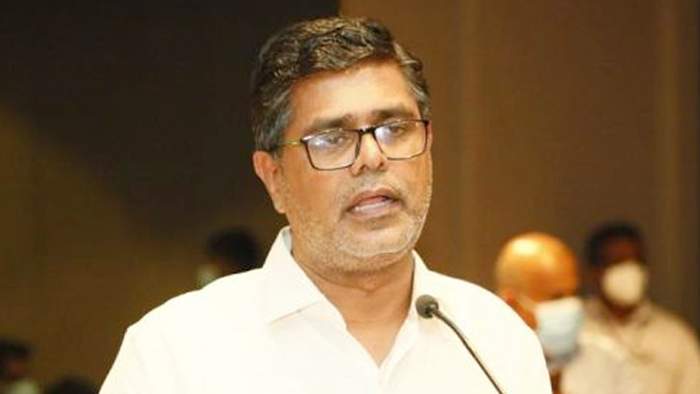
SJB Colombo District MP Mujibur Rahuman in parliament demanded to know from the government the reasons for CEB suspending the leave of all its employees until further notice from Thursday.
MP Rahuman said that the CEB has got an acting General Manager anew and the latter yesterday morning issued a circular suspending leave of all CEB employees with immediate effect until further notice.
“We demand that Minister Kanchana Wijesekera should explain this to the House. This circular was issued while this debate on the new Electricity Amendment Bill was pending. There are many who oppose this Bill. The Minister must tell parliament the reason for the urge to cancel the leave of CEB employees,” the MP said.However, Speaker Mahinda Yapa Abeywardena prevented Minister Wijesekera responding to the query and said that the matter raised by MP Rahuman was not relevant.
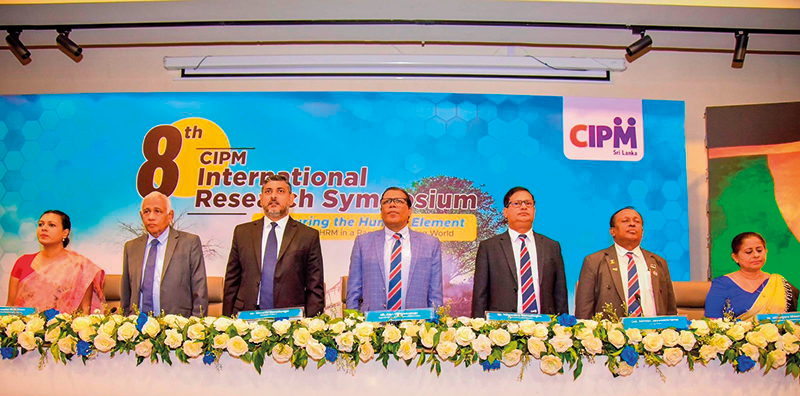
The Chartered Institute of Personnel Management (CIPM) successfully concluded the 8th Annual CIPM Symposium, which took place on 31st May 2024. Themed “Nurturing the Human Element—Redefining HRM in a Rapidly Changing World,” the symposium underscored the pivotal role of human resource management (HRM) in today’s dynamic global landscape. Since its inception in 1959, CIPM has been dedicated to advancing the HR profession through education, professional development, and advocacy, solidifying its position as Sri Lanka’s leading professional body for HRM.
Ken Vijayakumar, the President of the CIPM, graced the occasion as the chief guest. The symposium commenced with the welcome address by the Chairperson, Prof. Arosha Adikaram, followed by the Web Launch of the Symposium Proceedings and Abstract Book by the CIPM President. The event featured distinguished addresses, including a speech by Chief Guest Ken Vijayakumar, President of CIPM, and an address by Guest of Honor Shakthi Ranatunga, Chief Operating Officer of MAS Holdings Pvt. Ltd., Sri Lanka.
The symposium also featured an inspiring keynote address by Prof. Mario Fernando, Professor of Management and Director of the Centre for Cross Cultural Management (CCCM) at the University of Wollongong, Australia.
Vote of Thanks of the inauguration session was delivered by Dr. Dillanjani Weeratunga, Symposium Co-chair.
The symposium served as a comprehensive platform for researchers to present their findings across a wide range of critical topics in HRM. These included Cultural Diversity and Inclusion, Talent Development and Retention, Ethical Leadership and Corporate Social Responsibility, Adapting to Technological Advancements, Mental Health and Well-being at Work, Global Workforce Challenges, Employee Empowerment, and Reskilling and Upskilling.
The plenary session was led by Prof. Wasantha Rajapakse. Certificates were awarded to the best paper presenters during the valedictory session, followed by a vote of thanks delivered by Kamani Perera, Manager of Research and Development.
The annual symposium of CIPM was a truly inclusive event, attracting a diverse audience that spanned undergraduates, graduates, working professionals, research scholars and lecturers. This widespread interest highlights the symposium’s significance in the field of HRM, offering a unique opportunity for everyone to network and learn from scholarly brains.The CIPM International Research Symposium was sponsored by Hambantota International Port, Sri Lanka Institute of Information Technology (SLIIT), E B Creasy & Co. PLC, and Print Xcel Company.



US sports envoys to Lanka to champion youth development

Rahuman questions sudden cancellation of leave of CEB employees


