
News
Medical Specialists: Only 28 hospitals have liquid oxygen tanks


Noting that the best way to deliver oxygen to a patient’s bedside is to have piped oxygen distributed from a central liquid oxygen tank, rather than using cylinders, the Association of Medical Specialists (AMS) has said that Sri Lanka only has 28 such liquid oxygen tanks installed in hospitals.
Dr A J A L Fernando, President, AMS, yesterday said, in a media statement, that the sizes of those tanks ranged from 3,000 to 20,000 litres, but only two had 20,000 litre tanks. One was the National Hospital and the other the Peradeniya Teaching Hospital, the AMS has said.
“The others are relatively smaller. With the current coronavirus being highly transmissible, taking patients to hospitals with larger tanks may not be an option as many of these hospitals mainly cater to non-Covid patients. Spreading the disease within a hospital could also result in disaster. With this, the system will still have to largely depend on jumbo cylinders where each can carry 47 liquid litres that produce 7,050 gas litres of oxygen.”
Dr. Fernando added that although the jumbo cylinders were heavy enough to need more than a couple of people to move them, each of them might not last for more than a few hours as regards a highly oxygen dependant patient. Managing oxygen between hospitals and delivering it to the individual patient would certainly need intelligent planning and extreme coordination of production, storage and efficient delivery, he said.
Dr Fernando added that his association did not see any pragmatic strategy on the part of the government in place to face eventualities that could arise given the spike in COVID-19 cases. “The number of Covid-19 patients is on the rise in Sri Lanka. It has exceeded 1,000 a day and is still rising. We know that our existing capacity to treat patients (intensive care and high dependency beds) has reached its threshold. Experts have clearly mentioned the higher infectivity and virulence of the current strain warranting and increased need for oxygen dependency and intensive care.”
Excerpts of the AMS statement: “Since there is no firmly established cure for this disease, symptomatic treatment is the mainstay till the recovery is reached. However, oxygen and ICU care play a crucial role in critical cases and we should ensure that there will be a constant and uninterrupted availability of oxygen supplied beds if we are to avert disaster. Apparently, being a financially stronger regional giant, India is facing immense hardships due to shortage of oxygen right now.
“As oxygen is considered the most important medical need and likely to be in short supply, all necessary steps must be taken to avoid a crisis.
“To the best of our knowledge there are two companies that supply oxygen to healthcare facilities and these manufacturers can easily increase their production almost three-fold. Together they now produce around 75 tons of oxygen per day of which a portion is supplied for industrial use. They can divert all their oxygen production to health if the need arises and Sri Lanka has sufficient source of supply. However, the more important issue is the delivery of this oxygen to patient’s bedside. The best way to do this is to have piped oxygen distributed from a central liquid oxygen tank rather than using cylinders. Unfortunately, the whole country only has 28 such liquid oxygen tanks installed in hospitals. The sizes range from 3000 to 20000 litres, but there are only two 20,000 size tanks one each at National Hospital and Peradeniya and others are relatively smaller. With the current Covid being highly transmissible, taking patients to hospitals with larger tanks may not be an option as many of these hospitals mainly cater to non-covid patients. Spreading the disease within a hospital could also result in disaster. With this the system will still have to largely depend on jumbo cylinders where each can carry 47 liquid litres that produce 7050 gas litres of oxygen. Though heavy enough to need more than a couple of people to move them, each jumbo cylinder may not last for more than few hours in a highly oxygen dependant patient. Managing oxygen between hospitals and delivering to the individual patient will certainly need intelligent planning and extreme coordination of production, storage and efficient delivery.
“For this, we need to utilize the services of relevant experts in these fields to design and implement the best national plan and it should be kept strictly apolitical. If such action is not taken in this crucial juncture, we will be another nation who has “planned to fail” as we have “failed to plan”.
“It is also important that we take a serious note of the high rate of disease spread in spite of the present prevention strategies. A degree of complacency and overconfidence can take Sri Lanka to a critical point faster as it has happened in some countries. Out of all, Prevention is THE best strategy and we need to do everything possible to prevent and slow down the spread. Even if a lockdown is needed, it is best to foresee and think ahead and be prepared to do it if it is essential.
“Only the authorities who have the real information and data, can make that decision. It should not be a political decision, but a decision to save the country and its people based on scientific principles both for today and tomorrow. It is very evident now that the countries can go up or down in the success of Covid control based on the wisdom they demonstrate during decision making. Moreover, while appreciating all the positive moves the government has taken towards Covid control, we believe it is the duty of the health authorities to submit the correct information and data to the political authorities without any delay. We urge the authorities to consider all above facts and make prompt decisions based on scientific facts and rational thinking to face the present Covid 19 situation. The AMS is ready to provide the government and health authorities its maximum support at this hour of need.”








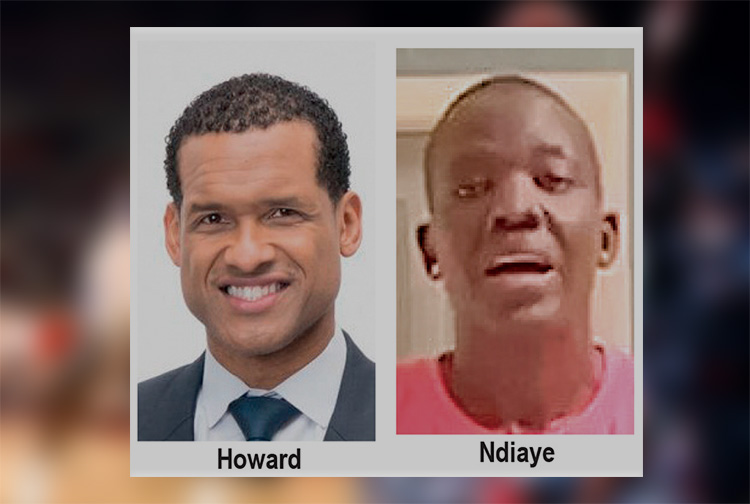
The U.S. Embassy in Colombo welcomed the U.S. Sports Envoys to Sri Lanka, former National Basketball Association (NBA) and Women’s National Basketball Association (WNBA) players Stephen Howard and Astou Ndiaye, from June 8 through 14.
The Public Diplomacy section of the U.S. Embassy said that it would launch a weeklong basketball program intended to harness the unifying power of sports, made possible through collaboration with Foundation of Goodness and IImpact Hoop Lab.
While in Sri Lanka, Howard and Ndiaye, both retired professional basketball players, will conduct a weeklong program, Hoops for Hope: Bridging Borders through Basketball. The Sports Envoys will lead basketball clinics and exhibition matches and engage in leadership sessions in Colombo and Southern Province for youth aged 14-18 from Northern, Uva, Eastern and Western Provinces, offering skills and leadership training both on and off the court. The U.S. Envoys will also share their expertise with the Sri Lanka Basketball Federation, national coaches, and players, furthering the development of basketball in the country. Beyond the clinics, they will collaborate with Sri Lankan schoolchildren to take part in a community service project in the Colombo area.
“We are so proud to welcome Stephen and Astou as our Sports Envoys to Sri Lanka, to build on the strong people-to-people connections between the United States and Sri Lanka,” said U.S. Ambassador Julie Chung. “The lessons that will be shared by our Sports Envoys – communication, teamwork, resilience, inclusion, and conflict resolution – are essential for leadership development, community building, equality, and peace. The U.S. Sports Envoy program is a testament to our belief that sports can be a powerful tool in promoting peace and unity.”
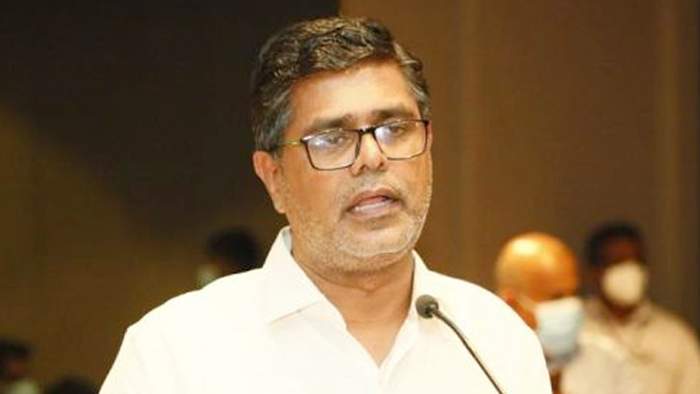
SJB Colombo District MP Mujibur Rahuman in parliament demanded to know from the government the reasons for CEB suspending the leave of all its employees until further notice from Thursday.
MP Rahuman said that the CEB has got an acting General Manager anew and the latter yesterday morning issued a circular suspending leave of all CEB employees with immediate effect until further notice.
“We demand that Minister Kanchana Wijesekera should explain this to the House. This circular was issued while this debate on the new Electricity Amendment Bill was pending. There are many who oppose this Bill. The Minister must tell parliament the reason for the urge to cancel the leave of CEB employees,” the MP said.However, Speaker Mahinda Yapa Abeywardena prevented Minister Wijesekera responding to the query and said that the matter raised by MP Rahuman was not relevant.
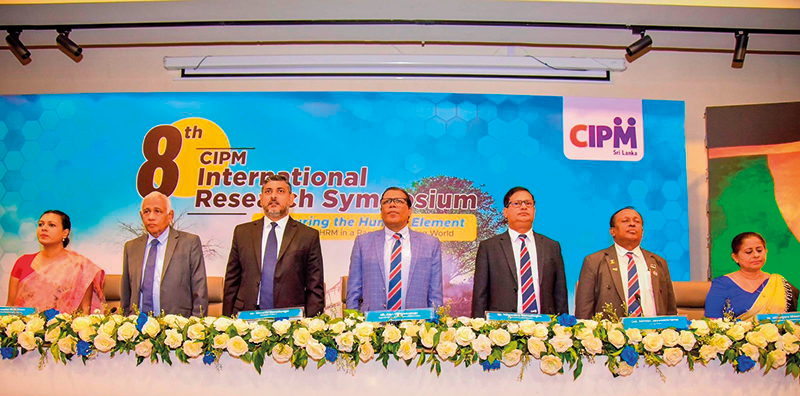
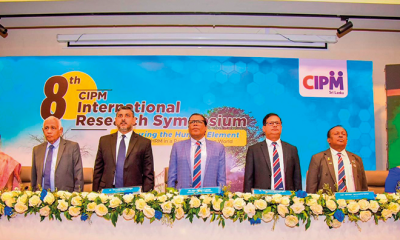
The Chartered Institute of Personnel Management (CIPM) successfully concluded the 8th Annual CIPM Symposium, which took place on 31st May 2024. Themed “Nurturing the Human Element—Redefining HRM in a Rapidly Changing World,” the symposium underscored the pivotal role of human resource management (HRM) in today’s dynamic global landscape. Since its inception in 1959, CIPM has been dedicated to advancing the HR profession through education, professional development, and advocacy, solidifying its position as Sri Lanka’s leading professional body for HRM.
Ken Vijayakumar, the President of the CIPM, graced the occasion as the chief guest. The symposium commenced with the welcome address by the Chairperson, Prof. Arosha Adikaram, followed by the Web Launch of the Symposium Proceedings and Abstract Book by the CIPM President. The event featured distinguished addresses, including a speech by Chief Guest Ken Vijayakumar, President of CIPM, and an address by Guest of Honor Shakthi Ranatunga, Chief Operating Officer of MAS Holdings Pvt. Ltd., Sri Lanka.
The symposium also featured an inspiring keynote address by Prof. Mario Fernando, Professor of Management and Director of the Centre for Cross Cultural Management (CCCM) at the University of Wollongong, Australia.
Vote of Thanks of the inauguration session was delivered by Dr. Dillanjani Weeratunga, Symposium Co-chair.
The symposium served as a comprehensive platform for researchers to present their findings across a wide range of critical topics in HRM. These included Cultural Diversity and Inclusion, Talent Development and Retention, Ethical Leadership and Corporate Social Responsibility, Adapting to Technological Advancements, Mental Health and Well-being at Work, Global Workforce Challenges, Employee Empowerment, and Reskilling and Upskilling.
The plenary session was led by Prof. Wasantha Rajapakse. Certificates were awarded to the best paper presenters during the valedictory session, followed by a vote of thanks delivered by Kamani Perera, Manager of Research and Development.
The annual symposium of CIPM was a truly inclusive event, attracting a diverse audience that spanned undergraduates, graduates, working professionals, research scholars and lecturers. This widespread interest highlights the symposium’s significance in the field of HRM, offering a unique opportunity for everyone to network and learn from scholarly brains.The CIPM International Research Symposium was sponsored by Hambantota International Port, Sri Lanka Institute of Information Technology (SLIIT), E B Creasy & Co. PLC, and Print Xcel Company.



US sports envoys to Lanka to champion youth development

Rahuman questions sudden cancellation of leave of CEB employees


