
News
LSSP leaders to pay floral tribute to Dr. N. M. Perera’s statue on August 14

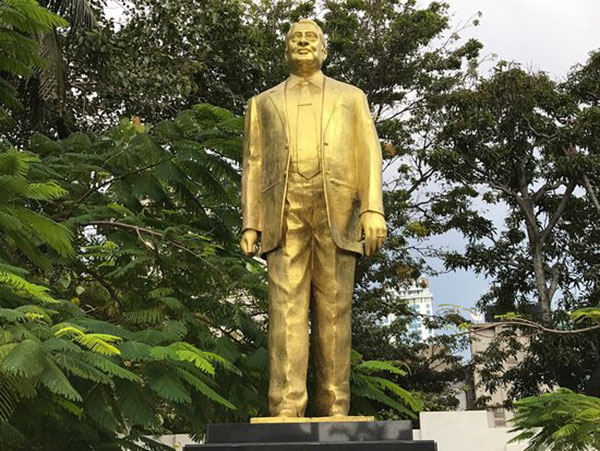
The 68th anniversary of the Great Hartal and the 42nd death anniversary of Dr. N. M. Perera falls on the 12th and the 14th of August respectively.
These are historic dates in the politics of Sri Lanka. The leaders of the Lanka Sama Samaja Party (LSSP) will place a floral tribute at the statue of Dr. N. M. Perera at 9.30 am on August 14 this year and follow it up with a felicitation meeting at the LSSP headquarters on the same day. Other left leaders will be invited to participate.
Dr.N . M. Perera was a founder leader of the LSSP in 1935 and remained its leader right up to his death in 1979. He completed his studies in the London School of Economics where he obtain a PhD and D.Sc. He was known as the favorite pupil of Prof. Harold Laski who was a chief adviser to the British Labour Party. While in London, he together with the other founder leaders of the LSSP, Dr.Colvin R.de Silva, Leslie Gunawardana, Dr.S.A.Wickremasinghe and Philip Gunawardena (who did his post graduate studies in the USA) changed from Social Democratic to Marxist politics. They returned to Sri Lanka which was under cruel British imperialist rule and formed the Lanka Sama Samaja Party, as a revolutionary Marxist-Leninist Party. The suffering of the people during the Malaria epidemic led them to shift their focus to the rural poor, while developing the Trade Union Movement in the urban and plantation areas. They faced opposition from the local capitalist class which later became the United National Party (UNP) as well as the British rulers and their agents in Sri Lanka. In the General Election of 1936 the plantation workers supported the LSSP and the UNP retaliated by disenfranchising the plantation workers. The outcome was that large sections of the Tamil voters also supported the LSSP.
The LSSP fought for complete independence for Sri Lanka while the UNP was content for Sri Lanka to remain a semi colony of Britain under dominion status. The LSSP wanted to do away with exploitation by the British and the local capitalist class and establish an “equal society” (a Sama Samajaya), and build a truly Sri Lankan Society free from any type of discrimination based on race, religion or cast.
The outbreak of the Second World War in 1939 resulted in the formation of the Communist Party (CP) from within the LSSP, which chose to support the British war effort. But the LSSP chose to continue the struggle for independence and as a result the LSSP was banned (it had to go underground) and its leaders were imprisoned by the British rulers. The LSSP leaders escaped from jail and joined the independence struggle in India led by Nehru and Gandhi. They were caught and imprisoned while in India and finally released in 1945 with the end of the war.
The LSSP leaders who returned to Sri Lanka became politically active on behalf of the people. The workers were organized into a powerful Trade Union Movement and carried out several mass protest and strikes to win their rights and improve their working and living conditions. The struggle for complete independence was intensified and on the 4thof February 1948 (after India won independence in 1947) the British conceded independence to Sri Lanka.
In the General Election held at that time UNP became the ruling party and allowed the British to continue to exploit our country. S.W.R.D. Bandaranaike, who was then a Minister in the UNP Government, broke away in 1951 and formed the Sri Lanka Freedom Party (SLFP). This was not enough to end UNP rule. The people remained frightened and servile.
The Great Hartal
With the onset of an economic crisis the UNP decided to pass the burden of the emerging crisis on to the people rather than the rich capitalist class. The price of rice was increased from 25 cents a measure to 70 cents and the UNP also raised price of sugar and other essentials. The LSSP took the lead in protesting on behalf of the people, organizing mass actions in the work places and the villages. It was supported in this by the SLFP and the CP. The mass protests spread throughout the country, but mainly in the Western, Southern and Central provinces. The main demand was that the increase in prices should be reversed. The LSSP promoted strikes in the work places and there were also protests in the rural areas. The fear that the people had over the rule by the UNP supported by the British had to be overcome if a significant change in the policies of the UNP were to be made.
The LSSP with the support of the other opposition parties decided to have a day of struggle on the 12th of August 1953. The people responded and besides protest meetings and wide spread undress led to interference with public transport and communications by cutting trees across the roads and telephone posts.
The mass response to this one day struggle, the Great Hartal, led to an emergency meeting of the Cabinet in a British warship in the Colombo Harbour. The British and the local capitalist class prevailed on the Prime Minister, Dudley Senanayake, to resign, and replaced him with a strong man with a military background, Sir John Kotelawala, as the Prime Minister. The UNP Government pacified the people by reducing the prices of the essential commodities. With backing given to Sir John by the British Government and because a General Election was due in 1956, where the people could defeat the UNP, the LSSP took the decision, along with the other left parties, to save the people from the danger of a massacre by not extending the Hartal.
History has proved that this decision was correct by the fact that S.W.R.D.Bandaranaike was able to lead the SLFP to power with the support of the left. Philip Gunawardena joined the Government and became a Minister along with his with VLSSP Party. At that time LSSP wanted Tamil also made an official language, in addition to Sinhala, if it was to join the SLFP led Government. But later in 1964 the LSSP also joined the SLFP led Government.
The outcome has been historic, because the SLFP and the LSSP have come together with the other progressive parties. This has made it possible to formed successive progressive Governments which has led to Sri Lanka becoming a completely independent, sovereign nation, not subservient to imperialism. Further it has enabled Sri Lanka to be able to develop a NATIONAL ECONOMY to satisfy the needs of all its people. The LSSP calls upon all progressive people and political parties to join us in celebrating these historic events.
– Prof Tissa Vitarana



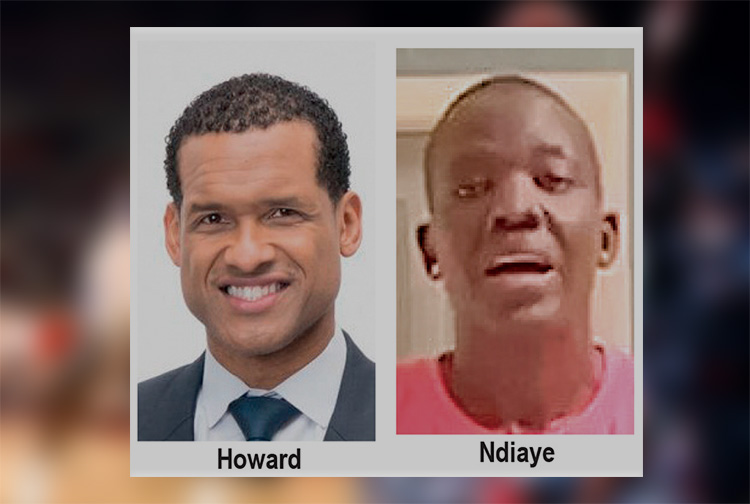
The U.S. Embassy in Colombo welcomed the U.S. Sports Envoys to Sri Lanka, former National Basketball Association (NBA) and Women’s National Basketball Association (WNBA) players Stephen Howard and Astou Ndiaye, from June 8 through 14.
The Public Diplomacy section of the U.S. Embassy said that it would launch a weeklong basketball program intended to harness the unifying power of sports, made possible through collaboration with Foundation of Goodness and IImpact Hoop Lab.
While in Sri Lanka, Howard and Ndiaye, both retired professional basketball players, will conduct a weeklong program, Hoops for Hope: Bridging Borders through Basketball. The Sports Envoys will lead basketball clinics and exhibition matches and engage in leadership sessions in Colombo and Southern Province for youth aged 14-18 from Northern, Uva, Eastern and Western Provinces, offering skills and leadership training both on and off the court. The U.S. Envoys will also share their expertise with the Sri Lanka Basketball Federation, national coaches, and players, furthering the development of basketball in the country. Beyond the clinics, they will collaborate with Sri Lankan schoolchildren to take part in a community service project in the Colombo area.
“We are so proud to welcome Stephen and Astou as our Sports Envoys to Sri Lanka, to build on the strong people-to-people connections between the United States and Sri Lanka,” said U.S. Ambassador Julie Chung. “The lessons that will be shared by our Sports Envoys – communication, teamwork, resilience, inclusion, and conflict resolution – are essential for leadership development, community building, equality, and peace. The U.S. Sports Envoy program is a testament to our belief that sports can be a powerful tool in promoting peace and unity.”
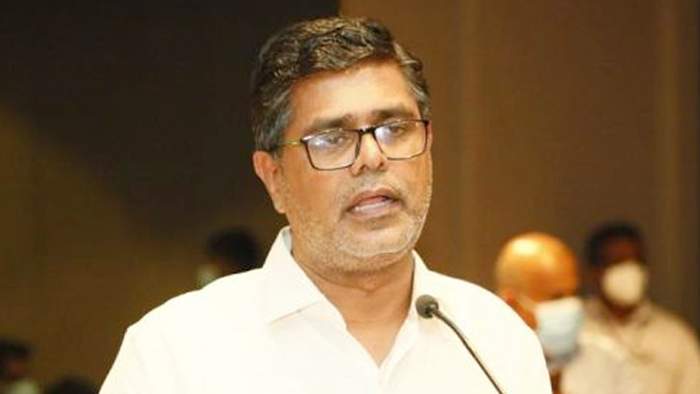
SJB Colombo District MP Mujibur Rahuman in parliament demanded to know from the government the reasons for CEB suspending the leave of all its employees until further notice from Thursday.
MP Rahuman said that the CEB has got an acting General Manager anew and the latter yesterday morning issued a circular suspending leave of all CEB employees with immediate effect until further notice.
“We demand that Minister Kanchana Wijesekera should explain this to the House. This circular was issued while this debate on the new Electricity Amendment Bill was pending. There are many who oppose this Bill. The Minister must tell parliament the reason for the urge to cancel the leave of CEB employees,” the MP said.However, Speaker Mahinda Yapa Abeywardena prevented Minister Wijesekera responding to the query and said that the matter raised by MP Rahuman was not relevant.
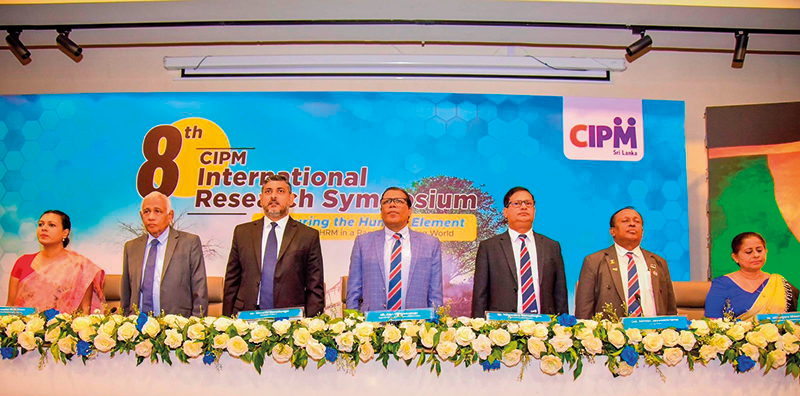
The Chartered Institute of Personnel Management (CIPM) successfully concluded the 8th Annual CIPM Symposium, which took place on 31st May 2024. Themed “Nurturing the Human Element—Redefining HRM in a Rapidly Changing World,” the symposium underscored the pivotal role of human resource management (HRM) in today’s dynamic global landscape. Since its inception in 1959, CIPM has been dedicated to advancing the HR profession through education, professional development, and advocacy, solidifying its position as Sri Lanka’s leading professional body for HRM.
Ken Vijayakumar, the President of the CIPM, graced the occasion as the chief guest. The symposium commenced with the welcome address by the Chairperson, Prof. Arosha Adikaram, followed by the Web Launch of the Symposium Proceedings and Abstract Book by the CIPM President. The event featured distinguished addresses, including a speech by Chief Guest Ken Vijayakumar, President of CIPM, and an address by Guest of Honor Shakthi Ranatunga, Chief Operating Officer of MAS Holdings Pvt. Ltd., Sri Lanka.
The symposium also featured an inspiring keynote address by Prof. Mario Fernando, Professor of Management and Director of the Centre for Cross Cultural Management (CCCM) at the University of Wollongong, Australia.
Vote of Thanks of the inauguration session was delivered by Dr. Dillanjani Weeratunga, Symposium Co-chair.
The symposium served as a comprehensive platform for researchers to present their findings across a wide range of critical topics in HRM. These included Cultural Diversity and Inclusion, Talent Development and Retention, Ethical Leadership and Corporate Social Responsibility, Adapting to Technological Advancements, Mental Health and Well-being at Work, Global Workforce Challenges, Employee Empowerment, and Reskilling and Upskilling.
The plenary session was led by Prof. Wasantha Rajapakse. Certificates were awarded to the best paper presenters during the valedictory session, followed by a vote of thanks delivered by Kamani Perera, Manager of Research and Development.
The annual symposium of CIPM was a truly inclusive event, attracting a diverse audience that spanned undergraduates, graduates, working professionals, research scholars and lecturers. This widespread interest highlights the symposium’s significance in the field of HRM, offering a unique opportunity for everyone to network and learn from scholarly brains.The CIPM International Research Symposium was sponsored by Hambantota International Port, Sri Lanka Institute of Information Technology (SLIIT), E B Creasy & Co. PLC, and Print Xcel Company.



US sports envoys to Lanka to champion youth development

Rahuman questions sudden cancellation of leave of CEB employees


