
News
Lanka’s draft ‘Rehabilitation Law’ would spur abuse – HRW

The Sri Lankan government should withdraw a draft law that would give the authorities broad powers to detain people in military-run “rehabilitation” centers, placing them at great risk of abuse, Human Rights Watch said yesterday (17).
The Bureau of Rehabilitation Bill, submitted to parliament on September 23, 2022, would allow the compulsory detention in centers of “drug dependant persons, ex-combatants, members of violent extremist groups and any other group of persons.”
The Bureau of Rehabilitation Bill would establish a new administrative structure controlled by the Defense Ministry to operate “rehabilitation” centers staffed by military personnel. The proposed law, which human rights advocates have already challenged in the Supreme Court, does not describe the basis for being sent for “rehabilitation,” but other recent government policies provide vague and arbitrary powers to forcibly “rehabilitate” people who have not been convicted of any crime.
“The Sri Lankan government’s proposed ‘rehabilitation’ efforts appear to be nothing more than a new form of abusive detention without charge,” said Meenakshi Ganguly, South Asia director at Human Rights Watch. “The Rehabilitation Bill would open the door widely to more torture, mistreatment, and endless detention.”
The Sri Lankan government has previously used coercive “rehabilitation” centers to enable arbitrary detention and torture. Following the civil war, which ended in 2009, thousands of people whom the government identified as members of the defeated separatist Liberation Tigers of Tamil Eelam were detained in military-run “rehabilitation” centers, where some were allegedly tortured and subjected to other abuses, including sexual violence. The current bill seeks once again to “rehabilitate” “ex-combatants” 13 years after the war ended.
The Rehabilitation Bill is the latest measure in a long history of laws, such as the Prevention of Terrorism Act (PTA), that authorize arbitrary detention and torture in Sri Lanka. The law could be used to target minority communities or anti-government protesters whom President Ranil Wickremesinghe has labeled “extremists.”
Under the Rehabilitation Bill, which would allow prolonged detention without judicial oversight, government officials would be protected from criminal liability for their actions if they act “in good faith.” The bill also empowers officials to use undefined “minimum force” to “compel obedience” from detainees. Another provision provides that an official who “without reasonable cause” strikes, wounds, ill-treats, or willfully neglects anyone under rehabilitation can be punished by up to 18 months in prison, suggesting that there might be a “reasonable cause” to harm detainees. International law absolutely prohibits torture, and other cruel, inhuman or degrading treatment or punishment.
A separate bill to amend Sri Lanka’s Poisons, Opium and Dangerous Drugs Ordinance, which was presented to parliament on September 9, provides for the compulsory rehabilitation of alleged drug users. The legislation would worsen already abusive laws and practices under Sri Lanka’s “war on drugs,” which Sri Lankan military officers have repeatedly compared to the “war on terror.”
Sri Lanka already has a system of forced “rehabilitation” for alleged drug users, which is run by the armed forces at two sites previously used to “rehabilitate” former combatants. There have been allegations of forced labor and ill-treatment, including the collective punishment of inmates, who are denied access to medically appropriate treatment for drug dependency while undergoing coercive “de-addiction.” The death of an inmate at the Kandakadu rehabilitation center in June led to the arrest of four army and air force sergeants acting as “therapists.”
International standards for the treatment of addiction maintain that treatment should always be voluntary and addiction regarded primarily as a health condition. The abstinence-based “rehabilitation” programs operated by the military are not based on scientific evidence and provide no harm reduction services.
In 2017, the United Nations Working Group on Arbitrary Detention expressed concern at the involvement of the Sri Lankan military in drug treatment and at the lack of medical care, as well as irregularities in the judicial process. The detention of alleged drug users for coercive “rehabilitation” is incompatible with medically appropriate drug dependency treatment and contravenes international law, Human Rights Watch said.
The proposed amendment to the drug law contains provisions to weaken evidentiary standards and deny bail to suspects in some criminal cases related to the possession of drugs. Sri Lanka continues to impose the death penalty for some drug offenses, contrary to international law standards and despite a national moratorium on executions since 1976.
The Rehabilitation Bureau Bill and the proposed amendment to anti-narcotics legislation are only the latest measures in President Wickremesinghe’s assault on fundamental rights, Human Rights Watch said. An attempt to use the Official Secrets Act to restrict public gatherings in the capital, Colombo, was withdrawn earlier in October amid widespread objections that the action was unlawful.
On October 6, the United Nations Human Rights Council adopted a resolution expressing concern at the human rights situation in Sri Lanka and mandating enhanced UN monitoring, as well as renewing a mandate for the UN to collect and analyze evidence of past human rights violations for use in future prosecutions.
“President Wickremesinghe is pursuing abusive and repressive policies that make it difficult for Sri Lanka’s international partners to wholeheartedly back desperately needed economic measures,” Ganguly said. “Foreign governments should make clear that they will support the urgent needs of the Sri Lankan people, but they will also take action through targeted sanctions and other measures against those committing serious human rights violations.”







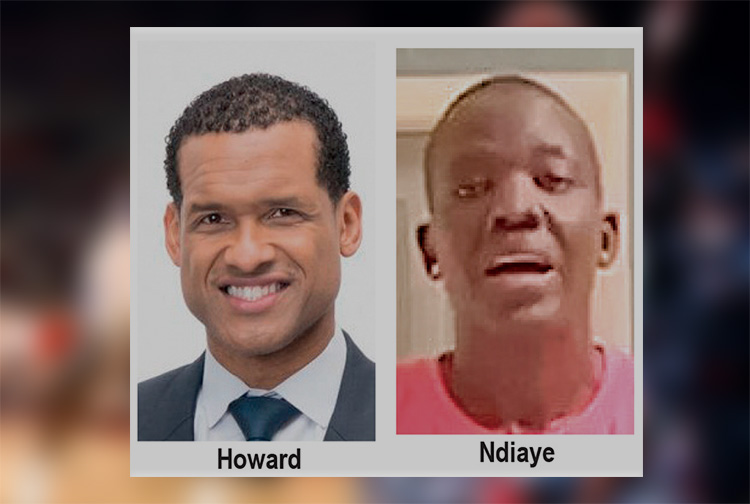
The U.S. Embassy in Colombo welcomed the U.S. Sports Envoys to Sri Lanka, former National Basketball Association (NBA) and Women’s National Basketball Association (WNBA) players Stephen Howard and Astou Ndiaye, from June 8 through 14.
The Public Diplomacy section of the U.S. Embassy said that it would launch a weeklong basketball program intended to harness the unifying power of sports, made possible through collaboration with Foundation of Goodness and IImpact Hoop Lab.
While in Sri Lanka, Howard and Ndiaye, both retired professional basketball players, will conduct a weeklong program, Hoops for Hope: Bridging Borders through Basketball. The Sports Envoys will lead basketball clinics and exhibition matches and engage in leadership sessions in Colombo and Southern Province for youth aged 14-18 from Northern, Uva, Eastern and Western Provinces, offering skills and leadership training both on and off the court. The U.S. Envoys will also share their expertise with the Sri Lanka Basketball Federation, national coaches, and players, furthering the development of basketball in the country. Beyond the clinics, they will collaborate with Sri Lankan schoolchildren to take part in a community service project in the Colombo area.
“We are so proud to welcome Stephen and Astou as our Sports Envoys to Sri Lanka, to build on the strong people-to-people connections between the United States and Sri Lanka,” said U.S. Ambassador Julie Chung. “The lessons that will be shared by our Sports Envoys – communication, teamwork, resilience, inclusion, and conflict resolution – are essential for leadership development, community building, equality, and peace. The U.S. Sports Envoy program is a testament to our belief that sports can be a powerful tool in promoting peace and unity.”
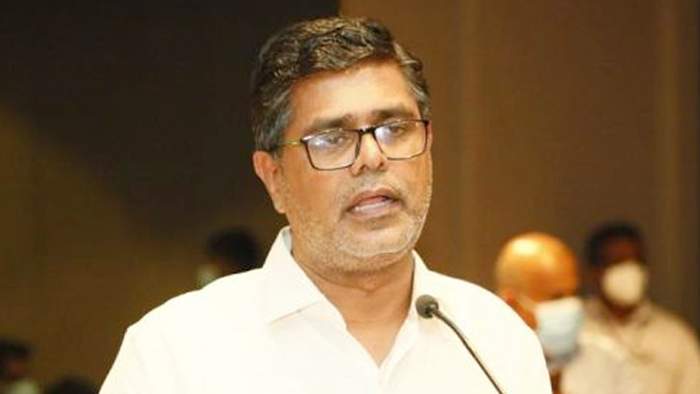
SJB Colombo District MP Mujibur Rahuman in parliament demanded to know from the government the reasons for CEB suspending the leave of all its employees until further notice from Thursday.
MP Rahuman said that the CEB has got an acting General Manager anew and the latter yesterday morning issued a circular suspending leave of all CEB employees with immediate effect until further notice.
“We demand that Minister Kanchana Wijesekera should explain this to the House. This circular was issued while this debate on the new Electricity Amendment Bill was pending. There are many who oppose this Bill. The Minister must tell parliament the reason for the urge to cancel the leave of CEB employees,” the MP said.However, Speaker Mahinda Yapa Abeywardena prevented Minister Wijesekera responding to the query and said that the matter raised by MP Rahuman was not relevant.
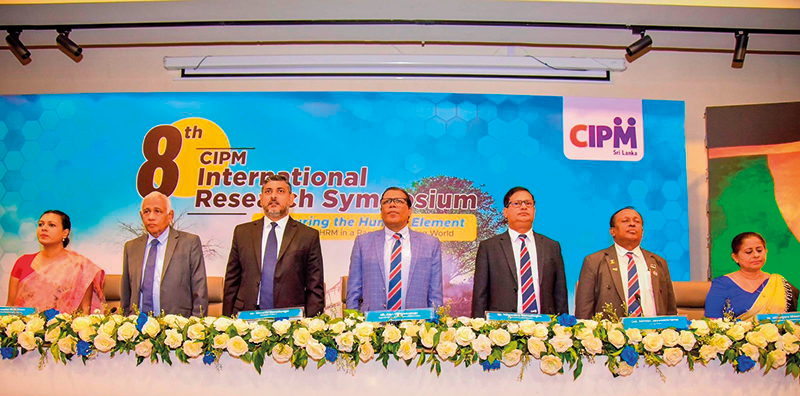
The Chartered Institute of Personnel Management (CIPM) successfully concluded the 8th Annual CIPM Symposium, which took place on 31st May 2024. Themed “Nurturing the Human Element—Redefining HRM in a Rapidly Changing World,” the symposium underscored the pivotal role of human resource management (HRM) in today’s dynamic global landscape. Since its inception in 1959, CIPM has been dedicated to advancing the HR profession through education, professional development, and advocacy, solidifying its position as Sri Lanka’s leading professional body for HRM.
Ken Vijayakumar, the President of the CIPM, graced the occasion as the chief guest. The symposium commenced with the welcome address by the Chairperson, Prof. Arosha Adikaram, followed by the Web Launch of the Symposium Proceedings and Abstract Book by the CIPM President. The event featured distinguished addresses, including a speech by Chief Guest Ken Vijayakumar, President of CIPM, and an address by Guest of Honor Shakthi Ranatunga, Chief Operating Officer of MAS Holdings Pvt. Ltd., Sri Lanka.
The symposium also featured an inspiring keynote address by Prof. Mario Fernando, Professor of Management and Director of the Centre for Cross Cultural Management (CCCM) at the University of Wollongong, Australia.
Vote of Thanks of the inauguration session was delivered by Dr. Dillanjani Weeratunga, Symposium Co-chair.
The symposium served as a comprehensive platform for researchers to present their findings across a wide range of critical topics in HRM. These included Cultural Diversity and Inclusion, Talent Development and Retention, Ethical Leadership and Corporate Social Responsibility, Adapting to Technological Advancements, Mental Health and Well-being at Work, Global Workforce Challenges, Employee Empowerment, and Reskilling and Upskilling.
The plenary session was led by Prof. Wasantha Rajapakse. Certificates were awarded to the best paper presenters during the valedictory session, followed by a vote of thanks delivered by Kamani Perera, Manager of Research and Development.
The annual symposium of CIPM was a truly inclusive event, attracting a diverse audience that spanned undergraduates, graduates, working professionals, research scholars and lecturers. This widespread interest highlights the symposium’s significance in the field of HRM, offering a unique opportunity for everyone to network and learn from scholarly brains.The CIPM International Research Symposium was sponsored by Hambantota International Port, Sri Lanka Institute of Information Technology (SLIIT), E B Creasy & Co. PLC, and Print Xcel Company.



US sports envoys to Lanka to champion youth development

Rahuman questions sudden cancellation of leave of CEB employees


