
News
Lankan Economic Outlook 2022: Experts call for bold and radical reforms

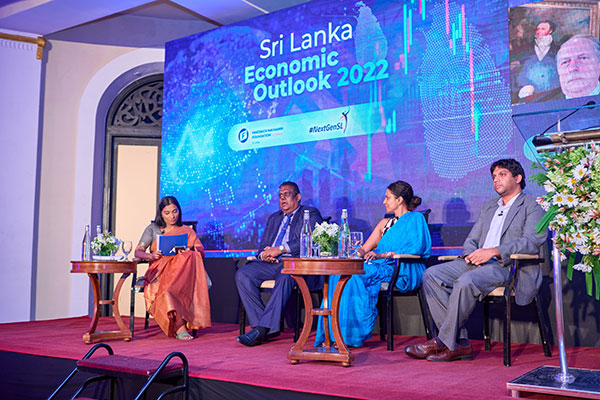
International and local economic experts and corporate leaders have stressed the need for a concrete, long-term and bold reform agenda for the economy as the country braces for a critical year amidst unprecedented socio-economic challenges.
Speaking at the “Sri Lanka Economic Outlook 2022” forum organised by the Friedrich Naumann Foundation for Freedom and NextGenSL, recently, Prof. Lee. C. Buchheit, an international debt restructuring expert, Prof. H.D. Karunaratne, a prominent economist and the newly-appointed Vice Chancellor of the University of Colombo, Kasturi Chellaraja Wilson, Hemas Group CEO and Economist Deshal de Mel spoke at length about Sri Lanka’s economic trajectory for the year and the options available at present.
“Any fiscal adjustment programme initiated at this stage will be ‘distasteful’ and will involve a degree of pain. Even a home-grown adjustment programme will entail certain political problems due to the nature of reforms. The question here is whether the country’s political leaders will have the political stamina to proceed with them,” Prof. Lee C. Buchheit, an international expert with a 43-year legal career specialising in sovereign debt management, said.
Delivering the keynote speech at the event, Buchheit presented a detailed account of the global debt situation for the year 2022. He has worked on over two dozen sovereign debt restructurings and he led the legal teams advising the sovereign debtors in the two largest sovereign debt workouts in history (Greece in 2012 and Iraq in 2005-08).
“The problem Sri Lanka must ask itself at the moment is whether there is a plausible fiscal adjustment programme that can be implemented within the next two-three years. It is in this context that the option of seeking the support of the International Monetary Fund (IMF) should be assessed and analysed. The country can also proceed with borrowings from bi-lateral partners as long as the Government has a clear policy and the stamina to implement comprehensive reforms,” he added.
“Sri Lanka’s creditors — be they bilateral or commercial — will be interested in one critical question. That would be; who are we going to share the pain with? Every sovereign bond restructuring boils down to one decision — how much of the country’s pain should be borne by its citizens, and how much should be borne by the creditors,” the international expert explained.
“Commercial creditors caught up in this issue often ask themselves whether the proposed debt restructuring is necessary and whether the conditions proposed to them are proportionate to what the country actually needs.”
“This could be a challenging process as both the public and the creditors would say that they are disproportionately carrying the burden.”
“Therefore, the only entity in the world with the technical expertise and the political legitimacy to assuage such concerns and handle this process is the International Monetary Fund (IMF)”, Prof. Buchheit said.
“A number of countries in the world have embarked on debt restructuring without the IMF. But, if you ask whether the involvement of the IMF is useful, the answer would be ‘yes’,” he added.
Commenting on international credit rating agencies downgrading Sri Lanka, Prof. Buchheit said it should not be a major concern for Sri Lanka.
“This will only be a big concern if you are trying to re-access the global capital market in the near future. When the country announces the need for debt restructuring, rating agencies will downgrade the country to ‘selective default’ and this rating will remain until the restructuring is completed. Once this is done, they will upgrade the country to higher rating categories.”
“This will only be a major worry if Sri Lanka intends to issue additional International Sovereign bonds in the near future. I don’t think Sri Lanka is in a position to do so,” he said.
Speaking at the discussion, Prof. H.D. Karunaratne said the crisis in Sri Lanka had been brewing for over 70 years and opined that short-term fixes would not resolve a long-term problem.
“Sri Lanka is a country that harbours a lot of dreams. But, we are not working practically, with a rational approach, to achieve our dreams,” he said.
He added that “the large majority of Sri Lankans assume that bringing in more foreign investments alone will resolve our crisis. But, do we at least have consensus across the political spectrum on the nature of foreign investments Sri Lanka wants? The dynamics investors usually see in other countries do not work in Sri Lanka’s context. How are we going to attract high-value investments without addressing these critical issues?” Prof. Karunaratne asked.
The senior Economist also pointed out that the ever-expanding public sector was also another area of concern for Sri Lanka.
“We have nearly 1.4 million workers in the public sector and each government keeps on adding to this number. In addition, so many loss-making institutions in the public sector are being operated without any plan for restructuring. This irrational approach is one of the key contributing factors to the current situation,” he said.
“Another problem Sri Lanka must pay attention to is policy inconsistencies. For instance, in 2016, the Government announced tax concessions for electricity-based vehicles. In 2017, the Government imposed heavy taxes on the same vehicles. This is just one example as to how policy inconsistencies have contributed to the crisis we find ourselves in today,’ Karunaratne said, adding that Sri Lanka is currently paying the price for its over-reliance on gas.
Commenting on the way forward, Prof. Karunaratne said the country’s top priority should be to keep its house in order. “Whatever we do, we cannot expect satisfactory results unless we decide to keep our house in order. We can go on borrowing money from bilateral partners but what’s the point in doing so without any concrete plan to address these key areas for concern?”
The senior economist proposed to set up a Japanese-style “Economic Planning Agency” to ensure stable and consistent policies related to the country’s economy.
Hemas Group CEO, Kasturi Chellaraja Wilson said Sri Lanka should now focus on its approach to overcome the existing difficulties.
“We have faced immense difficulties ranging from accessing foreign exchange to opening Letters of Credit. But we, Sri Lankans, have faced challenges before and I am sure we will see many more challenges in the future. So, the problem is not the challenges, but the approach we adopt to overcome them,” she said opening her remarks.
“We must first come to the realization that short-term, tactical measures will no longer resolve our crisis at this point. We need long-term, concrete planning.”
“Do we have the political will to do what is right? Our politicians must decide whether they are going to play party politics or do what is right by the country. The Government, the Opposition, the public sector and the private sector must come together to lead the country out of the current crisis. That is what we want to see,” she said.
“There is no doubt about the fact that economic reforms are going to be a bitter pill to swallow. But, there is no other way out. The issue, however, is that we do not seem to have a common agenda as a country to navigate the crisis,” Wilson explained.
Economist Deshal de Mel who described this as an opportunity to come together for a bold and drastic reform agenda expressed the same sentiments.
“Whatever we do — be it debt restructuring or seeking support from bilateral or multilateral donors — we will not be able to avoid reforms. We all know that reforms are not going to be easy but I see this crisis as an opening to come together to initiate bold reforms,” de Mel said.
When asked about suggestions made by the business community and some economists to go for debt restructuring, De Mel said it could be deemed as a prudent approach. “The most important thing right now is to find a sustainable solution to the debt issue,” he added.
“Sri Lanka must find a way to build its reserves and to adjust the country’s fiscal trajectory,” De Mel stated adding that it was important to Sri Lanka to have a concrete plan to regain access to the global capital market.



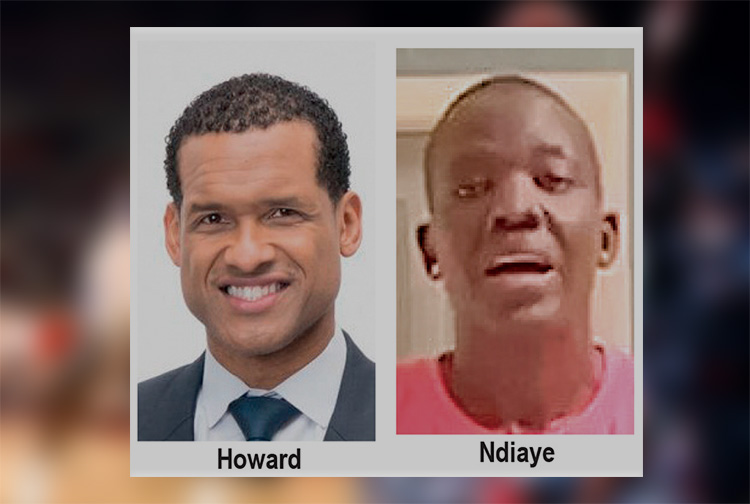
The U.S. Embassy in Colombo welcomed the U.S. Sports Envoys to Sri Lanka, former National Basketball Association (NBA) and Women’s National Basketball Association (WNBA) players Stephen Howard and Astou Ndiaye, from June 8 through 14.
The Public Diplomacy section of the U.S. Embassy said that it would launch a weeklong basketball program intended to harness the unifying power of sports, made possible through collaboration with Foundation of Goodness and IImpact Hoop Lab.
While in Sri Lanka, Howard and Ndiaye, both retired professional basketball players, will conduct a weeklong program, Hoops for Hope: Bridging Borders through Basketball. The Sports Envoys will lead basketball clinics and exhibition matches and engage in leadership sessions in Colombo and Southern Province for youth aged 14-18 from Northern, Uva, Eastern and Western Provinces, offering skills and leadership training both on and off the court. The U.S. Envoys will also share their expertise with the Sri Lanka Basketball Federation, national coaches, and players, furthering the development of basketball in the country. Beyond the clinics, they will collaborate with Sri Lankan schoolchildren to take part in a community service project in the Colombo area.
“We are so proud to welcome Stephen and Astou as our Sports Envoys to Sri Lanka, to build on the strong people-to-people connections between the United States and Sri Lanka,” said U.S. Ambassador Julie Chung. “The lessons that will be shared by our Sports Envoys – communication, teamwork, resilience, inclusion, and conflict resolution – are essential for leadership development, community building, equality, and peace. The U.S. Sports Envoy program is a testament to our belief that sports can be a powerful tool in promoting peace and unity.”
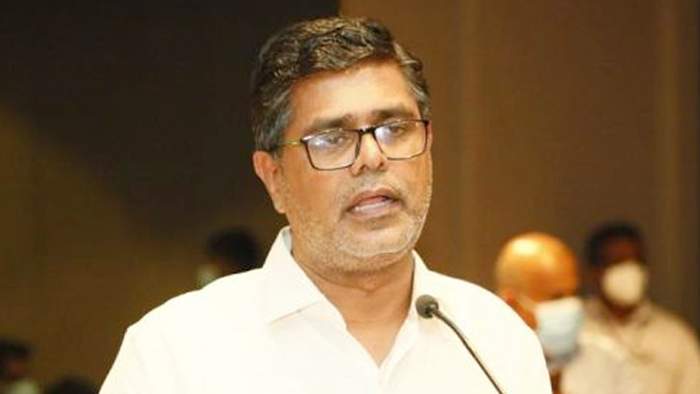
SJB Colombo District MP Mujibur Rahuman in parliament demanded to know from the government the reasons for CEB suspending the leave of all its employees until further notice from Thursday.
MP Rahuman said that the CEB has got an acting General Manager anew and the latter yesterday morning issued a circular suspending leave of all CEB employees with immediate effect until further notice.
“We demand that Minister Kanchana Wijesekera should explain this to the House. This circular was issued while this debate on the new Electricity Amendment Bill was pending. There are many who oppose this Bill. The Minister must tell parliament the reason for the urge to cancel the leave of CEB employees,” the MP said.However, Speaker Mahinda Yapa Abeywardena prevented Minister Wijesekera responding to the query and said that the matter raised by MP Rahuman was not relevant.
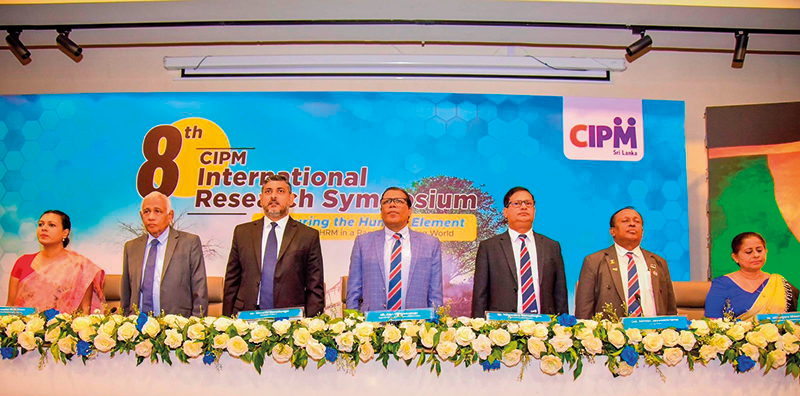
The Chartered Institute of Personnel Management (CIPM) successfully concluded the 8th Annual CIPM Symposium, which took place on 31st May 2024. Themed “Nurturing the Human Element—Redefining HRM in a Rapidly Changing World,” the symposium underscored the pivotal role of human resource management (HRM) in today’s dynamic global landscape. Since its inception in 1959, CIPM has been dedicated to advancing the HR profession through education, professional development, and advocacy, solidifying its position as Sri Lanka’s leading professional body for HRM.
Ken Vijayakumar, the President of the CIPM, graced the occasion as the chief guest. The symposium commenced with the welcome address by the Chairperson, Prof. Arosha Adikaram, followed by the Web Launch of the Symposium Proceedings and Abstract Book by the CIPM President. The event featured distinguished addresses, including a speech by Chief Guest Ken Vijayakumar, President of CIPM, and an address by Guest of Honor Shakthi Ranatunga, Chief Operating Officer of MAS Holdings Pvt. Ltd., Sri Lanka.
The symposium also featured an inspiring keynote address by Prof. Mario Fernando, Professor of Management and Director of the Centre for Cross Cultural Management (CCCM) at the University of Wollongong, Australia.
Vote of Thanks of the inauguration session was delivered by Dr. Dillanjani Weeratunga, Symposium Co-chair.
The symposium served as a comprehensive platform for researchers to present their findings across a wide range of critical topics in HRM. These included Cultural Diversity and Inclusion, Talent Development and Retention, Ethical Leadership and Corporate Social Responsibility, Adapting to Technological Advancements, Mental Health and Well-being at Work, Global Workforce Challenges, Employee Empowerment, and Reskilling and Upskilling.
The plenary session was led by Prof. Wasantha Rajapakse. Certificates were awarded to the best paper presenters during the valedictory session, followed by a vote of thanks delivered by Kamani Perera, Manager of Research and Development.
The annual symposium of CIPM was a truly inclusive event, attracting a diverse audience that spanned undergraduates, graduates, working professionals, research scholars and lecturers. This widespread interest highlights the symposium’s significance in the field of HRM, offering a unique opportunity for everyone to network and learn from scholarly brains.The CIPM International Research Symposium was sponsored by Hambantota International Port, Sri Lanka Institute of Information Technology (SLIIT), E B Creasy & Co. PLC, and Print Xcel Company.



US sports envoys to Lanka to champion youth development

Rahuman questions sudden cancellation of leave of CEB employees


