
News
Lanka busts US$664mn in ‘reserves for imports’ in two months


ECONOMYNEXT – Sri Lanka has spent 664 million US dollars in providing ‘reserves for imports’ in November and December 2021, as the central bank tried to implement a 200 to the US dollar peg while printing money to sterilize the same dollar sales at fixed interest rate of 6.0 percent.
The central bank bought 61.7 million US dollars from forex markets where compulsory surrender rules have been imposed, creating money, and spent 372.35 million US dollars for imports in November.
In December the central bank bought 71.16 million US dollars from banks and spent 424.7 million US dollars to enforce a peg at 200 and provide ‘reserves for imports’.
A pegged central bank which tries to implement a fixed interest rate has to print money to offset such interventions, injecting new rupee reserves to the banking system as dollar sales from reserves sucks out liquidity from the banking system reflecting the transfer of real wealth out of the country.
Such an ‘unsterilized sale’ will reduce the ability of banks to give new credit and shrink reserve money driving up rates and keeping the exchange rate fixed.
However a soft-pegged central bank re-injects the money into the banking system to ‘sterilize’ the intervention, perpetuating the currency crisis by keeping both interest rate and reserve money fixed.
Central bank data showed that 113 billion rupees had been printed in November.
Sri Lanka’s foreign reserves fell in November. In December reserves were boosted with a swap.
In a remarkable development, Mercantilists and some members of the business community last week called on the central bank to continue to sell reserves which will keep the exchange rate at 200 to the US dollar and default on debt.
The call for reserve sales to enforce the peg came after many businessmen had previously said the 200 to the US dollar peg was not realistic or not market determined.
Due to continued liquidity injections at 6.0 percent and earlier at around 5.2 percent by placing price controls on Treasury bill auctions the credibility of the 200 to the US dollar peg has been lost and people are willing to pay as much as 250 rupees to get the printed money out of the country leading to the emergency of parallel markets.
A float will end the ‘reserve sales’ for imports and consequently also end the need to sterilize the intervention, restore the interbank spot market and balance total inflows with outflows.
As long as reserve sales continue, the liquidity injections also continue (the central bank sells both dollars and rupees to the banking system simultaneously) preventing the credit system from adjusting to the reserve outflow.
However a float also leads to a fall of the currency to a lower level.
Analysts have said that the Mercantilist myth involving sterilized interventions were propagated by John Henry Williams an advocate of the the US dollars as ‘key currency’ in a post-World War II monetary system and others like Arthur Bloomfield, who found instances when gold standard central banks supposedly engaged in sterilized interventions and lived to tell the tale.
Such ideas were rejected in East Asian countries like Singapore, which do not have a fixed policy rate.
“..[W]e wanted to indicated to academics, both local and foreign; that what is fashionable in the West is not necessarily good for Singapore,” Singapore’s economic architect and former Finance Minister Goh Keng Swee said in a landmark speech.
“A perceptive mind is needed to distinguish the peripheral form the fundamental, transient fads from permanent values.”
The entire ‘Sterling Area’ of which Sri Lanka was a member until a US money doctor set up a sterilizing Latin America style central bank was based on this ‘permanent value’.
The US Fed in 1971 under then Chairman Arthur Burns broke a 300 year old gold standard, sterilizing interventions in 1971, after earlier printing money to target an output gap.



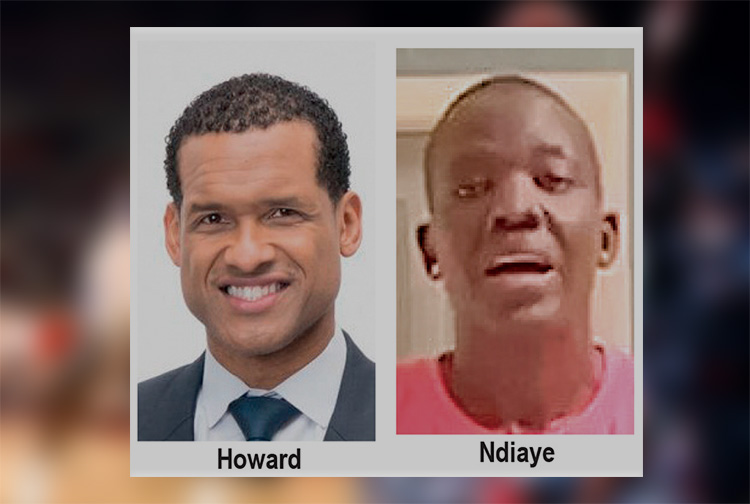
The U.S. Embassy in Colombo welcomed the U.S. Sports Envoys to Sri Lanka, former National Basketball Association (NBA) and Women’s National Basketball Association (WNBA) players Stephen Howard and Astou Ndiaye, from June 8 through 14.
The Public Diplomacy section of the U.S. Embassy said that it would launch a weeklong basketball program intended to harness the unifying power of sports, made possible through collaboration with Foundation of Goodness and IImpact Hoop Lab.
While in Sri Lanka, Howard and Ndiaye, both retired professional basketball players, will conduct a weeklong program, Hoops for Hope: Bridging Borders through Basketball. The Sports Envoys will lead basketball clinics and exhibition matches and engage in leadership sessions in Colombo and Southern Province for youth aged 14-18 from Northern, Uva, Eastern and Western Provinces, offering skills and leadership training both on and off the court. The U.S. Envoys will also share their expertise with the Sri Lanka Basketball Federation, national coaches, and players, furthering the development of basketball in the country. Beyond the clinics, they will collaborate with Sri Lankan schoolchildren to take part in a community service project in the Colombo area.
“We are so proud to welcome Stephen and Astou as our Sports Envoys to Sri Lanka, to build on the strong people-to-people connections between the United States and Sri Lanka,” said U.S. Ambassador Julie Chung. “The lessons that will be shared by our Sports Envoys – communication, teamwork, resilience, inclusion, and conflict resolution – are essential for leadership development, community building, equality, and peace. The U.S. Sports Envoy program is a testament to our belief that sports can be a powerful tool in promoting peace and unity.”
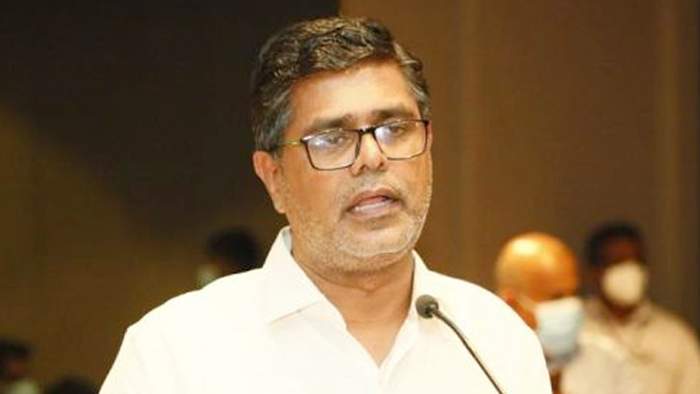
SJB Colombo District MP Mujibur Rahuman in parliament demanded to know from the government the reasons for CEB suspending the leave of all its employees until further notice from Thursday.
MP Rahuman said that the CEB has got an acting General Manager anew and the latter yesterday morning issued a circular suspending leave of all CEB employees with immediate effect until further notice.
“We demand that Minister Kanchana Wijesekera should explain this to the House. This circular was issued while this debate on the new Electricity Amendment Bill was pending. There are many who oppose this Bill. The Minister must tell parliament the reason for the urge to cancel the leave of CEB employees,” the MP said.However, Speaker Mahinda Yapa Abeywardena prevented Minister Wijesekera responding to the query and said that the matter raised by MP Rahuman was not relevant.
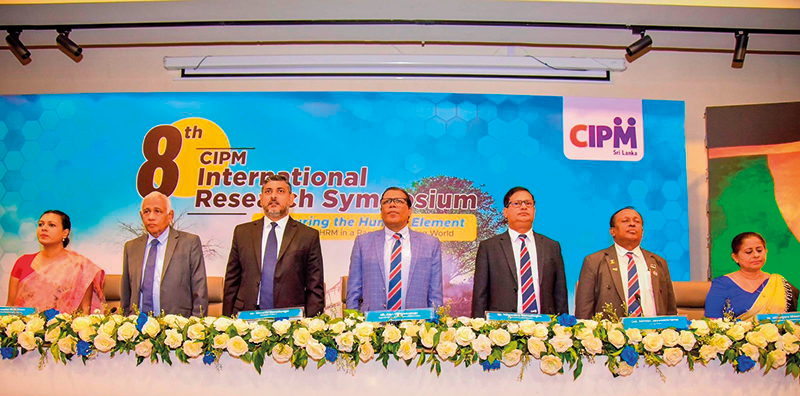
The Chartered Institute of Personnel Management (CIPM) successfully concluded the 8th Annual CIPM Symposium, which took place on 31st May 2024. Themed “Nurturing the Human Element—Redefining HRM in a Rapidly Changing World,” the symposium underscored the pivotal role of human resource management (HRM) in today’s dynamic global landscape. Since its inception in 1959, CIPM has been dedicated to advancing the HR profession through education, professional development, and advocacy, solidifying its position as Sri Lanka’s leading professional body for HRM.
Ken Vijayakumar, the President of the CIPM, graced the occasion as the chief guest. The symposium commenced with the welcome address by the Chairperson, Prof. Arosha Adikaram, followed by the Web Launch of the Symposium Proceedings and Abstract Book by the CIPM President. The event featured distinguished addresses, including a speech by Chief Guest Ken Vijayakumar, President of CIPM, and an address by Guest of Honor Shakthi Ranatunga, Chief Operating Officer of MAS Holdings Pvt. Ltd., Sri Lanka.
The symposium also featured an inspiring keynote address by Prof. Mario Fernando, Professor of Management and Director of the Centre for Cross Cultural Management (CCCM) at the University of Wollongong, Australia.
Vote of Thanks of the inauguration session was delivered by Dr. Dillanjani Weeratunga, Symposium Co-chair.
The symposium served as a comprehensive platform for researchers to present their findings across a wide range of critical topics in HRM. These included Cultural Diversity and Inclusion, Talent Development and Retention, Ethical Leadership and Corporate Social Responsibility, Adapting to Technological Advancements, Mental Health and Well-being at Work, Global Workforce Challenges, Employee Empowerment, and Reskilling and Upskilling.
The plenary session was led by Prof. Wasantha Rajapakse. Certificates were awarded to the best paper presenters during the valedictory session, followed by a vote of thanks delivered by Kamani Perera, Manager of Research and Development.
The annual symposium of CIPM was a truly inclusive event, attracting a diverse audience that spanned undergraduates, graduates, working professionals, research scholars and lecturers. This widespread interest highlights the symposium’s significance in the field of HRM, offering a unique opportunity for everyone to network and learn from scholarly brains.The CIPM International Research Symposium was sponsored by Hambantota International Port, Sri Lanka Institute of Information Technology (SLIIT), E B Creasy & Co. PLC, and Print Xcel Company.



US sports envoys to Lanka to champion youth development

Rahuman questions sudden cancellation of leave of CEB employees


