
News
Japan’s development assistance to SL transcribes to wide infrastructure development

by Steve A. Morrell
The Japanese Embassy convened a seminar on ‘Quality Infrastructure’ to commemorate International Cooperation Day.
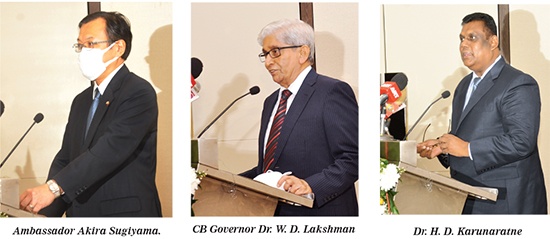
Japanese Ambassador, Akira Sugiyama, in his opening remarks said under the Official Development Assistance (ODA) program of the government of Japan, infrastructure development to Sri Lanka has continued for 50 years.
In addition, Japan’s entry to the Colombo Plan on October 6, 1954 marked an indelible milestone in economic assistance and cooperation to Sri Lanka over this period.
He said ‘Quality Infrastructure’, including sustainable growth, was the hallmark of development programs initiated by Japan. Such growth included open access, transparency, economic efficiency including life cycle cost and financial viability.
Reverting to the 2019 G20 Osaka Summit, he said emerging donors under Japan’s leadership endorsed G20 principles of quality Infrastructure Investment, which will “guide us a long way into the future as we witness shifts towards the Indo Pacific Region”.
The majority member states covering G20 countries are in the Region covered by the Colombo Plan.
Japan’s economic cooperation with the Sri Lankan government goes back 56 years covering human resources, and the post-war emerging economic cooperation which, to this day chartered an unbroken course of development, that could be aptly described a trend of continuation of mutual friendship between both countries.
Japan’s knowledge-based assistance was continued with no interruption. Around 13,350 persons were exposed to education in Japanese Universities including technical assistance and training in a wide choice of technology that benefited infrastructure development in Sri Lanka.
Chief guest at the ceremony, Central Bank Governor, Professor W. D. Lakshman, in his presentation to the seminar, referred to Sri Lanka and Japan as ‘Distant Neighbours’, a term he coined to describe the long-term development and continuous expansion and infrastructure which is an ongoing phenomenon of economic cooperation.
The ODA program was index to such development, including the onset of television, which was unheard of before 1977; broadcasting development, power, water, the Colombo harbor and additional projects worth many billions of dollars, which were of sustained benefit to Sri Lanka, he noted.
Such benefits also included agriculture improvement and allied technology generating expansion of techniques that percolated to the rural sector, he said.
Although imports from Japan to Sri Lanka were substantial, it was of interest to also note that exports from Sri Lanka to Japan amounted to about US$ 85 million in 2019. The main commodity was tea to Japan. Such exports did not match imports of technology or equipment from Japan to Sri Lanka, but the advantage was that Sri Lanka was exposed to advanced technology made available as a sequel to such imports, Prof. Lakshman outlined.
His presentation also referred to Anagarika Dharmapala’s visit to Japan in the late 19th century, initiating friendship between both countries at the time.
The Governor also referred to the celebrated speech of President J. R. Jayewardene at the San Francisco conference, where he stressed it was important that Japan should be supported by world powers to regain its technology and internal infrastructure to make progress in a world of peace.
Charman Institute of Policy Studies, Prof. H. D. Karunaratne, in his presentation, expanded on the importance of Japan not only to Sri Lanka, but its economic impact on the South East Asian Region was a growing phenomenon of technology and growth.
Senior Lecturer, Department of Economics, University of Colombo, Dr. D. D. P. M. Dunusinghe also spoke.
(Pix by Dharmasena Welipitiya)




The U.S. Embassy in Colombo welcomed the U.S. Sports Envoys to Sri Lanka, former National Basketball Association (NBA) and Women’s National Basketball Association (WNBA) players Stephen Howard and Astou Ndiaye, from June 8 through 14.
The Public Diplomacy section of the U.S. Embassy said that it would launch a weeklong basketball program intended to harness the unifying power of sports, made possible through collaboration with Foundation of Goodness and IImpact Hoop Lab.
While in Sri Lanka, Howard and Ndiaye, both retired professional basketball players, will conduct a weeklong program, Hoops for Hope: Bridging Borders through Basketball. The Sports Envoys will lead basketball clinics and exhibition matches and engage in leadership sessions in Colombo and Southern Province for youth aged 14-18 from Northern, Uva, Eastern and Western Provinces, offering skills and leadership training both on and off the court. The U.S. Envoys will also share their expertise with the Sri Lanka Basketball Federation, national coaches, and players, furthering the development of basketball in the country. Beyond the clinics, they will collaborate with Sri Lankan schoolchildren to take part in a community service project in the Colombo area.
“We are so proud to welcome Stephen and Astou as our Sports Envoys to Sri Lanka, to build on the strong people-to-people connections between the United States and Sri Lanka,” said U.S. Ambassador Julie Chung. “The lessons that will be shared by our Sports Envoys – communication, teamwork, resilience, inclusion, and conflict resolution – are essential for leadership development, community building, equality, and peace. The U.S. Sports Envoy program is a testament to our belief that sports can be a powerful tool in promoting peace and unity.”
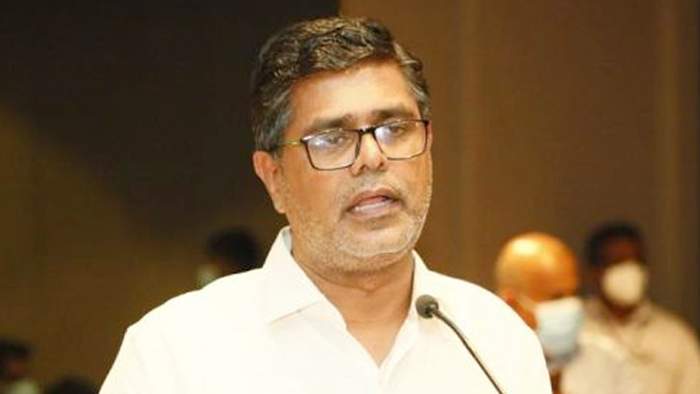
SJB Colombo District MP Mujibur Rahuman in parliament demanded to know from the government the reasons for CEB suspending the leave of all its employees until further notice from Thursday.
MP Rahuman said that the CEB has got an acting General Manager anew and the latter yesterday morning issued a circular suspending leave of all CEB employees with immediate effect until further notice.
“We demand that Minister Kanchana Wijesekera should explain this to the House. This circular was issued while this debate on the new Electricity Amendment Bill was pending. There are many who oppose this Bill. The Minister must tell parliament the reason for the urge to cancel the leave of CEB employees,” the MP said.However, Speaker Mahinda Yapa Abeywardena prevented Minister Wijesekera responding to the query and said that the matter raised by MP Rahuman was not relevant.
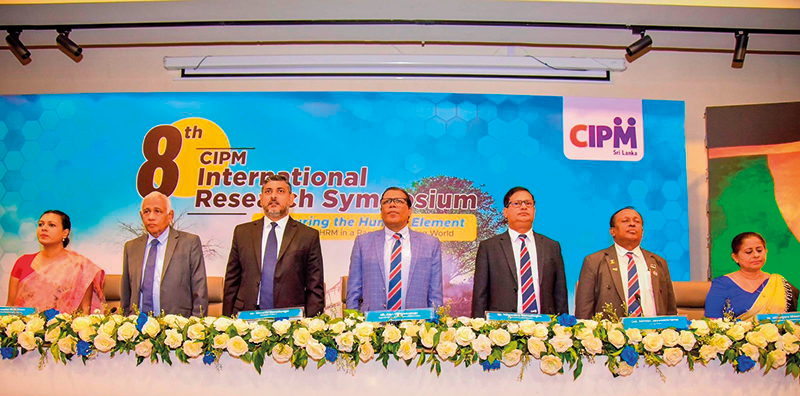
The Chartered Institute of Personnel Management (CIPM) successfully concluded the 8th Annual CIPM Symposium, which took place on 31st May 2024. Themed “Nurturing the Human Element—Redefining HRM in a Rapidly Changing World,” the symposium underscored the pivotal role of human resource management (HRM) in today’s dynamic global landscape. Since its inception in 1959, CIPM has been dedicated to advancing the HR profession through education, professional development, and advocacy, solidifying its position as Sri Lanka’s leading professional body for HRM.
Ken Vijayakumar, the President of the CIPM, graced the occasion as the chief guest. The symposium commenced with the welcome address by the Chairperson, Prof. Arosha Adikaram, followed by the Web Launch of the Symposium Proceedings and Abstract Book by the CIPM President. The event featured distinguished addresses, including a speech by Chief Guest Ken Vijayakumar, President of CIPM, and an address by Guest of Honor Shakthi Ranatunga, Chief Operating Officer of MAS Holdings Pvt. Ltd., Sri Lanka.
The symposium also featured an inspiring keynote address by Prof. Mario Fernando, Professor of Management and Director of the Centre for Cross Cultural Management (CCCM) at the University of Wollongong, Australia.
Vote of Thanks of the inauguration session was delivered by Dr. Dillanjani Weeratunga, Symposium Co-chair.
The symposium served as a comprehensive platform for researchers to present their findings across a wide range of critical topics in HRM. These included Cultural Diversity and Inclusion, Talent Development and Retention, Ethical Leadership and Corporate Social Responsibility, Adapting to Technological Advancements, Mental Health and Well-being at Work, Global Workforce Challenges, Employee Empowerment, and Reskilling and Upskilling.
The plenary session was led by Prof. Wasantha Rajapakse. Certificates were awarded to the best paper presenters during the valedictory session, followed by a vote of thanks delivered by Kamani Perera, Manager of Research and Development.
The annual symposium of CIPM was a truly inclusive event, attracting a diverse audience that spanned undergraduates, graduates, working professionals, research scholars and lecturers. This widespread interest highlights the symposium’s significance in the field of HRM, offering a unique opportunity for everyone to network and learn from scholarly brains.The CIPM International Research Symposium was sponsored by Hambantota International Port, Sri Lanka Institute of Information Technology (SLIIT), E B Creasy & Co. PLC, and Print Xcel Company.



US sports envoys to Lanka to champion youth development

Rahuman questions sudden cancellation of leave of CEB employees


