
Life style
Jack of all fruits the “Vegan Sensation “

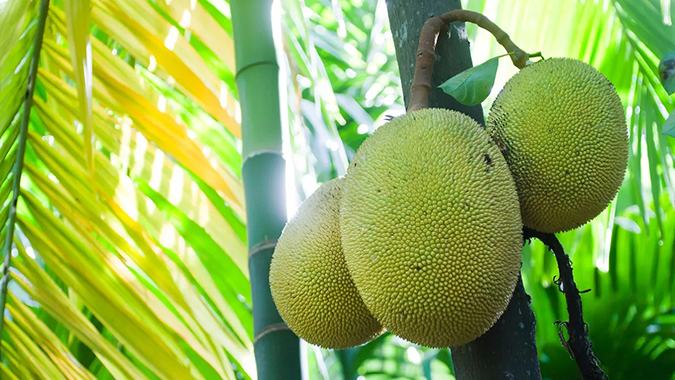
Sri Lankans began planting jackfruit trees to gain food self-sufficiency during British rule, and they’ve since helped islanders avoid starvation.
My mother grew up in a house of eight people in Kurunegala, Sri Lanka, 100km north-east of Colombo. During the island’s severe droughts in the 1970s, most of her family’s humble, home-cooked meals consisted of boiled jackfruit served in a clay pot with a handful of freshly grated coconut. This simple, carb-rich meal fused with natural fats fuelled enough energy for the farmer-family to toil day and night in the dry plains.
Today, Starbucks serves jackfruit in wraps, while Pizza Hut offers it as a topping. The London Evening Standard called jackfruit “the new kimchi, kale and cauliflower all rolled into one”.
Pinterest named it “the hottest food trend of 2017”, and more recently, The Guardian declared it “a vegan sensation” thanks to its shredded meat texture.
But for my mother, her memories of growing up are studded with her eldest sister’s myriad jackfruit dishes. She’s particularly fond of kiri kos, a creamy jackfruit curry cooked in coconut milk. For kiri kos, my aunt plucked unripe jackfruits. Decades later in the early 2000s, it was the same tree that pleased my jackfruit cravings as a child. My mother recalls the days where I sat side by side with her as she removed and discarded the sticky white sap – koholla, as she called it in Sinhala – from ripe jackfruit, gobbling up each yellow, egg-like pod.

I loved the strong smell of the ripe fruit. People in the West often describe it as “stinky”, but for me, other Sri Lankans and those living between many parts of India and the rainforests of Malaysia where the fruit naturally grows, this seasonal smell of ripe jackfruit brings immense joy.
Jackfruit is the world’s largest tree-borne fruit and it has a spiky skin that changes colour from green to yellow as it ripens. We use unripe jackfruit in our cooking and eat the ripe fruit raw, just as we eat a ripe mango or an apple. While the West is now touting it as an ethical meat alternative, for centuries, this humble fruit has been revered by Sri Lankans, as it has repeatedly saved the island from starvation.
Across Sri Lanka, the jackfruit tree is known as bath gasa (“rice tree”). Sri Lankans are rice eaters and pre-colonial Sri Lanka took pride in the country’s vast reservoirs and irrigation canals that harnessed monsoon rains, supplying water for paddy cultivation. But when British forces occupied the island starting in 1815 and subsequently stripped farmers of their land, they made it difficult for islanders to grow rice and instead expanded plantation crops such as tea, rubber and cinnamon for their export gains.
In 1915, a member of Sri Lanka’s independence movement named Arthur V Dias, who had been sentenced to death by the British for his perceived role in an uprising, was freed from prison. Upon his release, Dias dedicated himself to helping Sri Lankans fight British rule and he realized that islanders would soon face food shortages as rice cultivation continued to decline.
During his independence movement marches in Sri Lanka’s central highlands, he also saw the destruction of the island’s native jackfruit trees. When he learnt about the harrowing food shortages caused by World War One across Europe, Dias sought to establish food security and self-sufficiency throughout Sri Lanka.
“One person can’t build a tank for paddy cultivation, but Arthur V Dias realized he could plant jackfruit trees, which [would] be the same as rice and eradicate starvation in Sri Lanka,” said Damith Amarasinghe, a history teacher at St Mary’s Maha Viduhala in the town of Uswetakeiyawa.
Dias came up with the ambitious goal of planting one million jackfruit trees across Sri Lanka. A planter by occupation, Dias imported jackfruit seeds from Malaysia and gathered healthy seeds for germination. He visited villages to distribute seedlings and mailed seeds to far-flung corners in the country. Over time, Dias’ campaign paved the way to many successful jackfruit plantations across the country and earned him the heroic nickname of Kos Mama, or Uncle Jack.
Today, Dias is considered a national hero, and like most Sri Lankan children, I first learned about Dias in a school textbook. His jackfruit campaign also helped establish food security in Sri Lanka during World War Two while nearby places such as Bengal and Vietnam experienced horrific famines in the 1940s. Amarasinghe explained that jackfruit was also known as the “starvation fruit” in Sri Lanka during the 1970s, fleetingly transferring me to my mother’s memories of her childhood.

In the 1970s, a combination of inflation, droughts and a food shortage pushed Sri Lanka to the verge of collapse. A 1974 New York Times article quotes Sri Lanka’s then-prime minister Sirimavo Bandaranaike as saying the dire economic situation has “almost squeezed the breath out of us – we are literally fighting to survive”.
But thanks to Dias’ campaign in the early 1900s, people had jackfruit growing in their backyards. Amarasinghe explained that those saplings – which had become tall, fruit-bearing trees long before the 1970s – are what got people through the crisis.
“My grandmother hailed from a well-to-do family, but the government only allowed them to purchase 2kg of rice for a week. During these years, it’s jackfruit that kept them fed,” Amarasinghe told me.
Most recently, Amarasinghe says that jackfruit also became a staple during Sri Lanka’s months-long curfew to control Covid-19. During the initial weeks of the pandemic, many people in rural villages lost their incomes and it took weeks or even months for government welfare programmes to reach these remote hamlets. Without access to money or food, many villagers resorted to boiling jackfruit – just as my mother’s family did in the 1970s.
But jackfruit isn’t just a starvation fruit. The island’s deep love and gratitude for jackfruit has birthed a host of flavourful delicacies, and we welcome every bit of it into our diverse cuisine. Tender baby jackfruit without seeds go into a flavourful curry known as polos ambula. The curry’s labour-intensive process involves slow cooking the young fruit in a clay pot over an earthen fire for at least six hours. As the hours pass, the baby jackfruit slices simmer in a spice-infused coconut broth, soaking up the flavours of cloves, cardamom, dried tamarind and other aromats.
Ripe jackfruit pods are slimy and taste better with a sprinkle of salt. Seeds don’t go to waste in our homes; we eat them boiled. When combined with a ground mix of pan-fried rice and shredded coconut, boiled seeds make for a dark curry called kos ata kalu pol maluwa. My mother loves seeds as a snack, smoking them over a charcoal fire.
My favourite is my father’s kos ata aggala, pan-roasted and ground jackfruit seeds blended with scraped coconut, sugar and a hint of pepper that are formed into balls for sublime taste and a subtle crunch. He makes them for evening tea when I’m home as a token of his love.

This jack-of-all-fruits’ versatility runs beyond the kitchen. “It’s hard to think of another tree with so many uses,” said Diwani Welitharage, a pharmacist who cooks with locally sourced ingredients in her spare time. Welitharage cites jackfruit trees’ popularity as timber and the many uses of its leaves and flowers in Ayurvedic medicine to treat diabetes. Rich in carbs, jackfruit is also a good source of dietary fibre and vitamin C.
Welitharage uses jackfruit flour in muffins and cakes, and fries sliced jackfruit pods into chips laden with sugar. Similarly, many Hela Bojun restaurants – an initiative by the Ministry of Agriculture allowing women to cook traditional Sri Lankan cuisine and earn a living – prepare kos kottu. Kottu, a popular street food and hangover cure, is a greasy mix of leftover flatbread, sliced vegetables, eggs and meat. The female-run Hela Bojun stalls dish up a healthier vegan kottu using boiled jackfruit pods.
Though jackfruit is traditionally cooked at home, this humble fruit is increasingly found in many upscale restaurants across the country.
“One day we had additional baby jackfruit, so I thought of preparing cutlets [a croquette-like snack] with it for guests who are vegetarian or vegan,” said chef Wasantha Ranasinghe at Upali’s by Nawaloka, a popular restaurant in Colombo that serves authentic local dishes. His tender jackfruit cutlets, served with a homemade spicy chilli sauce, soon became a hit among the epicureans frequenting the restaurant.
Curious to see how jackfruit fares at hipster cafes, I visited the chic Colombo restaurant Cafe Kumbuk, which plates tacos with fried baby jackfruit alongside mango salsa and guacamole. “Living in Sri Lanka, I realized jackfruit is such a widely available, versatile fruit that can be cooked and enjoyed in so many ways,” said cafe founder Shana Dandeniya, who returned to Sri Lanka a few years ago after growing up in the UK. “To me, it’s one of the greatest local superfoods we have access to, and we should champion it more.” – BBC



Institute of Hospitality Sri Lanka
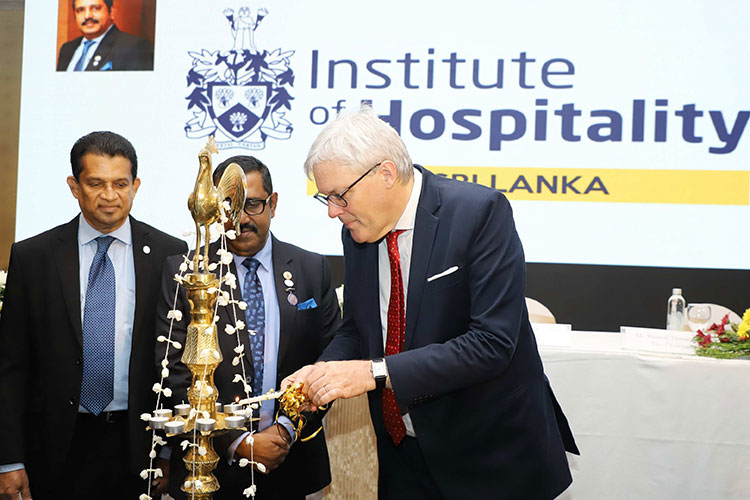
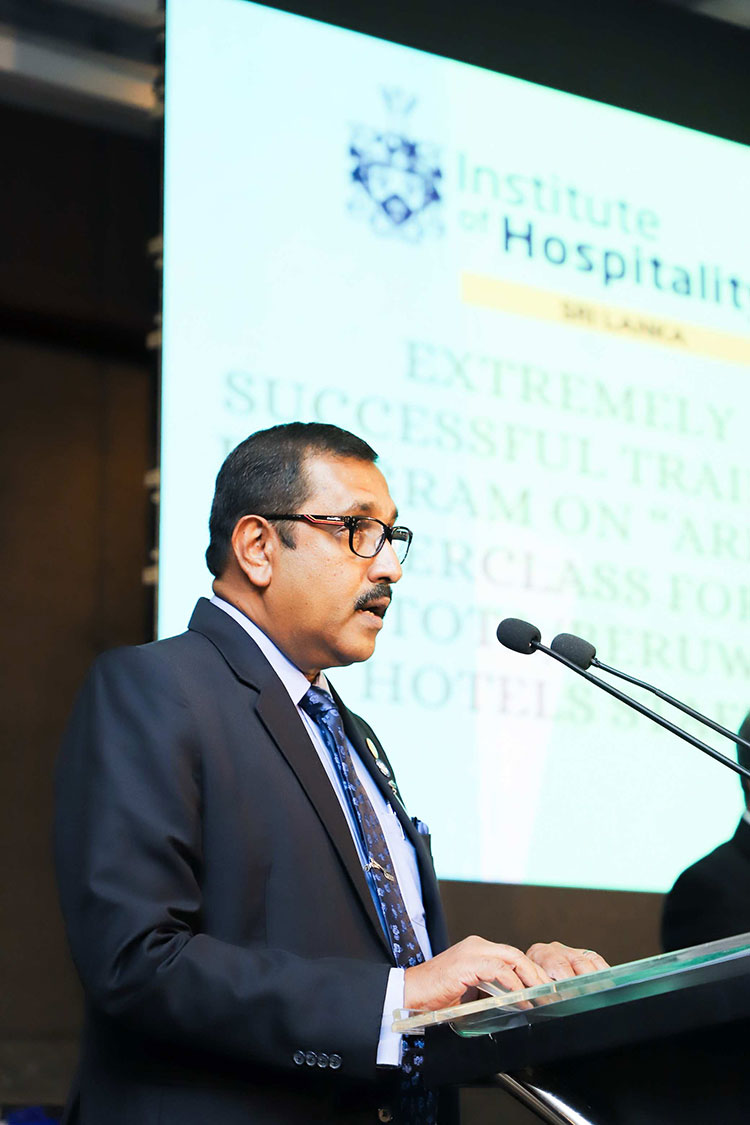
 The 32nd Annual General Meeting (AGM) of the UK-based Institute of Hospitality’s Sri Lanka Chapter was held recently at the Ramada Hotel Colombo,.The event provided an evening of camaraderie , reflection of the past and present achievements,setting new benchmarks for the future
The AGM had the presence of two distinguished guests, the Chief Guest Opposition Leader Sajith Premadasa, and the Guest of Honour British High Commissioner to Sri Lanka, Andrew Patrick. Their inspiring speeches were lauded by all hoteliers who were present at the occasion
A special thanks was extended to Robert Richardson, CEO of the Institute of Hospitality UK, along with his team, sponsors, committee members, and all attendees for making the event memorable.
Dr. Harsha Jayasingh, Past President of the Institute of Hospitality (UK) Sri Lanka Chapter, emphasised the Institute’s longstanding history and the strength of its Sri Lankan branch. “The Institute of Hospitality (IH) UK has a history of 86 years, and we are proud to be the Sri Lanka Branch. IH Sri Lanka is much stronger now with many members from all areas of the hospitality industry,” he stated.
Dr. Jayasingh highlighted the significant role of tourism in Sri Lanka’s economy,. He said tourism it is the third-largest source of revenue for the country. “Tourism accounts for about 13.3% of total foreign exchange earnings and employs 450,000 people directly and indirectly. The hospitality industry in this island of pearl holds tremendous potential for economic growth, job creations, and cultural exchange,” he added.
He also pointed out more women should be attracted to the industry and advocated for the use of technology in hospitality sector to attract the younger generation.
The newly appointed Chairman Ramesh Dassanayake spoke about the challenges faced by the industry, including the reluctance of youth to join the sector. . Dassanayake expressed concerns over the migration of staff between hotels and the overall ‘brain drain’ in the sector. ” We must maintain high standards in the hotel We must try to attract tourists to Sri Lanka, we must have with many facilities Hence, hotel schools and other professional institutions involved in skills development mustincrease their intakes,” he pointed out.
Chief Guest Sajith Premadasa emphasised the importance of eco tourism and said “We need to have an environmental policy related to tourism in place,” . .
The 32nd AGM of the Institute of Hospitality UK, Sri Lanka Chapter, was a testament to the strength and potential of Sri Lanka’s hospitality industry. The insights and commitments shared during the event set a new benchmark for the future.(ZC)



Pix by Thushara Attapathu
Life style
He recognizes human identity beyond boundaries of gender, race, nationality and religion.
Visit of Sri Gurudev to Sri Lanka
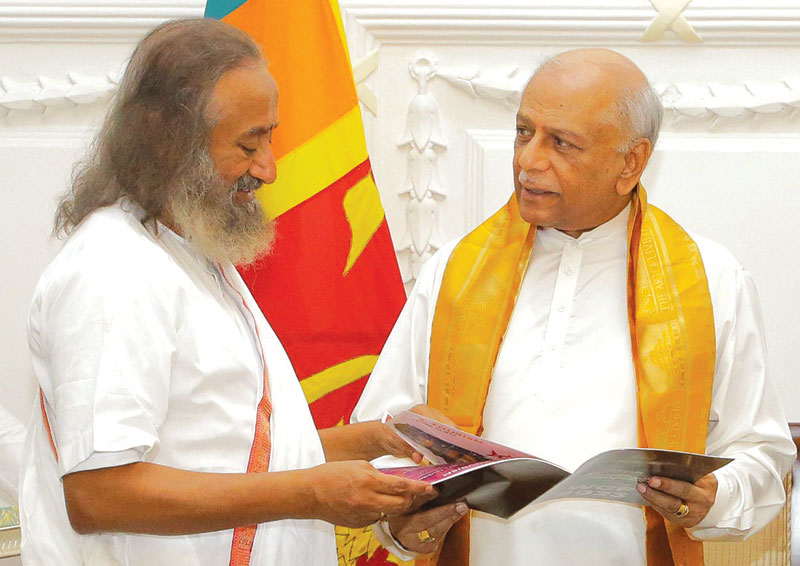
Humanitarian, spiritual leader and Global Ambassador of Peace Gurudev Sri Sri Ravi Shankar (Sri Gurudev) was in Sri Lanka on a three day tour on the invitation of the Prime Minister of Sri Lanka Dinesh Gunewardene. Gurudev who inspired a wave of volunteerism and service to moot one of the largest volunteer-based organisations in the world – The Art of Living – visited the various projects under the aegis of the foundation and launched twelve vocational and technical centers around the island. He was accompanied by thousands of followers from Sri Lanka and around the world.
Gurudev who visited Sri Lanka for the sixth time also had a first day cover launched in honour of his visit. He is a strong proponent of spreading happiness, using the unique Sudarshan Kriya, yoga, meditation and practical wisdom to unite people, empower individuals and transform communities. His programmes provide techniques and tools to live a deeper, more joyous life, while his non-profit organisations recognize the human identity beyond the boundaries of gender, race, nationality and religion.
The Art of Living which has more than 30,000 teachers and over one million volunteers across 180 countries has touched in excess of five hundred million people around the world. CNN called it “Life Changing” and The Washington Post headlined it, “Fresh air to millions”.
In Trincomalee, Gurudev met with war victims and had a heartwarming engagement with the children from the children’s homes run by the Foundation. He also visited the Koneswara Temple in Trincomalee and graced the Kumbhabhishekam at Seetha ecogPnize the human identity beyond the boundaries of gender, race, nationality and religion. Amman temple at Nuwara Eliya. He held discussions with the trustees on the progress of the foundation’s social service projects, while also holding a special event – Ekamuthuwa – attended by a large number of dignitaries and his devotees from around the world.
His time with the Prime Minister was spent discussing the prospects of unity in diversity and uniting Sri Lanka by adding happiness into the formula of living. In addition he had discussions with the Speaker of the Parliament of Sri Lanka Mahinda Yapa Abeywardena, prominent business stewards and civil society leaders.
by Zanita Careem
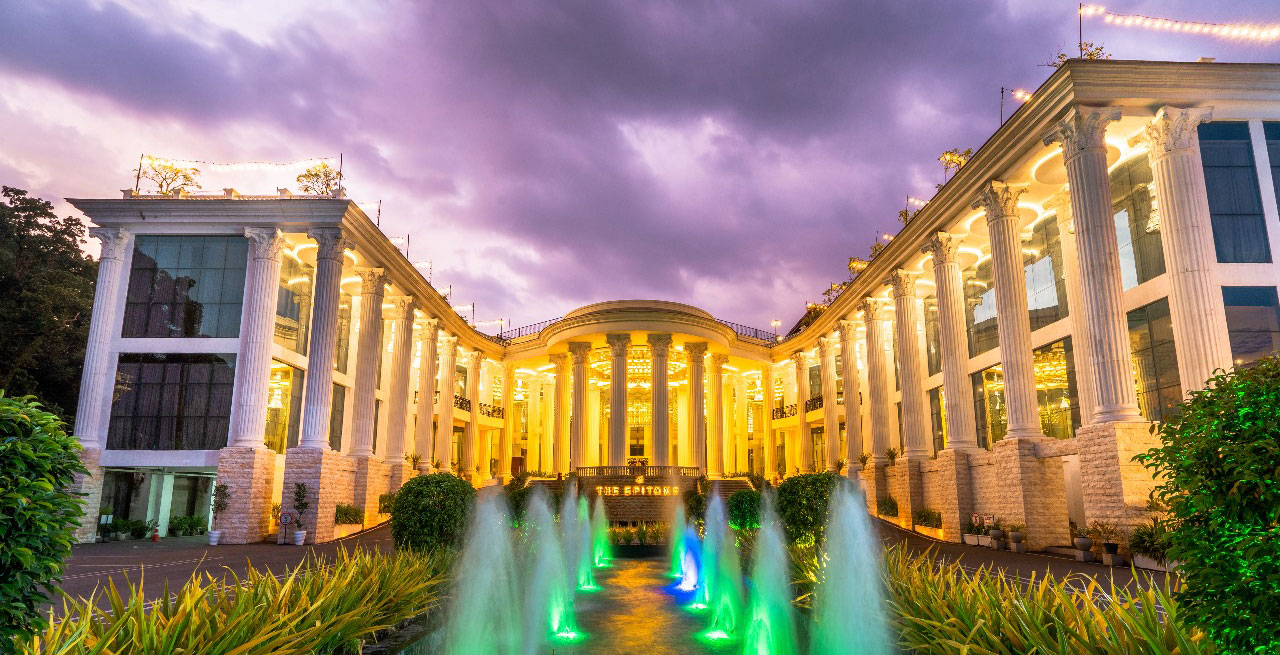
Envison your dream wedding day come to life at the Epitome Hotel, a prestigious city hotel in Kurunegala offering an unrivalled luxury rendors experience for weddings.
The venue is designed to embody opulence and luxury from all quarters for a spectacular wedding in kurunegala,Thier ballroom is the largest banquet facility in Sri Lanka It can be divided into six luxurious pillarless wedding halls on the ground floor and 25pax smaller banquet halls.
It can be easily named as a five star heaven in the heart of the city contributing to a myriad of immense experiences tailored to inspire and delight wedding experiences.
From opulent décor set up to exquisite table decor, lavish food, every detail is meticulously curated to spark your imagination and ignite creativity for a perfect wedding. The previous prestigious wedding shows season one and season two attracted large crowds
were unique events which gave the wedding vendors and potential clients had an opportunity to connect and interact with each other. Beyond being a showcase it was a chance for the wedding vendors to unite and contribute to the vibrancy of the wedding industry. The wedding show covered all area of the bridal industry providing a comprehensive variety of bridal supplies from Sri lanka and became the most popular bridal exhibitions in Kurunegala.This bridal exhibitions allowed brides and grooms to experience first hand the products and services available from suppliers in Sri Lanka
These wedding shows held at The Epitome created a benchmark and gave an opportunity for vendors to create connections to the utmost satisfaction said Harshan Lakshita Executive Director. of the magnificent Hotel
Our wedding shows featured experts and professionals in every field‘ It covered all areas of the bridal industry provided a comprehensive variety of bridal supplies from Sri lanka and became most popular bridal exhibition in this region.We are always open to everyone to join us at our wedding shows in the future. It is an opportunity to discover the incredible talent within our local wedding and bridal vendors to make meaningful relationships and plan thier special day at our breathtaking hotel The Epitome said General Manager Kavinda Caldera
The Epitome Hotel’s bridal show which will be held end of June will buzz with great ideas,advice and inspiration for all those who plan thier dream wedding
…….
The Hotel Epitome’s Wedding Season 3 will marked excellence, celebration and inspiration for those in the wedding industry. The exhibition halls will resonate with ideas on exquisite bridal wear to decor, florists , photography etc and showshowcase the rich tapestry of talent within the local wedding industry. .







US sports envoys to Lanka to champion youth development

Rahuman questions sudden cancellation of leave of CEB employees


