
News
Is Dr.N.M.Perera’s Solution of the 1970-75 Economic Crisis the Answer To Today’s Crisis ?

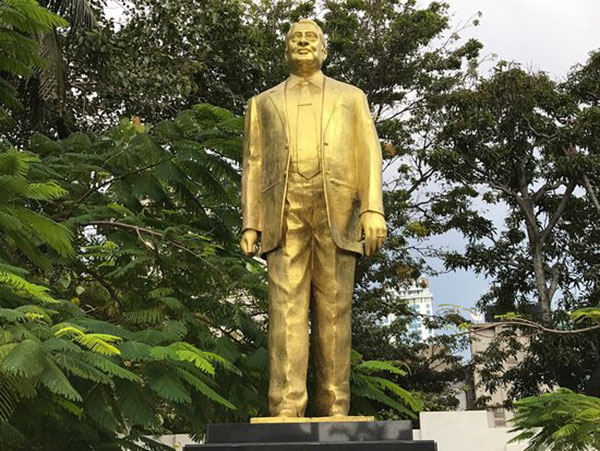
Commemoration of Dr.N.M.Perera’s 42nd Death Anniversary.
Sri Lanka’s economy is facing a deep economic crisis. But it is not alone in this situation. The whole world is in crisis. It is a systemic crisis that affects every country periodically, to a greater or lesser extent, at intervals of eight to ten years. These have led to much suffering to the people and the process of emerging from them has been very slow and painful. This is an inherent feature of the capitalist economic system.
Capitalism developed in the womb of feudalism in Europe leading to revolutionary upheavals like those of the French Revolution and the Cromwellian Revolution in England. But in the countries of the Third World like Sri Lanka or India capitalism did not arise from within, but were introduced from capitalist countries like Britain to exploit our human and material resources and markets, using the local (comprador) capitalist class, led by parties like the UNP in Sri Lanka.
Dr. N M Perera and emerging young intellectuals like Colvin R de Silva, Leslie Goonewardena, Philip Gunawardene and Dr. S A Wickremasinghe, when they were abroad recognized that this colonial subjugation would lead to perpetual poverty for the vast majority of the Sri Lankan people. A true understanding of the nature of capitalism and imperialism was achieved through a study of Marxism. They became Marxist revolutionaries committed to the defeat of capitalism and its replacement by socialism globally and thereby in Sri Lanka.
Dr N.M. Perera obtained a BSc, PhD and DSc from the prestigious London School of Economics of the London University. He was a favourite pupil of the legendary Prof. Harold J. Laski, who was also an advisor to the Labour Party, who said that NM had all the qualities needed to be an English Chancellor of the Exchequer (a Finance Minister). Following NMs return to Sri Lanka and his performance here, Sir Ivor Jennings who was then the Vice Chancellor of the only University of Ceylon, said that he had all the qualities required of a Labour Prime Minister in Britain. Instead of rising to great heights serving the British Empire that ruled the world, NM chose to serve the people of Sri Lanka by fighting to win independence from the British.
When NM and these Left leaders returned to Sri Lanka (Ceylon) they helped form the Suriyamal Movement to save the people whom the British rulers allowed to suffer from malaria without medicine and food. Dr. N.M. was referred to as “parippu mahattaya”, as he supplied these needs climbing steep hills by foot despite the presence of leeches and snakes, as there were few roads. In 1935 they (NM, Colvin, Philip, SA and Leslie) formed the Lanka Sama Samaja Party( LSSP). They devoted all their energy and income, day and night, to fight for the rights of our people against the British rulers and their local agents. Their main objective was winning complete independence (unlike the Dominion status that was given by the British to D.S. Senanayake and the UNP in 1948 to continue their exploitation here). Complete independence was finally achieved in 1972, overcoming UNP resistance, through the Republican Constitution drafted by Colvin as Minister of Constitutional Affairs in the Coalition Government led by Sirimavo Bandaranaike. This was 22 years after India as UNP and TNA resistance had to be overcome.
The second objective was to overcome poverty and injustice and narrow the rich minority /poor majority gap, by establishing a society with social equity , a “sama samajaya”. In Sri Lanka, like in the whole world , the rich poor gap is widening and society is becoming more unstable. With the global capitalist crisis, and the fall of the US and western economies and the rise of China purely by trade (without any imperialist conquests) the USA is now gearing for war to lift its economy which depends on arms sales, as it produces 60% of global supply. The aim is also to achieve regime change in China.
The LSSP also fought for 22 other demands and won many of them – free education, free health, the eight hour working day, overtime payment, pension, EPF and other rights. While doing all this, NM found time to attain many achievements; MP for Ruwanwella and Yatiyantota, Leader of the Opposition, Minister of Finance, a co-convenor of the global Group of 77 Ministers of Economics, the Mayor of Colombo and Leader of the LSSP from its inception upto his death. As an economist and political scientist he wrote copiously and was a popular speaker, in Parliament, and at public meetings; he went to all parts of the country and the world. He was a good sportsman and captained Ananda College at cricket.
But among his many achievements perhaps the most valuable is his overcoming the 1970/75 economic crisis in Sri Lanka. The crisis was a result of the adverse trade balance due to the policies of the 1965/70 UNP Government that wasted our limited forex on import of luxury goods as well as local products , hitting our farmers and SMEs. On top of this he was faced with the global capitalist downturn, the rise in the price of fossil fuels by seven times due to action by OPEC. Fertilizer prices rose by 422% in 1974. The world faced the worst drought for about 30 years during this period and food prices soared, with thousands dying in various parts of the world from starvation but no one died in Sri Lanka. The price of rice rose by 60% ( from 35 to 56 pounds per ton), flour by 65%, sugar by 323%.
The prices of food items have not gone up internationally on a similar scale today. It is far lower. The local market price has gone up due to massive profiteering by middlemen in Sri Lanka, specially millers and traders. Further the farmers are in the grip of money lenders as they are in a state of chronic debt. NM took measures to relieve rural debt. All essentials were supplied through a ration card at low prices through the Cooperative system that was functioning well. Producer and Consumer Cooperatives dealt with each other, getting rid of profiteering by middlemen (traders, millers etc.) in the process. We can gain by following NMs policies to tide over the present crisis.
( Prof. Tissa Vitarana)



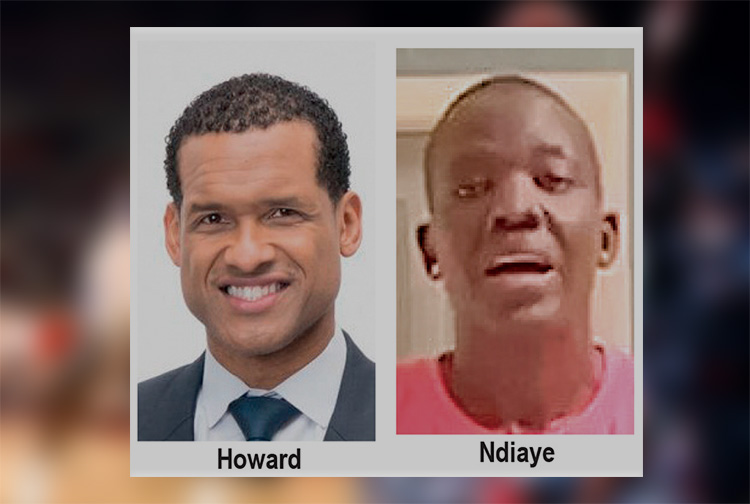
The U.S. Embassy in Colombo welcomed the U.S. Sports Envoys to Sri Lanka, former National Basketball Association (NBA) and Women’s National Basketball Association (WNBA) players Stephen Howard and Astou Ndiaye, from June 8 through 14.
The Public Diplomacy section of the U.S. Embassy said that it would launch a weeklong basketball program intended to harness the unifying power of sports, made possible through collaboration with Foundation of Goodness and IImpact Hoop Lab.
While in Sri Lanka, Howard and Ndiaye, both retired professional basketball players, will conduct a weeklong program, Hoops for Hope: Bridging Borders through Basketball. The Sports Envoys will lead basketball clinics and exhibition matches and engage in leadership sessions in Colombo and Southern Province for youth aged 14-18 from Northern, Uva, Eastern and Western Provinces, offering skills and leadership training both on and off the court. The U.S. Envoys will also share their expertise with the Sri Lanka Basketball Federation, national coaches, and players, furthering the development of basketball in the country. Beyond the clinics, they will collaborate with Sri Lankan schoolchildren to take part in a community service project in the Colombo area.
“We are so proud to welcome Stephen and Astou as our Sports Envoys to Sri Lanka, to build on the strong people-to-people connections between the United States and Sri Lanka,” said U.S. Ambassador Julie Chung. “The lessons that will be shared by our Sports Envoys – communication, teamwork, resilience, inclusion, and conflict resolution – are essential for leadership development, community building, equality, and peace. The U.S. Sports Envoy program is a testament to our belief that sports can be a powerful tool in promoting peace and unity.”
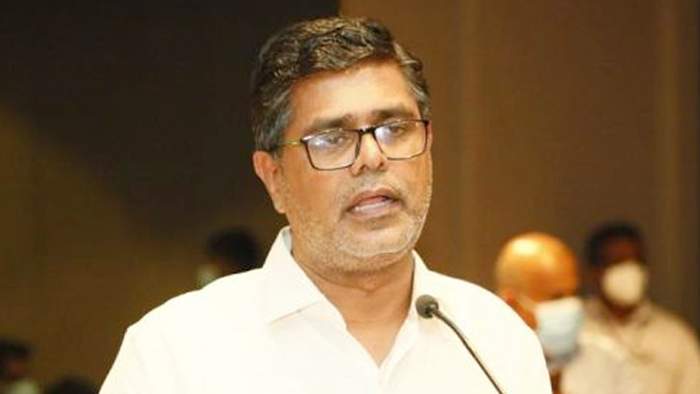
SJB Colombo District MP Mujibur Rahuman in parliament demanded to know from the government the reasons for CEB suspending the leave of all its employees until further notice from Thursday.
MP Rahuman said that the CEB has got an acting General Manager anew and the latter yesterday morning issued a circular suspending leave of all CEB employees with immediate effect until further notice.
“We demand that Minister Kanchana Wijesekera should explain this to the House. This circular was issued while this debate on the new Electricity Amendment Bill was pending. There are many who oppose this Bill. The Minister must tell parliament the reason for the urge to cancel the leave of CEB employees,” the MP said.However, Speaker Mahinda Yapa Abeywardena prevented Minister Wijesekera responding to the query and said that the matter raised by MP Rahuman was not relevant.
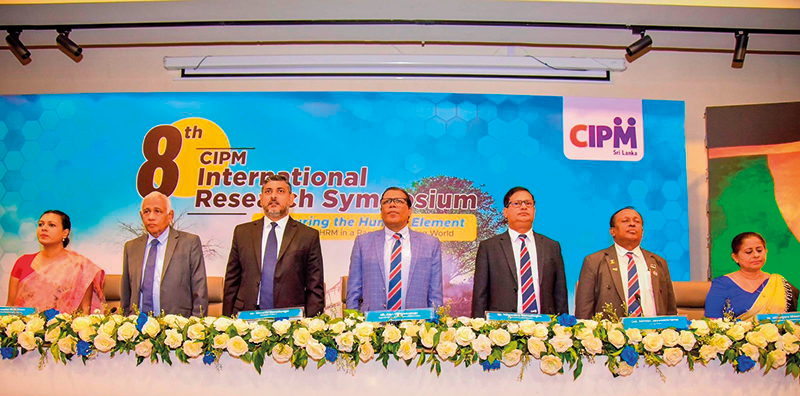
The Chartered Institute of Personnel Management (CIPM) successfully concluded the 8th Annual CIPM Symposium, which took place on 31st May 2024. Themed “Nurturing the Human Element—Redefining HRM in a Rapidly Changing World,” the symposium underscored the pivotal role of human resource management (HRM) in today’s dynamic global landscape. Since its inception in 1959, CIPM has been dedicated to advancing the HR profession through education, professional development, and advocacy, solidifying its position as Sri Lanka’s leading professional body for HRM.
Ken Vijayakumar, the President of the CIPM, graced the occasion as the chief guest. The symposium commenced with the welcome address by the Chairperson, Prof. Arosha Adikaram, followed by the Web Launch of the Symposium Proceedings and Abstract Book by the CIPM President. The event featured distinguished addresses, including a speech by Chief Guest Ken Vijayakumar, President of CIPM, and an address by Guest of Honor Shakthi Ranatunga, Chief Operating Officer of MAS Holdings Pvt. Ltd., Sri Lanka.
The symposium also featured an inspiring keynote address by Prof. Mario Fernando, Professor of Management and Director of the Centre for Cross Cultural Management (CCCM) at the University of Wollongong, Australia.
Vote of Thanks of the inauguration session was delivered by Dr. Dillanjani Weeratunga, Symposium Co-chair.
The symposium served as a comprehensive platform for researchers to present their findings across a wide range of critical topics in HRM. These included Cultural Diversity and Inclusion, Talent Development and Retention, Ethical Leadership and Corporate Social Responsibility, Adapting to Technological Advancements, Mental Health and Well-being at Work, Global Workforce Challenges, Employee Empowerment, and Reskilling and Upskilling.
The plenary session was led by Prof. Wasantha Rajapakse. Certificates were awarded to the best paper presenters during the valedictory session, followed by a vote of thanks delivered by Kamani Perera, Manager of Research and Development.
The annual symposium of CIPM was a truly inclusive event, attracting a diverse audience that spanned undergraduates, graduates, working professionals, research scholars and lecturers. This widespread interest highlights the symposium’s significance in the field of HRM, offering a unique opportunity for everyone to network and learn from scholarly brains.The CIPM International Research Symposium was sponsored by Hambantota International Port, Sri Lanka Institute of Information Technology (SLIIT), E B Creasy & Co. PLC, and Print Xcel Company.



US sports envoys to Lanka to champion youth development

Rahuman questions sudden cancellation of leave of CEB employees


