
Life style
Is dark chocolate good for you ?

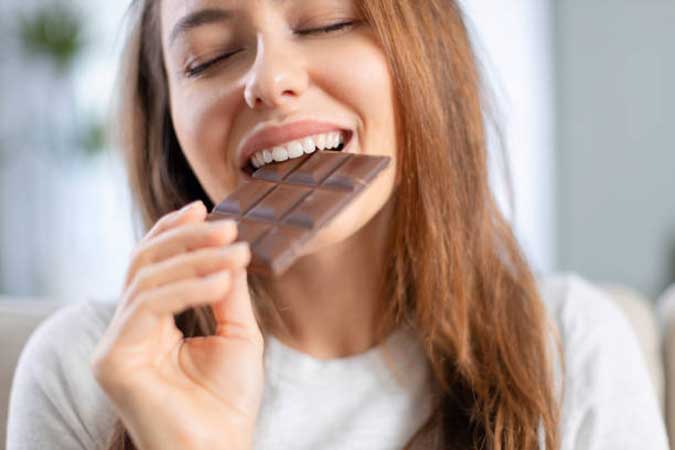
While researchers haven’t explicitly recommended eating chocolate to stave off heart disease, one paper concludes that regularly eating dark chocolate is likely to have net benefits to our health, and that the strongest evidence base pertains to heart health.
Humans have been consuming some form of chocolate for hundreds of years. For most of this time, it came in the form of liquid cacao, made from cacao beans.Some cultures – but not all – have since added sugar, milk and shiny packaging. Those still consuming cacao more traditionally, meanwhile, have ignited a debate over whether chocolate can be good for our health.
The Kuna Indians, for instance, who live on the San Blas Islands of Panama, have low blood pressure that doesn’t rise with age, low levels of heart attacks, strokes, diabetes and cancer, and they tend to die old, says Marji McCullough, senior scientific director of epidemiology research at the American Cancer Society.And contrary to the scientific consensus that excessive salt can increase blood pressure, their diet contains as much salt as the average US person’s.
To find out exactly what they consume on a daily basis, McCullough visited the Kuna Indians. She discovered that they were consuming around four cups of cocoa – cacao mixed with water and small amounts of sugar – every day.But McCullough can’t attribute the Kuna Indian’s great health to cocoa-drinking with any certainty – especially since they were also eating twice as much fruit and four times as much fish as the average US diet. Plus, they live more active lifestyles than we generally do in the West.
Many other observational studies have looked at the heart benefits of dark chocolate, but they may be biased because people who eat chocolate more frequently tend to have fewer concerns about their weight, says JoAnn Manson, professor of medicine at Harvard Medical School. She adds that they may also be healthier to begin with.In one study, researchers looked at the diets and health of 20,000 people, and found that eating up to 100g of chocolate – including milk chocolate – a day was associated with lower risk of heart disease and stroke. They controlled for other factors that might influence this, including smoking and exercise levels, but said there could be other explanations rather than the chocolate.
And then came a large clinical trial that could control for other possible causes, like diet and lifestyle. It was based on the hunch that the potential health benefits of cacao could be down to its high level of flavonoids, plant compounds also found in berries and tea.
The Cocoa Supplement and Multivitamin Outcomes Study, involving 21,000 people, found that taking 400 to 500mg daily cocoa flavanol supplements could reduce a person’s risk of dying from heart disease by reducing blood pressure and inflammation in the body.The scientists used supplements instead of actual cacao because the concentration of flavonoids can vary hugely across different chocolate brands, depending on the harvesting, manufacturing and processing, says Manson, who was also principal investigator of the trial.
Dark chocolate may have up to four times as many flavonoids as tea, but research shows that flavanol content is reduced during the manufacturing process.I don’t think any approach to increase flavanol content in chocolates will make them a ‘health food’ – Gunter Kuhnle As a consequence, there is currently no consensus about the amount of cocoa flavanols you’d need to see any health benefits, says Gunter Kuhnle, professor of nutrition and food science at the University of Reading.
While the European Food Standards Authority (EFSA) says around 200mg of cocoa flavonoids, or 10g of dark chocolate is beneficial, more recent data suggests that about 500mg per day is more likely to make a difference to our health. That’s the equivalent of a little under one small 30g bar of chocolate.
“I don’t think any approach to increase flavanol content in chocolates will make them a ‘health food’,” Kuhnle says.
Dark chocolate also contains something else we don’t know much about. It’s one of the few sources – apart from coffee – of the plant molecule theobromine.While it is a psychoactive substance, theobromine – which is in the same family as caffeine – can give you a “smoother hit” than caffeine, says Chris Alford, professor in applied psychology at the University of the West of England. And the darker the chocolate, the stronger the hit.
“If you’re eating a lot of dark chocolate, you may get a genuine hit, and the theobromine may be nicer than the caffeine hit,” he says.
For those who are concerned that chocolate increases the risk of heart disease, some researchers say it actually doesn’t need to be avoided.Dark chocolate usually also contains sugar, but one way to avoid this is to opt for chocolate with a higher percentage cocoa than the proportion found in milk chocolate.
Chocolate’s dark side
Testing the effects of cocoa flavanol supplements also bypasses the other components of dark chocolate: sugar and saturated fat. Dark chocolate often contains cocoa butter, which is high in saturated fat, which has been linked to an increased risk of heart disease.
“The fats in chocolate all come from cocoa butter, but while evidence says stearic acid has a neutral effect on cholesterol, a third of fat in cocoa butter is saturated and deleterious to health,” says Aedin Cassidy, professor at the School of Biological Sciences at Queen’s University in Belfast.
While researchers haven’t explicitly recommended eating chocolate to stave off heart disease, one paper concludes that regularly eating dark chocolate is likely to have net benefits to our health, and that the strongest evidence base pertains to heart health.And eating little portions of dark chocolate could help tackle unhealthy eating habits, says Duane Mellor, dietician at Aston Medical School.
“Small amounts of chocolate won’t be harmful and may challenge your relationship with chocolate, because you can enjoy a small amount and not feel guilty. The bitterness tends to make it self-limiting.”
The problem is – the higher the cocoa flavonoid content of a chocolate bar, the more bitter the taste, and the more bitter the taste, the less marketable it is.
“There’s a conflict between the good bits of cocoa and what we need to put with it to make it edible and enjoyable,” says Mellor.
What if the process of preserving the taste of the cocoa bean also, incidentally, results in a healthier chocolate? To make matters more complicated, it’s possible that fat and sugar helps make the flavonoids in chocolate more bioavailable, which means they’re easier for the body to take in.
“Some of these flavanols are complex organic compounds, and one way we can make them available is sticking sugar onto them,” he says.
There just isn’t enough research for anyone to look at the cocoa flavanol and sugar content in chocolate to conclude where the sweet spot is.Also, there’s still no way of knowing how many cocoa flavanols you’re getting.
“Chocolate is not a health food, and, considering the amount of sugar and fat in most chocolates, it is likely that any benefit from flavanols are negligible compared to the adverse effects of overeating,” says Kuhnle.
The quest for taste
There seems to be a surge in smaller “bean-to-bar” companies producing higher percentage cocoa with a focus on preserving taste, rather than any possible health benefits.But what if the process of preserving the taste of the cocoa bean also, incidentally, results in a healthier chocolate?
Cocoa beans grown on the Solomon Islands in the Pacific are picked at the exact moment of ripeness, says Martyn O’Dare, co-founder of chocolate brand Firetree Chocolate. The farmers then break open the cocoa pods and start the six-day process of fermentation, before drying them out. Some of the dried beans are then sent to the UK, to Firetree, where they are roasted whole.
This was how it was originally done, but in the early part of the 20th Century, things changed, according to O’Dare.Chocolate companies relied on two crops from farmers – the main crop, harvested from November to January, and the mid-crop, from January to June, he says.
“The mid-crops were smaller and slightly inferior, and weren’t initially sold. Then, companies started buying them at a discount, and farmers realised they were selling good beans at a lower price, so started mixing in the mid-crop with the main crop,” he says.While you can find flavanols in many different foods alongside chocolate, studies suggest that dark chocolate can fit within a healthy diet
“This meant that chocolate companies were receiving different size beans, which would require different roasting times. So they decided to start breaking open the shells so they could roast just the nibs.”
Whether this story is hearsay or not, the truth remains that smaller chocolate-makers might be on to something: roasting the whole bean, rather than just the nibs, often involves roasting at a lower temperature for longer.
We know that if we cook vegetables too long, fewer nutrients stay intact. But whether the same can be said for dark chocolate and the fruit it comes from, the cacao bean, remains to be seen – more research needs to be done.Still, while you can find flavanols in many different foods alongside chocolate, studies suggest that dark chocolate can fit within a healthy diet.
“It’s reasonable to have high percentage dark chocolate several times a week as long as you’re avoiding excessive calories, but it shouldn’t be perceived as a health food you try to eat more of,” says Manson.
“Try to increase flavanols through diet, with tea, berries, grapes and other fruits, as well as a reasonable, moderate amount of high-cacao chocolate,” she says. (BBC)



Institute of Hospitality Sri Lanka
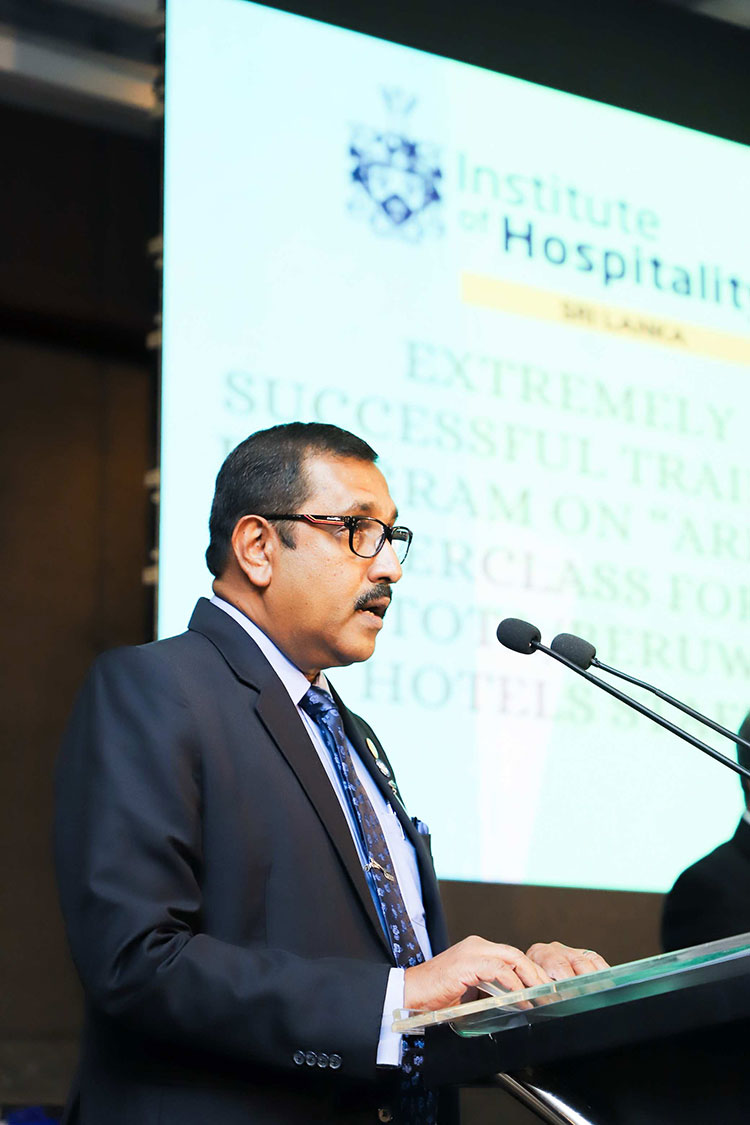
 The 32nd Annual General Meeting (AGM) of the UK-based Institute of Hospitality’s Sri Lanka Chapter was held recently at the Ramada Hotel Colombo,.The event provided an evening of camaraderie , reflection of the past and present achievements,setting new benchmarks for the future
The AGM had the presence of two distinguished guests, the Chief Guest Opposition Leader Sajith Premadasa, and the Guest of Honour British High Commissioner to Sri Lanka, Andrew Patrick. Their inspiring speeches were lauded by all hoteliers who were present at the occasion
A special thanks was extended to Robert Richardson, CEO of the Institute of Hospitality UK, along with his team, sponsors, committee members, and all attendees for making the event memorable.
Dr. Harsha Jayasingh, Past President of the Institute of Hospitality (UK) Sri Lanka Chapter, emphasised the Institute’s longstanding history and the strength of its Sri Lankan branch. “The Institute of Hospitality (IH) UK has a history of 86 years, and we are proud to be the Sri Lanka Branch. IH Sri Lanka is much stronger now with many members from all areas of the hospitality industry,” he stated.
Dr. Jayasingh highlighted the significant role of tourism in Sri Lanka’s economy,. He said tourism it is the third-largest source of revenue for the country. “Tourism accounts for about 13.3% of total foreign exchange earnings and employs 450,000 people directly and indirectly. The hospitality industry in this island of pearl holds tremendous potential for economic growth, job creations, and cultural exchange,” he added.
He also pointed out more women should be attracted to the industry and advocated for the use of technology in hospitality sector to attract the younger generation.
The newly appointed Chairman Ramesh Dassanayake spoke about the challenges faced by the industry, including the reluctance of youth to join the sector. . Dassanayake expressed concerns over the migration of staff between hotels and the overall ‘brain drain’ in the sector. ” We must maintain high standards in the hotel We must try to attract tourists to Sri Lanka, we must have with many facilities Hence, hotel schools and other professional institutions involved in skills development mustincrease their intakes,” he pointed out.
Chief Guest Sajith Premadasa emphasised the importance of eco tourism and said “We need to have an environmental policy related to tourism in place,” . .
The 32nd AGM of the Institute of Hospitality UK, Sri Lanka Chapter, was a testament to the strength and potential of Sri Lanka’s hospitality industry. The insights and commitments shared during the event set a new benchmark for the future.(ZC)


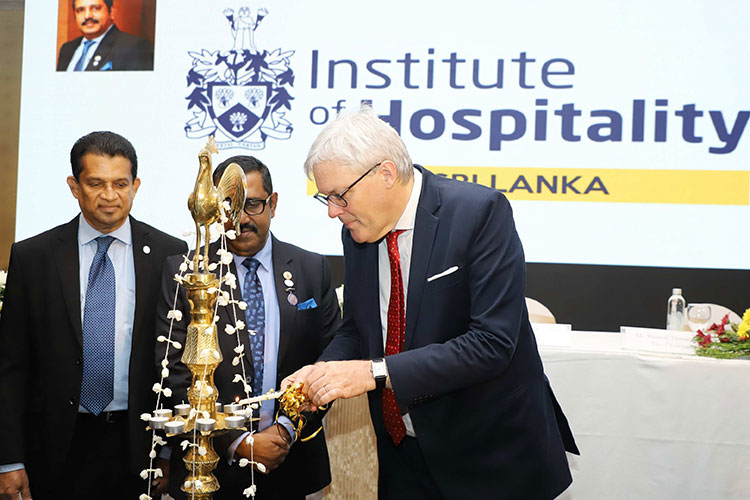

Pix by Thushara Attapathu
Life style
He recognizes human identity beyond boundaries of gender, race, nationality and religion.
Visit of Sri Gurudev to Sri Lanka
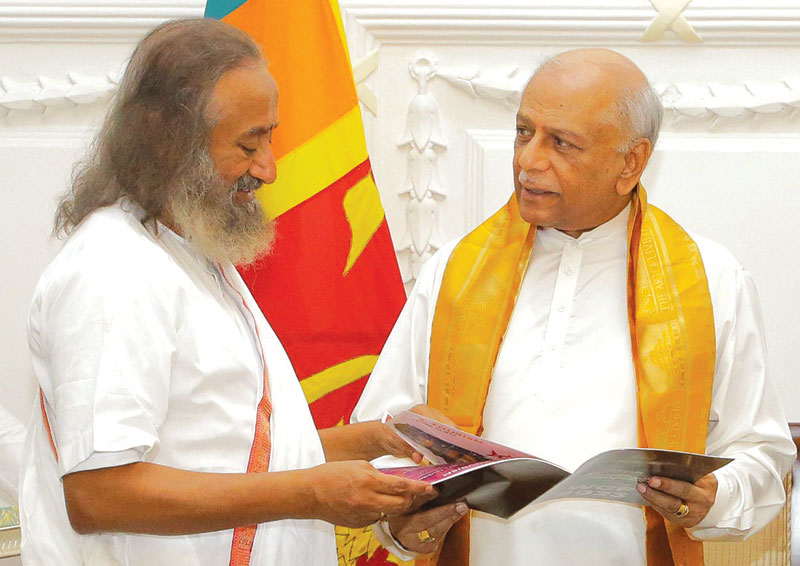
Humanitarian, spiritual leader and Global Ambassador of Peace Gurudev Sri Sri Ravi Shankar (Sri Gurudev) was in Sri Lanka on a three day tour on the invitation of the Prime Minister of Sri Lanka Dinesh Gunewardene. Gurudev who inspired a wave of volunteerism and service to moot one of the largest volunteer-based organisations in the world – The Art of Living – visited the various projects under the aegis of the foundation and launched twelve vocational and technical centers around the island. He was accompanied by thousands of followers from Sri Lanka and around the world.
Gurudev who visited Sri Lanka for the sixth time also had a first day cover launched in honour of his visit. He is a strong proponent of spreading happiness, using the unique Sudarshan Kriya, yoga, meditation and practical wisdom to unite people, empower individuals and transform communities. His programmes provide techniques and tools to live a deeper, more joyous life, while his non-profit organisations recognize the human identity beyond the boundaries of gender, race, nationality and religion.
The Art of Living which has more than 30,000 teachers and over one million volunteers across 180 countries has touched in excess of five hundred million people around the world. CNN called it “Life Changing” and The Washington Post headlined it, “Fresh air to millions”.
In Trincomalee, Gurudev met with war victims and had a heartwarming engagement with the children from the children’s homes run by the Foundation. He also visited the Koneswara Temple in Trincomalee and graced the Kumbhabhishekam at Seetha ecogPnize the human identity beyond the boundaries of gender, race, nationality and religion. Amman temple at Nuwara Eliya. He held discussions with the trustees on the progress of the foundation’s social service projects, while also holding a special event – Ekamuthuwa – attended by a large number of dignitaries and his devotees from around the world.
His time with the Prime Minister was spent discussing the prospects of unity in diversity and uniting Sri Lanka by adding happiness into the formula of living. In addition he had discussions with the Speaker of the Parliament of Sri Lanka Mahinda Yapa Abeywardena, prominent business stewards and civil society leaders.
by Zanita Careem
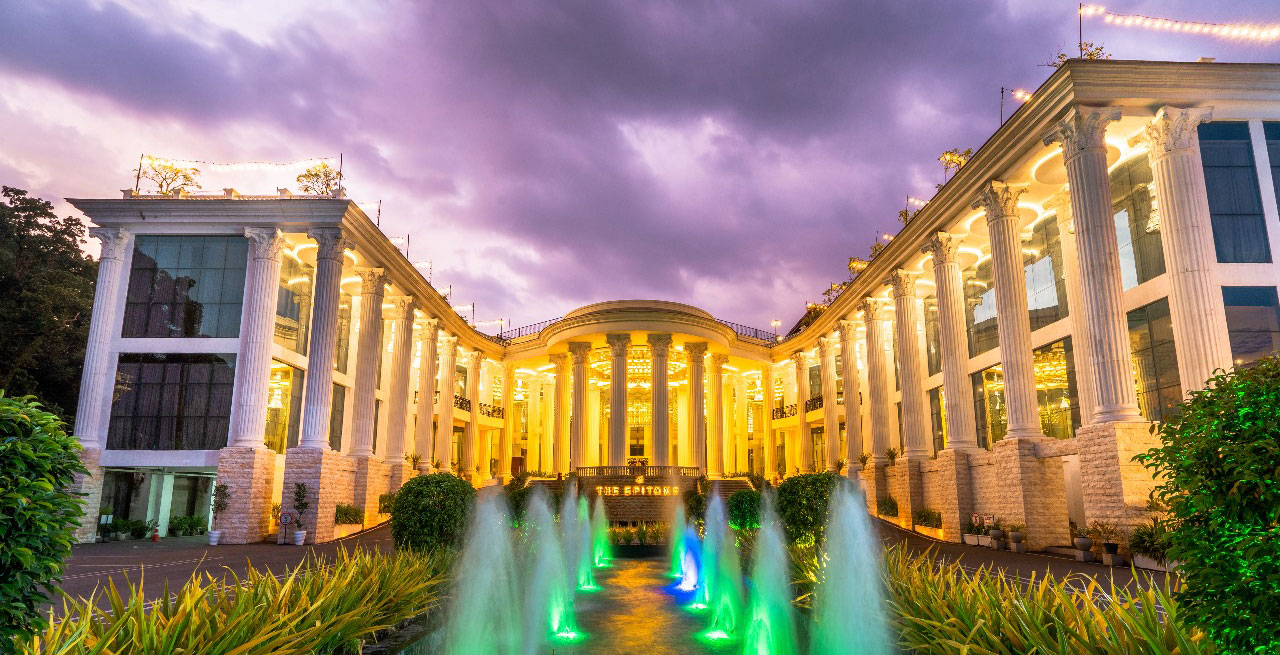
Envison your dream wedding day come to life at the Epitome Hotel, a prestigious city hotel in Kurunegala offering an unrivalled luxury rendors experience for weddings.
The venue is designed to embody opulence and luxury from all quarters for a spectacular wedding in kurunegala,Thier ballroom is the largest banquet facility in Sri Lanka It can be divided into six luxurious pillarless wedding halls on the ground floor and 25pax smaller banquet halls.
It can be easily named as a five star heaven in the heart of the city contributing to a myriad of immense experiences tailored to inspire and delight wedding experiences.
From opulent décor set up to exquisite table decor, lavish food, every detail is meticulously curated to spark your imagination and ignite creativity for a perfect wedding. The previous prestigious wedding shows season one and season two attracted large crowds
were unique events which gave the wedding vendors and potential clients had an opportunity to connect and interact with each other. Beyond being a showcase it was a chance for the wedding vendors to unite and contribute to the vibrancy of the wedding industry. The wedding show covered all area of the bridal industry providing a comprehensive variety of bridal supplies from Sri lanka and became the most popular bridal exhibitions in Kurunegala.This bridal exhibitions allowed brides and grooms to experience first hand the products and services available from suppliers in Sri Lanka
These wedding shows held at The Epitome created a benchmark and gave an opportunity for vendors to create connections to the utmost satisfaction said Harshan Lakshita Executive Director. of the magnificent Hotel
Our wedding shows featured experts and professionals in every field‘ It covered all areas of the bridal industry provided a comprehensive variety of bridal supplies from Sri lanka and became most popular bridal exhibition in this region.We are always open to everyone to join us at our wedding shows in the future. It is an opportunity to discover the incredible talent within our local wedding and bridal vendors to make meaningful relationships and plan thier special day at our breathtaking hotel The Epitome said General Manager Kavinda Caldera
The Epitome Hotel’s bridal show which will be held end of June will buzz with great ideas,advice and inspiration for all those who plan thier dream wedding
…….
The Hotel Epitome’s Wedding Season 3 will marked excellence, celebration and inspiration for those in the wedding industry. The exhibition halls will resonate with ideas on exquisite bridal wear to decor, florists , photography etc and showshowcase the rich tapestry of talent within the local wedding industry. .







US sports envoys to Lanka to champion youth development

Rahuman questions sudden cancellation of leave of CEB employees


