
News
Interim government to meet crises needs correct policies

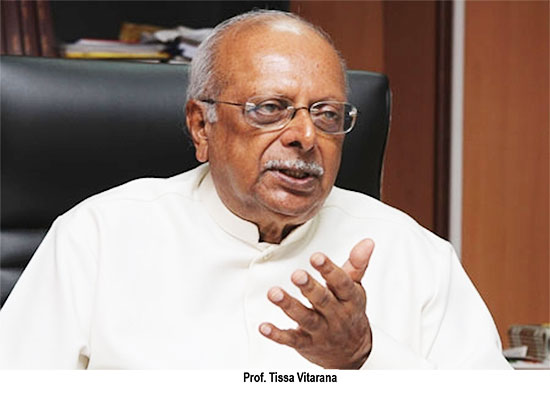
by PROF.TISSA VITARANA
The decision taken by the leaders of the Eleven Party Alliance to request that the President to forms and Interim Government is an essential first step towards solving the present crisis facing Sri Lanka. This interim Government needs to have correct policies to meet a crisis of this enormous magnitude. The interim government should not follow the policies that have aggravated the global economic crisis to such a scale in Sri Lanka. The immediate problems facing the suffering people such as the high price of food and food shortages, the shortages of essential medicines, fuel, gas and electricity have to be given priority. As mentioned by me last week the shortage of dollars is the principle factor. I like to stress once again that we should delay the settlement of loans and interest due for the next five years through a Moratorium. As we had to pay US dollars 6 billion last year to settle our loans, such a course will probably save about 30 billion dollars. This would enable us to immediately obtain the above mentioned essentials that are the main cause of the suffering of the people. I stressed that this has been done by several countries faced with similar economic crises in the past and even the present. The main policy of the SLPP Government not to do this but to somehow other pay back the loans on time will not provide the dollars that we badly need. The required change of attitude will not discredit us to the extent that the SLPP Government fears because, as mentioned earlier, this has been done in the past and even the present.
The above course of action will relieve the suffering of the people and bring back the confidence in the President and the interim government. The alternative that is proposed by the SLPP Government, UNP and Samagi Jana Balawegaya (SJB) of turning to the International Monetary Fund (IMF) will only aggravate the problem. This is because the neoliberal policies that those parties favor were the main cause of the massive defeat of the Yahalapanaya Government. The IMF insists on the door being opened for the import of any goods and article from abroad, whether they be cheaper or more expensive than what we can produce. It was the massive importation of luxury and non-essential goods over a long period of time by several Governments, most of all the Yahapalanaya Government, that led to our Foreign Reserves dropping from the usual safe level of 7 to 8 billion US dollars to the present level of less than one billion US dollars that has aggravated the crisis to this massive level. The loss of our ability to purchase essential items like oil, gas, milk powder and flour will be overcome as soon as we turn to the Moratorium policy of settlement of loans for five years as mentioned above. Once the people’s needs are provided and the crisis overcome in this way there will be no need to tie up with the IMF. The latter course would mean that we have to get more loans and get further into debt. The problem of debt and interest repayment will continue to plague us. The correct policy of developing a national economy where we become self-supporting with regard to food and also develop value added industries (both small, medium and large) that was decided on by the SLPP Government, but not implemented, could also be done. Therefore it is essential that those in the Interim Government should not insist on the tie-up with the IMF and the resultant commitment to implement their policies.
Another very important step is that the Interim Government should properly revive the Cooperative Movement, both consumer and multipurpose. By ruining this the present major problem of high prices of food leading to hunger, starvation and malnutrition could be solve by eliminating the price rises which are due to the large number of middleman who profiteer at the expense of both the farmer and the consumer. This can be quickened by reviving the Marketing Department which can also directly purchase from the farmer and provide the consumer with food at a reasonable price, by only covering their expenses, without any profiteering as is done by private traders.
The next essential step that must also be taken is establishing value added industries (both SMEs and Large scale). The necessary science and technology funding should be provided, to do the required research. With a stable economy and a stable government it would be possible to attract foreign investment. In addition the Lanka Sama Samaja Party (LSSP) proposal of introducing the principle of a Solidarity Economy should be put into effect. This principle has been adopted by several countries in Europe and in the third world, as well as the USA. A classic outcome is that it has helped both public and private loss making institution to become profitable ones. A good example is what happened in Kerala, India. There when TATA’s refused to give a salary increase to the workers on the premise that they were running at a loss, like the private plantations in Sri Lanka, the Left-wing Government took back the land from TATA’s and gave the ownership for a period of 30 years to the employees. The outcome is that the plantations are now running at a big profit to the benefit of both the employees and the Kerala Government.
During the SLFP/LSSP/CP Coalition Government (1970-1975) when faced with an equally severe crisis Dr.N.M.Perera, the LSSP leader, who was the Minister of Finance, was able to increase the Forex Reserves from 1.5 billion US dollars to 3.2 billion dollars, thereby ensuring adequate dollars to meet the cost of essential imports. Further he balanced the budget and took away the burden from the poor people, by reducing indirect taxes, and making up for this by increasing the taxation of the rich. He raised the highest tax slab for the super-rich to 75%. It is a crime to raise the VAT tax as the SLPP Government has done now by 2%, while maintaining the upper limit of tax for the super-rich at 14%. NM encouraged investment in the manufacturing industry by maintaining a very low tax level and any rich person could also get that benefit by investing there.
The LSSP, as a member of the Eleven Party Alliance supports the above policies if we are not only to have an Interim Government that puts the country back on the correct track, but also describes the policies that should be pursued if we are to get out of this severe crises and rescue our country and our people from poverty and its consequences. We shall give the President our fullest support in the setting up and functioning of this Interim Government. We hope that once there is some degree of stability General Elections will be held and a new Government formed that will get us out of the crisis, build national unity, and lead to the development of our country.



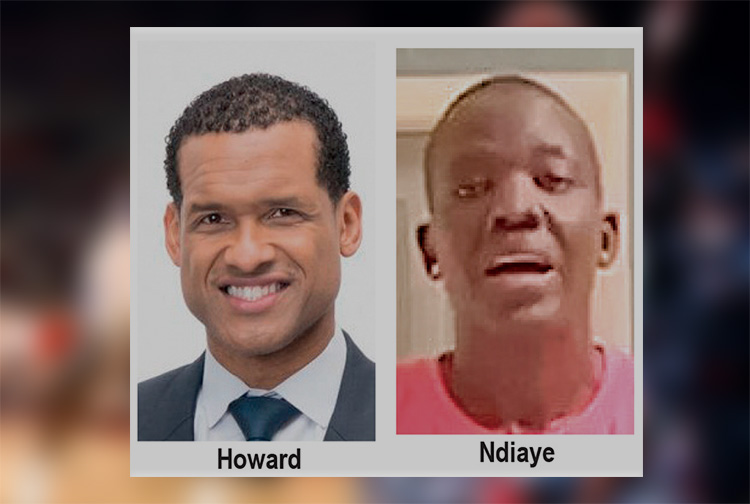
The U.S. Embassy in Colombo welcomed the U.S. Sports Envoys to Sri Lanka, former National Basketball Association (NBA) and Women’s National Basketball Association (WNBA) players Stephen Howard and Astou Ndiaye, from June 8 through 14.
The Public Diplomacy section of the U.S. Embassy said that it would launch a weeklong basketball program intended to harness the unifying power of sports, made possible through collaboration with Foundation of Goodness and IImpact Hoop Lab.
While in Sri Lanka, Howard and Ndiaye, both retired professional basketball players, will conduct a weeklong program, Hoops for Hope: Bridging Borders through Basketball. The Sports Envoys will lead basketball clinics and exhibition matches and engage in leadership sessions in Colombo and Southern Province for youth aged 14-18 from Northern, Uva, Eastern and Western Provinces, offering skills and leadership training both on and off the court. The U.S. Envoys will also share their expertise with the Sri Lanka Basketball Federation, national coaches, and players, furthering the development of basketball in the country. Beyond the clinics, they will collaborate with Sri Lankan schoolchildren to take part in a community service project in the Colombo area.
“We are so proud to welcome Stephen and Astou as our Sports Envoys to Sri Lanka, to build on the strong people-to-people connections between the United States and Sri Lanka,” said U.S. Ambassador Julie Chung. “The lessons that will be shared by our Sports Envoys – communication, teamwork, resilience, inclusion, and conflict resolution – are essential for leadership development, community building, equality, and peace. The U.S. Sports Envoy program is a testament to our belief that sports can be a powerful tool in promoting peace and unity.”
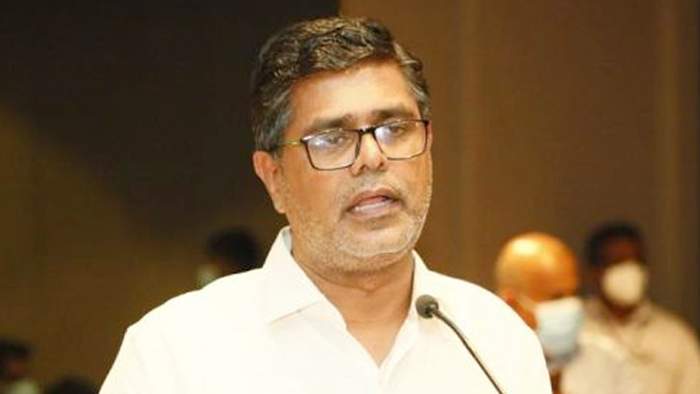
SJB Colombo District MP Mujibur Rahuman in parliament demanded to know from the government the reasons for CEB suspending the leave of all its employees until further notice from Thursday.
MP Rahuman said that the CEB has got an acting General Manager anew and the latter yesterday morning issued a circular suspending leave of all CEB employees with immediate effect until further notice.
“We demand that Minister Kanchana Wijesekera should explain this to the House. This circular was issued while this debate on the new Electricity Amendment Bill was pending. There are many who oppose this Bill. The Minister must tell parliament the reason for the urge to cancel the leave of CEB employees,” the MP said.However, Speaker Mahinda Yapa Abeywardena prevented Minister Wijesekera responding to the query and said that the matter raised by MP Rahuman was not relevant.
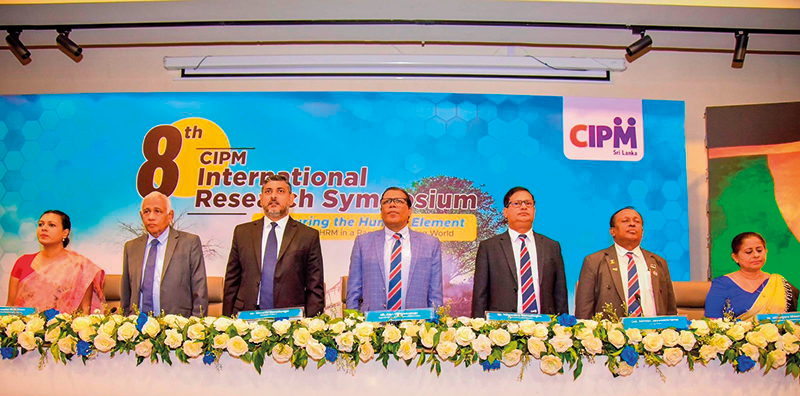
The Chartered Institute of Personnel Management (CIPM) successfully concluded the 8th Annual CIPM Symposium, which took place on 31st May 2024. Themed “Nurturing the Human Element—Redefining HRM in a Rapidly Changing World,” the symposium underscored the pivotal role of human resource management (HRM) in today’s dynamic global landscape. Since its inception in 1959, CIPM has been dedicated to advancing the HR profession through education, professional development, and advocacy, solidifying its position as Sri Lanka’s leading professional body for HRM.
Ken Vijayakumar, the President of the CIPM, graced the occasion as the chief guest. The symposium commenced with the welcome address by the Chairperson, Prof. Arosha Adikaram, followed by the Web Launch of the Symposium Proceedings and Abstract Book by the CIPM President. The event featured distinguished addresses, including a speech by Chief Guest Ken Vijayakumar, President of CIPM, and an address by Guest of Honor Shakthi Ranatunga, Chief Operating Officer of MAS Holdings Pvt. Ltd., Sri Lanka.
The symposium also featured an inspiring keynote address by Prof. Mario Fernando, Professor of Management and Director of the Centre for Cross Cultural Management (CCCM) at the University of Wollongong, Australia.
Vote of Thanks of the inauguration session was delivered by Dr. Dillanjani Weeratunga, Symposium Co-chair.
The symposium served as a comprehensive platform for researchers to present their findings across a wide range of critical topics in HRM. These included Cultural Diversity and Inclusion, Talent Development and Retention, Ethical Leadership and Corporate Social Responsibility, Adapting to Technological Advancements, Mental Health and Well-being at Work, Global Workforce Challenges, Employee Empowerment, and Reskilling and Upskilling.
The plenary session was led by Prof. Wasantha Rajapakse. Certificates were awarded to the best paper presenters during the valedictory session, followed by a vote of thanks delivered by Kamani Perera, Manager of Research and Development.
The annual symposium of CIPM was a truly inclusive event, attracting a diverse audience that spanned undergraduates, graduates, working professionals, research scholars and lecturers. This widespread interest highlights the symposium’s significance in the field of HRM, offering a unique opportunity for everyone to network and learn from scholarly brains.The CIPM International Research Symposium was sponsored by Hambantota International Port, Sri Lanka Institute of Information Technology (SLIIT), E B Creasy & Co. PLC, and Print Xcel Company.



US sports envoys to Lanka to champion youth development

Rahuman questions sudden cancellation of leave of CEB employees


