
News
Industry leaders say ban on oil palm crop expansion has jeopardized Rs. 26bn investment

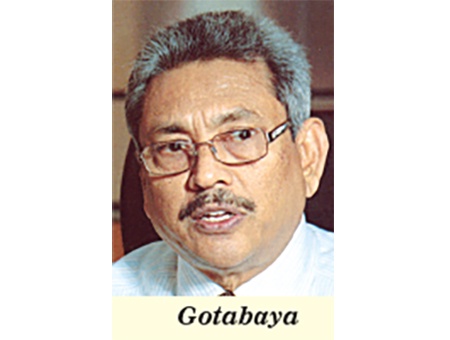
Representatives of the Palm Oil Industry Association (POIA) Association met with President Gotabaya Rajapaksa to present an appeal for a pragmatic solution to the impasse created by non-scientific opposition to the cultivation of oil palm, Dr. Rohan Fernando, president of the industry’s apex body, said.
The President’s announcement of a ban on further expansion of the crop has placed a Rs. 26 billion investment in jeopardy, he noted.
“We have presented the facts that respond to the environmental and other concerns expressed by critics, and elaborated on the economic potential of the industry in terms of supporting the government’s efforts to conserve foreign exchange through import substitution, and to generate better wages for plantation workers,” Dr. Fernando told the Association’s AGM last week.
He said that with the re-election of the founder office bearers and committee of the POIA for a second two-year term, business leaders pledged to continue their advocacy in the national interest on behalf of Sri Lanka’s beleaguered palm oil industry.
Palm oil is the most-widely used vegetable oil in the world, meeting 42 per cent of global demand from only 14.8 million hectares of land world-wide, while Soya Bean, the No. 2 crop, meets only 29.8 per cent of the global oil demand from 103.8 million hectares of land, he elaborated.
He said the current mean national yield of coconut oil is 0.8 MT per hectare in contrast to the global mean palm oil yield of 3.8 – 4.0 MT per hectare, which means that five times more land needs to be allocated to produce an equivalent volume of coconut oil.
A worker employed in an oil palm plantation earns an average of over Rs. 60,000 per month, which is more than twice the wages of a worker employed on a tea or rubber plantation, Dr Fernando said. “Therefore, cultivating oil palm is one strategy to address low worker wages within permissible limits and oil palm is also an economically-viable crop for smallholders.”
He added that the opportunity for import substitution is also immense in Sri Lanka as the country imports almost 220,000 MT of palm oil per year.
“We produce only around 25,000 MT of palm oil per year and coconut oil cannot meet the balance demand. An increase in local palm oil production could enable a foreign exchange saving in the region of approximately Rs 30 billion”, he further said.
The Association has repeatedly stressed that the campaign against oil palm cultivation in Sri Lanka is based on untruths, half-truths, misrepresentation and panic-mongering and that the country’s oil palm cultivation is a case study for guilt-free palm oil, Dr. Fernando continued.
Lessons learnt from the mistakes of other countries have been implemented in a slow and measured expansion of oil palm cultivation over the past 50 years, with no deforestation, no habitat loss and no adverse environmental or climate impacts scientifically attributable to the crop, he added.
Addressing the most common argument used against oil palm, he said: “Critics allege that cultivation of oil palm has affected rainfall in Galle, Kalutara and other districts. However, in the last several years rainfall in these districts has increased and caused flooding, which clearly shows that there has been no drop in rainfall in any of these districts. On the contrary, rainfall has drastically reduced in the last 10 years in the Nuwara Eliya and Kandy Districts, where there is no oil palm cultivated.”
“We remain hopeful that the President will favourably consider the Association’s request to permit the planting of saplings legitimately imported by plantation companies in response to the 2014 Cabinet decision during the Mahinda Rajapaksa presidency to expand the extent under oil palm cultivation up to 20,000 hectares”, he said.
The POIA represents cultivators as well as refiners, processors, manufacturers, marketers and sellers of palm oil and other products of the oil palm, who have cumulatively invested Rs 26 billion in the industry.
Sri Lanka has less than 11,000 hectares under oil palm – just over 1 per cent of the extents under tea, rubber and coconut – and plantation companies had been mandated by a government decision in 2014, to increase the total area under oil palm to 20,000 hectares under strictly-enforced guidelines that ensure the industry is environmentally non-invasive, before the government back-pedalled on the plan, leaving companies with oil palm saplings to the value of Rs. 500 million in nurseries.
The office bearers and executive committee re-elected at the POIA AGM for 2020-22 comprises Dr. Rohan Fernando (President), Vish Govindasamy and Sajjad Mawzoon (Vice Presidents), Mrs Oshadhi Kodisinghe (Secretary), Ravi Jayatilleke (Treasurer) and Messrs Gayan Samarakone, Bhathiya Bulumulla, Lalith Obeyesekere, Thishan Karunasena, Manjula Narayana, Manoj Udugampola and Binesh Pananwala.



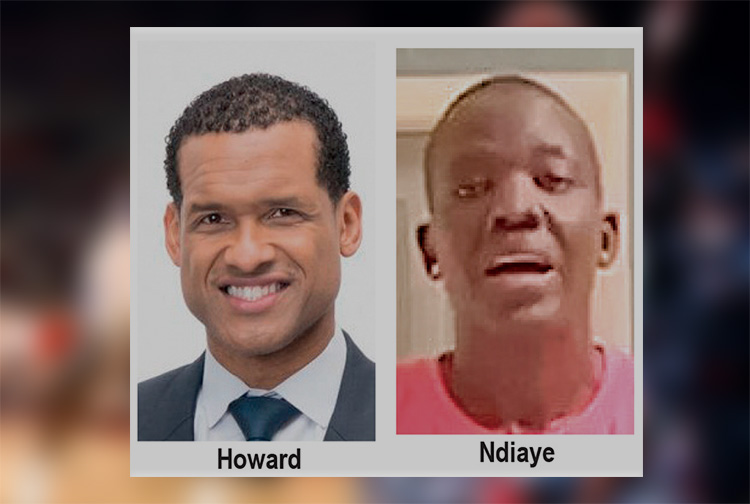
The U.S. Embassy in Colombo welcomed the U.S. Sports Envoys to Sri Lanka, former National Basketball Association (NBA) and Women’s National Basketball Association (WNBA) players Stephen Howard and Astou Ndiaye, from June 8 through 14.
The Public Diplomacy section of the U.S. Embassy said that it would launch a weeklong basketball program intended to harness the unifying power of sports, made possible through collaboration with Foundation of Goodness and IImpact Hoop Lab.
While in Sri Lanka, Howard and Ndiaye, both retired professional basketball players, will conduct a weeklong program, Hoops for Hope: Bridging Borders through Basketball. The Sports Envoys will lead basketball clinics and exhibition matches and engage in leadership sessions in Colombo and Southern Province for youth aged 14-18 from Northern, Uva, Eastern and Western Provinces, offering skills and leadership training both on and off the court. The U.S. Envoys will also share their expertise with the Sri Lanka Basketball Federation, national coaches, and players, furthering the development of basketball in the country. Beyond the clinics, they will collaborate with Sri Lankan schoolchildren to take part in a community service project in the Colombo area.
“We are so proud to welcome Stephen and Astou as our Sports Envoys to Sri Lanka, to build on the strong people-to-people connections between the United States and Sri Lanka,” said U.S. Ambassador Julie Chung. “The lessons that will be shared by our Sports Envoys – communication, teamwork, resilience, inclusion, and conflict resolution – are essential for leadership development, community building, equality, and peace. The U.S. Sports Envoy program is a testament to our belief that sports can be a powerful tool in promoting peace and unity.”
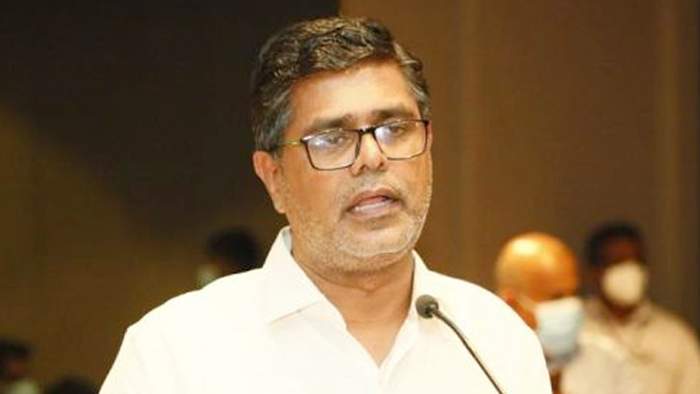
SJB Colombo District MP Mujibur Rahuman in parliament demanded to know from the government the reasons for CEB suspending the leave of all its employees until further notice from Thursday.
MP Rahuman said that the CEB has got an acting General Manager anew and the latter yesterday morning issued a circular suspending leave of all CEB employees with immediate effect until further notice.
“We demand that Minister Kanchana Wijesekera should explain this to the House. This circular was issued while this debate on the new Electricity Amendment Bill was pending. There are many who oppose this Bill. The Minister must tell parliament the reason for the urge to cancel the leave of CEB employees,” the MP said.However, Speaker Mahinda Yapa Abeywardena prevented Minister Wijesekera responding to the query and said that the matter raised by MP Rahuman was not relevant.
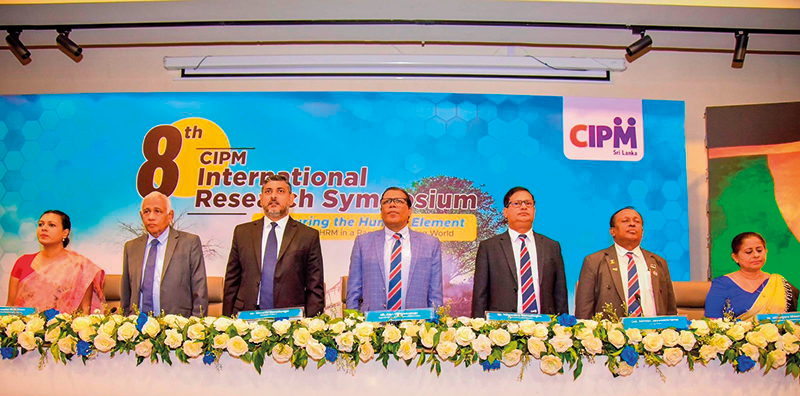
The Chartered Institute of Personnel Management (CIPM) successfully concluded the 8th Annual CIPM Symposium, which took place on 31st May 2024. Themed “Nurturing the Human Element—Redefining HRM in a Rapidly Changing World,” the symposium underscored the pivotal role of human resource management (HRM) in today’s dynamic global landscape. Since its inception in 1959, CIPM has been dedicated to advancing the HR profession through education, professional development, and advocacy, solidifying its position as Sri Lanka’s leading professional body for HRM.
Ken Vijayakumar, the President of the CIPM, graced the occasion as the chief guest. The symposium commenced with the welcome address by the Chairperson, Prof. Arosha Adikaram, followed by the Web Launch of the Symposium Proceedings and Abstract Book by the CIPM President. The event featured distinguished addresses, including a speech by Chief Guest Ken Vijayakumar, President of CIPM, and an address by Guest of Honor Shakthi Ranatunga, Chief Operating Officer of MAS Holdings Pvt. Ltd., Sri Lanka.
The symposium also featured an inspiring keynote address by Prof. Mario Fernando, Professor of Management and Director of the Centre for Cross Cultural Management (CCCM) at the University of Wollongong, Australia.
Vote of Thanks of the inauguration session was delivered by Dr. Dillanjani Weeratunga, Symposium Co-chair.
The symposium served as a comprehensive platform for researchers to present their findings across a wide range of critical topics in HRM. These included Cultural Diversity and Inclusion, Talent Development and Retention, Ethical Leadership and Corporate Social Responsibility, Adapting to Technological Advancements, Mental Health and Well-being at Work, Global Workforce Challenges, Employee Empowerment, and Reskilling and Upskilling.
The plenary session was led by Prof. Wasantha Rajapakse. Certificates were awarded to the best paper presenters during the valedictory session, followed by a vote of thanks delivered by Kamani Perera, Manager of Research and Development.
The annual symposium of CIPM was a truly inclusive event, attracting a diverse audience that spanned undergraduates, graduates, working professionals, research scholars and lecturers. This widespread interest highlights the symposium’s significance in the field of HRM, offering a unique opportunity for everyone to network and learn from scholarly brains.The CIPM International Research Symposium was sponsored by Hambantota International Port, Sri Lanka Institute of Information Technology (SLIIT), E B Creasy & Co. PLC, and Print Xcel Company.



US sports envoys to Lanka to champion youth development

Rahuman questions sudden cancellation of leave of CEB employees


