
Midweek Review
India’s Vietnam moment, US pullout and Afghan dilemma

UNP’s call to terminate diplomatic relations with Taliban questionable
By Shamindra Ferdinando
Can the recent US pullout, from Afghanistan, be compared with the Indian withdrawal, from Sri Lanka ,in late March 1990? Some sections of the Western media, at that time ,called the disastrous Indian military intervention here (July 1987-March 1990) India’s Vietnam. Reference was also made to what some called India’s Vietnam moment. The Washington Post report, that dealt with the situation in Sri Lanka, in the wake of ‘Operation Pawan,’ was aptly headlined, India’s Vietnam? The US media giant declared: “One reason that Sri Lanka had been unable to tame the ‘Tamil Tigers’ was the support that an indulgent New Delhi had let flow to them from India’s 50 million Tamils.”
What the Washington Post report, dated Oct 27, 1987, left unsaid, was that New Delhi armed over a half a dozen terrorist groups, in Sri Lanka, on the specific instructions of the then Indian Premier, Indira Gandhi, though Tamil Nadu was routinely blamed for the aggression. No less a person than the late Indian National Security Advisor and veteran diplomat J.N. Dixit, who had been Indian High Commissioner in Colombo (1985-1989) in his memoirs ‘Makers of India’s Foreign Policy’ acknowledged the executive prime ministerial decision to arm terrorists here.
Dixit’s declaration should be examined against the backdrop of Indira Gandhi‘s assassination by her Sikh bodyguards, on Oct 31, 1984. When did Indira Gandhi actually authorise arming of terrorist groups in Sri Lanka?
May be we shouldn’t be so unkind to Mrs. Gandhi, for obviously she was also a victim of circumstances, clearly sowed by the West. Mind you this was a time when the West was clearly lighting separatist fires right across India, be it in Punjab, Assam or Tripura. And the separatist fire that was lit here had, as its final aim, the breakup of India. The July ’83 riots, in the country, were clearly due to manipulation of the police here not to nip it in the bud by powerful interests. We even saw at firsthand how police, in different areas, went round egging the poor, among the Sinhalese and Muslims, to attack Tamils, who were considered the haves. So, in the resultant picture of mob violence, against hapless Tamils, that was created, can we blame Mrs. Gandhi for the counter steps that she took? She wanted to show the huge long restless Tamil population, in Tamil Nadu, that it was not the West that would give succor and protection to Tamils, in Sri Lanka, but mother India. The West even would have had plenty of infiltrators among her intelligence to feed her fears. From the word go, mind you, it was not in India that many of these separatists had their rear bases but in the capitals of the powerful West. For example, the LTTE International Secretariat was based in London, even after the assassination of Rajiv Gandhi by it. Of course, their lame excuse was that the LTTE had not violated British laws!
 She may have even assented to the ambush of a Sri Lankan military patrol, by Tamil terrorists, at Thinnavely, Jaffna, that was used by vested forces to trigger the anti-Tamil violence, in the south, with police not lifting a finger to stop it, let alone even firing a warning shot.
There had been an interesting incident, around 1977, at a cocktail party, in Manila, where a big talking American, who was obviously after one too many, had boasted to our Ambassador there, the late Oliver Perera, that soon there would be an armed rebellion, by Tamils, in Sri Lanka!
Obviously, Indira Gandhi’s assassination didn’t halt the despicable Indian project which culminated with the deployment of the Indian Army here. She was succeeded by son Rajiv, 40, the sixth and the youngest Indian Premier who intensified assistance to terrorist groups here. PM Gandhi also intervened, on behalf of the LTTE ,when the latter faced certain defeat in the hands of the Sri Lankan military.
If Rajiv Gandhi returned at the 1989 general election, the then Sri Lankan President Ranasinghe Premadasa, elected in the previous year, wouldn’t have succeeded in getting rid of the Indian Army. Those who propagated, and justified, New Delhi’s direct intervention, here, following the July 1983 violence, directed at the Tamil community, conveniently ignored the truth that India triggered the riots by causing the deaths of 13 soldiers at Thinnaveli, in Jaffna. There had never been such a devastating attack on the Army, until Indian trained terrorists wiped out the lightly armed mobile patrol.
Can the US invasion of Afghanistan, in the wake of the 9/11 carnage, and the Indian military misadventure, in Sri Lanka, be compared? In the case of Afghanistan, the US invaded that country, on the pretext of going after those responsible for 9/11, receiving refuge there, whereas New Delhi forced Army deployment here to impose a ‘political’ solution. Over 30 years later, the Indian solution is on the Geneva agenda!
On both occasions, powerful foreign forces had pathetically failed to achieve their primary objectives, though the circumstances were totally different. For the US, both Afghanistan and the fall of Saigon, way back, in late April 1975, meant the humiliating failure of Washington’s strategic policy. In other words, the US abandoned South Vietnam and Afghanistan administrations, and here, in Sri Lanka, India gave up a Tamil administration, installed by its Army. India went to the extent of forming, what was dubbed, Tamil National Army (TNA) to protect the NE provincial administration.
The US-led NATO forces, invaded Afghanistan to destroy the Taliban administration, accused of providing safe haven to those responsible for the 9/11 attacks, though, at the end, the US negotiated with them whereas the Indian military mission was meant to disarm Tamil groups, once sponsored by New Delhi. It would be pertinent to mention that the US invaded Afghanistan, though the majority of those involved in the 9/11 attacks, were Saudis. Of the 19 attackers, 15 were Saudi citizens, two were from the United Arab Emirates (UAE), one was from Lebanon, and one from Egypt.
India destabilised Sri Lanka in a bid to create a situation, conducive for deployment of its Army, followed by Provincial Council elections, rigged in favour of the Eelam People’s Revolutionary Liberation Front (EPRLF). With the Indian Army deployed in Sri Lanka, New Delhi forced the then JRJ administration to introduce the 13th Amendment to the Constitution. As the writer pointed out before, the 13th Amendment has ended up in the Geneva agenda.
Perhaps, those who had referred to New Delhi’s military misadventure here as India’s Vietnam may consider calling the US withdrawal, from Afghanistan, America’s Sri Lanka moment. The US pullout caused the immediate collapse of 72-year-old Mohammad Ashraf Ghani’s Afghan administration. Twice President Ghani, with the knowledge of the US, secured political asylum in the UAE. Ghani couldn’t have done so without the blessings of the Biden administration. International media coverage of the pathetic scenes at the Kabul airport must have deeply embarrassed the US. Those who believed the Afghan National Defence and Security Forces — including an 180,000 strong Afghan National Army, and a police force with 150,000 personnel, besides an Air Force, and other security wings — trained by the US military, NATO and India – could face up to the Taliban. They simply folded up like a house of cards, proving utterly unequal to the task of holding on to territory, and containing the Taliban. The Afghan imbroglio cannot be discussed without taking into consideration the US-Taliban agreement, finalised in Doha, in Qatar, in February, last year. In other words, Biden implemented the agreement between his predecessor Trump and the Taliban. Most probably, the US must have sealed the fate of its costly mission by its blind drone strikes there, which would have killed many hundreds, if not thousands, of innocents, thereby turning many more Afghans against the whole false façade of the West, fighting for human rights and fair play for their much-exploited women. Surely, how many times did they strike funeral processions, or weddings, while targeting the Taliban, using their smart missiles? Now, they and their allies have turned tail and run, leaving behind for the Taliban to use billions of dollars’ worth of state-of-the-art weapons!
India also stepped up engagement with Taliban, in the wake of US moves to bring the 20-year-old disastrous Afghan chapter to an end. One shouldn’t be surprised by the Indian strategy, as India cannot lose its relationship with Afghanistan, in the wake of the US pullout. That would be a major blunder on India’s part. Perhaps, the Afghan military received instructions, from those who sponsored them, to quickly give up the fight. That possibility cannot be ruled out. Perhaps, Ghani knew of that likelihood. In spite of being trained and equipped by US and its NATO allies, the Afghan Army didn’t have the guts to face the Taliban, who advanced to Kabul without facing any organised resistance. Quad member India, too, provided training to thousands of Afghan officers, and men, both in Afghanistan as well as at various training facilities, in India, over a period of time. India also provided a range of weapons, including helicopter gunships to Afghanistan. Of several Mi-24 helicopter gunships provided by India, the Taliban seized one as the Afghan Army quickly gave up the fight for Kabul. The swift collapse of the Afghan Army must have definitely embarrassed those who trained them.
India deployed Mi-24s against the LTTE here whereas the Sri Lanka Air Force acquired the same, in 1995, after the LTTE introduced surface-to-air heat seeking missiles.
In 1990, Sri Lanka faced a situation similar to that faced by the Afghan military. The Sri Lankan military struggled to cope up with an unprecedented crisis. The vacuum created by the Indian withdrawal had to be filled quickly but the Army lacked the strength. However, the country’s intrepid armed forces faced the challenge. The military saved the country from a catastrophe, in the wake of the Indian pullout.
The writer was among a group of journalists, invited to board INS Magar,on the morning of March 24, 1990, at the Trincomalee harbour, soon after the last contingent of Indian troops boarded the troop-carrier. The vessel left the port to the farewell strains of Auld lang syne, played by the Sri Lankan military. Before their departure, the Indian Commander, here, Lt. General A.S. Kalkat, declared, on board INS Magar: “We came as a proud force and are leaving as a proud force.” India lost 1,155 IPKF officers, and men, on top of 2,984 personnel wounded. India never bothered to build a monument for those who perished during the conflict here.
The Afghan Army didn’t have the stomach to fight the Taliban though there were some confrontations between them, as the US stepped up withdrawal. India re-trained Tamil terrorists, belonging to several groups, as well as new cadres, including underage children, as a last minute effort to establish, what was then known as the Tamil National Army. The TNA was meant to protect the then North-East administration of EPRLF strongman Varatharaja Perumal. However, the TNA collapsed, even before India completed its withdrawal, under controversial circumstances. India evacuated Perumal, along with those near and dear to him. The LTTE assassinated Rajiv Gandhi over a year later. Gandhi’s crime was sending the Indian Army here. Prabhakaran conveniently forgot how Gandhi saved him, in 1987, when the Sri Lanka Army was advancing on his hideout in the Vadamaratchchy region.
Resumption of hostilities
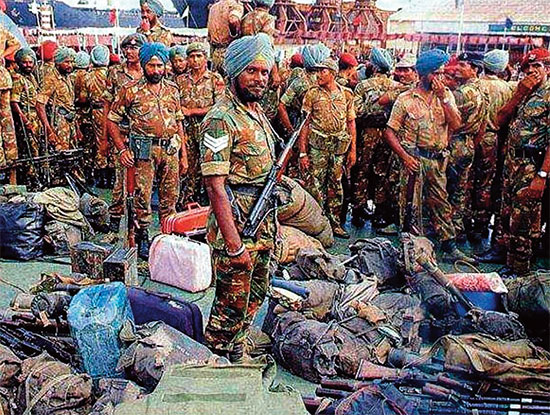
March 24, 1990, Trincomalee harbour: The last batch of Indian Army to leave Sri Lanka at the end of the disastrous mission
Less than three months, after India quit Sri Lanka, the LTTE resumed hostilities. Having gained valuable experience in fighting South Asia’s largest Army, the LTTE obviously believed the relatively smaller Sri Lanka Army could be overwhelmed in a meticulously planned offensive. By the end of June 1990, the LTTE had taken control of the Northern and Eastern Provinces, with the military confined to major bases. The police remained within their stations. When the writer, accompanied a group of journalists, assigned to cover the Indian departure ,from Trincomalee, the eastern port city was under threat. Both police and the military therein had no qualms in acknowledging the growing threat posed by LTTE units, operating just outside the town. Had the LTTE plan succeeded, Sri Lanka would have suffered an irrevocable setback in the Northern theatre of operations. As a result of miscalculations, on the part of the then political leadership, the LTTE had an opportunity to build up the required strength for a major offensive. The LTTE had the wherewithal to neutralise the Army, north of Vavuniya. Destruction, and the vacation of Army detachments, along the Kandy-Jaffna A9 road, isolated the Jaffna peninsula.
The LTTE couldn’t achieve its primary objective as the Army, in spite of being surrounded, managed to hold onto its strategic Elephant Pass base. The public would be surprised to know, at the time the LTTE resumed hostilities, the Army didn’t even have two battalions deployed in the entire Northern and Vanni regions. The then political and military leaderships never bothered to make contingency plans, as the Indians gradually withdrew from the Northern and Eastern regions. The last Indian contingent left by air, and sea, from Trincomalee, leaving the LTTE to isolate and destroy the police and the military. The LTTE realised the difficulties experienced by the military, primarily due to them not being at least engaged in proper patrolling. The armed forces, and the police, had been successful in neutralising the JVP threat (1987-1990) though the conventional LTTE challenge was not anticipated. The military hadn’t been prepared in the immediate aftermath of the Indian pullout.
Once the LTTE resumed hostilities, in the East, where the group massacred several hundred policemen, after they surrendered, on a government directive, the fighting quickly spread to the Northern theatre. The LTTE overran the Kokavil detachment, north of Vavuniya, in June 1990, and swiftly established control over the Vanni region. Successive governments had to move supplies, required by the military, and police, deployed in the Jaffna peninsula, by sea and air. The overland Main Supply Route (MSR) was restored in January 2009, during the final phase of the Vanni offensive.
The military and the police thwarted two JVP insurrections in 1971 and 1987-1990 and defeated conventional military challenges posed by the LTTE.
When the LTTE resumed hostilities, within months after the Indian withdrawal, in March 1990, the total strength of the Army had been 60,596 officers, and men, in both the Regular and Volunteer Forces. They had been deployed in isolated bases, with the majority outside the Northern and Eastern regions and, if not for the bravery of ordinary men and resolute leadership, given by some officers, they would have been overwhelmed in the Northern Province. Of the total strength at that time, the Regular Army comprised 2,221 officers and 36,304 other ranks. The Sri Lanka Army must have found the ground situation extremely difficult to handle as, at the height of the Indian Army deployment here, the IPKF comprised approximately 100,000 officers and men.
TNA’s view on Taliban
Jaffna District Illankai Tamil Arasu Kadchi (ITAK) MP Sivagnanam Sridharan recently compared the spectacularly successful Taliban advance, on Kabul, and the Tamil community’s struggle. Sridharan declared that struggles, undertaken by minority communities, could erupt at any moment. Justifying their struggle, MP Sridharan warned of dire consequences if the community was suppressed. Obviously, the Jaffna District lawmaker believed the Taliban’s return to Kabul boosted the Tamil community. Sridharan should be reminded that his political party served the LTTE’s terror project, from 2001 until the crushing military defeat of the organisation, in May 2009. The TNA believed in the LTTE’s capability to bring its terror project to a successful conclusion. MP Sridharan, expecting Taliban to provide a boost, shouldn’t come as a surprise, as another TNA lawmaker. M.A. Sumanthiran, PC, attempted to exploit the 2019 Easter Sunday attacks. The TNA heavyweight had no doubts in issuing a warning, a week after the Easter Sunday carnage (at the BMICH), when he declared that such attacks should be expected if grievances of minorities weren’t addressed.
Norwegian Anders Behring Breivik, 32, shocked the world, in late July 2011, by massacring 90 and wounding over 300 in two separate incidents. Breivik made references to the LTTE as a role model in his ‘manifesto’ that was released to the web, hours before the devastating bomb attack, in central Oslo, and the subsequent shooting rampage in an island resort. So no one should be surprised over MP Sridharan talking in glowing terms about Taliban’s triumph, or MP Sumanthiran seeing the Easter Sunday massacre as a way to pressure the government over minority rights.
UNP Chairman Vajira Abeywardena’s recent call to terminate diplomatic ties with Afghanistan, in the wake of the Taliban triumph, reminded the writer of UNP leader Ranil Wickremesinghe assuring Japan (now a Quad member) that the LTTE hadn’t been involved with Al Qaeda. The assurance was given at a meeting organised by the Japan Center for Conflict Prevention (JCCP) at the Imperial Hotel. The writer accompanied the GoSL delegation, led by the then Premier Ranil Wickremesinghe whose task was to appreciate the Japanese role in the Oslo-led peace process (LTTE not linked to al-Qaeda, PM tells Japan-The Sunday Island, Dec 8, 2002). The Taliban provided a safe haven for those who had fought the Soviet Union, in the wake of its invasion of Afghanistan, in Dec 1979. Osama bin Laden had been among those who secured the protection of Taliban, having served US interests during the Soviet occupation of Afghanistan. The Western media, and top US officials, have routinely referred to Afghanistan being the Soviet Union’s Vietnam. Decades later, the same fate has befallen the US military.


Midweek Review
Ranil reveals bid to get rid of him while GR was fleeing to Trinco on board SLNS Gajabahu
By Shamindra Ferdinando
Attempts had been made to compel UNP leader Ranil Wickremesinghe to give up the premiership immediately after the then President Gotabaya Rajapaksa had left Janadhipathi Mandiraya in the early afternoon of July 09, 2022.
That had been the devious Aragalaya strategy meant to pave the way for Speaker Mahinda Yapa Abeywardena to assume executive powers as a mere figurehead and with them easily controlling him with the threat of further upheaval. Obviously Aragalaya strategists wanted to force Wickremesinghe out of office before President Gotabaya Rajapaksa quit the presidency.
However, they may not have expected President Gotabaya Rajapaksa to flee President’s House immediately after protestors breached its main gates.
As we recall the law enforcers simply did nothing to halt the advance of the mob right into the President’s House, as people like US Ambassador Julie Chung openly prevailed on law enforcers not to act against what she repeatedly termed “peaceful protesters”, even after they, in a preplanned operation, meticulously burnt down more than hundred properties of government politicos and loyalists, across the country, on May 09/10, 2022. So they were on the whole the proverbial wolves in sheep’s clothing working with the Western regime change project here as was previously done in places like Libya and Iraq.
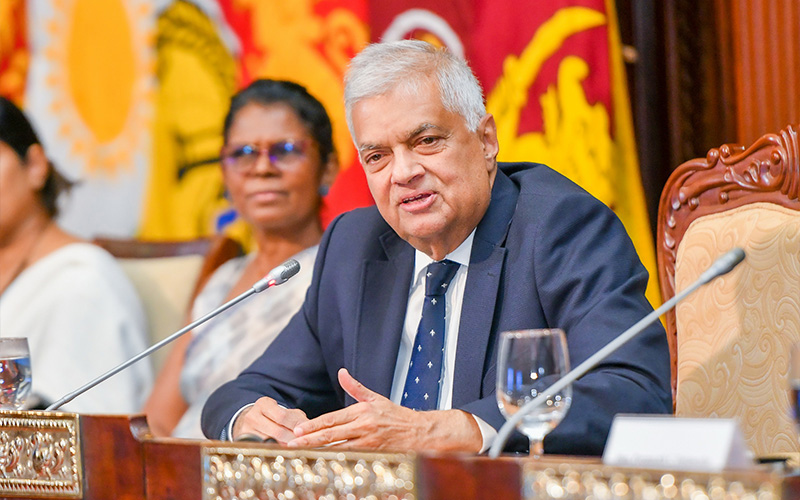
President Wickremesinghe discussed the challenge faced by him at the time of the Aragalaya, when he addressed a group of young legal professionals at the Presidential Secretariat on May 28.
Among those who had been at the head table was Colombo District SLPP lawmaker Premanath C. Dolawatte, an Attorney-at-Law and now widely believed to be one of those pursuing the UNP leader’s agenda.
Stressing the importance of the executive presidency in restoring stability, President Wickremesinghe recalled the situation as Aragalaya forced Gotabaya Rajapaksa out of Janadhipathi Mandiraya. The President said that some persons had asked him to resign as President Gotabaya Rajapaksa was on board a ship and on his way to Trincomalee.
The President’s Media Division (PMD) quoted him as having told the young professionals how he declined to resign unless an MP, who commanded the confidence of the majority in Parliament, emerged against the backdrop of chaos. The President said that even if he wrote a letter of resignation, he couldn’t have handed it over to President Gotabaya Rajapaksa when he was on his way to Trincomalee in a ship or flying to the Maldives to escape mob justice.
The President said that if he resigned, due to pressure brought on him by a particular person, or due to the destruction of his residence, at the top of 05th Lane, in Colombo 07, near Royal Primary, also on July 09, 2022, someone would have secured power outside the democratic process.
The President’s comments on Aragalaya didn’t attract sufficient media attention. In fact, the coverage of the Presidential Secretariat event had been influenced by the PMD media release. Both print and electronic media focused on the President pointing out that none of those contesting the forthcoming Presidential poll had assured so far that executive powers would be done away with.
Actually, at the 2019 Presidential election, SLPP candidate Gotabaya Rajapaksa never referred to the abolition of the Executive Presidency or further dilution of executive powers. The wartime Defence Secretary aspired to be an all-powerful Executive President and, in fact, further enhanced the presidency with the enactment of the 20th Amendment, enacted in late October 2020. The move to introduce a new Constitution was also meant to further enhance the Executive Presidency. That report, prepared at a tremendous cost to the taxpayer, is gathering dust, probably at the Presidential Secretariat. Perhaps Gotabaya Rajapaksa should inquire from his successor Ranil Wickremesinghe what he intended to do with it. The former President has every right to seek an explanation, not only from the President, but the Cabinet-of-Ministers as well.
Let us get back to President Wickremesinghe’s disclosure of the bid to force him out of office soon after President Gotabaya Rajapaksa boarded SLNS Gajabahu (formerly Sherman of the US Coast Guard), at the Colombo harbor, to escape the pursuing mob.
Now that President Wickremesinghe again made reference to Aragalaya’s bid to get rid of him, who could have asked Premier Wickremesinghe to resign on July 09, 2022? Had there been similar demands/requests in the run-up to Wickremesinghe receiving the appointment as President on July 14?
Perhaps, President Wickremesinghe would never reveal the identities of those who demanded his resignation, obviously on more than one occasion during July 09-14 period.
Political party system in a bind
Post-Aragalaya political leadership conveniently refrained from inquiring into the overthrowing of President Gotabaya Rajapaksa. Nearly two years after Gotabaya Rajapaksa’s ouster, there hadn’t been an effort, at any level, to conduct a thorough investigation into Aragalaya.
No holds barred investigation into Aragalaya shouldn’t be mixed up with individual cases, such as the killing of SLPP lawmaker Amatakeerthi Atukorale and his police bodyguard, at Nittambuwa, on the afternoon of May 09, 2022, or the killing of a protester at Rambukkana on April 19, 2022. A proper probe into Aragalaya should focus on the circumstances leading to the eruption of violent protest campaign, outside President Gotabaya Rajapaksa’s private residence at Pangiriwatte, Mirihana, on the night of March 31, 2022, and the period till President Wickremesinghe deployed the military and the police, including the Special Task Force (STF), on July 22, 2022, to clear the Presidential Secretariat of protesters. And all those who were threatening to die for the “system change,” they were ostensibly clamouring for, simply vanished into thin air. How convenient! And how conveniently Julie Chung’s trap, too, shut on behalf of Aragalaya?
Had Wickremesinghe lacked the courage to do so, regardless of “international “condemnation”, the Aragalaya could have been still in control of the President’s House, Presidential Secretariat, etc. Wickremesinghe acted swiftly and decisively as he realized the danger in failing to bring back the situation under control, within a short period of time. Or was that all a show to hoodwink the country? May be he knew too much about JVP shenanigans, especially with the West for them being the principal mover of the demand for system change, too, to go silent, like obedient kittens, with Ranil at the helm.
National Freedom Front (NFF) leader Wimal Weerawansa, MP, in April 2023, named outgoing US Ambassador Julie Chung as one of the key Aragalaya conspirators. The former JVP heavyweight went to the extent of alleging that Ambassador Chung personally met Speaker Abeywardena at the latter’s official residence in the wake of President Gotabaya Rajapaksa fleeing Janadhipathi Mandiraya.
Speaker Abeywardena never denied Weerawansa’s claim, though Ambassador Chung dismissed the allegation. However, President Wickremesinghe latest disclosure should be examined, taking into Speaker’s declaration in March this year that those who spearheaded Aragalaya even threatened him unless he cooperated with them. Speaker Abeywardena declared that Aragalaya wanted him to accept the presidency, though the Constitution stipulated that the Premier should succeed the President.
Then, obviously, those who demanded Wickremesinghe to resign, and Speaker Abeywardena to accept the Presidency in July 2020, must be the same. There cannot be any dispute whatsoever regarding the Aragalaya strategy. Obviously, ousted President Gotabaya Rajapaksa, in his widely read book ‘The Conspiracy to Oust Me from Presidency’ failed to properly deal with external intervention, particularly the interventions made by Ambassador Chung.
The US, through Ambassador Chung’s interventions, ensured protection for Aragalaya throughout the high profile project as President Gotabaya Rajapaksa’s control rapidly eroded. The then government never really comprehended the grave implications of the April 19, 2022 Rambukkana incident. The senior police officer in charge of Kegalle, Senior Superintendent of Police K.B. Keerthiratne, had to undergo the humiliation of being arrested and remanded over a police shooting that claimed the life of a protester. Had Keerthiratne failed to order that shooting, the protesters would have set ablaze a fully loaded bowser, carrying petrol, strategically placed across the rail tracks there to create chaos and disrupt rail transport By the time the SSP and three other policemen received bail, in August, Wickremesinghe was the President.
The former President should have dealt with the Rambukkana issue in his memoirs. There cannot be any doubt, or dispute, that the utterly irresponsible government response to police firing at Rambukkana discouraged the military from taking tangible measures to thwart the overrunning of Janadhipathi Mandiraya.
The Aragalaya opened Janadhipathi Mandiraya and Presidential Secretariat for the public and they remained in their hands until President Wickremesinghe regained control on July 22, 2022.
Prez draws sharp criticism
Sri Lanka couldn’t have continued with chaos caused in the wake of the political-economic-social crisis that threatened the ruination of the war-winning country that also successfully undertook so many development projects, like building expressways in the country for the first time, badly needed new international airport and even an international harbour, that became the envy of even our giant neighbour. Speaker Abeywardena, whatever his shortcomings and failures, should receive the respect and gratitude of all for saving the country from a horrible fate. Sri Lanka’s unitary status had been at stake and the country faced the risk of disintegrating.
Having been elected as the 8th Executive President on July 20, 2022 by the SLPP parliamentarians, who had the majority in the House, the UNP leader moved swiftly to regain control. Since then, Wickremesinghe, in spite of being reduced to just one National List MP in Parliament, never looked back as he advanced his agenda.
The President’s decision to do away with the Galle Face protest site earned the wrath of those who hoped for a different outcome. They expected Speaker Abeywardena, as Head of State, at least for a brief period, pending post-Gaddafi-style Libyan administration.
The following are some of the statements issued by the “usual suspects” who blindly tow the US line, in the wake of President Wickremesinghe’s directive:
UN Human Rights Commission:
“We are alarmed by the unnecessary use of force by security forces to break up a protest camp near presidential offices in Colombo. We condemn reports of beatings of protesters, journalists and lawyers and urge authorities to halt the use of force.”
The UNHRC Sri Lanka Core Group (consisting of Canada, Germany, Malawi, Montenegro, North Macedonia, the USA and the UK):
“peaceful protest is fundamental to any democracy and dismayed at the violence which took place at Galle Face on Friday.” The grouping called for full respect for human rights and the rule of law.
Amnesty International South Asia:
“…the attack on ‘GotaGoGama,’ the peaceful protest site in Colombo by the police and the military is unacceptable and authorities must stand down immediately. The right to protest must be protected. Sri Lankan authorities must immediately cease these acts of violence and release those arrested unlawfully in this manner. Authorities must also protect the freedom of the press. Journalists must not be barred from ‘GotaGoGama’. Blocking journalists from doing their jobs directly violates freedom of the press.”
Human Rights Watch South Asia Director Meenakshi Ganguly said:
“President Ranil Wickremesinghe has been telling donors and friends that he is committed to resolving the economic crisis, and yet among his first acts was to deploy a midnight security forces raid to disperse the peaceful protesters. The international community needs to act now, send a strong message that the global efforts are directed to support the people of Sri Lanka, and not to prop up abusive political leaders who undermine fundamental freedoms.”
UN Resident Coordinator Hanaa Singer-Hamdy said she was gravely concerned by the use of force to disperse protesters.
“Journalists and human rights defenders have a right to monitor demonstrations and their functions should not be impeded. Actions that stifle protests and right to peaceful assembly can worsen economic and political stability in Sri Lanka. Peaceful solutions in accordance with broad public consultations is the only way forward.”
The European Union:
“Freedom of expression proved essential to Sri Lanka’s current transition. Hard to see how severely restricting it can help in finding solutions to the current political and economic crises.”
UK High Commissioner Sarah Hulton expressed concern over the attack and said:
“We have made clear the importance of the right to peaceful protest.”
US Ambassador Julie Chung:
“Deeply concerned about actions taken against protestors at Galle Face in the middle of the night. We urge restraint by authorities and immediate access to medical attention for those injured.”
Canadian High Commissioner David McKinnon:
“It is crucial the authorities act with restraint and avoid violence.”
The Presidential Secretariat remained in the hands of protesters till midnight July 22, 2022, out of the three State properties they took control of on July 09. Protesters evacuated from the other two – the President’s House and Temple Trees ahead of any confrontation with the military tasked to remove them!
In the absence of proper investigations…
Chief Government Whip Prasanna Ranatunga is one of the few lawmakers to question the failure on the part of relevant authorities to investigate organized attacks on government MPs. When the writer raised this issue with Minister Ranatunga a few moons ago, the Gampaha District SLPP strongman expressed serious disappointment over the status of the investigations.
Declaring that his properties at Udugampola, Gampaha, had been set ablaze in the presence of law enforcement officers, Urban Development and Housing Minister Ranatunga said that he was still awaiting the conclusion of the investigation undertaken by the Human Rights Commission. None of those who had been identified as responsible for systematic destruction of houses and other properties belonging to government members and in some cases supporters hadn’t been dealt with.
President Wickremesinghe’s recent disclosure of efforts to force him out of the Premier’s Office revealed that there hadn’t been a proper investigation into the Aragalaya at all. What is the mysterious evil hand preventing justice being done to victims of mob justice by Aragalaya? But the evil West leaves no stone unturned in seeking “justice” on behalf of the LTTE and its sympathisers, who tried to break up this country through sheer raw terror.
It would be interesting to know the status of the investigation promised by the Attorney General Sanjay Rajaratnam, PC, into the May 9/10 attacks on politicians’ properties. A case filed by a group of politicians, demanding an investigation into these incidents, had been withdrawn in late May, 2023 on an assurance given by the Attorney General.
The State Counsel appearing on behalf of the Attorney General assured Court that the AG had received an assurance from the Public Security Ministry that there would be a formal investigation into the incidents and secondly, the Secretary to the President promised that the Wasantha Karannagoda Committee report on the May 2022 incidents would be brought to the attention of the President.
What is the status of the promised investigation? President Wickremesinghe cannot absolve himself of the responsibility for ensuring a comprehensive investigation into violence perpetrated during 2022.
In spite of allegations that the JVP instigated an attack on Samagi Jana Balawegaya (SJB) and Opposition Leader Sajith Premadasa at the Galle Face protest site on the afternoon of May 09, 2022, the main Opposition party never pushed hard for an investigation.
Recently MP Premadasa confirmed the alleged JVP plot when the writer sought his response to SLPP MP Johnston Fernando’s declaration that Premadasa would have been lynched if his driver failed to reverse the vehicle at high-speed after the JVP mob surrounded Premadasa. Sunil Handunetti declared that both Johnston and Sajith should have their heads examined. But JVP Leader Anura Kumara Dissanayake was virtually received with open arms by the same Aragalaya activists on the same day at the same venue
Another matter for serious concern is that all suspects arrested in connection with the killing of MP Amarakeerthi Atukorale were granted bail without the AG being consulted. The accusation has been made by the AG in respect of the decision taken by the Trial-at-Bar of the Gampaha High Court. We would refrain from commenting on the issue at hand as the matter is pending before the court.
The Wickremesinghe-Rajapaksa government has completely ignored ex-President’s allegations that the military deliberately failed to thwart the public protest campaign that was launched on March 31, 2022. Gotabaya Rajapaksa went to the extent of alleging that Chief of Defence Staff (CDS) General (retd.) Shavendra Silva and Defence Secretary General (retd.) Kamal Gunaratne may have failed to take tangible measures as they were under pressure due to war crimes accusations directed at them by the US. However, it must be pointed out that General Silva hadn’t been at the helm of the Army at the time Aragalaya overran Janadhipathi Mandiraya with ease.
President Gotabaya Rajapaksa replaced General Silva on June 1, 2022, following the May 09 incidents which shook his government with Vikum Liyanage, also of the Gajaba Regiment as the Commander of the Army, though various interested parties found fault with Silva, who headed the celebrated 58 Division that in way spearheaded the war victory, for not protecting Gotabaya Rajapaksa’s government.
The UNP also provided muscle to Aragalaya. Former MP and current presidential advisor Ashu Marasinghe and SJB MP and Minister Harin Fernando had declared the UNP’s direct role in Aragalaya whereas the JVP and its breakaway faction the Frontline Socialist Party (FSP/Peratugami Pakshaya) played a significant role. However, the vast majority of those who provided the real strength to the protest campaign were not members of any political party but angry Sri Lankans influenced by the collapsing of the economy. They also engaged in looting in some instances but there were organized groups which caused massive destruction, systematically at the behest of Aragalaya masterminds operating from behind the scene.
President Wickremesinghe should name those who had asked him to give up the premiership. Speaker Abeywardena, too, should reveal who threatened to harm him unless he fully cooperated with the Aragalaya.
By Lynn Ockersz
White-clad and smug,
In cavernous Limousines,
The dignitaries are back,
Trying out winning smiles,
Surveying the debacle,
Of these brave decades,
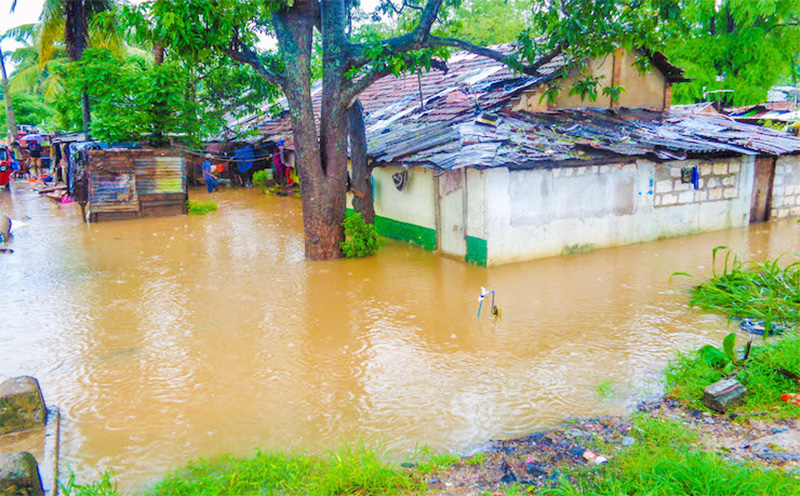
Of people and homesteads,
Sinking mercilessly,
In backwaters of neglect,
Which is the best proof yet,
That the land’s periphery,
Has not figured much,
On the planning boards,
Of those ‘strutting and fretting,
Their hour’ on high ground.
By Shamindra Ferdinando
Jaffna district parliamentarian Mathiaparanan Abraham Sumanthiran’s recent declaration supportive of the militarily defeated Liberation Tigers of Tamil Eelam (LTTE) particularly captured the public attention.
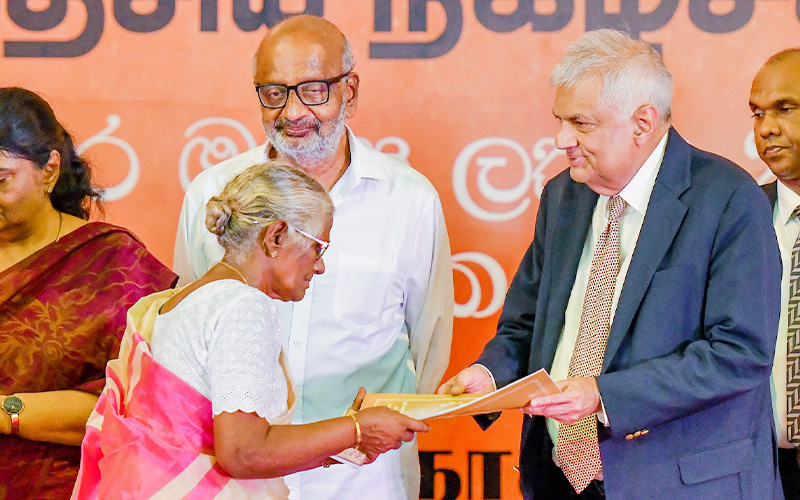
Then soon after, MP Sumanthiran surprised all by appearing on stage with President Ranil Wickremesinghe, in Jaffna, where the UNP leader bestowed land deeds on a selected group of people.
With them on stage were EPDP leader Douglas Devananda, MP, and Dharmalingam Siddharthan, MP, of PLOTE/TNA whose father, Visvanather Dharmalingam, MP (Jaffna District) was assassinated by TELO at the behest of Research and Analysis Wing (RAW) in Sept 1985. (Siddharthan himself told the writer that his father and colleague Jaffna District MP Arumugam Murugesu Alalasundaram were abducted and killed in a Mafia-style TELO operation). Will deal with Sumanthiran’s Jaffna move later.
Issuing a statement ahead of Tamil Genocide Remembrance Day that was marked on May 18 around the world, Sumanthiran, PC, now in his third term as a lawmaker, said: “Although it is my personal belief that a just political liberation cannot be achieved at the point of a gun, I have repeatedly stated that we cannot today decry or judge the decision taken by the Tamil youth who saw no other option at a time when oppression and military….”
The Illankai Arasu Katchi (ITAK) MP went on to say: “I have also consistently emphasized that the commitment and sacrifices unselfishly made by those who took up arms on our behalf should be regarded very highly.”
Sumanthiran tweeted hours before he paid respects to those who perished in fighting and the civilians at the Mullivaikkal commemoration site. However, Sumanthiran attended another commemoration also on the same day organized at the Viharamahadevi Park by several groups, including the Global Tamil Forum (GTF), to remember “all victims of war over 30 years in the North and South.”
Some found fault with MP Sumanthiran for attending the Colombo event where organizers quite rightly refrained from making reference to any particular group or community. There hadn’t been a similar remembrance event in Colombo since the end of the war 15 years ago. The same group organized an inter-religious prayer event at the Vavuniya Town Hall grounds, also on the same day.
The GTF should be commended for taking a courageous stand in spite of criticism by those who still seek advantage of the LTTE’s crushing defeat.
Perhaps, the GTF-led group should have made reference to Sri Lankans killed overseas due to terrorism, Indian military deaths here (July 1987-March 1990) and former Indian Premier Rajiv Gandhi’s assassination in May 1991 while campaigning during a general election by a brainwashed LTTE teenage suicide cadre.
The Tamil community shouldn’t confine the war dead commemoration to those who died during the last phase of the fighting with the focus on Mullivaikkal. Commemorations whether in the North, East or Colombo should be devoid of any petty racial connotation, for all were human beings. Such events shouldn’t be allowed to cause further divisions among the communities, under any circumstances. Those who make unnecessary interventions with a view to attracting media attention should be appropriately dealt with by law enforcement authorities.
We also like to ask self-proclaimed international do-gooders why they don’t show even an iota of interest in the unimaginable suffering undergoing by Palestinians at the hands of the Israelis, while they make a song and dance about imaginary genocide they claim to have happened here during the last phase of fighting.
The ITAK is the main constituent of the Tamil National Alliance (TNA) that had been formed in late Oct 2001 in line with the community’s overall politico-military strategy to achieve Eelam. Against the backdrop of the worst-ever battlefield defeat that had been inflicted on the Army in April 2000, Eelam seemed achievable. Having defeated the 54 Division, deployed at the Elephant Pass sector then widely believed to be impregnable, thereafter the LTTE almost succeeded in overwhelming the Army in the rest of the peninsula.
Muslims’ dilemma
The Sinhalese and Tamils should also publicly repent the suffering experienced by the Muslim community. That community suffered untold hardships for being steadfastly taking a stand against separatism. Had they thrown their weight behind the LTTE, the country could have been overwhelmed and the 2009 absolute victory over the LTTE couldn’t have been achieved. So, do not hesitate to recognize the Muslims’ commitment as a whole to Sri Lanka’s unitary status. They paid a very heavy price for being always supportive of the government stand for a united Sri Lanka, whoever was in power.
The 2019 Easter Sunday massacre, carried out by a group of extremist misguided Muslims, shouldn’t in any way be used against the community. Officers and men of the Muslim and Tamil communities served in the armed forces and police with distinction and made quite a contribution to the overall success of the war.
Just five months after the LTTE resumed war in June 1990 in the wake of the IPKF withdrawal from the temporarily-merged North and East Provinces, the LTTE ordered the Muslims out of the Northern region, comprising Jaffna, Kilinochchi, Mannar, Mullaithivu and Vavuniya giving them a matter of hours to leave. The then President Ranasinghe Premadasa’s government couldn’t do anything about it. The international community turned a blind eye. Tamil politicians remained silent. No one dared to challenge the LTTE’s inhumane and drastic move.
Twenty-one years later a deranged Norwegian Andres Breivik massacred 77 persons, mostly children in two attacks the attacker claimed was influenced by the LTTE’s eviction of the Muslim community from Northern Sri Lanka.
Did the late LTTE theoretician and ideologue Anton Balasingham approve of Velupillai Prabhakaran’s plan to force Muslims out of the Northern Province? Balasingham, the one-time British High Commission employee in Colombo, passed away in the UK, in Dec 2006, of kidney failure, a couple of months before the LTTE lost control of the Eastern Province.
Far right Breivik, then 32, a few hours before he went on the rampage on July 22, 2011, made reference to the LTTE’s eviction of the Muslim community from the Northern Province, in his so-called manifesto posted online. The following are the references (1) Pro-Sri Lanka (supports the deportation of all Muslims from Sri Lanka) (Page 1235) and (2) Fourth Generation War is normally characterized by a ‘stateless’ entity fighting a state or regime (the EUSSR). Fighting can be physical such as the Liberation Tigers of Tamil Eelam (LTTE) to use a modern example. (Page 1479).
Perhaps, Sri Lanka should have asked those who had been demanding international inquiry to include the Norwegian massacre in their agenda. One of Sri Lanka’s foremost diplomats, the late Jayantha Dhanapala, appearing before the Lessons Learnt and Reconciliation Commission (LLRC) in 2010, stressed on the need for accountability on the part of foreign governments. The then Mahinda Rajapaksa government, probably blinded by unfathomable victory, was not bothered. It only saw immediate political advantage out of the developments even forgetting the long term ramifications for the country.
Focus on Sumanthiran
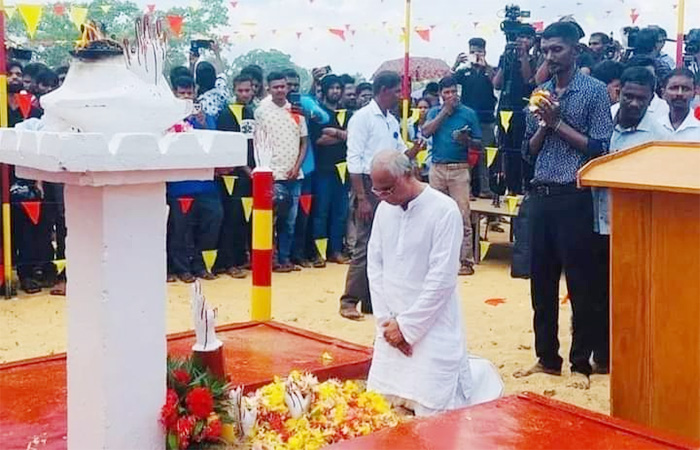
Sumanthiran on his knees before the Mullaivaikkal monument
(pic courtesy Tamil Guardian)
Maybe MP Sumanthiran should have recognized the LTTE as the group that continued the war until the very end. The parliamentarian shouldn’t have hesitated to do so though terrorism cannot be justified under any circumstances. The LTTE, however, proved its conventional capabilities throughout the war. The casualties, and the losses the group inflicted on the Indian Army underscored its fighting capabilities.
As Sumanthiran entered Parliament at the 2010 General Election, perhaps he hadn’t been affected by the LTTE’s wartime strategies and unprecedented developments that characterized the conflict, with him comfortably settled down in Wellawatte.
The writer first met Sumanthiran at A.J.M. Muzammil’s (incumbent Governor of the Uva Province) residence at No 07, Alfred House Road, Colombo 03 in June 2011. Muzammil, who had been a UNP member of the Western Provincial Council (WPC), arranged the writer to interview former Tamil Nadu State Assembly Congress I member Hasanali Kuddus at his residence. The new entrant to the Parliament Attorney-at-Law Sumanthiran, too, was there on that occasion and the writer had an opportunity to seek his opinion on some contentious matters.
Naturally, matters raised herein included the recognition of the LTTE by the TNA as the sole representative of the Tamil speaking people ahead of the signing of the Ceasefire Agreement (Feb 2002), LTTE-TNA joint boycott of 2005 presidential poll that cost UNP leader Ranil Wickremesinghe victory (the writer wouldn’t humiliate the defunct LTTE by repeating allegation that the Rajapaksas bribed the LTTE to order the boycott. The LTTE may have accepted money but the boycott was not certainly inspired by that) and still unbelievable was the TNA backing for the war-winning Army Chief Gen. Sarath Fonseka at the 2010 Presidential Poll. The TNA ensured a comfortable victory for Fonseka in the entire then merged North-East Province though he lost badly in the rest of the country. Mahinda Rajapaksa secured a second term by obtaining 1.8 mn votes more than Fonseka. A silly claim of computer “jilmaart” by Fonseka’s camp made his defeat even worse.
Kuddus, in an exclusive interview with The Island, strongly defended the eradication of the LTTE though concerns remained of atrocities allegedly committed by the military. Declaring that Sri Lanka couldn’t be punished on the basis of unsubstantiated war crimes allegations, Kuddus said that no country would be safe if legitimate governments were deprived of the opportunity to neutralize threats posed by terrorism. If Sri Lanka could be questioned over its right to hit back hard at the LTTE, what would be the position of the Indian military battling those who had taken up arms? (Congress I member Hasanali speaks out, The Island, June 16, 2011 edition)
At the April 2010 General Glection, the Tamil National Alliance (TNA) won 14 seats. Thirteen were elected while the party secured just one of the 29 National List slots. The TNA picked Sumanthiran as its NL member. It would be pertinent to mention that the TNA was placed third in terms of the number of seats won at that election. The UPFA secured a staggering 144 seats, including 17 NL slots whereas the UNP-led United National Front obtained 60 seats. Nine NL MPs were among them.
The TNA tally drastically dropped due to the eradication of the LTTE. At the previous general election conducted in April 2004, close on the heels of the devastating split in the group, the TNA won a record 22 seats, including two NL slots. The European Union Election Observation Mission, in its report found fault with the TNA for being the beneficiary of poll violence unleashed by the Tigers to stuff ballot boxes in TNA’s favour. That was the best outcome for the TNA at a general election.
At the last General Election, the TNA tally was reduced to 10 MPs. It is a pity that Sumanthiran couldn’t gain the leadership of the ITAK at a keenly contested election in January this year. Jaffna District lawmaker Sivagnanam Sritharan secured 184 votes while M.A. Sumanthiran obtained 137 votes.
Let us get back to MP Sumanthiran’s appearance on stage in Jaffna with President Wickremesinghe last week. During his brief statement, the President’s Counsel made reference to the LTTE-TNA boycott of the 2005 Presidential Poll that caused Wickremesinghe’s defeat, Mahinda Rajapaksa’s election and the unthinkable annihilation of the LTTE. The Presidential Media Division (PMD) quoted Sumanthiran as having told the gathering: “It is possible that the challenges in the North may have impeded your journey in 2005, a fact that I believe is now regretfully acknowledged by the people of the region.”
In the wake of a minor commotion over MP Sumanthiran’s appearance on stage with Wickremesinghe, the PC tweeted that his attendance at the state functions in his electorate shouldn’t be considered as an endorsement of the UNP leader’s candidature at the forthcoming Presidential Poll. The Jaffna District MP’s tweet is irrelevant. His declaration pertaining to the 2005 Presidential Poll clearly meant his support for Wickremesinghe.
The bottom line is that if not for that strategic mistake made by the LTTE and TNA in 2005, they could have achieved military superiority in the North after the then expected UNP victory as Wickremesinghe hardly making even a whimper against the LTTE. MP Sumanthiran’s politically charged statement in Jaffna should be examined also taking into consideration two key developments-in April 2003 (LTTE quit negotiating table) and January 2010 (backed General Fonseka).
The TNA could have used the opportunity to reach a consensus with President Rajapaksa if the party at least adopted a neutral stance. Instead, the TNA joined with the UNP and the JVP to defeat President Rajapaksa, thereby causing a lot of hostility. Backing Fonseka also dealt a severe blow to the TNA’s credibility in the backdrop of war crimes accusations directed at the Army.
GR meets Sampanthan at India House
Sumanthiran cannot be unaware of an attempt made by India in 2011 to work out an arrangement between President Rajapaksa’s government and the TNA.
TNA leader R. Sampanthan has been keen to normalize relations between his party and the government. The veteran politician appeared to have felt that such an arrangement could have helped his community and sought Indian intervention. But a section of the party sabotaged that effort, thereby undermining reconciliatory moves.
Following an incident at Alaveddi that had been staged by the group opposed to Sampanthan’s bid, an angry Defence Secretary Gotabaya Rajapaksa told the writer of a hitherto unreported meeting between him and Sampanthan at India House on June 08, 2011. The meeting that had taken place in the presence of the then Indian High Commissioner Ashok Kantha could have facilitated post-war reconciliation.
Pointing out that the June 16 incident at Alaveddi was meant to harm reconciliatory moves, Gotabaya Rajapaksa said that unwarranted interventions made by various interested parties, including the US, caused complications (GR alleges TNA split over Sampanthan’s reconciliation move with strapline ‘TNA pressured US State Department, several diplomatic missions to take up Alaveddi issue’ in the June 20, 2011 edition of The Island.
Recently SJB MP Mano Ganesan attacked TNA over what he called its post-war honeymoon with the government. A comprehensive post-war examination of political developments, commencing with the formation of the TNA at the behest of the LTTE, is necessary to comprehend the situation today.
The arrest of four persons in February 2017 during the Yahapalana administration, over an alleged attempt on Sumanthiran’s life, underscores the need for a wider examination of developments. The suspects held under Prevention of Terrorism Act (PTA) were granted bail in Oct 2022.
During that administration, the TNA played quite an important role with Sampanthan receiving the Opposition Leader’s post though his party had only 16 seats, including two NL slots whereas the breakaway UPFA faction comprised over 50 MPs. But, Yahapalana bosses decided in favour of TNA. In return, the TNA helped thwart President Maithripala Sirisena’s bid to form a new government under the premiership of Mahinda Rajapaksa. Formed in late Oct 2018, the Sirisena-Rajapaksa effort collapsed in 52 days. Sumanthiran played a significant role in the counter attack in support of ousted Wickremesinghe, who continued to insist he was the Premier regardless of the appointment made by Sirisena. Finally, the SC ruled in favour of Wickremesinghe. The rest is history. However, in the wake of 2019 Easter Sunday carnage, MP Sumanthiran said something which he shouldn’t have said under any circumstances. Addressing the first anniversary event of the political weekly ‘Annidha’ on April 29, 2019 at the BMICH, the TNA spokesman justified the heinous crime. He warned of dire consequences unless the government addressed the grievances of the minorities.
Sumanthiran is best remembered for his role in working out a tripartite agreement on a hybrid war crimes court as announced in Washington in June 2016.
Political parties need to make a genuine effort to move forward. The post-war reconciliation wouldn’t be realistic until parties represented in Parliament stopped playing politics with the war. The Tamil community should accept the LTTE had ample opportunities to reach consensus with the Sinhala leadership, particularly Ranil Wickremesinghe, who pursued a strategy even at the expense of his political life. The LTTE’s cardinal sin or serious error of judgment was the April 2003 withdrawal from the Norway-led peace effort. That was meant to create an environment conducive for full scale war that the group felt could have been brought to a successful conclusion by it. The LTTE was certainly ready for war in August 2005. If not, Prabhakaran wouldn’t have ordered Foreign Minister Lakshman Kadirgamar’s assassination. Full scale war commenced exactly a year later and what was widely believed to be an invincible force collapsed within two years and 10 months. Had the military not taken the civilian factor into consideration, the LTTE could have been wiped out much earlier. The ICRC said so as revealed by WikiLeaks.



US sports envoys to Lanka to champion youth development

Rahuman questions sudden cancellation of leave of CEB employees


