
News
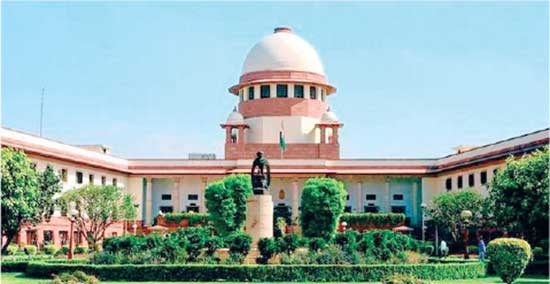
Indian Supreme Court says society must learn to accept inter-caste, inter-faith marriages

BY S VENKAT NARAYAN
Our Special Correspondent
NEW DELHI, February 9:
The Supreme Court of India on Monday underscored the right of the adults to choose their life partner, and added that it is time society learns to accept inter-caste and inter-faith marriages without hounding the couples who marry outside their caste or religion.
A Supreme Court bench of Justices Sanjay Kishan Kaul and Hrishikesh Roy further noted that it would “hardly be a desirable social exercise” for parents to shun their children only because they decided to marry outside their caste or community.
The judges, in their order, also emphasised the need for specific guidelines and a training module for policemen to deal with such “socially sensitive cases”, so that couples can get due protection available to them under the law should the parents lodge criminal cases against them.
The apex court noted that “educated young boys and girls are increasingly choosing their life partner on their own”, which might be viewed as a deviation by the society and the parents. But the police authorities were duty-bound to keep such couples out of harm’s way if there is no violation of the law.
(This country of 1,380 million people has 1,208 castes, and six main religions. Besides, six million people reported in the last census in 2011 that they practice other religions and faiths, including tribal religions).
The court’s comments are significant because they come in the wake of controversial laws/ordinances passed by several states ruled by India’s governing Bharatiya Janata Party (BJP). Such laws can be misused to obstruct inter-faith marriages.
The bench was hearing a case of an inter-caste marriage from Karnataka. The couple approached the top court, seeking protection from a criminal case lodged by the woman’s father.
The woman, 28, is from Karnataka while the man, 26, is from Uttar Pradesh. They fell in love while being trained for their jobs as assistant professor and lecturer in a college, and decided to get married. The woman’s parents strongly opposed this alliance. Her father filed a missing persons complaint. This was converted into an FIR at Belagavi in Karnataka.
The couple rushed to the Supreme Court for protection, which promptly stayed the first information report (FIR) by an order in December last year, and sought a response from the Karnataka government.
On Monday, advocate Subhranshu Padhi, appearing for the state government, informed the bench that the woman was yet to record her statement before at the concerned police station in Belagavi about her consensual relationship with the man concerned, and hence the investigation into the father’s complaint was still underway.
But the bench asked Padhi why the investigating officer did not accept the woman’s request to record her statement at a place of her choice so that she could feel safe.
Advocate Prabhat Kumar Rai, who represented the couple, referred to the woman’s letter to the investigating officer and various other senior police officials in Karnataka. These letters disclosed that the couple were married in October 2020; and she also sent a copy of her marriage certificate.
“The woman feared for her safety if she were to go to Belagavi for recording her statement. The right to marry a person of (one’s) own choice is an integral part of Article 21 (right to life and liberty) of the Indian Constitution,” added Rai.
Lamenting the concerned police officer’s attitude, the court said the investigating officer should receive counselling. The Karnataka government must consider conducting a training programme for all its police officers to sensitise them about such cases. The bench observed that it is desirable for all the police departments to lay down guidelines for handling such cases.
The highest court in the country regretted that the parents of the woman opposed the choice of their daughter even though both the man and the woman were highly qualified, independent professionals and Hindus, but not of the same caste and not from the same state.
Quashing the FIR, the bench stated that once two adults choose to be with each other and have a consensual relationship, they cannot be made accused in a criminal case only on account of their parents’ refusal to accept their relationship.
“We hope that the parents of the petitioner no.1 (woman) will have better sense and accept the marriage to re-establish social ties with their daughter and her husband. That, we think, is the only way forward,” recorded the court in its order.
At least five BJP-ruled states—Uttar Pradesh, Madhya Pradesh, Haryana, Karnataka and Gujarat have either passed laws, or are mulling laws designed to prevent “forcible conversions” through marriage, commonly referred to as “love jihad” laws.
The law in Uttar Pradesh, approved on November 28 as the Prohibition of Unlawful Religious Conversions Ordinance, includes provisions against “unlawful religious conversion,” declares a marriage null and void if the sole intention was to “change a girl’s religion.” The UP police made 35 arrests, and filed a dozen FIRs in the first month after the ordinance was passed.
The UP ordinance and the law in Madhya Pradesh passed last December propose sentences of up to 10 years in prison for those who break the law.
On January 6, the Supreme Court agreed to hear petitions challenging the constitutional validity of the laws passed in the name of love jihad. A bench headed by Chief Justice S A Bobde refused, however, to stay the controversial provisions of the laws and issued notices to both state governments on two different petitions.The pleas, filed by advocate Vishal Thakre and others and an NGO ‘Citizen for Justice and Peace’, have challenged the constitutional validity of the Uttar Pradesh Prohibition of Unlawful Religious Conversion Ordinance, 2020 and the Uttarakhand Freedom of Religion Act, 2018 which regulate religious conversions of inter-faith marriages.Senior advocate C U Singh, appearing for the NGO, said some provisions of these laws are “oppressive and horrible” in nature and require prior consent of the government to marry which is “absolutely obnoxious”, Singh added.
The plea ‘Citizen for Justice and Peace’ said that both the legislations violate Articles 21 and 25, as it empowers the State to suppress an individual’s personal liberty and the freedom to practice religion of one’s choice.



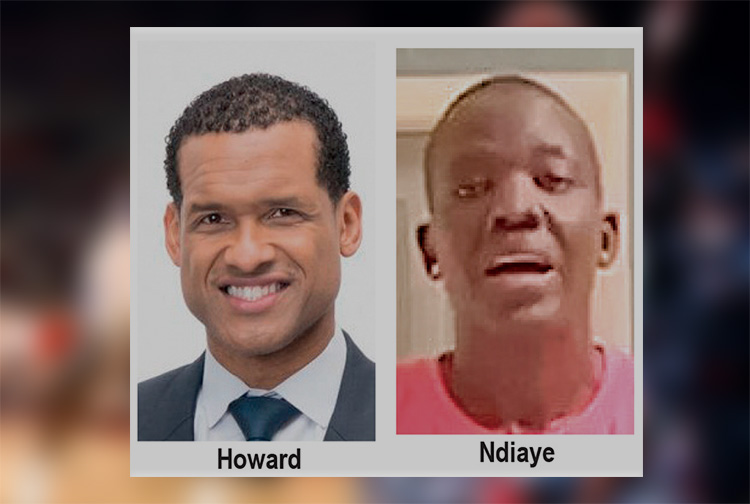
The U.S. Embassy in Colombo welcomed the U.S. Sports Envoys to Sri Lanka, former National Basketball Association (NBA) and Women’s National Basketball Association (WNBA) players Stephen Howard and Astou Ndiaye, from June 8 through 14.
The Public Diplomacy section of the U.S. Embassy said that it would launch a weeklong basketball program intended to harness the unifying power of sports, made possible through collaboration with Foundation of Goodness and IImpact Hoop Lab.
While in Sri Lanka, Howard and Ndiaye, both retired professional basketball players, will conduct a weeklong program, Hoops for Hope: Bridging Borders through Basketball. The Sports Envoys will lead basketball clinics and exhibition matches and engage in leadership sessions in Colombo and Southern Province for youth aged 14-18 from Northern, Uva, Eastern and Western Provinces, offering skills and leadership training both on and off the court. The U.S. Envoys will also share their expertise with the Sri Lanka Basketball Federation, national coaches, and players, furthering the development of basketball in the country. Beyond the clinics, they will collaborate with Sri Lankan schoolchildren to take part in a community service project in the Colombo area.
“We are so proud to welcome Stephen and Astou as our Sports Envoys to Sri Lanka, to build on the strong people-to-people connections between the United States and Sri Lanka,” said U.S. Ambassador Julie Chung. “The lessons that will be shared by our Sports Envoys – communication, teamwork, resilience, inclusion, and conflict resolution – are essential for leadership development, community building, equality, and peace. The U.S. Sports Envoy program is a testament to our belief that sports can be a powerful tool in promoting peace and unity.”
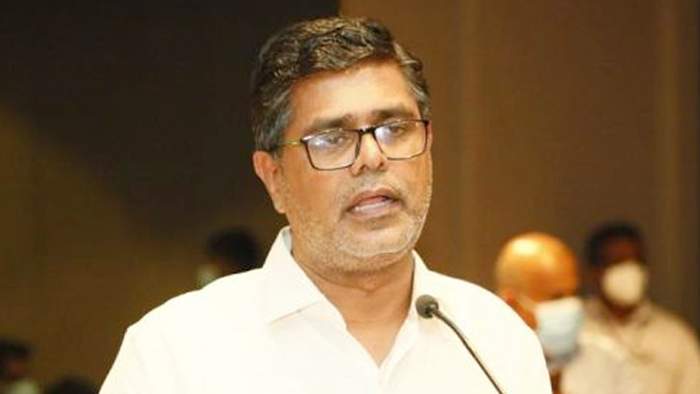
SJB Colombo District MP Mujibur Rahuman in parliament demanded to know from the government the reasons for CEB suspending the leave of all its employees until further notice from Thursday.
MP Rahuman said that the CEB has got an acting General Manager anew and the latter yesterday morning issued a circular suspending leave of all CEB employees with immediate effect until further notice.
“We demand that Minister Kanchana Wijesekera should explain this to the House. This circular was issued while this debate on the new Electricity Amendment Bill was pending. There are many who oppose this Bill. The Minister must tell parliament the reason for the urge to cancel the leave of CEB employees,” the MP said.However, Speaker Mahinda Yapa Abeywardena prevented Minister Wijesekera responding to the query and said that the matter raised by MP Rahuman was not relevant.
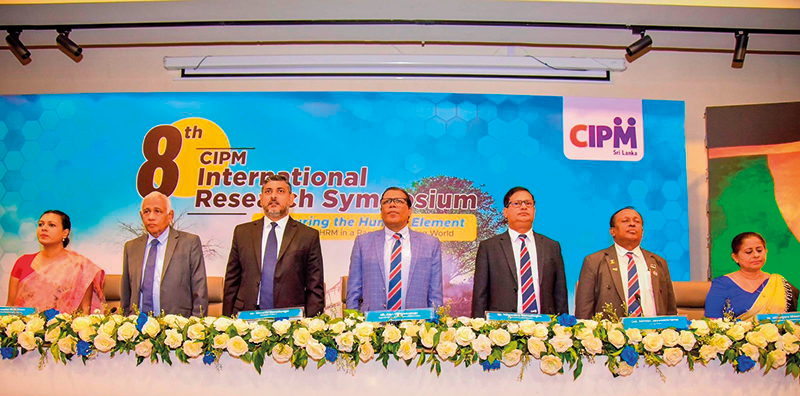
The Chartered Institute of Personnel Management (CIPM) successfully concluded the 8th Annual CIPM Symposium, which took place on 31st May 2024. Themed “Nurturing the Human Element—Redefining HRM in a Rapidly Changing World,” the symposium underscored the pivotal role of human resource management (HRM) in today’s dynamic global landscape. Since its inception in 1959, CIPM has been dedicated to advancing the HR profession through education, professional development, and advocacy, solidifying its position as Sri Lanka’s leading professional body for HRM.
Ken Vijayakumar, the President of the CIPM, graced the occasion as the chief guest. The symposium commenced with the welcome address by the Chairperson, Prof. Arosha Adikaram, followed by the Web Launch of the Symposium Proceedings and Abstract Book by the CIPM President. The event featured distinguished addresses, including a speech by Chief Guest Ken Vijayakumar, President of CIPM, and an address by Guest of Honor Shakthi Ranatunga, Chief Operating Officer of MAS Holdings Pvt. Ltd., Sri Lanka.
The symposium also featured an inspiring keynote address by Prof. Mario Fernando, Professor of Management and Director of the Centre for Cross Cultural Management (CCCM) at the University of Wollongong, Australia.
Vote of Thanks of the inauguration session was delivered by Dr. Dillanjani Weeratunga, Symposium Co-chair.
The symposium served as a comprehensive platform for researchers to present their findings across a wide range of critical topics in HRM. These included Cultural Diversity and Inclusion, Talent Development and Retention, Ethical Leadership and Corporate Social Responsibility, Adapting to Technological Advancements, Mental Health and Well-being at Work, Global Workforce Challenges, Employee Empowerment, and Reskilling and Upskilling.
The plenary session was led by Prof. Wasantha Rajapakse. Certificates were awarded to the best paper presenters during the valedictory session, followed by a vote of thanks delivered by Kamani Perera, Manager of Research and Development.
The annual symposium of CIPM was a truly inclusive event, attracting a diverse audience that spanned undergraduates, graduates, working professionals, research scholars and lecturers. This widespread interest highlights the symposium’s significance in the field of HRM, offering a unique opportunity for everyone to network and learn from scholarly brains.The CIPM International Research Symposium was sponsored by Hambantota International Port, Sri Lanka Institute of Information Technology (SLIIT), E B Creasy & Co. PLC, and Print Xcel Company.



US sports envoys to Lanka to champion youth development

Rahuman questions sudden cancellation of leave of CEB employees


