
News
Indian scientists begin a voyage to map the Indian Ocean genome

BY S VENKAT NARAYAN
Our Special Correspondent
NEW DELHI, March 12:
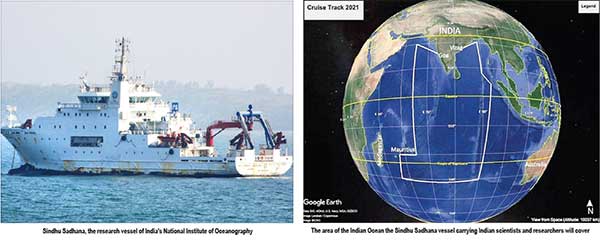
A 30-member team of scientists and researchers from the National Institute of Oceanography (NIO) in Panaji (Goa) and another 30 crew members onboard its research vessel Sindhu Sadhana were flagged off at Visakhapatnam (also known as Vizag) in Andhra Pradesh on Thursday on a first-of-its-kind research project in this country to map the Indian Ocean genome.
They will spend the next three months traversing the course of over 10,000 nautical miles in the Indian Ocean on a research project to reveal the internal working of the body of the ocean at a cellular level.
The research project is aimed at understanding the biochemistry and the response of the ocean to climate change, nutrient stress and increasing pollution. Conceptualised over the last two to three years, the research project has been undertaken at a cost of INR 250 million and will take three years to complete, NIO Director Sunil Kumar Singh said.
The scientists and researchers, including six women, will sail across the Indian Ocean from India’s east coast, all the way to Australia, then onward towards Port Louis in Mauritius and up to the border of Pakistan, off India’s west coast. They will gather samples for genome mapping of microorganisms in the Indian Ocean. They will collect samples from various stretches of the ocean at an average depth of about 5 km.
Just like gene-mapping is carried out on blood samples collected from humans, the scientists will map these in the bacteria, microbes found in the ocean. The mapping of the Deoxyribonucleic acid (DNA) and Ribonucleic acid (RNA) will show the nutrients present in them, and also those lacking in different parts of the ocean.
NIO Director Singh says this will help scientists understand the internal working of the ecosystem of the Indian Ocean. The research will enable scientists to identify the factors controlling the changes in RNA, DNA in the oceans, and various stressors impacting them.
The ocean has several micronutrients like nitrates, sulphates and silicates, minerals like iron ore and zinc, and trace metals like cadmium or copper. The genome mapping will show the presence of which these microbes have adapted to, in addition to their reaction to atmospheric carbon dioxide. This will help in identifying which part of the ocean has a greater concentration of which mineral or element.
The scientists will then use these as tracers to tackle the causative factors for excess or lack of a certain mineral or element and suggest possible solutions for their mitigation. In addition, the large pool of RNA, DNA library of the oceans will be utilised for using the Indian Ocean to human benefit in the future.
According to the NIO, rapid advances in sequencing technologies and bioinformatics have enabled exploration of the ocean genome. “Exploring the ocean genome will enable an increase in the growing number of commercial biotechnology applications, extending from multiple anticancer treatments to cosmetics and industrial enzymes, to antiviral molecules… Exploration of the ocean at a genetic level will result in new insights into taxonomy and adaptive capacity that can help optimize conservation efforts,” the NIO said in its project abstract.
Trace metals like cadmium or copper are supplied to oceans via continental run-offs, atmospheric deposition, hydrothermal activities and continental shelf interaction. They are essential for ocean productivity. Scientists say that it is important to understand the interactions of trace metals with marine biota “for having a holistic understanding about nutrient cycling and productivity of the oceans”.
Apart from their reactions on marine life, isotopic forms of trace metals can be utilised to track the movement of water masses responsible for ocean circulation and as tools to study the biological, geochemical and ecosystem processes and food web analyses.
The NIO’s project is expected to generate new information about trace metals from underexplored regions of the Indian Ocean, the third largest water body in the world, covering about 20 per cent of the Earth’s water surface.
The team of scientists will stay aboard their research vessel for about 90 days with refuelling scheduled at Mauritius. The route is from Visakhapatnam to the mouth of the Ganga then down the ocean to Australia, then westward to Mauritius and up to the Pakistan border. At various stages and stretches, samples will be collected by lowering a Kevlar cable of up to 8 km with a set of 24 teflon coated bottles to collect samples. They have a capacity of 12 litres.
The Kevler cable and the Teflon coating are to ensure that metals are not inadvertently introduced into the water by the vessel itself. The samples will be collected and the bacteria will be stored at -60 degrees Celsius with the help of liquid nitrogen. While some samples will be tested at six laboratories on board the vessel, several samples will be brought back to NIO for study and analysis over the next three years.



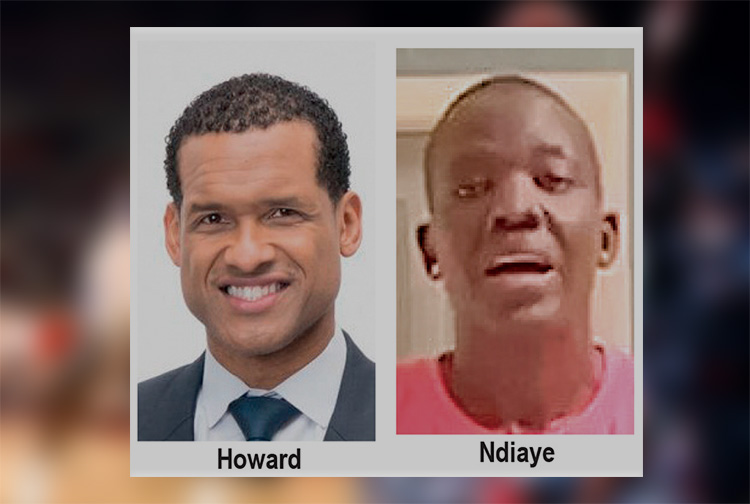
The U.S. Embassy in Colombo welcomed the U.S. Sports Envoys to Sri Lanka, former National Basketball Association (NBA) and Women’s National Basketball Association (WNBA) players Stephen Howard and Astou Ndiaye, from June 8 through 14.
The Public Diplomacy section of the U.S. Embassy said that it would launch a weeklong basketball program intended to harness the unifying power of sports, made possible through collaboration with Foundation of Goodness and IImpact Hoop Lab.
While in Sri Lanka, Howard and Ndiaye, both retired professional basketball players, will conduct a weeklong program, Hoops for Hope: Bridging Borders through Basketball. The Sports Envoys will lead basketball clinics and exhibition matches and engage in leadership sessions in Colombo and Southern Province for youth aged 14-18 from Northern, Uva, Eastern and Western Provinces, offering skills and leadership training both on and off the court. The U.S. Envoys will also share their expertise with the Sri Lanka Basketball Federation, national coaches, and players, furthering the development of basketball in the country. Beyond the clinics, they will collaborate with Sri Lankan schoolchildren to take part in a community service project in the Colombo area.
“We are so proud to welcome Stephen and Astou as our Sports Envoys to Sri Lanka, to build on the strong people-to-people connections between the United States and Sri Lanka,” said U.S. Ambassador Julie Chung. “The lessons that will be shared by our Sports Envoys – communication, teamwork, resilience, inclusion, and conflict resolution – are essential for leadership development, community building, equality, and peace. The U.S. Sports Envoy program is a testament to our belief that sports can be a powerful tool in promoting peace and unity.”
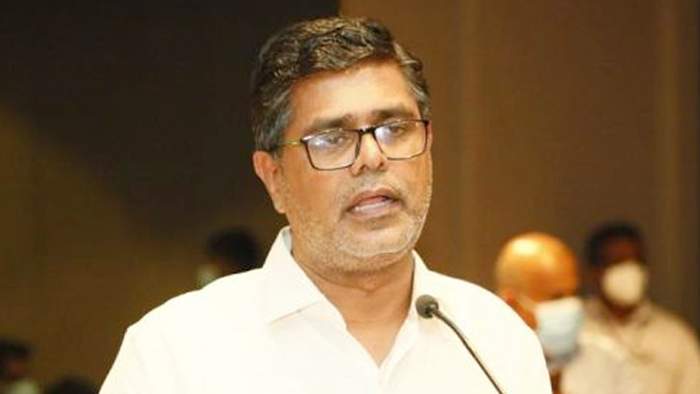
SJB Colombo District MP Mujibur Rahuman in parliament demanded to know from the government the reasons for CEB suspending the leave of all its employees until further notice from Thursday.
MP Rahuman said that the CEB has got an acting General Manager anew and the latter yesterday morning issued a circular suspending leave of all CEB employees with immediate effect until further notice.
“We demand that Minister Kanchana Wijesekera should explain this to the House. This circular was issued while this debate on the new Electricity Amendment Bill was pending. There are many who oppose this Bill. The Minister must tell parliament the reason for the urge to cancel the leave of CEB employees,” the MP said.However, Speaker Mahinda Yapa Abeywardena prevented Minister Wijesekera responding to the query and said that the matter raised by MP Rahuman was not relevant.
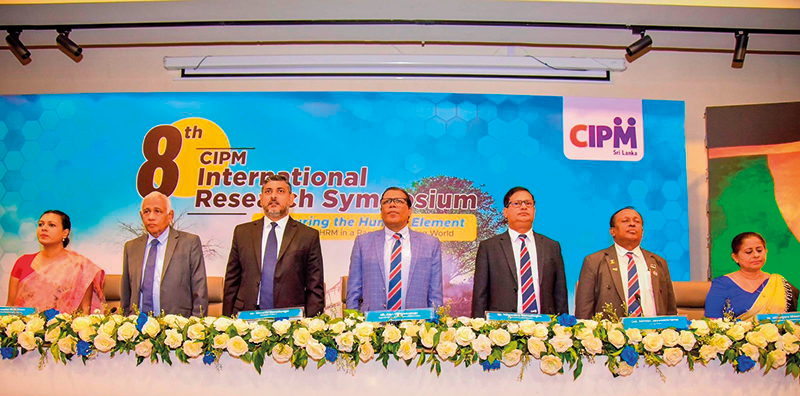
The Chartered Institute of Personnel Management (CIPM) successfully concluded the 8th Annual CIPM Symposium, which took place on 31st May 2024. Themed “Nurturing the Human Element—Redefining HRM in a Rapidly Changing World,” the symposium underscored the pivotal role of human resource management (HRM) in today’s dynamic global landscape. Since its inception in 1959, CIPM has been dedicated to advancing the HR profession through education, professional development, and advocacy, solidifying its position as Sri Lanka’s leading professional body for HRM.
Ken Vijayakumar, the President of the CIPM, graced the occasion as the chief guest. The symposium commenced with the welcome address by the Chairperson, Prof. Arosha Adikaram, followed by the Web Launch of the Symposium Proceedings and Abstract Book by the CIPM President. The event featured distinguished addresses, including a speech by Chief Guest Ken Vijayakumar, President of CIPM, and an address by Guest of Honor Shakthi Ranatunga, Chief Operating Officer of MAS Holdings Pvt. Ltd., Sri Lanka.
The symposium also featured an inspiring keynote address by Prof. Mario Fernando, Professor of Management and Director of the Centre for Cross Cultural Management (CCCM) at the University of Wollongong, Australia.
Vote of Thanks of the inauguration session was delivered by Dr. Dillanjani Weeratunga, Symposium Co-chair.
The symposium served as a comprehensive platform for researchers to present their findings across a wide range of critical topics in HRM. These included Cultural Diversity and Inclusion, Talent Development and Retention, Ethical Leadership and Corporate Social Responsibility, Adapting to Technological Advancements, Mental Health and Well-being at Work, Global Workforce Challenges, Employee Empowerment, and Reskilling and Upskilling.
The plenary session was led by Prof. Wasantha Rajapakse. Certificates were awarded to the best paper presenters during the valedictory session, followed by a vote of thanks delivered by Kamani Perera, Manager of Research and Development.
The annual symposium of CIPM was a truly inclusive event, attracting a diverse audience that spanned undergraduates, graduates, working professionals, research scholars and lecturers. This widespread interest highlights the symposium’s significance in the field of HRM, offering a unique opportunity for everyone to network and learn from scholarly brains.The CIPM International Research Symposium was sponsored by Hambantota International Port, Sri Lanka Institute of Information Technology (SLIIT), E B Creasy & Co. PLC, and Print Xcel Company.



US sports envoys to Lanka to champion youth development

Rahuman questions sudden cancellation of leave of CEB employees


