
News
India COVID-19 cases cross 7 million as experts warn of complacency

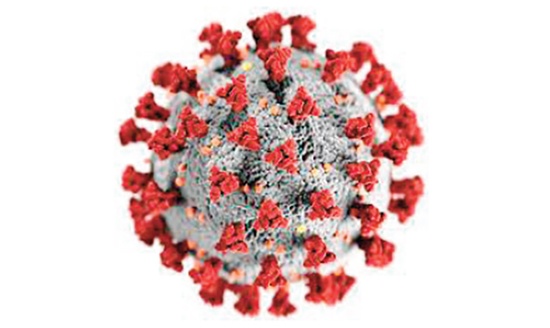
India’s confirmed coronavirus toll crossed 7 million on Sunday with a number of new cases dipping in recent weeks, even as health experts warn of mask and distancing fatigue setting in, agency reports from New Delhi said yesterday.
The Indian Health Ministry registered another 74,383 infections in the past 24 hours. India is expected to become the pandemic’s worst-hit country in coming weeks, surpassing the U.S., where more than 7.7 million infections have been reported.
The ministry also reported 918 additional deaths, taking total fatalities to 108,334.
The number of people who have died of COVID-19 has remained relatively low in South and Southeast Asia — from India to Vietnam and Taiwan — compared to European countries and the United States, said Dr. Randeep Guleria, a government health expert
“We have been able to keep the curve rise slow, but I do agree that we have not been able to get it to move aggressively down. That’s related to our population density, diversity of our country and socioeconomic challenges in our country,” said Guleria, referring to India’s burgeoning population of nearly 1.4 billion.
Some experts say though that India’s death toll may not be reliable because of poor reporting and health infrastructure and inadequate testing.
India aims to provide vaccines to 250 million people by July 2021, Health Minister Harsh Vardhan said last week. He said that the government was planning to receive 450 million to 500 million vaccine doses and would ensure “equitable access”.
India saw a steep rise in cases in July and added more than 2 million in August and another 3 million in September. But it is seeing a slower pace of coronavirus spread since mid-September, when the daily infections touched a record high of 97,894.
It’s averaging more than 70,000 cases daily so far this month. India has a high recovery rate of 85% with active cases below 1 million, according to the Health Ministry.
Health officials have warned about the potential for the virus to spread during the upcoming religious festival season, which is marked by huge gatherings in temples and shopping districts.
A crucial factor will be people wearing masks and maintaining a safe distance.
Dr. S.P. Kalantri, a hospital director in the village of Sevagram in India’s worst-hit western Maharashtra state, said that people in his village had stopped wearing masks, maintaining distance or washing their hands regularly. He added that the sick were still being brought in to his hospital.
India’s meager health resources are poorly divided across the country. Nearly 600 million Indians live in rural areas, and with the virus hitting India’s vast hinterlands, experts worry that hospitals could be overwhelmed.
“If we are able to have good behavior in terms of physical distancing and masks, maybe by early next year we should be able to come to a new normal. COVID-19 will not finish but it will be under reasonable control with travel and other things becoming much more easier and people relatively safer,” said Guleria.
Retired virologist Dr. T. Jacob John said there was increasing tendency among Indians not to wear masks or maintain distancing.
Social media have compounded the problem by propagating misinformation and fake cures. “And the result of this is that people have gotten fed up and have started making their own conclusions,” John said.
Nationwide, India is testing more than 1 million samples per day, exceeding the World Health Organization’s benchmark of 140 tests per 1 million people. But many of these are antigen tests, which look for virus proteins and are faster but less accurate than RT-PCR, which confirm the coronavirus by its genetic code.
With the economy contracting by a record 23.9% in the April-June quarter, leaving millions jobless, the Indian government is continuing to relax lockdown restrictions that were imposed in late March. The government in May announced a $266 billion stimulus package, but consumer demand and manufacturing are yet to recover.
A large number of offices, shops, businesses, liquor stores, bars and restaurants have reopened. Restricted domestic and international evacuation flights are being operated along with train services.



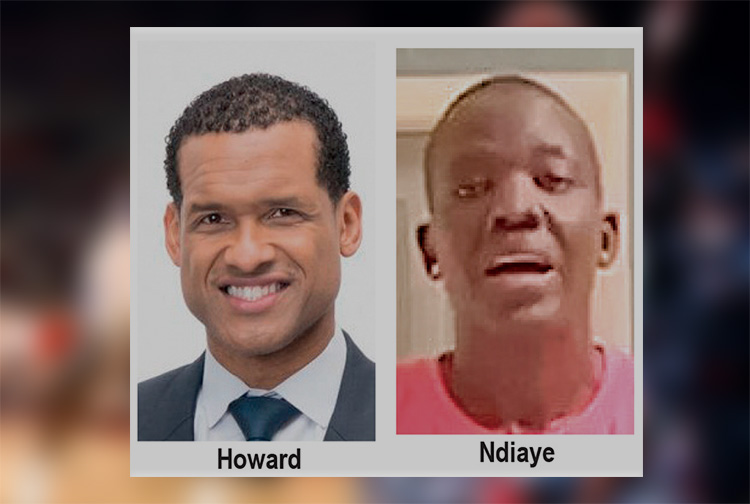
The U.S. Embassy in Colombo welcomed the U.S. Sports Envoys to Sri Lanka, former National Basketball Association (NBA) and Women’s National Basketball Association (WNBA) players Stephen Howard and Astou Ndiaye, from June 8 through 14.
The Public Diplomacy section of the U.S. Embassy said that it would launch a weeklong basketball program intended to harness the unifying power of sports, made possible through collaboration with Foundation of Goodness and IImpact Hoop Lab.
While in Sri Lanka, Howard and Ndiaye, both retired professional basketball players, will conduct a weeklong program, Hoops for Hope: Bridging Borders through Basketball. The Sports Envoys will lead basketball clinics and exhibition matches and engage in leadership sessions in Colombo and Southern Province for youth aged 14-18 from Northern, Uva, Eastern and Western Provinces, offering skills and leadership training both on and off the court. The U.S. Envoys will also share their expertise with the Sri Lanka Basketball Federation, national coaches, and players, furthering the development of basketball in the country. Beyond the clinics, they will collaborate with Sri Lankan schoolchildren to take part in a community service project in the Colombo area.
“We are so proud to welcome Stephen and Astou as our Sports Envoys to Sri Lanka, to build on the strong people-to-people connections between the United States and Sri Lanka,” said U.S. Ambassador Julie Chung. “The lessons that will be shared by our Sports Envoys – communication, teamwork, resilience, inclusion, and conflict resolution – are essential for leadership development, community building, equality, and peace. The U.S. Sports Envoy program is a testament to our belief that sports can be a powerful tool in promoting peace and unity.”
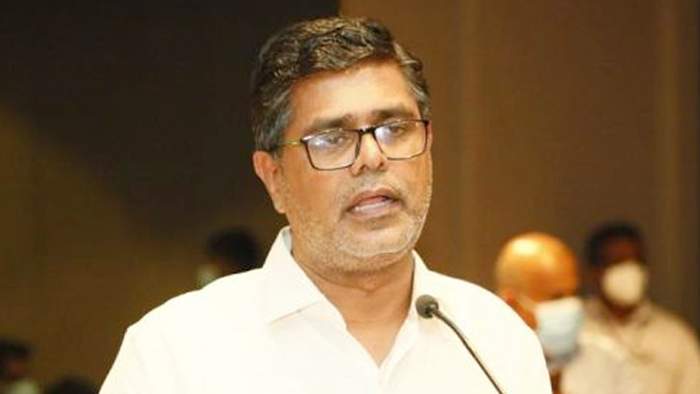
SJB Colombo District MP Mujibur Rahuman in parliament demanded to know from the government the reasons for CEB suspending the leave of all its employees until further notice from Thursday.
MP Rahuman said that the CEB has got an acting General Manager anew and the latter yesterday morning issued a circular suspending leave of all CEB employees with immediate effect until further notice.
“We demand that Minister Kanchana Wijesekera should explain this to the House. This circular was issued while this debate on the new Electricity Amendment Bill was pending. There are many who oppose this Bill. The Minister must tell parliament the reason for the urge to cancel the leave of CEB employees,” the MP said.However, Speaker Mahinda Yapa Abeywardena prevented Minister Wijesekera responding to the query and said that the matter raised by MP Rahuman was not relevant.
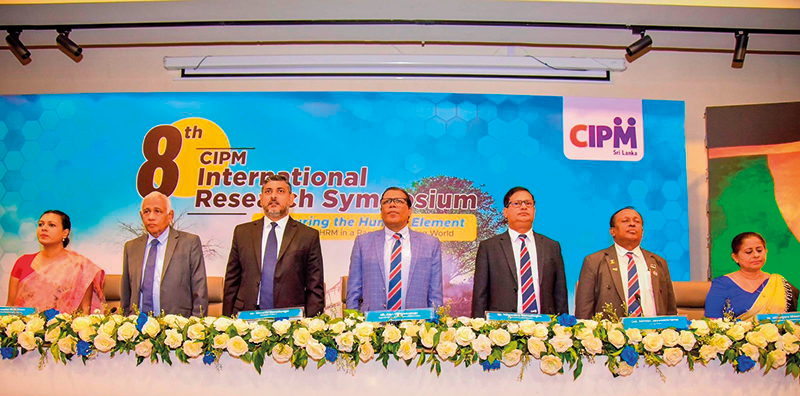
The Chartered Institute of Personnel Management (CIPM) successfully concluded the 8th Annual CIPM Symposium, which took place on 31st May 2024. Themed “Nurturing the Human Element—Redefining HRM in a Rapidly Changing World,” the symposium underscored the pivotal role of human resource management (HRM) in today’s dynamic global landscape. Since its inception in 1959, CIPM has been dedicated to advancing the HR profession through education, professional development, and advocacy, solidifying its position as Sri Lanka’s leading professional body for HRM.
Ken Vijayakumar, the President of the CIPM, graced the occasion as the chief guest. The symposium commenced with the welcome address by the Chairperson, Prof. Arosha Adikaram, followed by the Web Launch of the Symposium Proceedings and Abstract Book by the CIPM President. The event featured distinguished addresses, including a speech by Chief Guest Ken Vijayakumar, President of CIPM, and an address by Guest of Honor Shakthi Ranatunga, Chief Operating Officer of MAS Holdings Pvt. Ltd., Sri Lanka.
The symposium also featured an inspiring keynote address by Prof. Mario Fernando, Professor of Management and Director of the Centre for Cross Cultural Management (CCCM) at the University of Wollongong, Australia.
Vote of Thanks of the inauguration session was delivered by Dr. Dillanjani Weeratunga, Symposium Co-chair.
The symposium served as a comprehensive platform for researchers to present their findings across a wide range of critical topics in HRM. These included Cultural Diversity and Inclusion, Talent Development and Retention, Ethical Leadership and Corporate Social Responsibility, Adapting to Technological Advancements, Mental Health and Well-being at Work, Global Workforce Challenges, Employee Empowerment, and Reskilling and Upskilling.
The plenary session was led by Prof. Wasantha Rajapakse. Certificates were awarded to the best paper presenters during the valedictory session, followed by a vote of thanks delivered by Kamani Perera, Manager of Research and Development.
The annual symposium of CIPM was a truly inclusive event, attracting a diverse audience that spanned undergraduates, graduates, working professionals, research scholars and lecturers. This widespread interest highlights the symposium’s significance in the field of HRM, offering a unique opportunity for everyone to network and learn from scholarly brains.The CIPM International Research Symposium was sponsored by Hambantota International Port, Sri Lanka Institute of Information Technology (SLIIT), E B Creasy & Co. PLC, and Print Xcel Company.



US sports envoys to Lanka to champion youth development

Rahuman questions sudden cancellation of leave of CEB employees


