
News
Illicit artificial toddy trade deprives govt. of Rs. 80 billion in revenue annually

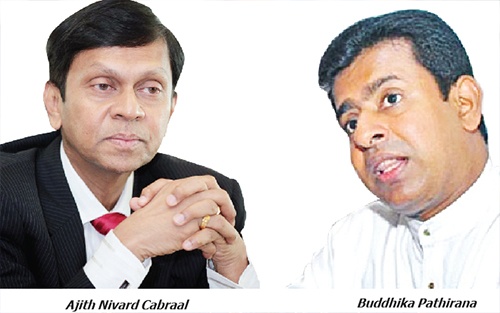
State Minister promises remedial action
By Saman Indrajith
One of the topics that kept reverberating throughout the budget debate that ended in parliament last Wednesday was the drain of excise revenue as a result of loopholes in the tax net by artificial toddy manufacturing businessmen.
Various facets of the issue were raised by SJB Matara District MP Buddhika Pathirana during the question time on three separate days highlighting the severity of the damage inflicted on the national economy by tax evading toddy businessmen who deprive the government coffers of a whopping Rs. 80 billion annually.
Following the disclosure by MP Pathriana, State Minister of Money & Capital Market and State Enterprise Reforms Ajith Nivard Cabraal promised remedial action.
Commissioner-General of Excise, Ariyadasa Bodaragama, acknowledged that there exists a tax leakage but he was wary of the figure of Rs. 80 billion.
Bodaragama is due to retire at the end of the month. Deputy Commissioner-General of the Inland Revenue Department, M. J. Gunasiri has been named as his successor.
Challenges before Gunasiri, as the new Excise Commissioner-General, are enormous, and whether he would be able to help Minister Cabraal deliver on his promise remains to be seen.
As Gunasiri earlier served as Deputy Commissioner-General Tax Administration (Corporate Small Entities & Non Corporate Sector) at the Inland Revenue Department, his expertise may be useful to remedy the situation. However, he has only three more months of service before his retirement. Unless he is given a service extension, the task of finding solutions to the tax evasion issue raised by Pathirana will probably have to wait till another Commissioner-General is appointed.
Pathirana told The Sunday Island that the government coffer is bound to lose over Rs. 80 billion a year due to tax evasion by artificial toddy manufacturers and the ramifications to the national economy are more acute if the health cost is also taken into account.
“We have seen many instances of serious health problems that illicit brewers caused to the people. Artificial toddy is produced by mixing urea, ammonia, nickel cadmium of old batteries and sugar. This harmful brew is sold at liquor shops and used for manufacturing ‘coconut arrack’ and vinegar.
“Suppose we overlook tipplers who consume the toxic brew knowingly or unknowingly, what about innocent consumers who buy vinegar? In Sri Lankan food culture, vinegar is an integral part. Imagine the number of people who get ill because they consume vinegar made of artificial toddy,” the MP said.
“The artificial toddy industry is well-rooted in coastal areas in the south. If one checks the number of trees tapped and the number of liters of toddy being sold, it is a very simple calculation to understand how much artificial toddy is being consumed. Only around one and a half litres of toddy could be tapped from a single coconut palm. As per reports of coconut researchers, the amount could vary slightly due to factors such as climate, humidity and season. The amount being sold by license holders varies from the actual amount extracted from palms. A difference is in the region of 60,000-70,000 litres. So, it is obvious that toddy comes from other sources”, he noted.
There have been raids by police and STF but toddy businessmen continue to ply their trade because the police cannot take the culprits before courts as per Sections 49, 50 and 52 of the Excise Ordinance. They have to hand over the suspects and the equipment to excise officers, who most of the time do not produce the suspects in courts but release them after filing a Technical Crime Report (TCR), the parliamentarian further said.
“Under the TCR, the racketeers only have to pay a small sum by way of a composition fee. The TCR is actually one of the loopholes these businessmen get out so easily. I pointed out all these to the government. I hope Minister Cabraal will act as promised. I also pointed out to him that there are not only excise officers but some finance ministry officials who benefit from the artificial toddy business. I hope and pray that the minister will be able to remedy this situation,” Pathirana added.
President of the Nawa Sinhala Rawaya, Ven Magalkande Sudattha Thera said the illicit toddy industry is thriving despite isolated raids. The police and the STF conducted successful raids in many areas in the recent past. Thereafter, the police hand over the suspects and equipment to the Excise Department for legal action. Excise Department officials file a TCR and release them on a composition fee.
Many illicit toddy producers have licences for toddy tapping. So finding sugar, ammonia, yeast, batteries in toddy amounts to only a technical error; it becomes a technical crime if they suspect that the manufacturer had purposefully mixed them with toddy or produced toddy using them as ingredients. During a recent raid, the police found three bags containing 25 kilos of ammonia to be used to produce toddy. How could the government ensure public safety when poison is being sold in bottles in the name of toddy, the prelate asked.
President of the consumer watchdog National Movement for Consumer Rights Protection, Ranjith Withanage said that old mobile phone batteries were also being used in the fermentation process of artificial toddy.
He said a countrywide survey conducted by his organisation revealed that discarded mobile phone batteries and power banks and chemicals such as urea were used to produce artificial toddy.
“We have information that such toddy is being sold to produce coconut arrack and vinegar. Arrack and vinegar made from artificial toddy were sold in the market while those responsible for preventing consumers from such harmful products have done nothing so far to raid shops and places that sold them”, he asserted.
Withanage said that local arrack and vinegar made from artificial toddy have been identified as one of the main causes of chronic kidney diseases.
He further said the government loses over Rs 180 billion a year due to the illicit liquor and tobacco (Rs. 100 billion on illicit liquor and tobacco and Rs. 80 billion on illicit toddy).
“We expected the government to present budget proposals to counter the loss of revenue, but there was none”, he added.
Excise Department spokesman, Deputy Commissioner, Kapila Kumarasinghe said there were instances where toddy manufacturers were caught for using illegal methods to increase the volume of alcohol. Water, sugar, urea, yeast and salt are being used to get a high content of ammonia in toddy.
He said that toddy is being sold in taverns as fresh toddy and bottled toddy after pasteurizing so that they could be kept for one to two weeks. Toddy is also being sold for the production of vinegar. If toddy with additives are used to distill arrack, the machines extract only the alcohol and the additives are discarded as ‘spent-wash’. The distilling machines are calibrated only to extract alcohol, and not other elements in the raw materials.
In the most popular brands of arrack sold in the market, there is only three percent toddy and 97 percent water, ethanol and rectified spirits. Adding alien items during production is illegal,” he warned, adding that the Excise Department with its available resources is fighting hard not only against the artificial toddy industry but also other narcotics and drugs, he said.
Excise Commissioner General Bodaragama acknowledged there was a significant loss of excise revenue due to various tactics used by toddy manufacturers.
He said that there is a leakage of tax revenue but assured that he was certain that it could not be Rs. 80 billion.
State Minister of Money & Capital Market and State Enterprise Reforms Ajith Nivard Cabraal told The Sunday Island that Pathirana had raised this issue several times in Parliament and he had already instructed Secretary to the Ministry of Finance and the Excise Department officers to submit a comprehensive report to him on the matter.
The toddy industry extends from Kalutara, Gampaha, Puttalam, Badulla, Moneragala, Hambantota, Anuradhapura to the Northern and Eastern provinces. As at Dec. 31, 2019, there were 3,094 licensed toddy tappers and 32 licensed toddy producers in the country.
“There could be many more engaged in supportive services for their livelihood but we have no exact details on them”, he noted.
“Pathirana made constructive suggestions and we took note of them. We are thankful to his efforts and are determined to remedy the situation. I intend to study this matter first with my officials. I assure you that this would be studied properly and necessary action initiated”, the Minister assured.



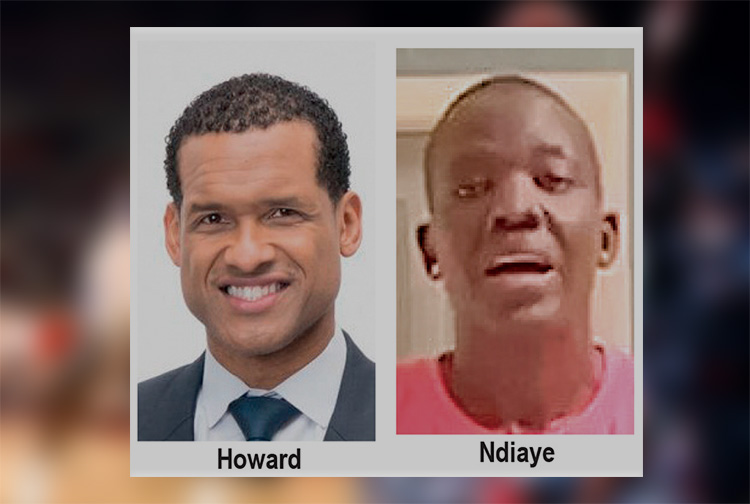
The U.S. Embassy in Colombo welcomed the U.S. Sports Envoys to Sri Lanka, former National Basketball Association (NBA) and Women’s National Basketball Association (WNBA) players Stephen Howard and Astou Ndiaye, from June 8 through 14.
The Public Diplomacy section of the U.S. Embassy said that it would launch a weeklong basketball program intended to harness the unifying power of sports, made possible through collaboration with Foundation of Goodness and IImpact Hoop Lab.
While in Sri Lanka, Howard and Ndiaye, both retired professional basketball players, will conduct a weeklong program, Hoops for Hope: Bridging Borders through Basketball. The Sports Envoys will lead basketball clinics and exhibition matches and engage in leadership sessions in Colombo and Southern Province for youth aged 14-18 from Northern, Uva, Eastern and Western Provinces, offering skills and leadership training both on and off the court. The U.S. Envoys will also share their expertise with the Sri Lanka Basketball Federation, national coaches, and players, furthering the development of basketball in the country. Beyond the clinics, they will collaborate with Sri Lankan schoolchildren to take part in a community service project in the Colombo area.
“We are so proud to welcome Stephen and Astou as our Sports Envoys to Sri Lanka, to build on the strong people-to-people connections between the United States and Sri Lanka,” said U.S. Ambassador Julie Chung. “The lessons that will be shared by our Sports Envoys – communication, teamwork, resilience, inclusion, and conflict resolution – are essential for leadership development, community building, equality, and peace. The U.S. Sports Envoy program is a testament to our belief that sports can be a powerful tool in promoting peace and unity.”
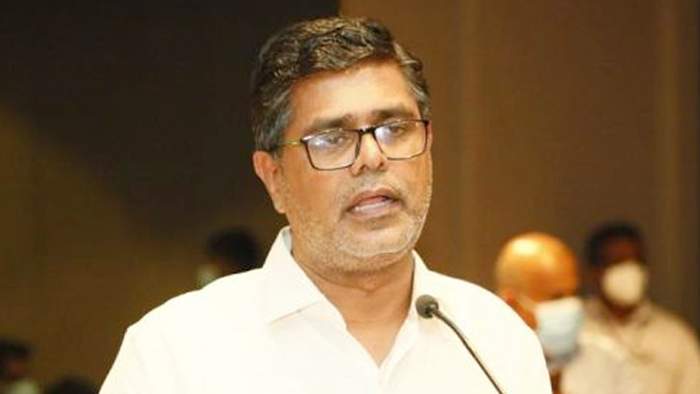
SJB Colombo District MP Mujibur Rahuman in parliament demanded to know from the government the reasons for CEB suspending the leave of all its employees until further notice from Thursday.
MP Rahuman said that the CEB has got an acting General Manager anew and the latter yesterday morning issued a circular suspending leave of all CEB employees with immediate effect until further notice.
“We demand that Minister Kanchana Wijesekera should explain this to the House. This circular was issued while this debate on the new Electricity Amendment Bill was pending. There are many who oppose this Bill. The Minister must tell parliament the reason for the urge to cancel the leave of CEB employees,” the MP said.However, Speaker Mahinda Yapa Abeywardena prevented Minister Wijesekera responding to the query and said that the matter raised by MP Rahuman was not relevant.
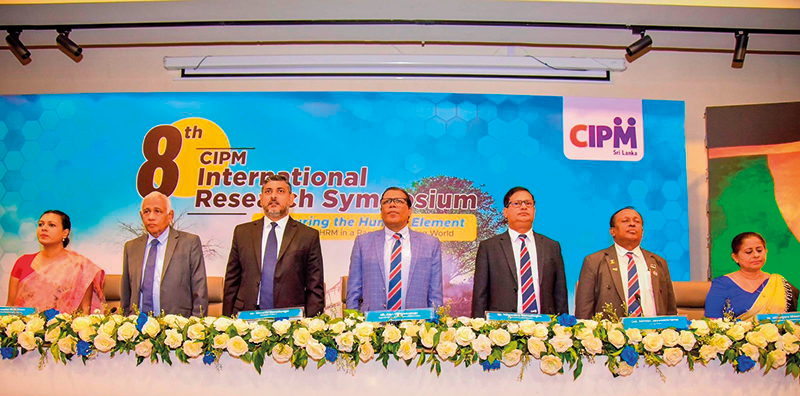
The Chartered Institute of Personnel Management (CIPM) successfully concluded the 8th Annual CIPM Symposium, which took place on 31st May 2024. Themed “Nurturing the Human Element—Redefining HRM in a Rapidly Changing World,” the symposium underscored the pivotal role of human resource management (HRM) in today’s dynamic global landscape. Since its inception in 1959, CIPM has been dedicated to advancing the HR profession through education, professional development, and advocacy, solidifying its position as Sri Lanka’s leading professional body for HRM.
Ken Vijayakumar, the President of the CIPM, graced the occasion as the chief guest. The symposium commenced with the welcome address by the Chairperson, Prof. Arosha Adikaram, followed by the Web Launch of the Symposium Proceedings and Abstract Book by the CIPM President. The event featured distinguished addresses, including a speech by Chief Guest Ken Vijayakumar, President of CIPM, and an address by Guest of Honor Shakthi Ranatunga, Chief Operating Officer of MAS Holdings Pvt. Ltd., Sri Lanka.
The symposium also featured an inspiring keynote address by Prof. Mario Fernando, Professor of Management and Director of the Centre for Cross Cultural Management (CCCM) at the University of Wollongong, Australia.
Vote of Thanks of the inauguration session was delivered by Dr. Dillanjani Weeratunga, Symposium Co-chair.
The symposium served as a comprehensive platform for researchers to present their findings across a wide range of critical topics in HRM. These included Cultural Diversity and Inclusion, Talent Development and Retention, Ethical Leadership and Corporate Social Responsibility, Adapting to Technological Advancements, Mental Health and Well-being at Work, Global Workforce Challenges, Employee Empowerment, and Reskilling and Upskilling.
The plenary session was led by Prof. Wasantha Rajapakse. Certificates were awarded to the best paper presenters during the valedictory session, followed by a vote of thanks delivered by Kamani Perera, Manager of Research and Development.
The annual symposium of CIPM was a truly inclusive event, attracting a diverse audience that spanned undergraduates, graduates, working professionals, research scholars and lecturers. This widespread interest highlights the symposium’s significance in the field of HRM, offering a unique opportunity for everyone to network and learn from scholarly brains.The CIPM International Research Symposium was sponsored by Hambantota International Port, Sri Lanka Institute of Information Technology (SLIIT), E B Creasy & Co. PLC, and Print Xcel Company.



US sports envoys to Lanka to champion youth development

Rahuman questions sudden cancellation of leave of CEB employees


