
Life style
How This Demon Dance Banishes Illnesses

in Sri Lanka’s Remote Jungles
by Zinara Ratnayake
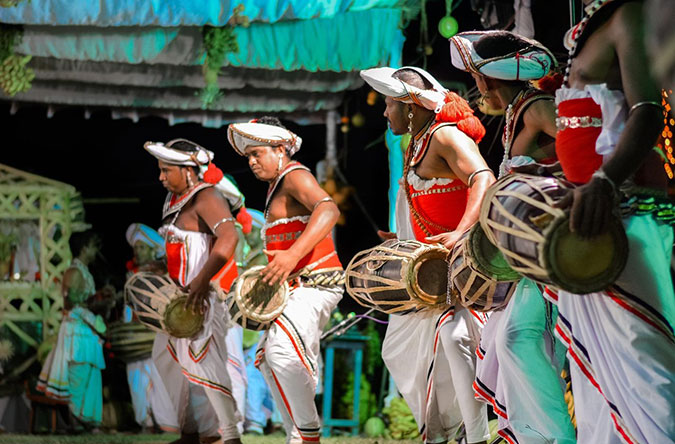
The kankariya dance all started with a legendary demon queen named Kuweni. As dusk falls, the thumping sound of drums echoes through the jungles of central Sri Lanka. Elaborately dressed dancers spin and swirl as their ornate silver headpieces gleam and bright red ribbons trail behind them. Their chests rise and fall beneath silver-beaded breastplates and two large mango-shaped earrings adorn their ears. The dancers carry candle-lit, hollowed-out coconuts and chant verses inviting gods and demons to their ritual. Sweet-smelling smoke from jasmine incense fills the air, obscuring the view of a banana bark altar with pictures of various Buddhist deities. As hundreds gather, the dancers tell the sad tale of the mythic, magical queen Kuweni.
This is kohomba yak kankariya. Several times a year, often in April, Sri Lankans in the country’s mountainous, central region hold this ritual to cure illnesses, prevent diseases from spreading, and seek blessings from the supernatural world. While today the ceremony tells Kuweni’s story, whose name is sometimes spelled Kuveni or Sesapathi, in ancient times, the ritual was believed to have lifted the illness-causing curse Kuweni had placed on the province.
According to legend, Kuweni was born in the sixth century BC to a yakka king who ruled Sri Lanka. The Sinhala word yakka is derived from the Pali word yakkha (Pali is a liturgical language often used in Buddhist texts) and the Sanskrit term yaksha, which translates to “demon.” Dipavamsa, the oldest historical account of Sri Lanka, describes yakka as a disorderly tribe of demons who eat human flesh and fight with each other. Although her father was a demon, Kuweni may not have been one herself.
Then Prince Vijaya, a legendary Indian prince, and 700 of his followers invaded demon-controlled Sri Lanka. Kuweni appeared before the prince disguised as a hermit spinning cotton. Vijaya soon promised to marry Kuweni and make her his queen. Trusting him, she betrayed her father and demon brethren and helped the prince slaughter them. Only a few of the yakka escaped into the Sri Lankan jungles.

Queen Kuweni was said to stalk the nightmares of King Vijaya’s nephew, Panduwas, in the form of a powerful leopardess.
After Vijaya took power, he broke his promise to Kuweni and married a South Indian princess, establishing the Sinhalese people who today make up the majority of Sri Lanka’s population. Jilted and angry, Kuweni cursed Vijaya and his successors before the remaining yakka killed her out of revenge.
Later, when Vijaya’s nephew Panduwas arrived in Sri Lanka to take the throne as his uncle’s successor, Panduwas began to suffer from a mysterious illness. He couldn’t sleep. Night after night, Kuweni, in the form of a leopard, appeared in his dreams and tried to kill him. Sleep deprivation drove Panduwas insane. Kuweni finally had her revenge.
In his book Kohomba Kankariya: The Sociology of a Kandyan Ritual, social anthropologist Sarath Amunugama wrote that Kuweni’s leopard is “a symbolic representation of the fatal lie that was uttered by Vijaya to Kuweni to facilitate his conquest.” Panduwas suffered due to his uncle’s lie to the queen, wrote Amunugama.
When Lord Sakra, the ruler of heaven in Buddhist cosmology, sees Panduwas unjustly suffering for his uncle’s deceit, he tells an Indian king about a ritual that will cure the ailing Panduwas. The king performs the ritual, and Panduwas recovers. Later on, the king instructed a local prince named Kohomba to perform the ritual any time it was necessary to repel Kuweni’s illness-fueling ire. Since then, the ritual, called kohomba yak kankariya in honour of the prince, is performed any time a mysterious illness descends upon the community.
Today, folk priests—village priests who conduct ancient rites such as the kankariya—continue to perform the ritual dance whenever local communities are plagued with diseases, such as chickenpox. One such priest is 29-year-old Abheeth Shilpadhipathi, whose father and grandfather taught him the kankariya. Recently, when Shilpadhipathi drummed in a kankariya, it was to ward off the Covid-19 pandemic that plagued the country. Originally, the ceremony would’ve lasted for about seven days, but today it takes less than a day.
“Before [the kankariya] begins, the chief [folk] priest pledges to the gods their intention in conducting the ceremony,” Shilpadhipathi says. In the past, individual families performed a kankariya to cure diseases, but because it’s an elaborate, expensive event, families rarely host them anymore. Buddhist temples and large social groups now conduct them annually or seasonally both as a healing and fertility ritual and sometimes just to keep the tradition alive. “People do it to show their gratitude for a good harvest or good fortune,” says Shilpadhipathi.

A Hindu priest holds a lit coconut oil lamp in front of statues of Prince Vijaya (left) and Kuweni (right) at the Sri Subramaniam temple in the southern Sri Lankan town of Matara.
People also perform the kankariya ritual to bestow good health, wealth, and even good school grades, says Sanushki Athalage, choreographer at Thaala Asapuwa, a Sri Lankan Dance Academy in Victoria, Australia, where they teach the kankariya along with other traditional dances. “It is also about giving and being selfless in return for a prosperous life. It is a beautiful concept that brings larger communities together in a common goal,” Athalage says.
Buddhism in Sri Lanka is a complex system that incorporates “shrines, rituals, and priests” who negotiate with a vast pantheon of gods, deities, and demons, says Amunugama. Sri Lankan Buddhists believe that prayers and rituals, such as the kankariya, are a way to seek blessings and build good karma.
Religious ceremonies are also a way to prevent meddlesome demons from interfering in people’s lives. Kuweni isn’t the only entity that can cause illnesses. Local folklore is full of demons who hunt humans and make them ill. When someone becomes sick, local priests are called in to identify the specific demon causing the illness. Once identified, the priest summons and vanquishes the demon in a dance or ritual, similar to the kankariya.
One popular ritual performed in southern Sri Lanka is the Daha Ata Sanniya, which is sort of a catch-all ritual that can cure illnesses caused by 18 different demons.

Rituals like these are “performed to relieve anxieties around mysterious diseases,” says Athalage. “When families are anxious, they seek blessings and help from higher powers to cure something that they don’t understand.” For the villagers, this “excursion into the supernatural” will help them live a “relatively untroubled life,” wrote Amunugama in his book. These rituals are a way to understand the incomprehensible, like why a loved one falls ill.
Although Kuweni caused illnesses like other demons, Shashiprabha Thilakarathne, a folklore scholar at the University of Moratuwa in Sri Lanka who researches Kuweni, explains that the demon queen might’ve been human. “It’s difficult to say who she is. Folk literature tells us that she has supernatural powers. Sometimes she could even take the form of different animals,” Thilakarathne says, explaining that her “magic” made “Vijaya’s weapons fall on demons’ bodies.”
But in the last few decades, Kuweni has appeared as a character in pop culture, from television dramas to songs and plays. Kuweni has become relatable—her motives clearer. Today Vijaya is often recast as the villain and Kuweni as the maligned anti-hero. She has shifted from a female demon spawn who cursed Sinhalese people to an embodiment of the modern woman, Thilakarathne explains. She is a wife, daughter, and mother. While Kuweni shares many traits with traditional yakka, she also stands out from them. She’s demon-like, but not a demon herself.
“Kuweni, as I understand, is a model we can apply to our modern society. At one point, she’s a daughter, then a lover and parent. She goes through many different challenges in life,” Thilakarathne says, “she represents us.”(BBC)



Institute of Hospitality Sri Lanka
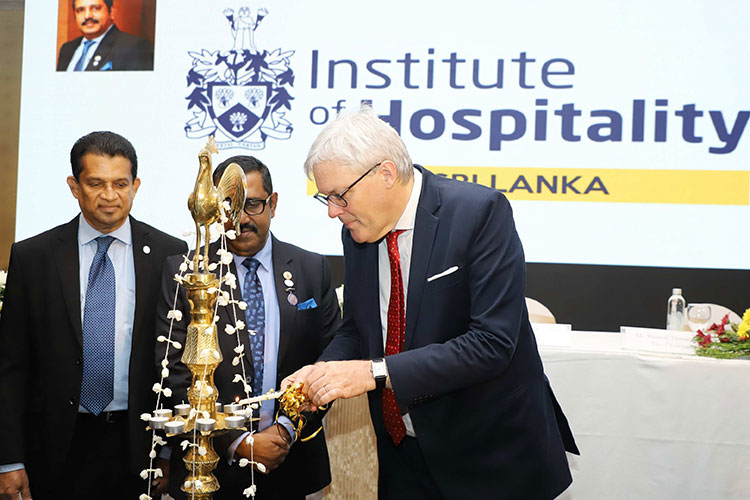
 The 32nd Annual General Meeting (AGM) of the UK-based Institute of Hospitality’s Sri Lanka Chapter was held recently at the Ramada Hotel Colombo,.The event provided an evening of camaraderie , reflection of the past and present achievements,setting new benchmarks for the future
The AGM had the presence of two distinguished guests, the Chief Guest Opposition Leader Sajith Premadasa, and the Guest of Honour British High Commissioner to Sri Lanka, Andrew Patrick. Their inspiring speeches were lauded by all hoteliers who were present at the occasion
A special thanks was extended to Robert Richardson, CEO of the Institute of Hospitality UK, along with his team, sponsors, committee members, and all attendees for making the event memorable.
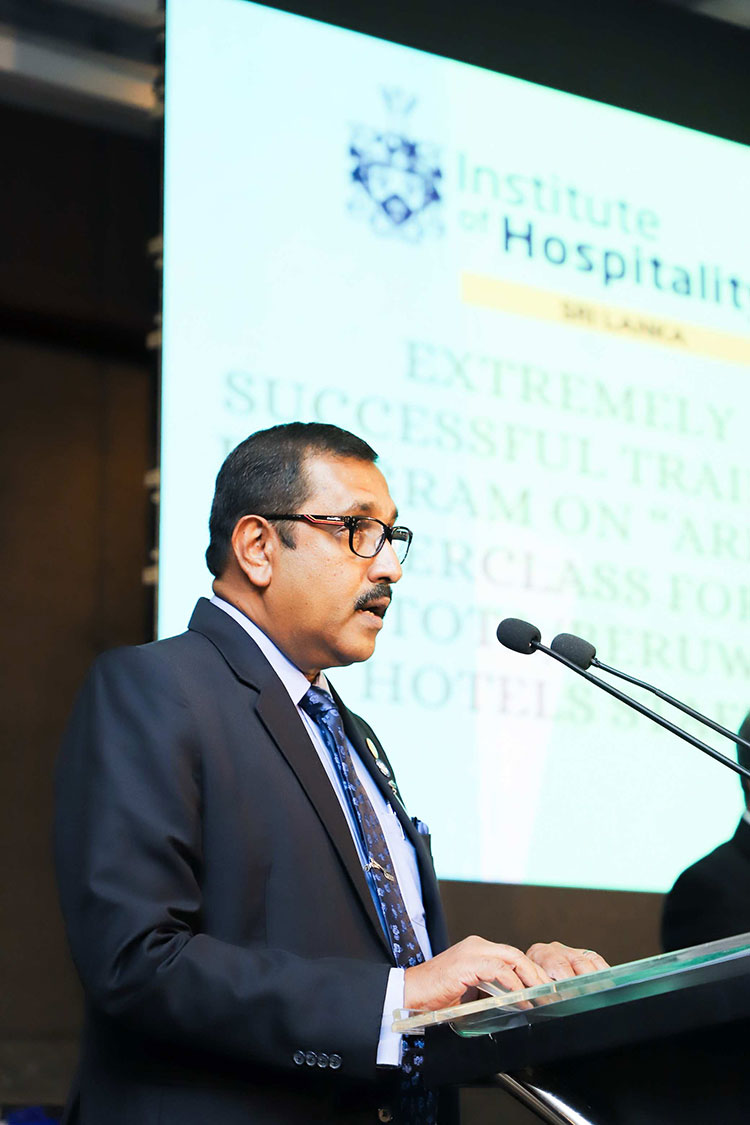
Dr. Harsha Jayasingh, Past President of the Institute of Hospitality (UK) Sri Lanka Chapter, emphasised the Institute’s longstanding history and the strength of its Sri Lankan branch. “The Institute of Hospitality (IH) UK has a history of 86 years, and we are proud to be the Sri Lanka Branch. IH Sri Lanka is much stronger now with many members from all areas of the hospitality industry,” he stated.
Dr. Jayasingh highlighted the significant role of tourism in Sri Lanka’s economy,. He said tourism it is the third-largest source of revenue for the country. “Tourism accounts for about 13.3% of total foreign exchange earnings and employs 450,000 people directly and indirectly. The hospitality industry in this island of pearl holds tremendous potential for economic growth, job creations, and cultural exchange,” he added.
He also pointed out more women should be attracted to the industry and advocated for the use of technology in hospitality sector to attract the younger generation.
The newly appointed Chairman Ramesh Dassanayake spoke about the challenges faced by the industry, including the reluctance of youth to join the sector. . Dassanayake expressed concerns over the migration of staff between hotels and the overall ‘brain drain’ in the sector. ” We must maintain high standards in the hotel We must try to attract tourists to Sri Lanka, we must have with many facilities Hence, hotel schools and other professional institutions involved in skills development mustincrease their intakes,” he pointed out.
Chief Guest Sajith Premadasa emphasised the importance of eco tourism and said “We need to have an environmental policy related to tourism in place,” . .
The 32nd AGM of the Institute of Hospitality UK, Sri Lanka Chapter, was a testament to the strength and potential of Sri Lanka’s hospitality industry. The insights and commitments shared during the event set a new benchmark for the future.(ZC)



Pix by Thushara Attapathu
Life style
He recognizes human identity beyond boundaries of gender, race, nationality and religion.
Visit of Sri Gurudev to Sri Lanka
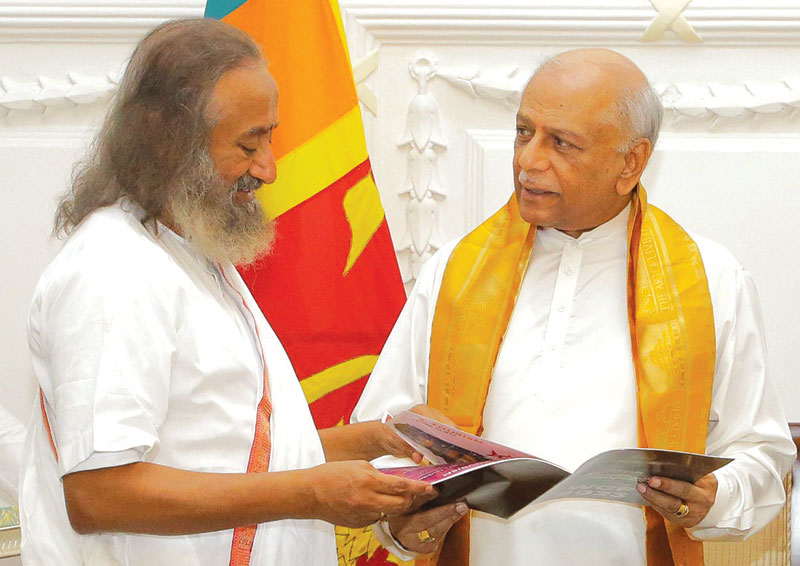
Humanitarian, spiritual leader and Global Ambassador of Peace Gurudev Sri Sri Ravi Shankar (Sri Gurudev) was in Sri Lanka on a three day tour on the invitation of the Prime Minister of Sri Lanka Dinesh Gunewardene. Gurudev who inspired a wave of volunteerism and service to moot one of the largest volunteer-based organisations in the world – The Art of Living – visited the various projects under the aegis of the foundation and launched twelve vocational and technical centers around the island. He was accompanied by thousands of followers from Sri Lanka and around the world.
Gurudev who visited Sri Lanka for the sixth time also had a first day cover launched in honour of his visit. He is a strong proponent of spreading happiness, using the unique Sudarshan Kriya, yoga, meditation and practical wisdom to unite people, empower individuals and transform communities. His programmes provide techniques and tools to live a deeper, more joyous life, while his non-profit organisations recognize the human identity beyond the boundaries of gender, race, nationality and religion.
The Art of Living which has more than 30,000 teachers and over one million volunteers across 180 countries has touched in excess of five hundred million people around the world. CNN called it “Life Changing” and The Washington Post headlined it, “Fresh air to millions”.
In Trincomalee, Gurudev met with war victims and had a heartwarming engagement with the children from the children’s homes run by the Foundation. He also visited the Koneswara Temple in Trincomalee and graced the Kumbhabhishekam at Seetha ecogPnize the human identity beyond the boundaries of gender, race, nationality and religion. Amman temple at Nuwara Eliya. He held discussions with the trustees on the progress of the foundation’s social service projects, while also holding a special event – Ekamuthuwa – attended by a large number of dignitaries and his devotees from around the world.
His time with the Prime Minister was spent discussing the prospects of unity in diversity and uniting Sri Lanka by adding happiness into the formula of living. In addition he had discussions with the Speaker of the Parliament of Sri Lanka Mahinda Yapa Abeywardena, prominent business stewards and civil society leaders.
by Zanita Careem
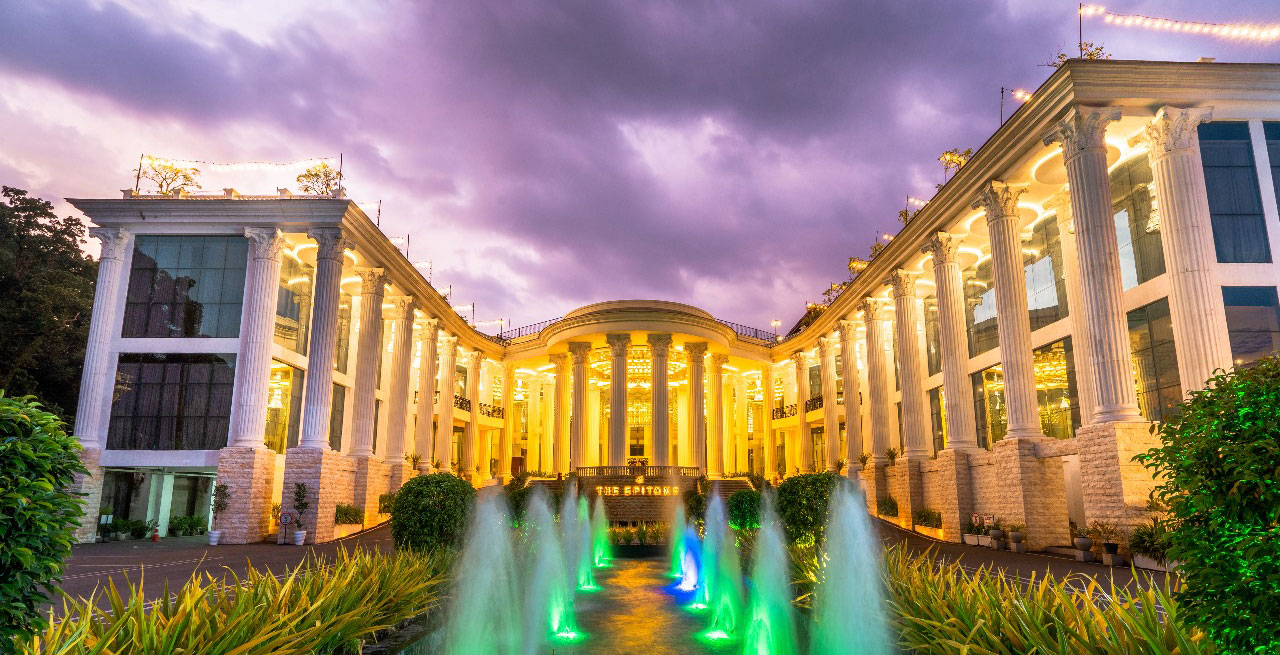
Envison your dream wedding day come to life at the Epitome Hotel, a prestigious city hotel in Kurunegala offering an unrivalled luxury rendors experience for weddings.
The venue is designed to embody opulence and luxury from all quarters for a spectacular wedding in kurunegala,Thier ballroom is the largest banquet facility in Sri Lanka It can be divided into six luxurious pillarless wedding halls on the ground floor and 25pax smaller banquet halls.
It can be easily named as a five star heaven in the heart of the city contributing to a myriad of immense experiences tailored to inspire and delight wedding experiences.
From opulent décor set up to exquisite table decor, lavish food, every detail is meticulously curated to spark your imagination and ignite creativity for a perfect wedding. The previous prestigious wedding shows season one and season two attracted large crowds
were unique events which gave the wedding vendors and potential clients had an opportunity to connect and interact with each other. Beyond being a showcase it was a chance for the wedding vendors to unite and contribute to the vibrancy of the wedding industry. The wedding show covered all area of the bridal industry providing a comprehensive variety of bridal supplies from Sri lanka and became the most popular bridal exhibitions in Kurunegala.This bridal exhibitions allowed brides and grooms to experience first hand the products and services available from suppliers in Sri Lanka
These wedding shows held at The Epitome created a benchmark and gave an opportunity for vendors to create connections to the utmost satisfaction said Harshan Lakshita Executive Director. of the magnificent Hotel
Our wedding shows featured experts and professionals in every field‘ It covered all areas of the bridal industry provided a comprehensive variety of bridal supplies from Sri lanka and became most popular bridal exhibition in this region.We are always open to everyone to join us at our wedding shows in the future. It is an opportunity to discover the incredible talent within our local wedding and bridal vendors to make meaningful relationships and plan thier special day at our breathtaking hotel The Epitome said General Manager Kavinda Caldera
The Epitome Hotel’s bridal show which will be held end of June will buzz with great ideas,advice and inspiration for all those who plan thier dream wedding
…….
The Hotel Epitome’s Wedding Season 3 will marked excellence, celebration and inspiration for those in the wedding industry. The exhibition halls will resonate with ideas on exquisite bridal wear to decor, florists , photography etc and showshowcase the rich tapestry of talent within the local wedding industry. .





US sports envoys to Lanka to champion youth development

Rahuman questions sudden cancellation of leave of CEB employees


