
Life style
How Fashions Have Changed

It is amazing to see how the different events in history have influenced and changed the way people have dressed throughout time. Some of the most popular fashions are classic, they can stand the test of time and hardly ever “go out of style”, only experiencing minor changes to keep up with the trends.
Other clothing items could be considered “fads”, styles that are only popular for a short season and then never worn again. Often certain fashion trends are dependent on the tastes of particular groups of people or cliques and are usually associated with social status or cultural preferences like the type of music a person likes.
Fashion can also be influenced by world events such as war or the economy. For example, during World War II, people were only allowed a certain amount of fabric so they were forced to create simple outfits that were practical enough for wartime duties. From the 1920s to the 1990s, popular fashions reflected the mood of each decade and showcased changes in society as the styles of clothing and accessories evolved with the times.
Dresses and Skirts – From Mini to Maxi, Pleats to Pencil
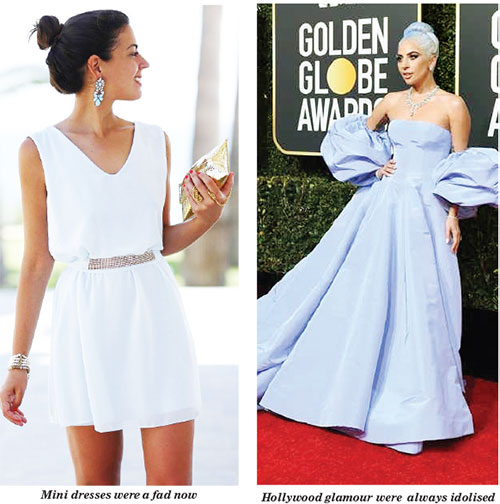
 Changes in skirts and dress fashion have changed and varied dramatically between the 1920s to the present, as well as within each decade. In 1920, only a few years after World War I, skirt and dress hemlines rose and waist lines lowered to the hip. These changes accompanied the boyish flapper fashions that marked the twenties as a decade of decadence and fun. During 1926 to 1928, hemlines were reported to be at their highest but once the stock market crashed in 1929 and the Great Depression set in, hem lines returned to a more conservative length (below the knee or lower). 1930s boasted a return to femininity and Hollywood glamour was idolized. Evening gowns showed bias-cuts and diamante accents and were made of chiffon or velvet. For a more casual look in the thirties dresses were slim-cut and had wide shoulders and a belt around the waist. Real fur accents and floral prints were also popular during this era until World War II broke out and the glamorous look of the decade lost its luster.
During World War II, luxurious fabrics like wool, silk and nylon were highly regulated and women’s skirts and dresses were often made of viscose and rayon. Skirts and dresses would also be made out of anything that could be found within a home (like curtains, nightgowns or bed sheets) due to the illegality of using excess fabric when making an outfit from about 1942 to 1947. With the economic boom in the 1950s, glamour become fashionable once again and A-line and pencil skirts were very popular form-fitting fashions. Dresses in the decade would often feature stylish ruffles or lace accents and were usually knee-length or tea-length. Going into the late fifties and 1960s mini-dresses and maxi-length skirt outfits entered the scene. Mod styled dresses with short skirts and bold, colorful patterns became popular. Mary Quant, a Mod fashion designer is one of the people credited with creating the iconic mini-skirt of the mid-sixties.
In the late sixties and seventies hippie fashion took over and loose-fitting, flowing maxi skirts and dresses became dominant. Disco music and dance also influenced dresses with slender lines, flowing skirts and the shimmering fabrics that would look best in a night club.
As we entered the 1980s, fashion evolved once more. Skirts and dresses were once again longer and featured straight lines and more serious design. As more and more women joined the professional work force business suits became a trend for women with straight conservative skirts and broad shouldered, boxy blazers topped the look. In the eighties, fashion became highly influenced by music stars and movies with eclectic looks shown off by Madonna, Cyndi Lauper, and movie star Molly Ringwald. In the 1990s, skirts and dresses were not as prominent and more casual looks became acceptable with hip-hop and alternative music setting the scene for fashion early in the decade. Skirts and dresses were usually short and even provocative, especially in the latter part of the decade, however loose and flowing dresses as well as long denim skirts were also notable trends.
Blouses, Shirts and Tops
In the 1920s, the jumper blouse was introduced and became incredibly popular. Usually the jumper blouse was made of cotton or silk and had a sailor collar. Perfect for pairing with a skirt, it usually reached just below the hips and would be accompanied by a belt or sash. Another popular type of twenties blouse was a low-cut v-neck shirt with a chemisette attached to promote modesty. Knitted long-sleeve shirts with rounded collars and tank blouses were also popular in the decade. For men, polo shirts, dress shirts and sweaters were the tops of choice. Going into the thirties, feminine blouses that featured v-necks and long bow ties attached around the neck, sleeveless blouses and knit shirts of Shoes and Boots
In the 1920s, women’s shoes would often feature high and wide heels whether on a pump or loafer style shoe. Many women would even wear heeled shoes with their swimming costumes as a mark of femininity. Oxfords of varying styles and colors were popular too with men and women, as well as lace up boots. During the 1930’s strapped heels and pumps surged in popularity, while more traditional styles of heels were still worn. For men and women, laced leather leisure shoes were popular for outdoor activities and exercise during the decade. In the forties, as a result of the war, shoes became more conservative and practical. Women’s shoes were usually made with flatter heels and had either cork or wooden soles.
Flat shoes, sandals, heels and pumps with rounded toes and feminine lines were worn by women in the 1950s. Saddle shoes, white lace up shoes with brown or black leather accents, were also popular for both men and women. Canvas basketball shoes (high-tops) or black leather oxfords were worn by men. Suede shoes also enjoyed moments of popularity during this decade. In the 1960s, black slip-on boots (most likely of leather or faux leather material) were popular for men and women, and heels became thinner on pumps. Vinyl boots, moccasin-style loafers with wide heels, wedge heels, and slip-on heels with leather cut-out patterns were all popular in the 1970s. Sandals and western style cowboy boots were also popular with both men and women.
In the 1980s, pumps were designed with higher and thinner heels than in decades before and they became more of a hit. For casual wear, tennis shoes (both high-tops and standard ankle high shoes) and leather dress shoes were very popular. Flats became popular too, especially with working women. By the 1990s, styles had returned to Earth and the casual look was key. During this decade leather substitutes became more popular due to environmental concerns, and cork-soled sandals like Birkenstocks defined the alternative look early in the decade. Walking shoes had bulkier heels, and gym-type athletic shoes were most people’s every day choice. As with the late 1980s and 1990s, branding became a driving force behind shoe sales. People would show off their Reebok, Nike or Adidas shoes with pride and special editions would sell for hundreds of dollars.
Hairstyles
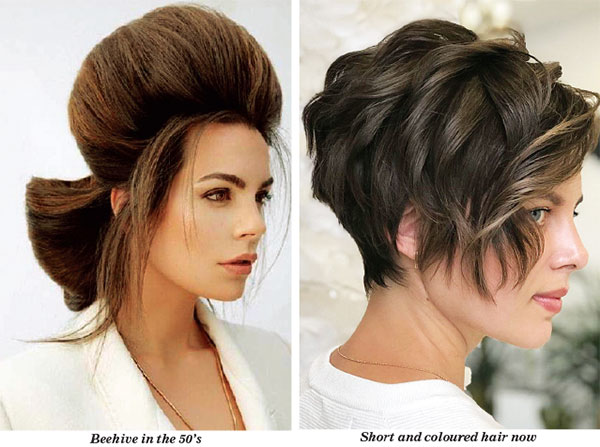
Short boyish haircuts were popular throughout the 1920s to the late 1930s. In the Forties, hair was often still hid under hats, but usually was longer and tied in a bun or other up-do. During the Second World War, scarves and turbans were also popular. Hats and turbans (sometimes even worn together) remained popular until the 1960s. After this time women began to perm and/or dye their hair. Wigs were more popular after this time as well, and the wearing of hats declined dramatically. Men’s hair (just like the short women’s cuts) of the 1920s and 1930s was usually neatly combed and groomed, and usually parted to the side. Hair for men was “greased” back. In the 1950s hair was still greased back, but hairstyles usually consisted of more hair on the top of the head (especially biker styles).
For women in the 1950s, hair was waved and fit to frame the face, or to be pulled back. Some actresses had wore their hair extremely short-way above the ears, as if it had been cut with a hair trimmer.
In the 1960s, beehive and flip-style hairdos were more popular for women. For the men, bowl cuts, such as the ones that are similar to what the Beatles wore are very popular as well. These looks continued on to the late 1960s. From the 1970s on, long, straight hair was popular for women, as well as for some men. Hairstyles were usually parted down the middle. Large puffy hair worn by Motown singers were considered stylish from 1969 on to the 1970s, and short wavy hairstyles like Jodie Foster wore in 1976 were popular too. During the seventies layered haircuts were also popular and this trend continued into the 1980s. From the mid to late eighties big hairstyles that were teased and curly or wavy with bangs were very popular. In the early 1990s straight hair and long spiral perms became popular, while later in the decade angled bobs and shaggy, mid-length haircuts were made popular by celebrities like Jennifer Aniston and Courteney Cox on the TV show Friends.
From the 1970s to the current time punk hairstyles such as shaved heads, Mohawks, and painted hair were worn. These were usually the hairdos of those who wanted to make a statement, or just simply to be different from mainstream society. Many mainstream and independent artists had punk hairdos. Heavy metal hairstyles for men were quite popular, especially after the 1980s. Male heavy metal rock groups would tease and/or color their hair, which usually was let to grow long. There are still standards for hairstyles in the present. For the workplace hairdos are very conservative, usually in a straight style, or sometimes waved or slightly permed.
Names of designers that were alive during the 1920s and the 1950s include Jeanne Lanvin, “Coco” Chanel, and Pierre Cardin. Each these designers have set his or her personal mark.



Institute of Hospitality Sri Lanka
 The 32nd Annual General Meeting (AGM) of the UK-based Institute of Hospitality’s Sri Lanka Chapter was held recently at the Ramada Hotel Colombo,.The event provided an evening of camaraderie , reflection of the past and present achievements,setting new benchmarks for the future
The AGM had the presence of two distinguished guests, the Chief Guest Opposition Leader Sajith Premadasa, and the Guest of Honour British High Commissioner to Sri Lanka, Andrew Patrick. Their inspiring speeches were lauded by all hoteliers who were present at the occasion
A special thanks was extended to Robert Richardson, CEO of the Institute of Hospitality UK, along with his team, sponsors, committee members, and all attendees for making the event memorable.
Dr. Harsha Jayasingh, Past President of the Institute of Hospitality (UK) Sri Lanka Chapter, emphasised the Institute’s longstanding history and the strength of its Sri Lankan branch. “The Institute of Hospitality (IH) UK has a history of 86 years, and we are proud to be the Sri Lanka Branch. IH Sri Lanka is much stronger now with many members from all areas of the hospitality industry,” he stated.
Dr. Jayasingh highlighted the significant role of tourism in Sri Lanka’s economy,. He said tourism it is the third-largest source of revenue for the country. “Tourism accounts for about 13.3% of total foreign exchange earnings and employs 450,000 people directly and indirectly. The hospitality industry in this island of pearl holds tremendous potential for economic growth, job creations, and cultural exchange,” he added.
He also pointed out more women should be attracted to the industry and advocated for the use of technology in hospitality sector to attract the younger generation.
The newly appointed Chairman Ramesh Dassanayake spoke about the challenges faced by the industry, including the reluctance of youth to join the sector. . Dassanayake expressed concerns over the migration of staff between hotels and the overall ‘brain drain’ in the sector. ” We must maintain high standards in the hotel We must try to attract tourists to Sri Lanka, we must have with many facilities Hence, hotel schools and other professional institutions involved in skills development mustincrease their intakes,” he pointed out.
Chief Guest Sajith Premadasa emphasised the importance of eco tourism and said “We need to have an environmental policy related to tourism in place,” . .
The 32nd AGM of the Institute of Hospitality UK, Sri Lanka Chapter, was a testament to the strength and potential of Sri Lanka’s hospitality industry. The insights and commitments shared during the event set a new benchmark for the future.(ZC)


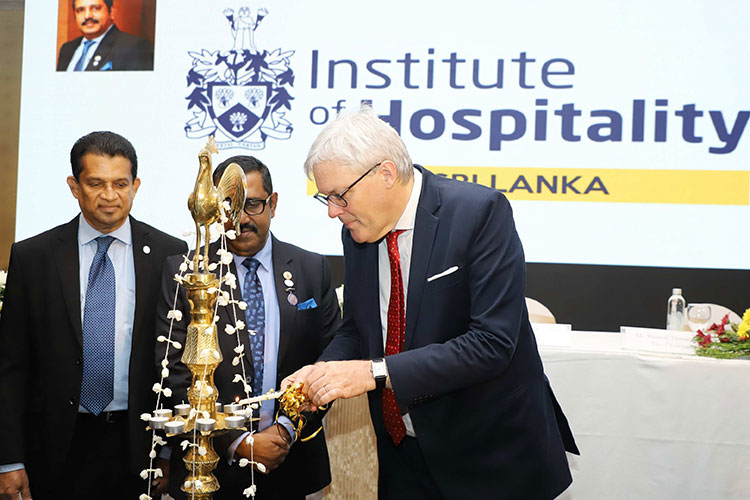
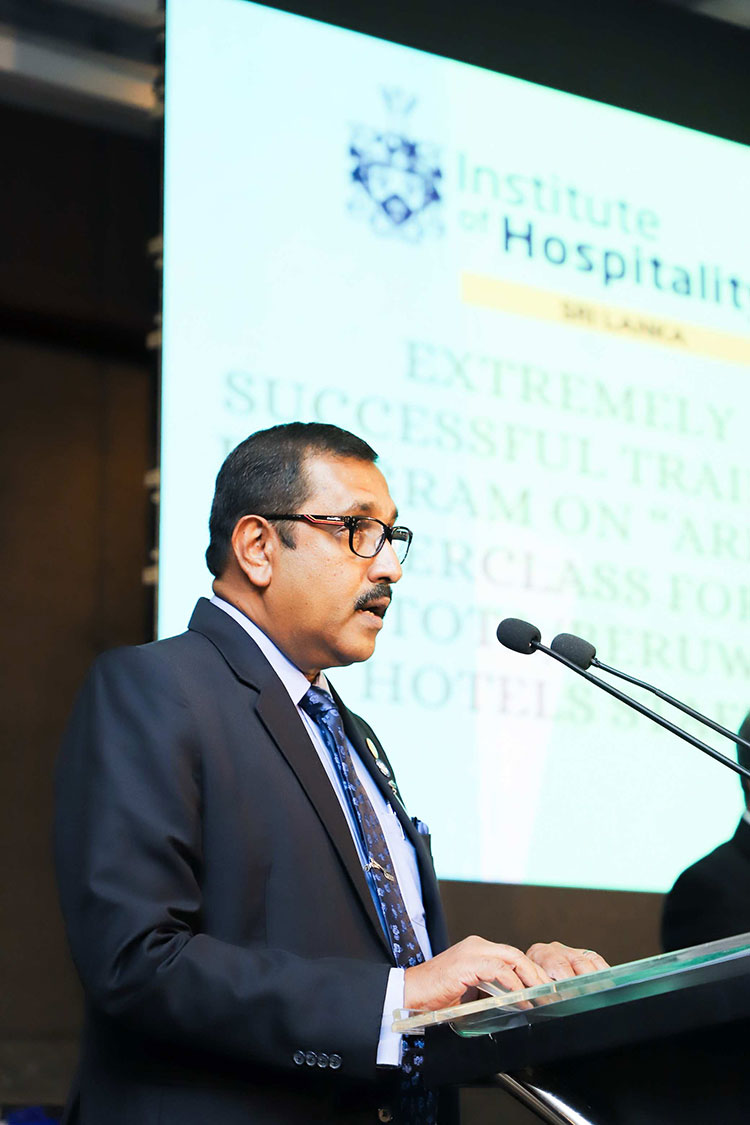

Pix by Thushara Attapathu
Life style
He recognizes human identity beyond boundaries of gender, race, nationality and religion.

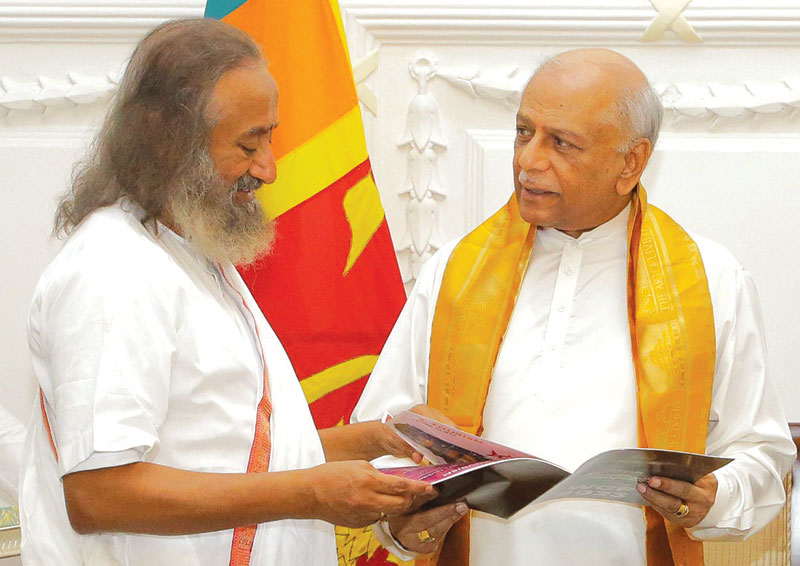
Visit of Sri Gurudev to Sri Lanka
Humanitarian, spiritual leader and Global Ambassador of Peace Gurudev Sri Sri Ravi Shankar (Sri Gurudev) was in Sri Lanka on a three day tour on the invitation of the Prime Minister of Sri Lanka Dinesh Gunewardene. Gurudev who inspired a wave of volunteerism and service to moot one of the largest volunteer-based organisations in the world – The Art of Living – visited the various projects under the aegis of the foundation and launched twelve vocational and technical centers around the island. He was accompanied by thousands of followers from Sri Lanka and around the world.
Gurudev who visited Sri Lanka for the sixth time also had a first day cover launched in honour of his visit. He is a strong proponent of spreading happiness, using the unique Sudarshan Kriya, yoga, meditation and practical wisdom to unite people, empower individuals and transform communities. His programmes provide techniques and tools to live a deeper, more joyous life, while his non-profit organisations recognize the human identity beyond the boundaries of gender, race, nationality and religion.
The Art of Living which has more than 30,000 teachers and over one million volunteers across 180 countries has touched in excess of five hundred million people around the world. CNN called it “Life Changing” and The Washington Post headlined it, “Fresh air to millions”.
In Trincomalee, Gurudev met with war victims and had a heartwarming engagement with the children from the children’s homes run by the Foundation. He also visited the Koneswara Temple in Trincomalee and graced the Kumbhabhishekam at Seetha ecogPnize the human identity beyond the boundaries of gender, race, nationality and religion. Amman temple at Nuwara Eliya. He held discussions with the trustees on the progress of the foundation’s social service projects, while also holding a special event – Ekamuthuwa – attended by a large number of dignitaries and his devotees from around the world.
His time with the Prime Minister was spent discussing the prospects of unity in diversity and uniting Sri Lanka by adding happiness into the formula of living. In addition he had discussions with the Speaker of the Parliament of Sri Lanka Mahinda Yapa Abeywardena, prominent business stewards and civil society leaders.
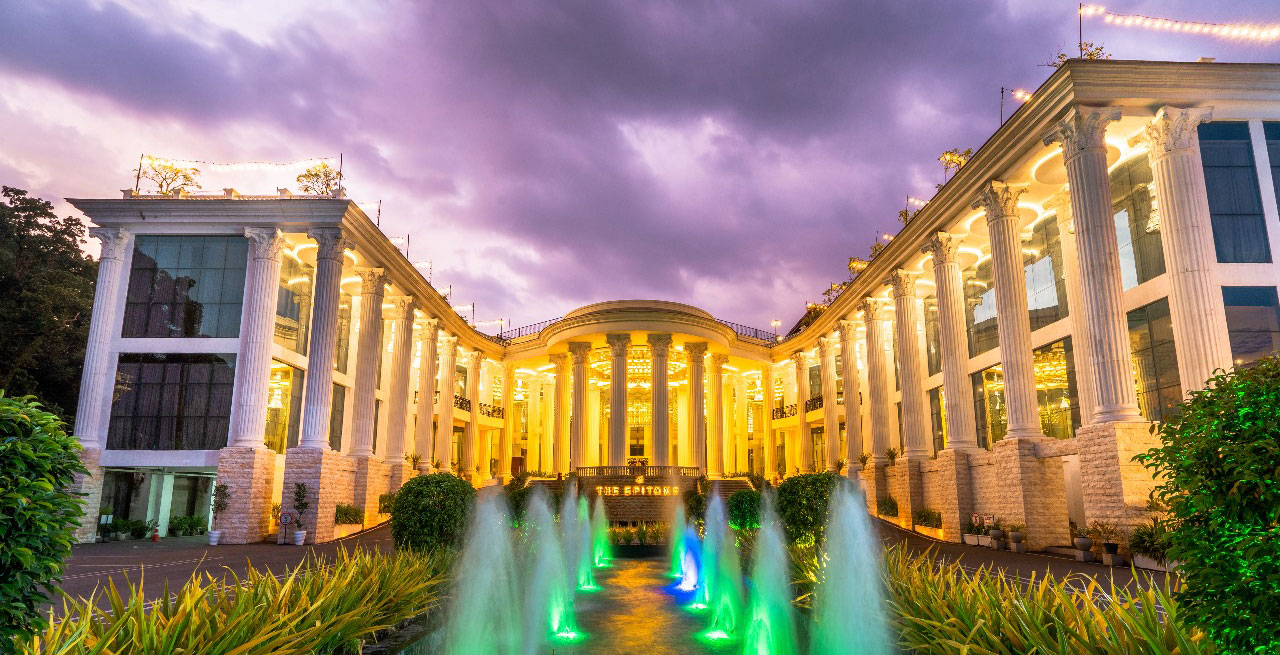
by Zanita Careem
Envison your dream wedding day come to life at the Epitome Hotel, a prestigious city hotel in Kurunegala offering an unrivalled luxury rendors experience for weddings.
The venue is designed to embody opulence and luxury from all quarters for a spectacular wedding in kurunegala,Thier ballroom is the largest banquet facility in Sri Lanka It can be divided into six luxurious pillarless wedding halls on the ground floor and 25pax smaller banquet halls.
It can be easily named as a five star heaven in the heart of the city contributing to a myriad of immense experiences tailored to inspire and delight wedding experiences.
From opulent décor set up to exquisite table decor, lavish food, every detail is meticulously curated to spark your imagination and ignite creativity for a perfect wedding. The previous prestigious wedding shows season one and season two attracted large crowds
were unique events which gave the wedding vendors and potential clients had an opportunity to connect and interact with each other. Beyond being a showcase it was a chance for the wedding vendors to unite and contribute to the vibrancy of the wedding industry. The wedding show covered all area of the bridal industry providing a comprehensive variety of bridal supplies from Sri lanka and became the most popular bridal exhibitions in Kurunegala.This bridal exhibitions allowed brides and grooms to experience first hand the products and services available from suppliers in Sri Lanka
These wedding shows held at The Epitome created a benchmark and gave an opportunity for vendors to create connections to the utmost satisfaction said Harshan Lakshita Executive Director. of the magnificent Hotel
Our wedding shows featured experts and professionals in every field‘ It covered all areas of the bridal industry provided a comprehensive variety of bridal supplies from Sri lanka and became most popular bridal exhibition in this region.We are always open to everyone to join us at our wedding shows in the future. It is an opportunity to discover the incredible talent within our local wedding and bridal vendors to make meaningful relationships and plan thier special day at our breathtaking hotel The Epitome said General Manager Kavinda Caldera
The Epitome Hotel’s bridal show which will be held end of June will buzz with great ideas,advice and inspiration for all those who plan thier dream wedding
…….
The Hotel Epitome’s Wedding Season 3 will marked excellence, celebration and inspiration for those in the wedding industry. The exhibition halls will resonate with ideas on exquisite bridal wear to decor, florists , photography etc and showshowcase the rich tapestry of talent within the local wedding industry. .





US sports envoys to Lanka to champion youth development

Rahuman questions sudden cancellation of leave of CEB employees


