
News
Harvesting ‘true cinnamon’: The story of the Ceylon spice

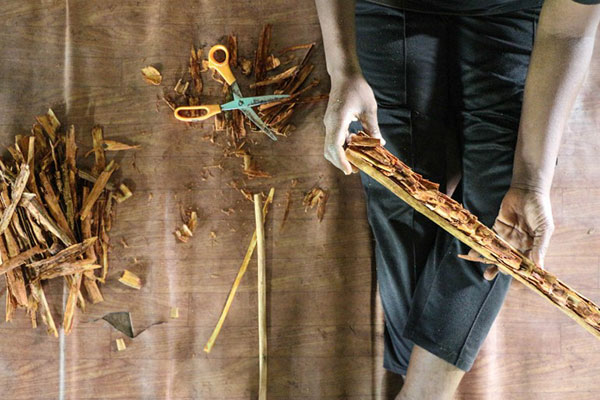
Considered the world’s best cinnamon, Ceylon cinnamon has been grown and produced in Sri Lanka for generations. But experienced peelers are now rare, says a report by Al Jazeera.
It said: It is 9am in the Carlton estate in Thihagoda, a small town about 160km (100 miles) south of Sri Lanka’s capital Colombo, and the July sun hides behind inky clouds. The air is thick and hot. Two men walk to the main estate building carrying piles of cinnamon branches. Inside, a group of women sit on the cement floor, chatting as they peel cinnamon.
Since 2000, workers here have planted, harvested and peeled cinnamon, sending batches of the fragrant sticks to a factory in Kamburupitiya, a 15-minute drive away, where they are cut, packed and loaded onto shipping containers for export.
Cinnamon harvesting usually takes place from June to December when the monsoon skies burst into downpours. But here at Rathna Producers Cinnamon Exports, it is produced throughout the year on the 42-acre (17 hectares) estate. “When we are done harvesting one acre, the next acre is ready,” says Chamara Lakshith, 28, the estate’s visiting officer, whose job involves coordinating between the estate and the main office in Kamburupitiya. “But sometimes for a few weeks, the bark is so hard that you can’t peel cinnamon. We know it by looking at the trees; young leaves turn striking red.”
The family business that began in 1985 is run by Ravindu Runage, whose late father started in the cinnamon trade with 7,000 Sri Lankan rupees ($35) to buy cinnamon from small farmers and sell it to bigger traders.
Now, Runage says the company is one of the largest cinnamon producers in Sri Lanka, exporting cinnamon and other spices like nutmeg and black pepper to 56 countries. Apart from growing organic cinnamon, the company also sources it from 8,000 individual and small-scale farmers and exports more than 30 containers of cinnamon a month.
“We grew up with cinnamon,” says 36-year-old Runage, at his office in Kamburupitiya, surrounded by several industry awards his family has won over the years. “We lived in a two-bedroom house. We slept in one room. In the other room, my thaththa [father] stored cinnamon.”
Once they were in the business, the Runage family learned that Mexico is one of the biggest cinnamon consumers. “So thaththa learned English and visited Mexico in 1998 to find a buyer,” says Runage. “But they spoke Spanish. So thaththa sent his business cards to companies he found in a telephone book.”
“Five months later, we sold our first container of cinnamon to Mexico.”
There are two types of cinnamon in the Western market: Ceylon cinnamon (named after the title British colonisers gave to Sri Lanka) and cassia. Ceylon cinnamon is native to Sri Lanka; it has a lush, inviting scent and a sweet taste, and its quills are soft and light brown in colour. Cassia comes from other Asian countries like China, Indonesia and Vietnam; its bark is sturdy with a rough texture, it is dark brown in colour and is stronger and hotter in taste. Cassia is considered lower quality, while Ceylon often triumphs as the pure, “true cinnamon”.
The process of producing this cinnamon includes several laborious, time-consuming steps. This is also why Ceylon cinnamon is expensive in the market while cassia is cheap, Runage says.
At the estate, seeds are planted in grow bags. After one year, saplings are cultivated. Harvesting begins four years later.
For harvesting, farmers cut down the branches of cinnamon trees at an angle, which allows cinnamon bushes to regrow, Lakshith says. Young and tender twigs are thrown away. Once branches are soaked in water and are moist enough, peelers remove the outermost layer of the cinnamon bark. To produce thin cinnamon quills, they spend hours stripping off the inner bark of the cinnamon branch in sheets.
Once produced, Ceylon cinnamon quills are graded based on their width; the thinner the quills, the higher they are in value. Alba is the highest form of cinnamon, with a diameter of 6mm. H1 is a lower grade of cinnamon, with a diameter of 22mm. In the export market, Alba costs twice as much as H1.
With a hearty smile, Suduhakuru Piyathilake holds a large batch of cinnamon quills. Piyathilake and his wife have been living in an old, dilapidated house next to the estate’s main building for 10 years now.
At 5am every day, Piyathilake heads off to the plantation. After collecting branches from about 15 trees, he plods back to the water tank in the main building, drops them off for soaking and returns to the plantation. He must make several trips back and forth before he begins peeling.
“When it’s moist, it’s easy to peel,” says the 55-year-old. “That’s why we cut them early in the morning and soak them.”
When the clock hits 10am, Piyathilake comes back with the last batch. After five hours, he has collected the branches of 200 trees. Sweat trickles down his forehead. A resident kitten swats at his feet, but Piyathilake ignores it and rushes in for a shower.
After a two-hour break, he sharpens his knife by scraping the outer bark of the branch and then he gets to work. “This is what my father and his father did,” he says. “Now my sons are cinnamon peelers.”
Piyathilake has been peeling cinnamon for the last 43 years. He learned the craft from his father in their village in Elpitiya, 70km north of the Runage family estate, where his children live with his mother. At home, cinnamon trees adorn their back yard, Piyathilake says. “But it’s a small garden so we can’t harvest cinnamon every day of the year. We don’t make much money there. So I work here with my wife. We only see our children once in every four months.”
Piyathilake is so adept at work that he can masterfully strip off extremely thin barks of the cinnamon branch by merely measuring them next to his index finger. After peeling the outer bark, he makes two cuts on two opposite sides before peeling off the inner bark. A half a length cut of your smallest bone is for Alba, Piyathilake says. For “rough” or H1 cinnamon quills, Piyathilake uses the length of two bones of his index finger.



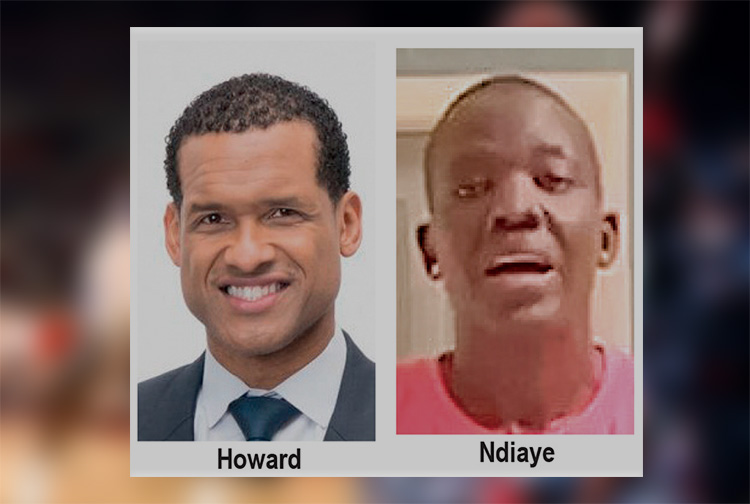
The U.S. Embassy in Colombo welcomed the U.S. Sports Envoys to Sri Lanka, former National Basketball Association (NBA) and Women’s National Basketball Association (WNBA) players Stephen Howard and Astou Ndiaye, from June 8 through 14.
The Public Diplomacy section of the U.S. Embassy said that it would launch a weeklong basketball program intended to harness the unifying power of sports, made possible through collaboration with Foundation of Goodness and IImpact Hoop Lab.
While in Sri Lanka, Howard and Ndiaye, both retired professional basketball players, will conduct a weeklong program, Hoops for Hope: Bridging Borders through Basketball. The Sports Envoys will lead basketball clinics and exhibition matches and engage in leadership sessions in Colombo and Southern Province for youth aged 14-18 from Northern, Uva, Eastern and Western Provinces, offering skills and leadership training both on and off the court. The U.S. Envoys will also share their expertise with the Sri Lanka Basketball Federation, national coaches, and players, furthering the development of basketball in the country. Beyond the clinics, they will collaborate with Sri Lankan schoolchildren to take part in a community service project in the Colombo area.
“We are so proud to welcome Stephen and Astou as our Sports Envoys to Sri Lanka, to build on the strong people-to-people connections between the United States and Sri Lanka,” said U.S. Ambassador Julie Chung. “The lessons that will be shared by our Sports Envoys – communication, teamwork, resilience, inclusion, and conflict resolution – are essential for leadership development, community building, equality, and peace. The U.S. Sports Envoy program is a testament to our belief that sports can be a powerful tool in promoting peace and unity.”
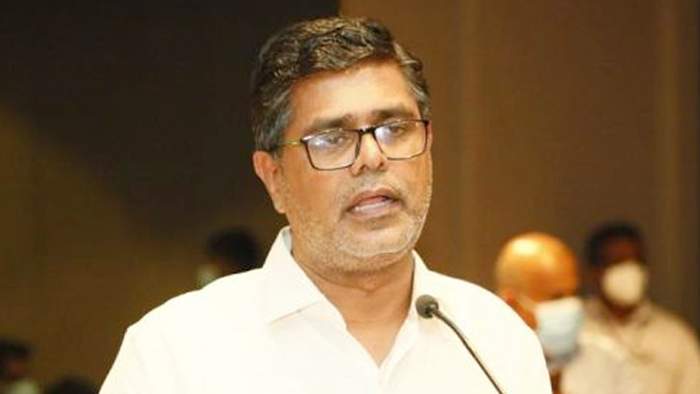
SJB Colombo District MP Mujibur Rahuman in parliament demanded to know from the government the reasons for CEB suspending the leave of all its employees until further notice from Thursday.
MP Rahuman said that the CEB has got an acting General Manager anew and the latter yesterday morning issued a circular suspending leave of all CEB employees with immediate effect until further notice.
“We demand that Minister Kanchana Wijesekera should explain this to the House. This circular was issued while this debate on the new Electricity Amendment Bill was pending. There are many who oppose this Bill. The Minister must tell parliament the reason for the urge to cancel the leave of CEB employees,” the MP said.However, Speaker Mahinda Yapa Abeywardena prevented Minister Wijesekera responding to the query and said that the matter raised by MP Rahuman was not relevant.
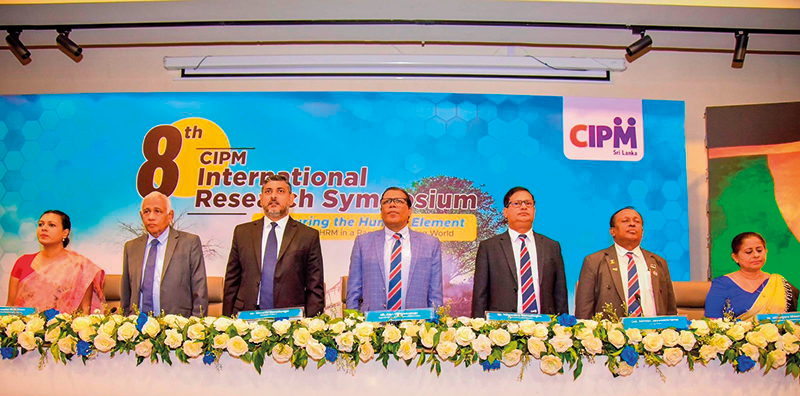
The Chartered Institute of Personnel Management (CIPM) successfully concluded the 8th Annual CIPM Symposium, which took place on 31st May 2024. Themed “Nurturing the Human Element—Redefining HRM in a Rapidly Changing World,” the symposium underscored the pivotal role of human resource management (HRM) in today’s dynamic global landscape. Since its inception in 1959, CIPM has been dedicated to advancing the HR profession through education, professional development, and advocacy, solidifying its position as Sri Lanka’s leading professional body for HRM.
Ken Vijayakumar, the President of the CIPM, graced the occasion as the chief guest. The symposium commenced with the welcome address by the Chairperson, Prof. Arosha Adikaram, followed by the Web Launch of the Symposium Proceedings and Abstract Book by the CIPM President. The event featured distinguished addresses, including a speech by Chief Guest Ken Vijayakumar, President of CIPM, and an address by Guest of Honor Shakthi Ranatunga, Chief Operating Officer of MAS Holdings Pvt. Ltd., Sri Lanka.
The symposium also featured an inspiring keynote address by Prof. Mario Fernando, Professor of Management and Director of the Centre for Cross Cultural Management (CCCM) at the University of Wollongong, Australia.
Vote of Thanks of the inauguration session was delivered by Dr. Dillanjani Weeratunga, Symposium Co-chair.
The symposium served as a comprehensive platform for researchers to present their findings across a wide range of critical topics in HRM. These included Cultural Diversity and Inclusion, Talent Development and Retention, Ethical Leadership and Corporate Social Responsibility, Adapting to Technological Advancements, Mental Health and Well-being at Work, Global Workforce Challenges, Employee Empowerment, and Reskilling and Upskilling.
The plenary session was led by Prof. Wasantha Rajapakse. Certificates were awarded to the best paper presenters during the valedictory session, followed by a vote of thanks delivered by Kamani Perera, Manager of Research and Development.
The annual symposium of CIPM was a truly inclusive event, attracting a diverse audience that spanned undergraduates, graduates, working professionals, research scholars and lecturers. This widespread interest highlights the symposium’s significance in the field of HRM, offering a unique opportunity for everyone to network and learn from scholarly brains.The CIPM International Research Symposium was sponsored by Hambantota International Port, Sri Lanka Institute of Information Technology (SLIIT), E B Creasy & Co. PLC, and Print Xcel Company.



US sports envoys to Lanka to champion youth development

Rahuman questions sudden cancellation of leave of CEB employees


