Life style
Hansa Vilak Stylish and profound cinematic experience

Veteran dramatist and film-maker Dharmasiri Bandaranayake’s landmark creation, Hansa Vilak is back on the screen after its restoration in digital format. The film remains ‘timeless’ and ‘forever young’ even after 40 years since it was first released in 1980.
by Randima Attygalle
Dharmasiri Banadaranayake’s Hansa Vilak is a ‘dazzling debut’ which ‘displays a remarkable feel for the medium. Imaginative, experimental and very exciting,’ commented Dr. Lester James Peries when the film was first released. An attempt to explore the social hypothesis of a marriage from an atypical perspective drove Bandaranayake to write his first screen play for Hansa Vilak in 1978. By then he was experienced both as a stage and a film actor.
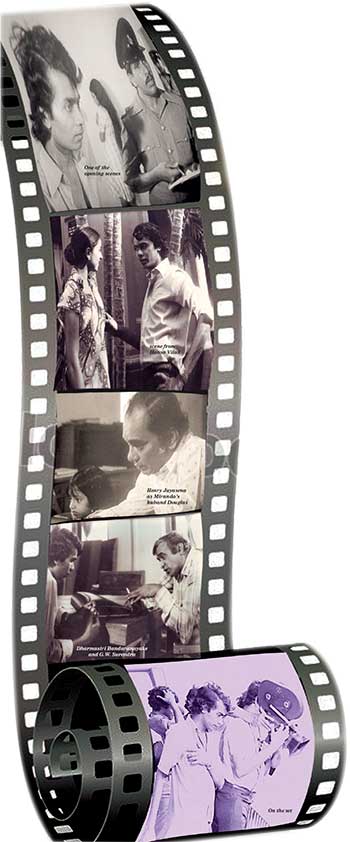

The forbidden love between Nissanka (played by Bandaranayake himself) and Miranda (Swarna Mallawarachchi) – both married, is the theme of Hansa Vilak or Swan Lake. This projects a universal appeal in any society where matrimony has been made into a legal or social institution. The deep and abiding emotions in a traditional Asian society are poignantly projected in the film.
Critic H.A Seneviratne once remarked that, ‘Hansa Vilak, combining both fantasy and reality, utilizes the diverse techniques of photography, editing, and sound mixing in all their complexities so much so that there appears to be much outwards novelty in it. Not only the form, but also the subject matter of the film appears to be new and complex to the Sinhala filmgoer. It deals with the emotional problems of two married couples whose matrimonial bond had been suddenly disrupted.’
The extra marital sexual relationship between Miranda, wife of Douglas (Henry Jayasena) and Nissanka, husband of Samanthi (Vasanthi Chaturani) is suddenly revealed with the police raiding the hotel in which the couple had found temporary lodging. This results in Nissanka deserting his wife and two children and Miranda too leaving her husband and only daughter. Nissanka and Miranda are united in marriage but their past emotional attachments continue to taunt them.
Some aspects of these characters are based on reality and some on illusion and fantasy. The characters were developed “transcending the traditional beginning, middle and the end construct known to films at that time,” Bandaranayake says. The film was based on a structure that was yet unseen in Sri Lankan cinema – the element which he attributes to Hansa Vilak’s lasting appeal even after 40 years since release.
The response to the newly restored Hansa Vilak in digital format has been “overwhelming,” says Bandaranayake. “Today it has come among another generation including students of cinema whose response to it has been heart-warming,” he says; he humbly adds that his creation has not aged, but remains modern and relevant.
Bandaranayake’s Hansa Vilak and Thunweni Yamaya were sent to India for restoration by the Sri Lanka Film Corporation about three years ago. The six-month restoration process in the Prasad Film Lab in Chennai reputed for its digital post production services has paid dividends.
“The visual impact of the new copy is just astounding. Although the images remain in their original black and white, their sharpness and clarity in the new version appeals to the modern audience,” says the filmmaker.
The film, distributed by Sri Lanka Film Corporation, is now being screened in several cinemas in Colombo. It will soon show at several more cinemas in other major towns.
As an artiste who is very vocal about conserving Sinhala cinema’s landmarks for posterity, Bandaranayake laments that several Sri Lankan cinematic landmarks will perish unless urgent interventions are made. Following the successful restoration of his own films, (Thunveni Yamaya will be screened soon), Bandaranayake stresses the need to salvage
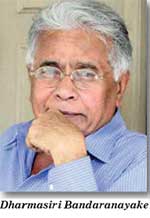

the masterpieces of celebrated film makers such as Lester James Peries, Dharmasena Pathiraja and Vasantha Obe
yesekera before they are forever lost to the country.
Commenting on Hansa Vilak (released in 1980), scholar and critic Regi Siriwardena remarked that, ‘Dharmasiri Bandaranayake has created in this film a form and style that go further than any Sinhala film before in taking us into the world of inner psychological experience. Throughout the film the camera is the means of projecting the sensations and feelings of Nissanka torn between love, suspicion, jealousy, duty and obligation. Many of the images on the screen belong not to the world of external, public reality but to the inner world of psychological reality.’
Psychology of character in the language of film-making becomes prominent in the creation of Hansa Vilak. The subject matter of the film is a fusion of fantasy and hallucinations of an emotional wreck. This fusion, Bandaranayake explains, enabled every viewer of the film a dialogue on what was real and what was illusion.
The camera in the hands of the cinematographer, Andrew Jayamanne is shifted towards the characters making it appear that the characters themselves walk towards it. The melodies of Maestro Premasiri Khemadasa – Hemin Sere Piya Vida (theme song sung by Sunila Abeysekera and T. M. Jayarathna) Senehasa Pupura sihinaya miya yayi and Sandun sihina mandapaye emerge strong motifs in the film.
Bandaranayake’s own portrayal of Nissanaka was not by choice. The non-availability of most actors he approached pushed him into taking the role himself. Inspiration to play the dual roles of actor and director came from the celebrated Gamini Fonseka, says Bandaranayake, adding that Gamini’s shoes were however too big for him.
A special pre-premiere of Hansa Vilak in 1979 won it an opportunity to be featured at the Mannheim International Film Festival in West Germany. “Rev. Fr. Ernest Portuthota who happened to be in the audience at the special show was so impressed by the film and took it upon himself to send it to Germany,” recollects Bandaranayake. This enabled him to join a group of novice film makers from different parts of the world.
Hansa Vilak
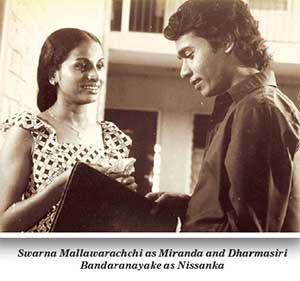

“To have found the means of reflecting through the form and techniques of the film, the pressures of society and the family in the mind of a bewildered and tormented individual is Dharmasiri Bandaranayake’s great achievement in the film,” wrote Regi Siriwardena who went on to note that this ‘achievement is sufficient to make Hansa Vilak a permanent landmark in the Sinhala Cinema, just as Rekawa or Ahas Gauwa were in their own time’.
Photo credit: Dharmasiri Bandaranayake