
News
GTF questions credibility of Sri Lankan commissions, pushes for Geneva solution

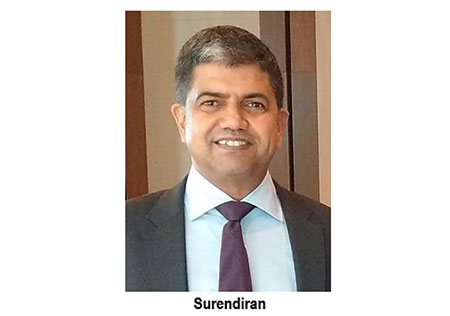
The Global Tamil Forum (GTF) spokesperson Suren Surendiran said that the Tamil community did not believe in commissions appointed by the government of Sri Lanka to address post-war reconciliation issues. In an interview with the BBC Sinhala service, Surendiran said that the Tamil community expected the UNHRC to address their grievances.
(BBC) Sri Lanka is facing a new UN resolution calling on it to hold human rights abusers to account and deliver justice to victims of its 26-year civil war. Britain and others have circulated a draft of the resolution among UN Human Rights Council (UNHRC) member states. It is expected to be adopted at the end of the four-week UNHRC spring session in Geneva.
Is this a progressive step?
(GTF) There have been seven resolutions passed since the end of the armed conflict in Sri Lanka. The last three of the seven were passed as consensus resolutions, which the Sri Lankan State co-sponsored, meaning, willingly accepted and agreed to take corrective measures. All these resolutions (not just the last 3) highlighted human rights failings, discriminatory practices, laws that are incompatible with international standards and best practices, weakening of democracy and governance and above all alleged breaches of international laws including war crimes and crimes against humanity.
Whether there are resolutions passed or not, unless these are fixed and/or willingness to fix is shown and progress has been shown in fixing, (1) victims and victim communities will continue to suffer, (2) achieving political stability becomes a near impossibility as if you don’t serve justice to victims, the conflict will continue (3) internationally, Sri Lanka will continue to be isolated (4) foreign and even local investors will be reluctant to invest (5) economy will suffer (6) will result in shortages of goods and services, price hikes and unemployment.
If the Government of Sri Lanka agrees to fix these identified issues, for the sake of all people of Sri Lanka, the UN and the international community will help to get these fixed and most of the above listed repercussions will be by and large eliminated or the impact reduced.
Instead of dealing with these issues like any mature progressive country will and should, the government of Sri Lanka creates a false narrative that these resolutions are undermining the sovereignty of Sri Lanka and that the international community, especially the powerful western countries are undermining Sri Lanka and her people and their war heroes. Government of Sri Lanka falsely claims that these resolutions are against Sri Lanka and her people.
United Nations Human Rights Council (UNHRC) is a body created by all countries who are members of the United Nations, including Sri Lanka for the purpose of creating a peaceful and harmless world where human rights of all people will be respected.
(BBC)
Lord Ahmad said the resolution was a vital step towards reconciliation and peaceful relations among all of Sri Lanka’s diverse communities and faith groups. Do you agree?
(GTF)
Indeed!
(BBC)
President Gotabaya Rajapaksa has also set up a three-member commission to look into this matter. Why can’t they bring the justice through an internal process?
(GTF)
There have been at least 3 separate commissions set up internally since the end of the war. This is another one which is being set up literally four weeks before the UN High Commissioner of Human Rights submitted her findings and recommendations at the 46th session of the UNHRC. This “Commission” is set up to review recommendations made by the previous commissions without a mandate to address the key issues identified in the resolutions passed by the UNHRC. When such farcical and sham “commissions” are set up, which reasonable thinking body of countries will accept?
I do not envy the current President’s and Prime Minister’s positions as they held command responsibility for some of the alleged heinous crimes, war crimes and crimes against humanity that were committed, how can they be expected to set up a just mechanism to serve justice to the victims?
(BBC)
The war ended nearly 12 years ago. Communities seem to have grown even a far apart. What is your suggestion for reconciliation?
(GTF)
All people of Sri Lanka should be told the truth of the past with evidence. Majority of the Sri Lankans are reasonable people and if a transparent process was set up to explain for all people to understand how dealing with the past, introducing permanent solutions will enable creating a peaceful and mutually respectful society and that in turn will create a peaceful and prosperous country, I believe permanent reconciliation between communities can be achieved for all to live as equals.
(BBC)
Does the GTF do economic and social related programs? Is the GTF involved in political organizing, both from civil society and political parties, in the North and the East of Sri Lanka?
(GTF)
GTF doesn’t directly involve in politics in Sri Lanka. We work very closely with the elected members of our community and others. We engage with civil society organisations and representatives from a cross section of all communities in Sri Lanka and reflect the ground reality in Sri Lanka to overseas stakeholders. On social programs, Canadian Tamil Congress, one of our member organisations, recently delivered food parcels and essential items to Covid-19 affected communities. In July 2017 GTF sent several medical professionals to the South of Sri Lanka including Galle and Matara where we served floods affected Sinhala communities in partnership with Sarvodaya Movement. The then Yahapalanaya government welcomed this effort as an initial step of trust building between communities.



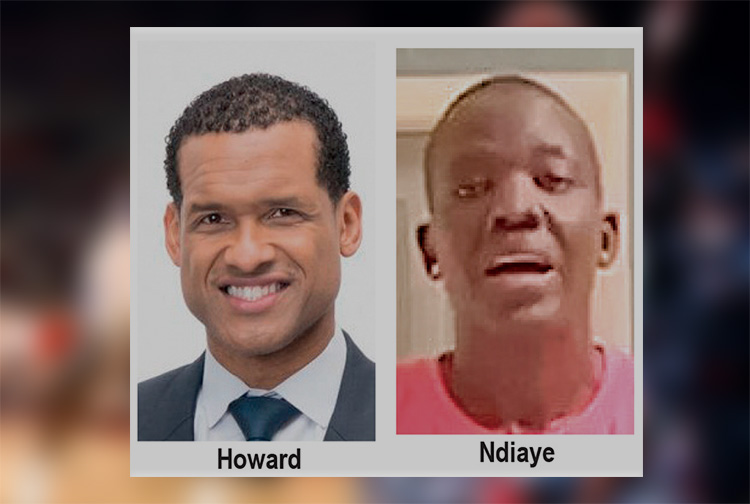
The U.S. Embassy in Colombo welcomed the U.S. Sports Envoys to Sri Lanka, former National Basketball Association (NBA) and Women’s National Basketball Association (WNBA) players Stephen Howard and Astou Ndiaye, from June 8 through 14.
The Public Diplomacy section of the U.S. Embassy said that it would launch a weeklong basketball program intended to harness the unifying power of sports, made possible through collaboration with Foundation of Goodness and IImpact Hoop Lab.
While in Sri Lanka, Howard and Ndiaye, both retired professional basketball players, will conduct a weeklong program, Hoops for Hope: Bridging Borders through Basketball. The Sports Envoys will lead basketball clinics and exhibition matches and engage in leadership sessions in Colombo and Southern Province for youth aged 14-18 from Northern, Uva, Eastern and Western Provinces, offering skills and leadership training both on and off the court. The U.S. Envoys will also share their expertise with the Sri Lanka Basketball Federation, national coaches, and players, furthering the development of basketball in the country. Beyond the clinics, they will collaborate with Sri Lankan schoolchildren to take part in a community service project in the Colombo area.
“We are so proud to welcome Stephen and Astou as our Sports Envoys to Sri Lanka, to build on the strong people-to-people connections between the United States and Sri Lanka,” said U.S. Ambassador Julie Chung. “The lessons that will be shared by our Sports Envoys – communication, teamwork, resilience, inclusion, and conflict resolution – are essential for leadership development, community building, equality, and peace. The U.S. Sports Envoy program is a testament to our belief that sports can be a powerful tool in promoting peace and unity.”
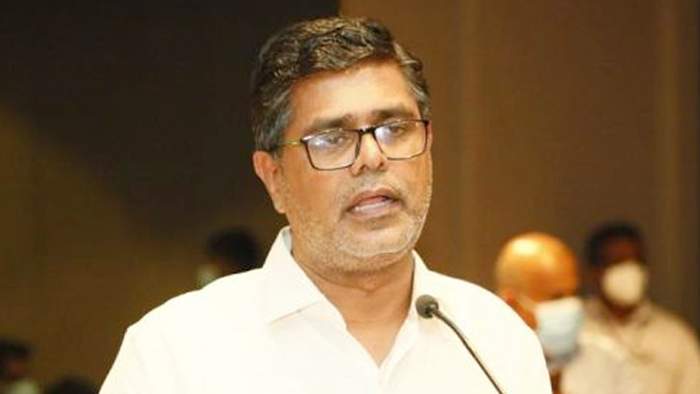
SJB Colombo District MP Mujibur Rahuman in parliament demanded to know from the government the reasons for CEB suspending the leave of all its employees until further notice from Thursday.
MP Rahuman said that the CEB has got an acting General Manager anew and the latter yesterday morning issued a circular suspending leave of all CEB employees with immediate effect until further notice.
“We demand that Minister Kanchana Wijesekera should explain this to the House. This circular was issued while this debate on the new Electricity Amendment Bill was pending. There are many who oppose this Bill. The Minister must tell parliament the reason for the urge to cancel the leave of CEB employees,” the MP said.However, Speaker Mahinda Yapa Abeywardena prevented Minister Wijesekera responding to the query and said that the matter raised by MP Rahuman was not relevant.
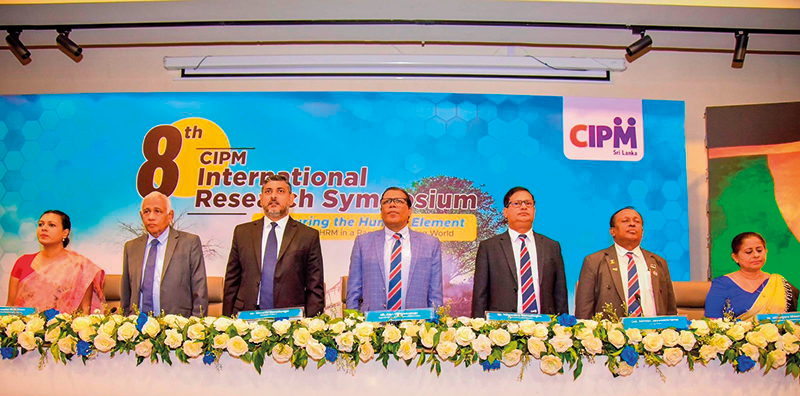
The Chartered Institute of Personnel Management (CIPM) successfully concluded the 8th Annual CIPM Symposium, which took place on 31st May 2024. Themed “Nurturing the Human Element—Redefining HRM in a Rapidly Changing World,” the symposium underscored the pivotal role of human resource management (HRM) in today’s dynamic global landscape. Since its inception in 1959, CIPM has been dedicated to advancing the HR profession through education, professional development, and advocacy, solidifying its position as Sri Lanka’s leading professional body for HRM.
Ken Vijayakumar, the President of the CIPM, graced the occasion as the chief guest. The symposium commenced with the welcome address by the Chairperson, Prof. Arosha Adikaram, followed by the Web Launch of the Symposium Proceedings and Abstract Book by the CIPM President. The event featured distinguished addresses, including a speech by Chief Guest Ken Vijayakumar, President of CIPM, and an address by Guest of Honor Shakthi Ranatunga, Chief Operating Officer of MAS Holdings Pvt. Ltd., Sri Lanka.
The symposium also featured an inspiring keynote address by Prof. Mario Fernando, Professor of Management and Director of the Centre for Cross Cultural Management (CCCM) at the University of Wollongong, Australia.
Vote of Thanks of the inauguration session was delivered by Dr. Dillanjani Weeratunga, Symposium Co-chair.
The symposium served as a comprehensive platform for researchers to present their findings across a wide range of critical topics in HRM. These included Cultural Diversity and Inclusion, Talent Development and Retention, Ethical Leadership and Corporate Social Responsibility, Adapting to Technological Advancements, Mental Health and Well-being at Work, Global Workforce Challenges, Employee Empowerment, and Reskilling and Upskilling.
The plenary session was led by Prof. Wasantha Rajapakse. Certificates were awarded to the best paper presenters during the valedictory session, followed by a vote of thanks delivered by Kamani Perera, Manager of Research and Development.
The annual symposium of CIPM was a truly inclusive event, attracting a diverse audience that spanned undergraduates, graduates, working professionals, research scholars and lecturers. This widespread interest highlights the symposium’s significance in the field of HRM, offering a unique opportunity for everyone to network and learn from scholarly brains.The CIPM International Research Symposium was sponsored by Hambantota International Port, Sri Lanka Institute of Information Technology (SLIIT), E B Creasy & Co. PLC, and Print Xcel Company.



US sports envoys to Lanka to champion youth development

Rahuman questions sudden cancellation of leave of CEB employees


