
News
Green Growth takes the stage: Sri Lanka hosts high-level event on climate action

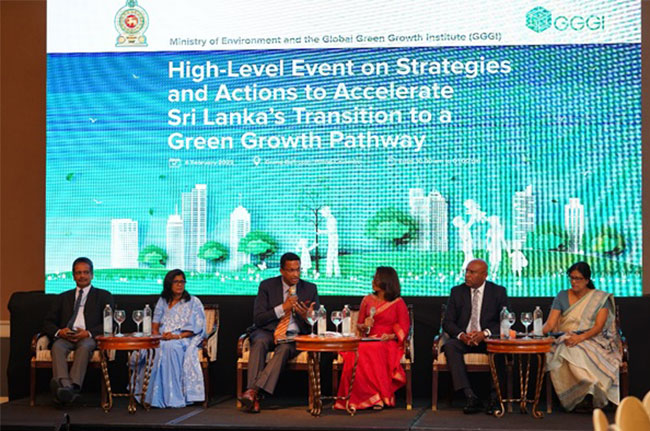
The Ministry of Environment and the Global Green Growth Institute (GGGI) organized a High-Level Event on Strategies and Actions to Accelerate Sri Lanka’s Transition to a Green Growth Pathway on February 6.
The event (was) aimed to complement ongoing efforts to transform Sri Lanka’s development, by formalizing the application of a green growth model. It was under the patronage of President Ranil Wickramasinghe and former UN Secretary General Ban Ki-moon, the President of the Assembly and Chair of the Council of the Global Green Growth Institute, the event brought together key stakeholders from government, private sector, development partners, academia, and civil society, a news release connected with the event said.
“Delivering a key statement at the event Ban Ki-moon reinstated a powerful statement, “We have no excess time to spare, nor do we have a Plan B or a Planet B. This is what we will bestow upon our succeeding generation”. A message that resonated strongly with the diverse audience members,” it said.
During his welcome remarks, Dr. Anil Jasinghe, Secretary Ministry of Environment expressed that the Government of Sri Lanka was not able to successfully deliver alone on the transition to a green development pathway and were seeking the support of all the experts invited and looking forward to forging partnerships and working in close collaboration, over the long term.
The event featured a panel discussion on strategies and actions to accelerate Sri Lanka’s green growth pathway, moderated by Dr. Achala Abeysinghe, GGGI Asia Regional Director and Head of Programs. Leaders representing various sectors presented their perspectives on strategies and actions
Ms. Kumudini Vidyalankara, Director of Climate Change at the Ministry of Environment, discussed the development of a green enabling environment in Sri Lanka. She acknowledged that while the country has robust policies and plans in place, there are still significant obstacles that need to be addressed, including a lack of financing, technical expertise, and capacity.
This sentiment was echoed by Environment Minister Naseer Ahamed in his remarks. The Government of Sri Lanka is keen to work closely with development partners, organizations such as GGGI, and the private sector to address these gaps.

Mr. Dimantha Seneviratne, Chief Executive Officer of the National Development Bank PLC [NDB] stated that many banks are currently working towards accessing significant funding from global climate financiers for the purpose of on-lending to green projects, while also building the required institutional capacity to play this role. The Central Bank of Sri Lanka as the regulator has facilitated this process by formulating the required regulatory environment with the launch of the “Green Finance Taxonomy”.
Senaratne further stated that the consideration of a debt-for-nature swap transaction to supplement the sovereign debt restructuring process can serve as a key demonstration project for Sri Lanka that can mirror the success of such transactions executed in the South American region.
Ms. Karin Fernando, Senior Research Professional and Team Leader for Sustainable Development at the Center for Poverty Analysis (CEPA) was of the view that while greening is important, there is also a real need to reduce inequalities and increase opportunities. This means reducing the gap between urban and rural areas through diversifying employment options to include jobs that are not dependent on natural resources. Recognizing the rights and dignity of the poor, ensuring that they are not dispossessed and have support to transition into new jobs is also something to be prioritized, she said.
Mr. Dilhan Fernando, CEO of Dilmah Tea and Chair of Biodiversity Sri Lanka, indicated that only when businesses understand the need for climate action as well as realize the impact that collective action by the private sector can have, can there be a sincere and urgent commitment to Environmental Social and Governance (ESG). This includes considering aspects of business operations that might degrade nature while seeking to innovate in terms of products, processes, materials, and strategies for ending biodiversity loss, reducing pollution, and striving for nature-positive business.
Finally, Prof. Buddhi Marambe, Senior Professor at the Faculty of Agriculture at the University of Peradeniya spoke about the use of climate-smart technologies to increase food security and reduce vulnerability in both urban and rural settings. Along with the importance of observing good agricultural practices coupled with green growth scenarios. Closing the panel discussion Dr. Abeysinghe noted that GGGI and the development partner community were dedicated to supporting the Sri Lankan government in achieving its green goals.
Delivering key remarks at the conclusion of the event, President Wickremesinghe highlighting the nation’s double jeopardy. The ongoing struggle with both an economic crisis and fiscal imbalances to address climate action. He emphasized the need for international cooperation and stronger financial commitments from developed countries to address these pressing challenges.
Additionally, Ban Ki-moon highlighted GGGI’s willingness to support Sri Lanka in new areas such as Debt for Nature Swaps, floating Solar or electric buses; projects that the organization is piloting and developing investment strategies for in numerous countries across the world.
He concluded his recommendations by emphasizing the importance of the proposed steps in creating a comprehensive and ambitious partnership between the Government of Sri Lanka, GGGI, and the private sector. He assured that the GGGI and its members are fully committed to supporting Sri Lanka in its green transition and will spare no effort in doing so.
Dr. Sonali Senaratna Sellamuttu, Country Representative for GGGI in Sri Lanka, stressed in her vote of thanks, that a synopsis from the event would be shared and include the views expressed not just by the speakers, but by all invitees, collated through an online app during the event, on priority actions and concrete steps needed to work collectively to move the green growth agenda forward.
J



The U.S. Embassy in Colombo welcomed the U.S. Sports Envoys to Sri Lanka, former National Basketball Association (NBA) and Women’s National Basketball Association (WNBA) players Stephen Howard and Astou Ndiaye, from June 8 through 14.
The Public Diplomacy section of the U.S. Embassy said that it would launch a weeklong basketball program intended to harness the unifying power of sports, made possible through collaboration with Foundation of Goodness and IImpact Hoop Lab.
While in Sri Lanka, Howard and Ndiaye, both retired professional basketball players, will conduct a weeklong program, Hoops for Hope: Bridging Borders through Basketball. The Sports Envoys will lead basketball clinics and exhibition matches and engage in leadership sessions in Colombo and Southern Province for youth aged 14-18 from Northern, Uva, Eastern and Western Provinces, offering skills and leadership training both on and off the court. The U.S. Envoys will also share their expertise with the Sri Lanka Basketball Federation, national coaches, and players, furthering the development of basketball in the country. Beyond the clinics, they will collaborate with Sri Lankan schoolchildren to take part in a community service project in the Colombo area.
“We are so proud to welcome Stephen and Astou as our Sports Envoys to Sri Lanka, to build on the strong people-to-people connections between the United States and Sri Lanka,” said U.S. Ambassador Julie Chung. “The lessons that will be shared by our Sports Envoys – communication, teamwork, resilience, inclusion, and conflict resolution – are essential for leadership development, community building, equality, and peace. The U.S. Sports Envoy program is a testament to our belief that sports can be a powerful tool in promoting peace and unity.”
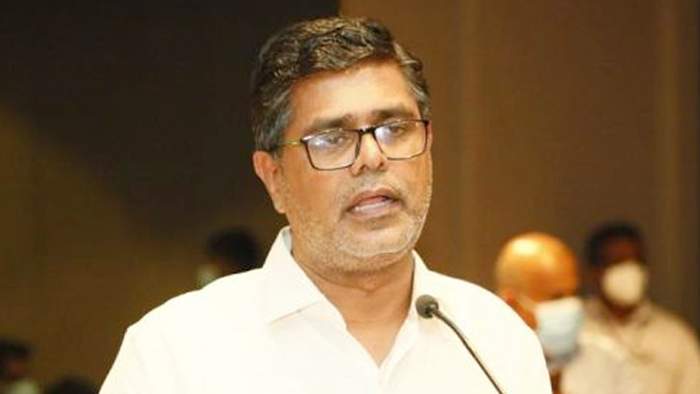
SJB Colombo District MP Mujibur Rahuman in parliament demanded to know from the government the reasons for CEB suspending the leave of all its employees until further notice from Thursday.
MP Rahuman said that the CEB has got an acting General Manager anew and the latter yesterday morning issued a circular suspending leave of all CEB employees with immediate effect until further notice.
“We demand that Minister Kanchana Wijesekera should explain this to the House. This circular was issued while this debate on the new Electricity Amendment Bill was pending. There are many who oppose this Bill. The Minister must tell parliament the reason for the urge to cancel the leave of CEB employees,” the MP said.However, Speaker Mahinda Yapa Abeywardena prevented Minister Wijesekera responding to the query and said that the matter raised by MP Rahuman was not relevant.
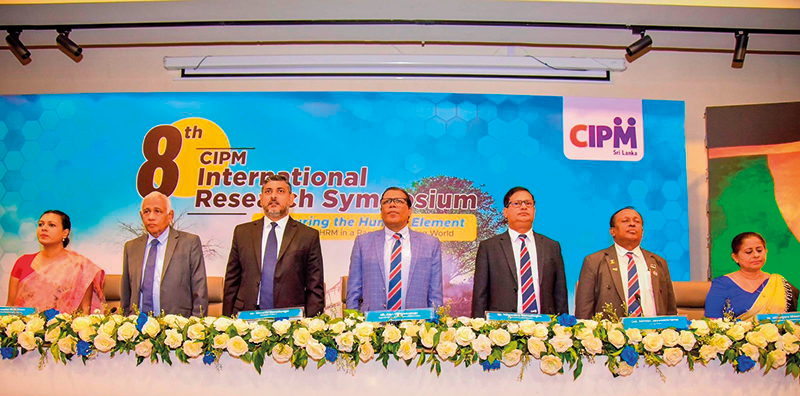
The Chartered Institute of Personnel Management (CIPM) successfully concluded the 8th Annual CIPM Symposium, which took place on 31st May 2024. Themed “Nurturing the Human Element—Redefining HRM in a Rapidly Changing World,” the symposium underscored the pivotal role of human resource management (HRM) in today’s dynamic global landscape. Since its inception in 1959, CIPM has been dedicated to advancing the HR profession through education, professional development, and advocacy, solidifying its position as Sri Lanka’s leading professional body for HRM.
Ken Vijayakumar, the President of the CIPM, graced the occasion as the chief guest. The symposium commenced with the welcome address by the Chairperson, Prof. Arosha Adikaram, followed by the Web Launch of the Symposium Proceedings and Abstract Book by the CIPM President. The event featured distinguished addresses, including a speech by Chief Guest Ken Vijayakumar, President of CIPM, and an address by Guest of Honor Shakthi Ranatunga, Chief Operating Officer of MAS Holdings Pvt. Ltd., Sri Lanka.
The symposium also featured an inspiring keynote address by Prof. Mario Fernando, Professor of Management and Director of the Centre for Cross Cultural Management (CCCM) at the University of Wollongong, Australia.
Vote of Thanks of the inauguration session was delivered by Dr. Dillanjani Weeratunga, Symposium Co-chair.
The symposium served as a comprehensive platform for researchers to present their findings across a wide range of critical topics in HRM. These included Cultural Diversity and Inclusion, Talent Development and Retention, Ethical Leadership and Corporate Social Responsibility, Adapting to Technological Advancements, Mental Health and Well-being at Work, Global Workforce Challenges, Employee Empowerment, and Reskilling and Upskilling.
The plenary session was led by Prof. Wasantha Rajapakse. Certificates were awarded to the best paper presenters during the valedictory session, followed by a vote of thanks delivered by Kamani Perera, Manager of Research and Development.
The annual symposium of CIPM was a truly inclusive event, attracting a diverse audience that spanned undergraduates, graduates, working professionals, research scholars and lecturers. This widespread interest highlights the symposium’s significance in the field of HRM, offering a unique opportunity for everyone to network and learn from scholarly brains.The CIPM International Research Symposium was sponsored by Hambantota International Port, Sri Lanka Institute of Information Technology (SLIIT), E B Creasy & Co. PLC, and Print Xcel Company.



US sports envoys to Lanka to champion youth development

Rahuman questions sudden cancellation of leave of CEB employees


