
News
Govt. should reduce expenditure on infrastructure development temporarily to feed people faced with hunger


We live in a highly commercialized world where making maximum profit is the measure of success, and not the outcomes and their real benefit to humanity with minimal harm to life and the environment. In addition in Sri Lanka there is a high degree of exploitation of both the farmer and the consumer by excessive profiteering by middlemen, such as mill owners and traders. The result is that the farmers are suffering and are facing hunger. The vast mass of consumers are also faced with hunger.
Society led by the scientific community has to be on constant vigilance to ensure the safety of all living things. It was with great satisfaction that a majority of people in Sri Lanka welcomed the President’s demand for the immediate cessation of the use of agrochemicals (an accepted cause of various serious diseases such as cancer and kidney disease) and the switch over to the use of organic fertilizer. An open and valuable discussion has resulted, especially with regard to the outcomes and implementation.
The powerful chemicals lobby says that yields will drop due to the fact that the hybrid seeds used and the chemical fertilizers complement each other, and the pesticide/weedicide lobby joins in, as they too will lose much income.
I am happy that the local scientific community is by and large for the switch over to organic farming. The best proposal appears to be that of Dr. C. M. Wijeyaratne, Dr. Lionel Weerakoon, Buddhi Jayasuriya and some others. It envisages “a planned shift to Ecological Farming” within the farm itself, without just “adding organic fertilizer” from outside. Setting this up in the country results in a wide network of farmer organizations to coordinate this shift, and to ensure that the farmer and the consumer get a good deal. (The LSSP has all along promoted the setting up and linking of farmer and consumer cooperatives to eliminate exploitation by the middleman). These three have proposed a gradual step-wise process based on the FAO recommendations while stressing the use of appropriate technology and the importance of good water management.
An excellent strategy is included for the plantation sector, “Employee By Out of plantations for improving productivity, production and conservation”. The LSSP has always promoted the idea of worker participation in management, but this takes it a step further giving the workers a share in the ownership of the enterprise,(which has also been a part of the LSSP program). The importance of further developing animal husbandry is also stressed. As part of the implementation mechanism they propose establishing a Sustainable Agriculture Development Authority (SADA) which I appreciate. This would ensure maximum benefits to the farmer and the consumer and ensure that the replacement of harmful chemicals by organic inputs will be ensured. I am hoping to go along with them to present this valuable set of proposal to the President to obtain his support for its implementation.
As a further step in controlling the major problems of hunger among our people I would also appeal to the President and the Prime Minister to reduce the expenditure on infrastructure development temporarily in order to provide food for all those who are faced with hunger.
Besides the acute problem of hunger the major problem facing our people is that of the Covid-19 pandemic. This is now once again becoming a major problem with a marked increase in the number of cases and deaths. The introduction of the Delta variant of the virus has increased the threat to humanity. This causes more severe illness with a higher proportion of deaths, and also spreads much quicker. I urged the Minister of Health and her officials to accept the fact that there is community spread of the Covid infection and that it is not confined to identified clusters. This needs a community based strategy for its control. I suggest that there should be a committee of party leaders set up in Parliament to interact with the Minister to get maximum support countrywide to get the message across that this is a National problem.
This would enable the Covid Committees to be established down to village and slum levels and procure the cooperation of everybody. This should emphasize the understanding and implementation of the health guidelines (like the regular wearing of masks, social distancing and the constant washing of hands with soap and water). These committees should ensure that everybody fully implements these health practices. This will be vital if there is an upsurge of the Delta variant of the virus. These committees can also identify possible cases as soon as they appear and get them hospitalized after PCR testing and help in the tracing and quarantining of contacts.
The committee would also conduct intensive health education so that everyone is fully aware of the need for the above mentioned action. The Government would then be able to carry out an intensive and effective control program across the country. If the situation gets worse the government will have to act sternly to ensure that people do not form crowds anywhere and that even at home visitors are kept out. All workplaces should use minimal staff, observing the health rules and confine the group meetings to five persons.
The education of children maintained with the use of digital communication is desirable. The cost of this is heavy and the Government may not able to fund that program widely. It may be mainly richer children who will benefit from a such a scheme. For the other children the best option would be the use of television channels. If indicated, specially for senior students, there could be small classes held according to the health rules on important subjects with the presence of the teacher.
The vaccination program is being done fairly widely, but in a haphazard manner. The vaccines to be used in the country should be carefully chosen and it would be preferable if RNA based vaccines are avoided in view of the possibility of future genetic consequences. Considering their limited level and time of protection, I would use vaccines mainly to protect the vulnerable group (elderly and those with chronic illnesses). The scare about a post-Covid syndrome affecting children does not need immunization of children. This is a relatively rare occurrence in a few children and it fits into the pattern of the Kawasaky disease which is seen as an occasional event with many virus infections. Large scale vaccination is costly and not necessary. Further the vaccine against the Alpha variant is not very effective against the Delta variant.
In the present situation facing the country, the major emphasis must be placed on providing food to the hungry and also to reducing the spread of the Covid-19 virus (specially the Delta variant), and the proper treatment in hospital of those who are seriously affected. But if there is proper health education and strict enforcement of the health rules then the problem itself can be prevented.
Prof. Tissa Vitarana




The U.S. Embassy in Colombo welcomed the U.S. Sports Envoys to Sri Lanka, former National Basketball Association (NBA) and Women’s National Basketball Association (WNBA) players Stephen Howard and Astou Ndiaye, from June 8 through 14.
The Public Diplomacy section of the U.S. Embassy said that it would launch a weeklong basketball program intended to harness the unifying power of sports, made possible through collaboration with Foundation of Goodness and IImpact Hoop Lab.
While in Sri Lanka, Howard and Ndiaye, both retired professional basketball players, will conduct a weeklong program, Hoops for Hope: Bridging Borders through Basketball. The Sports Envoys will lead basketball clinics and exhibition matches and engage in leadership sessions in Colombo and Southern Province for youth aged 14-18 from Northern, Uva, Eastern and Western Provinces, offering skills and leadership training both on and off the court. The U.S. Envoys will also share their expertise with the Sri Lanka Basketball Federation, national coaches, and players, furthering the development of basketball in the country. Beyond the clinics, they will collaborate with Sri Lankan schoolchildren to take part in a community service project in the Colombo area.
“We are so proud to welcome Stephen and Astou as our Sports Envoys to Sri Lanka, to build on the strong people-to-people connections between the United States and Sri Lanka,” said U.S. Ambassador Julie Chung. “The lessons that will be shared by our Sports Envoys – communication, teamwork, resilience, inclusion, and conflict resolution – are essential for leadership development, community building, equality, and peace. The U.S. Sports Envoy program is a testament to our belief that sports can be a powerful tool in promoting peace and unity.”
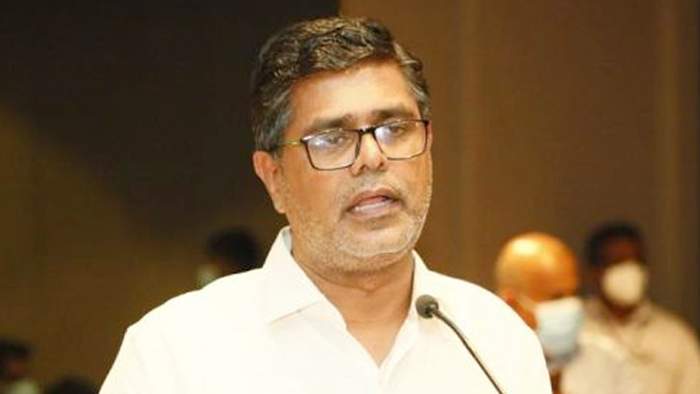
SJB Colombo District MP Mujibur Rahuman in parliament demanded to know from the government the reasons for CEB suspending the leave of all its employees until further notice from Thursday.
MP Rahuman said that the CEB has got an acting General Manager anew and the latter yesterday morning issued a circular suspending leave of all CEB employees with immediate effect until further notice.
“We demand that Minister Kanchana Wijesekera should explain this to the House. This circular was issued while this debate on the new Electricity Amendment Bill was pending. There are many who oppose this Bill. The Minister must tell parliament the reason for the urge to cancel the leave of CEB employees,” the MP said.However, Speaker Mahinda Yapa Abeywardena prevented Minister Wijesekera responding to the query and said that the matter raised by MP Rahuman was not relevant.
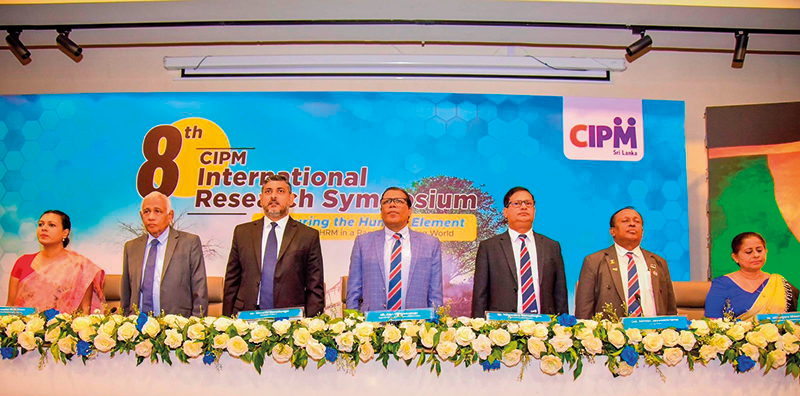
The Chartered Institute of Personnel Management (CIPM) successfully concluded the 8th Annual CIPM Symposium, which took place on 31st May 2024. Themed “Nurturing the Human Element—Redefining HRM in a Rapidly Changing World,” the symposium underscored the pivotal role of human resource management (HRM) in today’s dynamic global landscape. Since its inception in 1959, CIPM has been dedicated to advancing the HR profession through education, professional development, and advocacy, solidifying its position as Sri Lanka’s leading professional body for HRM.
Ken Vijayakumar, the President of the CIPM, graced the occasion as the chief guest. The symposium commenced with the welcome address by the Chairperson, Prof. Arosha Adikaram, followed by the Web Launch of the Symposium Proceedings and Abstract Book by the CIPM President. The event featured distinguished addresses, including a speech by Chief Guest Ken Vijayakumar, President of CIPM, and an address by Guest of Honor Shakthi Ranatunga, Chief Operating Officer of MAS Holdings Pvt. Ltd., Sri Lanka.
The symposium also featured an inspiring keynote address by Prof. Mario Fernando, Professor of Management and Director of the Centre for Cross Cultural Management (CCCM) at the University of Wollongong, Australia.
Vote of Thanks of the inauguration session was delivered by Dr. Dillanjani Weeratunga, Symposium Co-chair.
The symposium served as a comprehensive platform for researchers to present their findings across a wide range of critical topics in HRM. These included Cultural Diversity and Inclusion, Talent Development and Retention, Ethical Leadership and Corporate Social Responsibility, Adapting to Technological Advancements, Mental Health and Well-being at Work, Global Workforce Challenges, Employee Empowerment, and Reskilling and Upskilling.
The plenary session was led by Prof. Wasantha Rajapakse. Certificates were awarded to the best paper presenters during the valedictory session, followed by a vote of thanks delivered by Kamani Perera, Manager of Research and Development.
The annual symposium of CIPM was a truly inclusive event, attracting a diverse audience that spanned undergraduates, graduates, working professionals, research scholars and lecturers. This widespread interest highlights the symposium’s significance in the field of HRM, offering a unique opportunity for everyone to network and learn from scholarly brains.The CIPM International Research Symposium was sponsored by Hambantota International Port, Sri Lanka Institute of Information Technology (SLIIT), E B Creasy & Co. PLC, and Print Xcel Company.



US sports envoys to Lanka to champion youth development

Rahuman questions sudden cancellation of leave of CEB employees


