
News
Govt. should obtain support of SL’s natural allies in NAM and Global South who form a majority in UNHRC

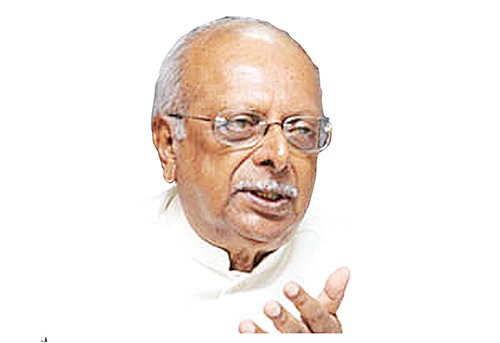
While taking action to negate and disprove the charges
The United Nations Human Rights Council (UNHRC) has scheduled, at its February/March 2021 Sessions, to take up for discussion the report on Sri Lanka prepared by the High Commissioner, Mrs. Bachelet on human rights.
This is to discuss the implementation of Resolution 30/1 adopted in 2015, and the subsequent resolutions co-sponsored by the previous government on alleged past violations of human rights in Sri Lanka.
The arguments advanced by the High Commissioner are what she uses to justify the imposition of sanctions against Sri Lanka and to take it before the ICC, the International Criminal Court of Justice. There is also provision for legal action to be taken in the courts of any foreign country against individual citizens of Sri Lanka alleged to have committed crimes against humanity, (which are genocide, ethnic cleansing and war crimes).
If we are to counter these sinister moves against Sri Lanka and its citizens, then action must be taken within Sri Lanka to deprive the High Commissioner and the Western Group led by the UK (in the absence of the USA, which has left the UNHRC) of the arguments levelled by the High Commissioner to the extent that they interfere with Sri Lanka’s responsibility under the UN Charter and international human rights conventions.
Action must also be taken by the government to expose the manner in which the Report and its recommendations, should they be endorsed by the Council, will seriously undermine the Charter-based multilateral system, which is the guarantor of state sovereignty and independence established under the multilateral system based on the UN Charter.
Such action will also help to draw in its natural allies in the Global South to extend their own support to Sri Lanka within the UNHRC, and help defeat the sinister moves.
The High Commissioner’s arguments are based on the following six broad areas of concern:
* Militarization of civilian government functions.
* Reversal of Constitutional safeguards, including the passage of the 20th Amendment.
* Political obstruction of accountability for crimes and human rights violations such as the presidential commission of ‘political victimization’, which has intervened on behalf of a number of military officers implicated in gross human rights violations, including the killing of Lasantha Wickrematunga abduction of Prageeth Ekneligoda, and the naval officers implicated in ransom induced abductions and murder of Tamil youth in Trincomalee.
* Majoritarian and exclusionary rhetoric.
* Surveillance and obstruction of civil society and shrinking democratic space.
* New and exacerbated human rights concerns.
These concerns are already being addressed domestically by the people of Sri Lanka themselves, both in the past (LLRC Report) and the present. The UK-led forces backing the UNHRC resolution are well aware of this. It is important that the government should also further intensify its efforts in this direction.
In doing so, the government should fully appreciate the real motivations for these concerns by the High Commissioner. They are to advance the global agenda of the United States to maintain its hegemony and consolidate the unilateral global order that it desires.
Therefore, while taking action to negate and disprove these charges, the government should obtain the support of our natural allies in the Non-aligned Movement and the Global South, like Russia, who form a majority in the UNHRC, so as to counter what is a common threat.
Some sections of the government, including the Secretary to the Ministry of Foreign Affairs, are seeking to reach a consensus with the UK-led Western bloc. The danger of trying to reach a consensus with the US and its Western allies is that the negotiations will necessarily be between unequal partners, as a result of our high economic dependence on the very same powerful Western countries that are leading the resolution against us.
Moreover, if there are direct bilateral negotiations, then Sri Lanka’s natural allies in the Global South, which are the majority in the United Nations, will not want to get involved by supporting Sri Lanka, as shown by our own past experience.
A consensus between such unequal partners can only, therefore, result in Sri Lanka having to make compromises and also accommodate America’s global agenda, undermining Sri Lanka’s sovereignty, independence, and territorial integrity. We may be even compelled to accept the MCC, SOFA and ACSA agreements that were rejected earlier.
Under these circumstances, the option is to call for a vote in the Council through a friendly nation, such as Cuba, and to work towards obtaining the support of the Council’s majority, who are members of the Non Aligned Movement, and the Global South, including Russia. This option has already proven to be successful in numerous cases where draft resolutions against individual countries by the Western Group have been defeated.
For example, in the specific case of Sri Lanka, in September 2011, we even succeeded, with the support of the Non Aligned Movement and Russia to force the US and Canada to withdraw a draft resolution against Sri Lanka, even before it was tabled.
The support of most, if not all, Non-aligned countries and others like Russia is a certainty provided they are all made aware of the hidden agenda motivating the USA/UK led Western action against Sri Lanka, as well as the precedent that such a resolution would create in the future for the Global South as a whole.
Even if the matter is brought before the Security Council, which alone can take punitive action against a member state, and even then only when there is a threat to international peace and security or a war of aggression, both Russia and China can, and I am sure will, be able to use their veto in our defense.
In the circumstances, Sri Lanka must under no circumstances try to reach a consensus that will necessarily require compromising the multilateral principles of the UN system. If it acts on its own, it will get the necessary support of the Non-aligned countries and the Global South as it is acting on a matter of common concern for a vast majority of the countries. We must follow the successful example of Cuba, which regularly gets the support of all countries, except the USA, and Israel on its General Assembly Resolution condemning the illegal US blockade against Cuba.
Prof. Tissa Vitarana



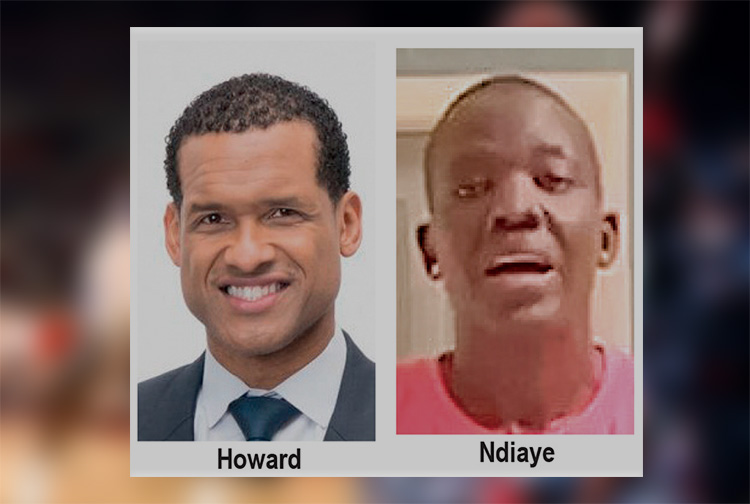
The U.S. Embassy in Colombo welcomed the U.S. Sports Envoys to Sri Lanka, former National Basketball Association (NBA) and Women’s National Basketball Association (WNBA) players Stephen Howard and Astou Ndiaye, from June 8 through 14.
The Public Diplomacy section of the U.S. Embassy said that it would launch a weeklong basketball program intended to harness the unifying power of sports, made possible through collaboration with Foundation of Goodness and IImpact Hoop Lab.
While in Sri Lanka, Howard and Ndiaye, both retired professional basketball players, will conduct a weeklong program, Hoops for Hope: Bridging Borders through Basketball. The Sports Envoys will lead basketball clinics and exhibition matches and engage in leadership sessions in Colombo and Southern Province for youth aged 14-18 from Northern, Uva, Eastern and Western Provinces, offering skills and leadership training both on and off the court. The U.S. Envoys will also share their expertise with the Sri Lanka Basketball Federation, national coaches, and players, furthering the development of basketball in the country. Beyond the clinics, they will collaborate with Sri Lankan schoolchildren to take part in a community service project in the Colombo area.
“We are so proud to welcome Stephen and Astou as our Sports Envoys to Sri Lanka, to build on the strong people-to-people connections between the United States and Sri Lanka,” said U.S. Ambassador Julie Chung. “The lessons that will be shared by our Sports Envoys – communication, teamwork, resilience, inclusion, and conflict resolution – are essential for leadership development, community building, equality, and peace. The U.S. Sports Envoy program is a testament to our belief that sports can be a powerful tool in promoting peace and unity.”
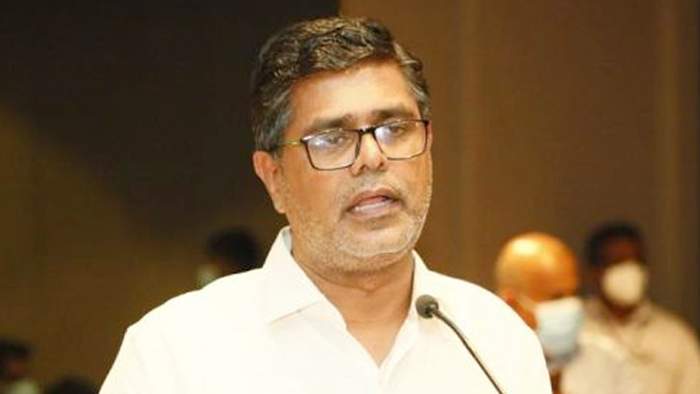
SJB Colombo District MP Mujibur Rahuman in parliament demanded to know from the government the reasons for CEB suspending the leave of all its employees until further notice from Thursday.
MP Rahuman said that the CEB has got an acting General Manager anew and the latter yesterday morning issued a circular suspending leave of all CEB employees with immediate effect until further notice.
“We demand that Minister Kanchana Wijesekera should explain this to the House. This circular was issued while this debate on the new Electricity Amendment Bill was pending. There are many who oppose this Bill. The Minister must tell parliament the reason for the urge to cancel the leave of CEB employees,” the MP said.However, Speaker Mahinda Yapa Abeywardena prevented Minister Wijesekera responding to the query and said that the matter raised by MP Rahuman was not relevant.
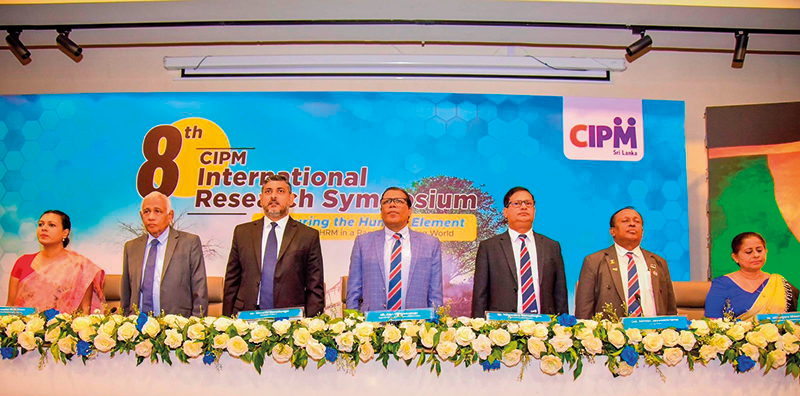
The Chartered Institute of Personnel Management (CIPM) successfully concluded the 8th Annual CIPM Symposium, which took place on 31st May 2024. Themed “Nurturing the Human Element—Redefining HRM in a Rapidly Changing World,” the symposium underscored the pivotal role of human resource management (HRM) in today’s dynamic global landscape. Since its inception in 1959, CIPM has been dedicated to advancing the HR profession through education, professional development, and advocacy, solidifying its position as Sri Lanka’s leading professional body for HRM.
Ken Vijayakumar, the President of the CIPM, graced the occasion as the chief guest. The symposium commenced with the welcome address by the Chairperson, Prof. Arosha Adikaram, followed by the Web Launch of the Symposium Proceedings and Abstract Book by the CIPM President. The event featured distinguished addresses, including a speech by Chief Guest Ken Vijayakumar, President of CIPM, and an address by Guest of Honor Shakthi Ranatunga, Chief Operating Officer of MAS Holdings Pvt. Ltd., Sri Lanka.
The symposium also featured an inspiring keynote address by Prof. Mario Fernando, Professor of Management and Director of the Centre for Cross Cultural Management (CCCM) at the University of Wollongong, Australia.
Vote of Thanks of the inauguration session was delivered by Dr. Dillanjani Weeratunga, Symposium Co-chair.
The symposium served as a comprehensive platform for researchers to present their findings across a wide range of critical topics in HRM. These included Cultural Diversity and Inclusion, Talent Development and Retention, Ethical Leadership and Corporate Social Responsibility, Adapting to Technological Advancements, Mental Health and Well-being at Work, Global Workforce Challenges, Employee Empowerment, and Reskilling and Upskilling.
The plenary session was led by Prof. Wasantha Rajapakse. Certificates were awarded to the best paper presenters during the valedictory session, followed by a vote of thanks delivered by Kamani Perera, Manager of Research and Development.
The annual symposium of CIPM was a truly inclusive event, attracting a diverse audience that spanned undergraduates, graduates, working professionals, research scholars and lecturers. This widespread interest highlights the symposium’s significance in the field of HRM, offering a unique opportunity for everyone to network and learn from scholarly brains.The CIPM International Research Symposium was sponsored by Hambantota International Port, Sri Lanka Institute of Information Technology (SLIIT), E B Creasy & Co. PLC, and Print Xcel Company.



US sports envoys to Lanka to champion youth development

Rahuman questions sudden cancellation of leave of CEB employees


