
Business
Good Riddance to the FBR: What Next to Increase Migrant Remittances to Sri Lanka?


By Dr Bilesha Weeraratne
The decision by the Cabinet to partially lift the Family Background Report (FBR) requirement for female migrants is long overdue and a welcome move to promote female labour migration from Sri Lanka. The discriminatory FBR policy was introduced in June 2013 in order to restrict females with children under the age of five and to discourage females with older children from taking up foreign employment. The FBR initially covered only female domestic worker departures, but in August 2015, this was expanded to cover all females. As a result, from 2013 onwards the dominance of women among worker departures declined significantly.
The FBR’s Intended Objectives
The FBR requirement was introduced based on the notion that a mother’s absence has negative social implications for the children left behind. Generally, this is an acceptable argument. However, it is important to consider the economic context and income constraints faced by the mother, the related stress and other facets that contribute to the wellbeing of a child. The critical weakness around the introduction of this policy was the absence of sound empirical evidence of the negative social impacts brought about by the absence of the migrant mother, which the policy aimed to address. Similarly, the continuation of the policy lacked empirical evidence to prove any improvement to the wellbeing of children of mothers held back by the policy. Hence, although the FBR purportedly “protected against family breakdown,” it is unclear whether staying together as a family contributed to the greater well-being of the children”.
Outcomes of the FBR Policy
Apart from the absence of evidence confirming any positive outcome of the policy, there was ample evidence of the unintended negative consequences. Research conducted by the Institute of Policy Studies of Sri Lanka (IPS) in 2016 showed that although the FBR was successful in restricting females migrating for domestic work, the policy promoted migration outside Sri Lanka’s legal framework or through visitor visas and thus increasing their vulnerability at destination. Additionally, vulnerability was heightened due to women resorting to corrupt practices to circumvent the FBR requirement by forging documents. In 2015, the price of a forged FBR ranged from LKR 25,000-85,000. Often, these amounts were paid by the sub-agent or the licensed recruitment agent, leading to abuse and exploitation of the potential migrant women during recruitment. Similarly, FBR is also associated with delays in the recruitment process.
More recent evidence from IPS research shows that the FBR policy resulted in decreased departures among lower-skilled groups and increased departures among middle-level and professional workers. This increase in higher-skilled workers is linked to FBR-related corruption and misreporting of skills to avoid the policy. Thus, the policy is associated with greater involvement of lower-skilled workers in recruitment-related corruption, higher exposure to recruitment-related vulnerability, and lower foreign employment opportunities. One of the most critical gaps in this policy as highlighted in previous IPS research was the absence of a mechanism to support those who were “not recommended” for migration under the FBR and were forced to remain in Sri Lanka with their children.
Reluctance to Reverse
Until its removal in June 2022, the FBR policy had been revisited several times. For example, in 2016, as a result of research evidence and lobbying by different stakeholders, a Parliamentary Sub-committee was established to review the policy. As noted by the author in another study for the Global Knowledge Partnership on Migration and Development (KNOMAD), the then ministry-in-charge and the Sri Lanka Bureau of Foreign Employment (SLBFE) encouraged repealing the FBR based on both evidence and stakeholder perceptions. Yet, the Sub-committee favoured continuation of the policy. Despite mounting evidence and support from the relevant stakeholders, the FBR mandate remained for nine years mainly due to the absence of political will to accept evidence-based research and advice by qualified/relevant stakeholders. The underlying reason for this was the possible political backlash for removing a populist policy – though not backed by an iota of evidence.
Increasing Formal Remittances
Migration and remittances can contribute significantly to bridge Sri Lanka’s foreign exchange shortage. Research reveals that compared to men, women are more reliable remitters, although their wages are relatively lower. As such, it is important to facilitate foreign employment opportunities for women. The removal of the FBR requirement is likely to increase female departures by enabling women to make a labour market decision independent of their maternal status, while minimising delays and vulnerability in the recruitment process.
However, to reap the desired outcome of more remittances from higher departures, the new stock of females departing for foreign employment in the absence of the FBR must be convinced to remit through formal channels. Here, it is important to identify the key demographics of this segment of migrants who now face more relaxed regulations for migration (likely to be married women with mostly young children and leaving children in the care of a female extended family member) and design incentives accordingly.
In addition to the traditional incentive schemes proposed in recent weeks to promote formal remittances, a few recommendations targeting female migrants are as follows:
1. Provide unmatched incentives for remittances sent through children’s bank accounts.
a. For every X amount (i.e. USD 100) remitted per month through a child’s bank account
i. Y amount (i.e. USD 5) will be contributed by the state towards an education fund account for that child maintained in the same bank, which can be withdrawn annually for year-end educational expenses.
ii. Tie a children’s medical insurance, where medical reimbursement to the value of Y amount (i.e. LKR 2000) per month can be received.
iii. Receive a child nutrition pack
b. Once remittances sent through the child’s bank account exceed X amount (i.e. USD 1000),
i. The child will receive a free life insurance cover.
ii. Become eligible for an internship at the bank upon reaching the age of 18.
2. Tie incentives for remittances through support towards the children’s caregiver.
a. For every X amount (i.e. USD 100) remitted per month through a bank account
i. Receive a caregiver nutrition pack worth Y amount.
ii. Receive a caregiver medical care insurance coverage.
Link to the blog: https://www.ips.lk/talkingeconomics/2022/07/04/good-riddance-to-the-fbr-what-next-to-increase-migrant-remittances-to-sri-lanka/


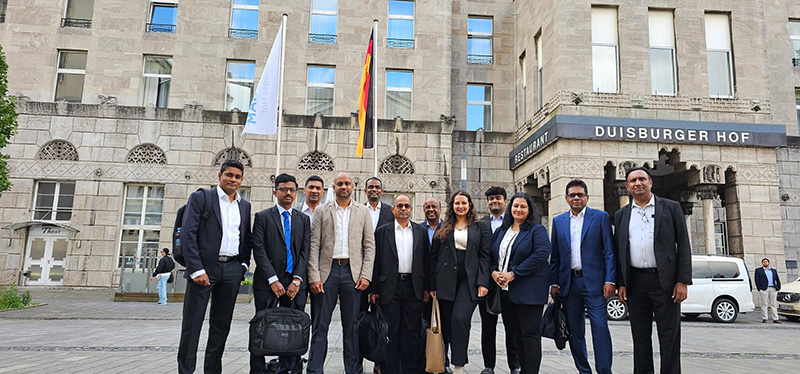
The Delegation of German Industry and Commerce in Sri Lanka (AHK Sri Lanka) proudly facilitated the first-ever Sri Lankan delegation’s participation at Drupa 2024, the world’s largest trade fair for the printing industry and technology. Held after an eight-year hiatus, Drupa 2024 was a landmark event, marking significant advancements and opportunities in the global printing industry.
AHK Sri Lanka played a pivotal role in organising and supporting the delegation, which comprised 17 members from the Sri Lanka Association for Printers (SLAP), representing eight companies from the commercial, newspaper, stationery printing, and packaging industries. This pioneering effort by AHK Sri Lanka not only showcased the diverse capabilities of Sri Lanka’s printing sector but also facilitated vital bilateral discussions with key stakeholders from the German printing industry.
Business
Unveiling Ayugiri: Browns Hotels & Resorts sets the stage for a new era in luxury Ayurveda Wellness
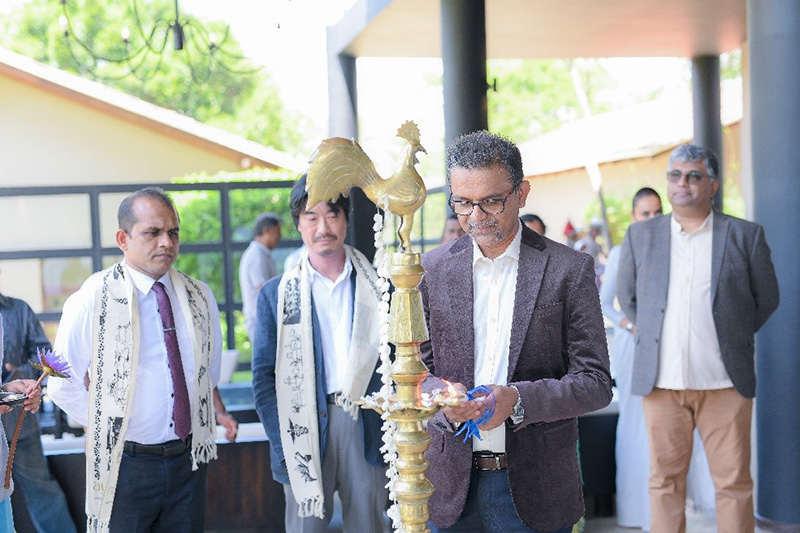
In a captivating reimagining of luxury wellness tourism, Browns Hotels & Resorts proudly unveiled the exquisite Ayugiri Ayurveda Wellness Resort Sigiriya. This momentous occasion, celebrated amidst a vibrant and serene grand opening on the 6th of June, heralds a new chapter in the Ayurveda wellness tourism landscape in Sri Lanka. Nestled amidst 54 acres of unspoiled natural splendour, Ayugiri features 22 exclusive suites and stands out as the only luxury Ayurveda wellness resort in the country offering plunge pools in every room, rendering it truly one-of-a-kind.
The grand opening of Ayugiri Ayurveda Wellness Resort was an enchanting event, where guests were captivated by the melodies of flutists and violinists resonating through Sigiriya’s lush landscapes. As traditional drummers and dancers infused the air with vibrant energy, Browns Hotels & Resorts’ CEO, Eksath Wijeratne, Kotaro Katsuki, Acting Ambassador for the Embassy of Japan and General Manager, Buwaneka Bandara, unveiled the resort’s new logo, marking a significant moment witnessed by distinguished guests from the French Embassy, Ayurveda and wellness enthusiasts along with officials from the Sigiriya area, LOLC Holdings and Browns Group.
“Our strategic expansion into wellness tourism with Ayugiri Ayurveda Wellness Resort Sigiriya symbolises a significant milestone for Browns Hotels & Resorts. Wellness tourism has consistently outperformed the overall tourism industry for over a decade, reflecting a growing global interest in travel that goes beyond leisure to offer rejuvenation and holistic well-being. By integrating the timeless wisdom of Ayurveda with modern luxury, we aim to set a new standard in luxury wellness tourism in Sri Lanka. Whether your goal is prevention, healing, or a deeper connection to inner harmony, Ayugiri offers a sanctuary for holistic well-being” stated Eksath Wijeratne.
Ayugiri encapsulates the essence of life, inspired by the lotus flower held by the graceful queens of the infamous Sigiriya frescoes. Just as the lotus emerges from the murky depths, untainted and serene,
Ayugiri invites guests on a journey of purity and rejuvenation, harmonised with a balance of mind, body and spirit, the essence of nature, echoes of culture and the wisdom of ancient Ayurvedic healing.

HNB General Insurance, one of Sri Lanka’s leading general insurance providers, has been honored as the Best General Bancassurance Provider in Sri Lanka 2024 by the prestigious Global Banking and Finance Review – UK.
The esteemed accolade underscores HNB General Insurance’s unwavering commitment to excellence and its outstanding performance in the field of bancassurance. Through dedication and hard work, the HNB General Insurance team has continuously endeavored to deliver innovative insurance solutions, cultivate strong relationships with banking partners, and provide unparalleled service to customers nationwide. This recognition is a testament to the team’s dedication and relentless pursuit of excellence in the bancassurance business.
“We are honored to receive this prestigious award, which reflects our team’s tireless efforts and dedication to delivering value-added insurance solutions and exceptional service through our bancassurance partnerships,” said Sithumina Jayasundara, CEO of HNB General Insurance. “This recognition reaffirms our position as a trusted insurance provider in Sri Lanka and motivates us to continue striving for excellence in serving our customers and communities.”



US sports envoys to Lanka to champion youth development

Rahuman questions sudden cancellation of leave of CEB employees


