
Life style
Golden Jubilee years of Sinhala Pop Music;

Christian youth herald an Integrative revolution
By Dr D.Chandraratna
Right at the outset I need to justify the above subtitle. The readers may be understandably perturbed that the use of the word Christian is an irrelevant identity marker, given the violence that identity markers have caused in Sri Lanka. I am acutely conscious of Amartya Sen’s advice, ‘Reason before Identity’ before we classify groups (Identity Violence, 2007). However this identity profiling is only an empirical generalization contextualized here because it has contingent social significance.
I wish to demonstrate how young, predominantly Christian youth, through Sinhala song stumbled on to foster amity, dialogue and communication between communities, ‘unloading a million bricks’ out of the Sinhala psyche (Langston Hughes, The Big Sea, 1986). Having relieved my burden I shall come to the subject proper. This article is to celebrate more than half a century of the continued dominance of Christian youth led popular Sinhala music where they reigned supreme.
Bands Galore
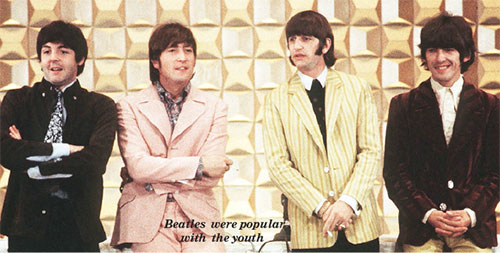
At independence while Sinhala music was experimenting with different forms, amidst debate and rancour the city dwelling youth were emulating the sprouting bands and vocalists in the West, and Latin America. The Beatles, Shadows, Kinks, Rolling Stones etc. and generally fast rhythm music was mimicked by the westernized youth who were mostly Christian whose talents were honed in the arts and performances of the church. The bill was split between competing groups. Among the most popular were La Ceylonians, Moonstones, Sunflowers, La Lavinians, Los Flamingos, Hummingbirds, La Bambas, Los Muchachos, Los Serenaders, Los Caberellos, Beacons, Peddlers, Sunflowers, Spitfires, Gypsies, Eranga and Priyanga and many more in the country towns including the North. The Christian schools in Colombo as St Thomas’, St Peter’s, St Joseph’s, St Benedict’s provided much needed youth to work the bands. Likewise the Christian Schools in towns of Kandy, Ratnapura, Nawalapitiya, Galle, and Jaffna followed suit supplying vocalists and instrumentalists.
The dawn of the ‘people’s revolution’ in the late fifties was turbulent. It was a time Sri Lankan society was badly challenged by language and religion thereby partitioning the pluralities and diversities that were considered the norm. The revolution was executed in a rush without debate and dialogue. Exultation was short lived and as the ideals became distant many communities felt betrayed and perceived to feel outside the Sri Lankan heritage. The thesis canvassed here is that Sinhala popular music championed by Christian youth, led an integrative revolution, which was successful in no small measure.
The sudden loss of the conviviality and robust richness of the cultural mix that was their world may have driven the youth to yearn for a mechanism to return to the beautiful old days. Sinhala pop music beckoned them as the integrative solution that many were yearning for. Their school education, mainly in the liberal arts, equipped them with a number of competencies; an intellectual tolerance, substantial questioning of dogmatism, social maturity, rejection of authoritarianism and a degree of secularizati
on outside of books. They were not oblivious to many aspects of the contemporary world.
Meteoric popularity of the Sinhala bands
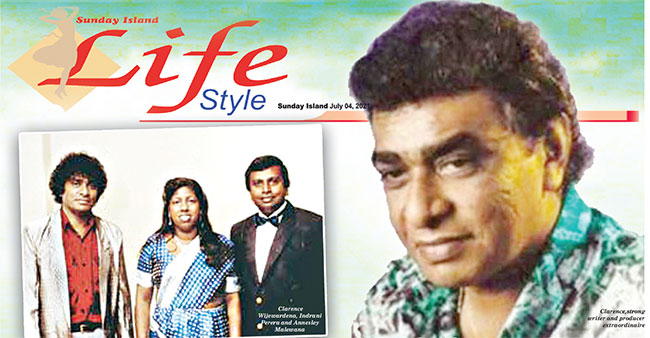
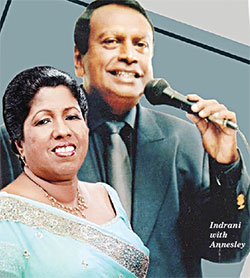
With apologies to many bands and artists of yore including the Dharmaratna brothers who were the stars of the Sinhala pop I will limit myself to the trio, Indrani Perera, Annesley Malewana and Clarence Wijewardena. Indrani of the Three Sisters and Clarence and Annesley of Golden Chimes, and their bittersweet re-union in Super Golden Chimes were at the helm for the entire period. Their stamp in the pop scene has survived all these years and naturally they have been dubbed the Queens and Kings of the fifty plus year’s history of the Sinhala popular music.
The stars of Indrani, Annesley and Clarence have burned brighter for more than half a century and I will be excused for selecting the three for the purposes of this article. Indrani’s crystalline voice delivering folk like verses were framed in exquisite musical arrangements prepared by Clarence Wijewardena, the songwriter and producer extraordinaire. He was bass guitarist devising dynamic guitar breaks as a value add, especially to the moody emotion filled songs such as Dilhani and Kalpani Duwani. He once said in public that as a teen he was an avid listener to Beatles and Shadows with Cliff Richard and that after secondary school all he wanted was to make actual music with his interiorized musicality. Indrani’s vocals were often multilayered with harmonies by her sisters. Annesley’s dusky voice ranging in delivery from home based country anthems to solemn folk balladry attracted large crowds and sold the records under numerous labels.
Trained in gospel singing, in Indrani and others the Sri Lankan audiences discovered a national treasure That won lasting affection for bringing us nostalgic experiences of our own lives; beauty of the landscape, undiluted romantic innocence, and the warmth of a human community. Throughout their long and brilliant careers spanning five decades they entertained millions of Lankans. Working long hours in a undervalued vocation in the 60’s and 70’s we who are the recipients of their precious gift owe them an enormous debt of gratitude. A career in music is hard work, a lot of sacrifice, but more importantly need a lot of perseverance and patience.
The integrative revolution
The singer and audience relationship is about connection; above all an emotional bond that make you cry, laugh, think, hold out a hand, in brief empathic union. The bands playing western music were moving the people on the dance floor while the Sinhala groups were moving people in an atmospheric emotional direction. Beyond the form they also were driving hard a message to bring the nation together. In sonata style, without big guitar moments, warbling in unhurried tunes, fittingly mellow with mundane lyrics made an impressive appeal.
It was the immense capacity to put together a poetic collection of images, sounds, scents and stories, wrapped in mellifluous but simple words. They produced a grand alchemy of songs all testimony to the indigenous artists’ engagement with the country and its people, the common folk. At the same time they evoked something within all and we felt connected. It was a part of the little tradition of the Sri Lankan culture that brought us together.
This change in the music topography and culture that took place from the decade of the 60’s points to something beyond the confines of musical creation and musical thought to the wider sphere of social life and social strife. This was an integrative revolution responding to kindred developments in the realm of wider society. The integrative revolution was led by the suburban Christian youth.
Clarence Wijewardena, mindful of the furious forces that were beating against the barriers that hemmed them in, stuck to his motto throughout: semplice-sempre, simple in style and presentation. Contemporary reality mirrored and expressed in spirited conversations with few instruments, he was able to compose songs like Sigiriya, Ruwanpuraya , Kalu ganga Udarata Kandukaraye, Dunhinda Manamali, Wana bambaro ohoma hitu, Dilhani, Ela dola piruna Gon Bassa, Mango nanda, Gamen liyumak avilla, Udarata niliya heda wage, Kalu mame, and many others disregarding formalistic aspects of language and idiom. Of course some of the words were criticized and even censored for being rustic.
Use of words such as Himihita wetiyan, Umbata rideyinam, ohoma hitu, and bithu sithuwam neluwo were subjected to trenchant criticism. But the most important fact was that this music, lyrics and tempo appealed to all segments of society, Buddhists, Christians, Hindu and Muslims could enjoy breaking ethnic and class barriers. In sociological parlance it can be said that while the earlier bands and music were westernized, the Sinhala pop music was sanskritized.
The authoritative Indian sociologist M.N.Srinivas captured the social changes in the 1960’s in India by devising the term sanskritization for a similar process that we can freely use to describe the changes in Sri Lanka ushered in by popular music. Even to the urban society it impressed both on an intellectual and emotional level. I may be pursuing a tenuous connection leading to a dead end but I considered it necessary to record this transformation as a valuable contribution, as reminded by Reverend Malcolm Ranjith quite candidly. It was a social movement and the implied consequences may not be intended. However as Hegel once noted philosophy should avoid political entanglements.
Music and song became the catalyst that unleashed the forces and opened vistas of all communities including the upper middle classes to fall in line. No doubt there was opposition but there were also entrepreneurs like Gerald Wickremasooriya who unstintingly offered assistance. Perhaps they understood the underlying integrative element because it was a contrapuntal message, given better than any political pamphleteer. Popular artists liberated the melody from its tight constrictive wordy bodice and made it part of the common man’s idiom. More importantly, the text invited all social classes and communities to embrace the ethos of our common Sri Lankan heritage. Maw bima obei sithala, rata deya kere bandila, panamen obei sithala, pili gatha yuthui puthune, they pleaded.
One needs only a comparative perspective to understand how the thought content of their music presented a contrasting but an inclusive society in which all communities and religions to wipe out that ordre positif of the old feudal regime and enter a much better ‘ordre naturel’ preordained by the all-wise and all loving deities whose work men can mar but never mend. Was that the confidence they possessed to accomplish their task fighting all barriers that playwrights like Professor Sarachchandra could not easily dismantle.
Professor K.N.O Dharmadasa noted in an introduction to a booklet on Maname the interesting and enlightening dialogue between Professor Sarachchandra and a Cinnamon Gardens lady on the steps of the Lionel Wendt theatre on one of the early days of Maname where the lady said that Sinhala nadagama appealed nicely to the likes of her kitchen maid. No more profound expression of the class divide of the Sri Lankan Weltanschauung is needed. The upper classes were steeped in a world quite alien to the common Sri Lankan heritage. We therefore pose the question whether the musicians, mostly brought up in the Christian Church background lifted the impenetrable barricades as they sang ‘Api enawa murakawal okkoma bindala’ with much more ease, one wonders.
In the 1950s and sixties the freedom, equality and liberty that independence had granted to Sri Lanka was blotted out by dark shadows of communalism and religious bigotry, a society already fractured by caste and creed. The Bandaranaike revolution was hardly inclusive. The politics at the time failed to create a liberated society, a society that is able to express a richer and fuller life. The people’s revolution brought out the monstrosity of communalism more repulsive than the semi feudal class oppression that it was intent on driving out.
Here we draw the power of the form and thought of creative art in song and music. These musicians, who were the progeny of parents outside the ‘purists’ managed to enter the depths of the consciousness of those who were distracted by the people’s revolution and unobtrusively connected them with the Sinhala mainstream society. While appealing to the common multitude they also entered the homes of the rich and famous freely and all this without political undertones.
All we can say is ‘Thank you for the music and thank you for bringing us close’.



Institute of Hospitality Sri Lanka
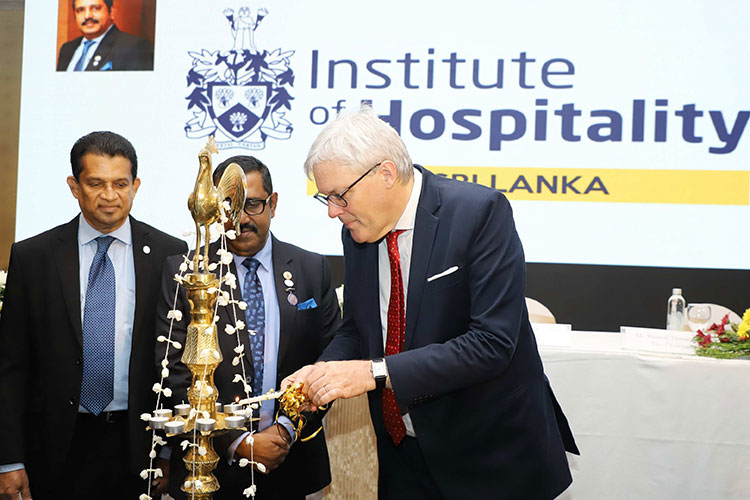
 The 32nd Annual General Meeting (AGM) of the UK-based Institute of Hospitality’s Sri Lanka Chapter was held recently at the Ramada Hotel Colombo,.The event provided an evening of camaraderie , reflection of the past and present achievements,setting new benchmarks for the future
The AGM had the presence of two distinguished guests, the Chief Guest Opposition Leader Sajith Premadasa, and the Guest of Honour British High Commissioner to Sri Lanka, Andrew Patrick. Their inspiring speeches were lauded by all hoteliers who were present at the occasion
A special thanks was extended to Robert Richardson, CEO of the Institute of Hospitality UK, along with his team, sponsors, committee members, and all attendees for making the event memorable.
Dr. Harsha Jayasingh, Past President of the Institute of Hospitality (UK) Sri Lanka Chapter, emphasised the Institute’s longstanding history and the strength of its Sri Lankan branch. “The Institute of Hospitality (IH) UK has a history of 86 years, and we are proud to be the Sri Lanka Branch. IH Sri Lanka is much stronger now with many members from all areas of the hospitality industry,” he stated.
Dr. Jayasingh highlighted the significant role of tourism in Sri Lanka’s economy,. He said tourism it is the third-largest source of revenue for the country. “Tourism accounts for about 13.3% of total foreign exchange earnings and employs 450,000 people directly and indirectly. The hospitality industry in this island of pearl holds tremendous potential for economic growth, job creations, and cultural exchange,” he added.
He also pointed out more women should be attracted to the industry and advocated for the use of technology in hospitality sector to attract the younger generation.
The newly appointed Chairman Ramesh Dassanayake spoke about the challenges faced by the industry, including the reluctance of youth to join the sector. . Dassanayake expressed concerns over the migration of staff between hotels and the overall ‘brain drain’ in the sector. ” We must maintain high standards in the hotel We must try to attract tourists to Sri Lanka, we must have with many facilities Hence, hotel schools and other professional institutions involved in skills development mustincrease their intakes,” he pointed out.
Chief Guest Sajith Premadasa emphasised the importance of eco tourism and said “We need to have an environmental policy related to tourism in place,” . .
The 32nd AGM of the Institute of Hospitality UK, Sri Lanka Chapter, was a testament to the strength and potential of Sri Lanka’s hospitality industry. The insights and commitments shared during the event set a new benchmark for the future.(ZC)


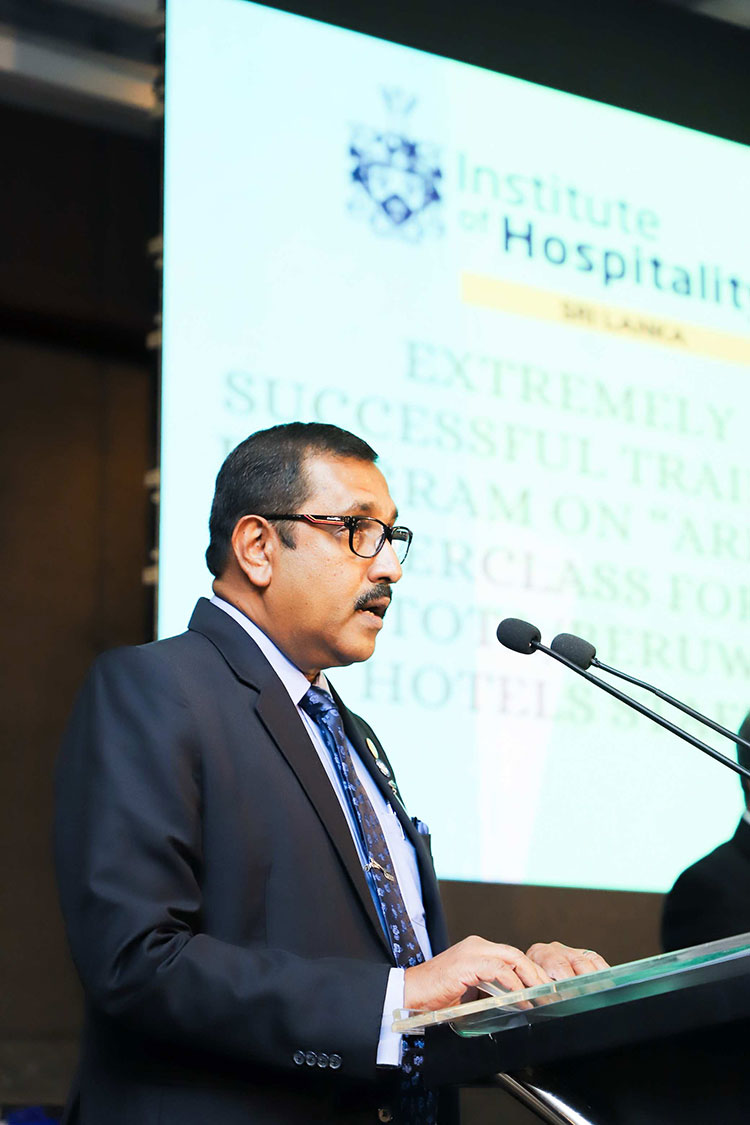

Pix by Thushara Attapathu
Life style
He recognizes human identity beyond boundaries of gender, race, nationality and religion.

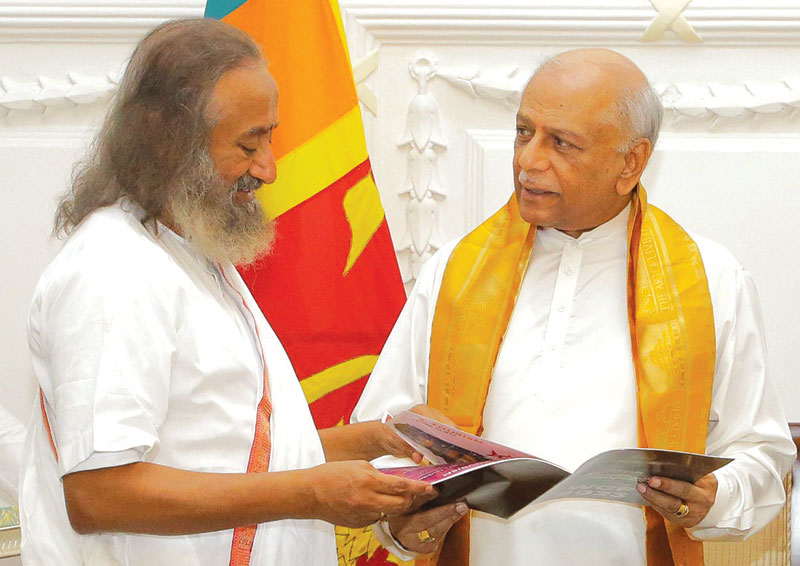
Visit of Sri Gurudev to Sri Lanka
Humanitarian, spiritual leader and Global Ambassador of Peace Gurudev Sri Sri Ravi Shankar (Sri Gurudev) was in Sri Lanka on a three day tour on the invitation of the Prime Minister of Sri Lanka Dinesh Gunewardene. Gurudev who inspired a wave of volunteerism and service to moot one of the largest volunteer-based organisations in the world – The Art of Living – visited the various projects under the aegis of the foundation and launched twelve vocational and technical centers around the island. He was accompanied by thousands of followers from Sri Lanka and around the world.
Gurudev who visited Sri Lanka for the sixth time also had a first day cover launched in honour of his visit. He is a strong proponent of spreading happiness, using the unique Sudarshan Kriya, yoga, meditation and practical wisdom to unite people, empower individuals and transform communities. His programmes provide techniques and tools to live a deeper, more joyous life, while his non-profit organisations recognize the human identity beyond the boundaries of gender, race, nationality and religion.
The Art of Living which has more than 30,000 teachers and over one million volunteers across 180 countries has touched in excess of five hundred million people around the world. CNN called it “Life Changing” and The Washington Post headlined it, “Fresh air to millions”.
In Trincomalee, Gurudev met with war victims and had a heartwarming engagement with the children from the children’s homes run by the Foundation. He also visited the Koneswara Temple in Trincomalee and graced the Kumbhabhishekam at Seetha ecogPnize the human identity beyond the boundaries of gender, race, nationality and religion. Amman temple at Nuwara Eliya. He held discussions with the trustees on the progress of the foundation’s social service projects, while also holding a special event – Ekamuthuwa – attended by a large number of dignitaries and his devotees from around the world.
His time with the Prime Minister was spent discussing the prospects of unity in diversity and uniting Sri Lanka by adding happiness into the formula of living. In addition he had discussions with the Speaker of the Parliament of Sri Lanka Mahinda Yapa Abeywardena, prominent business stewards and civil society leaders.
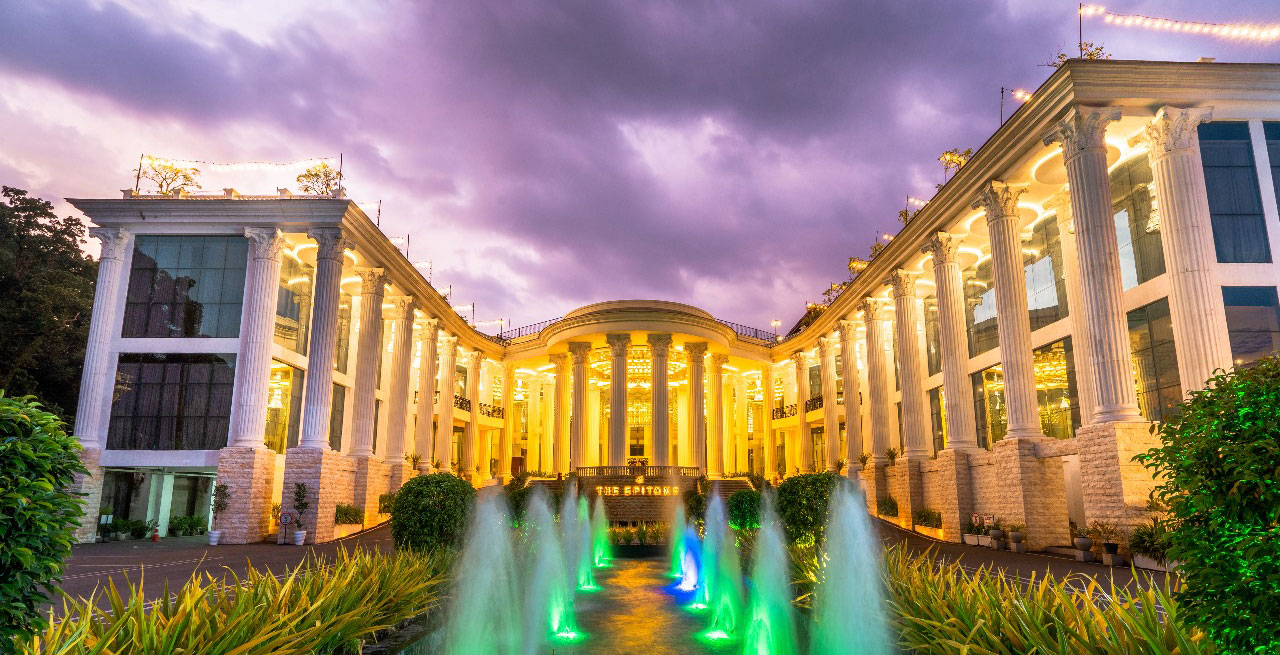
by Zanita Careem
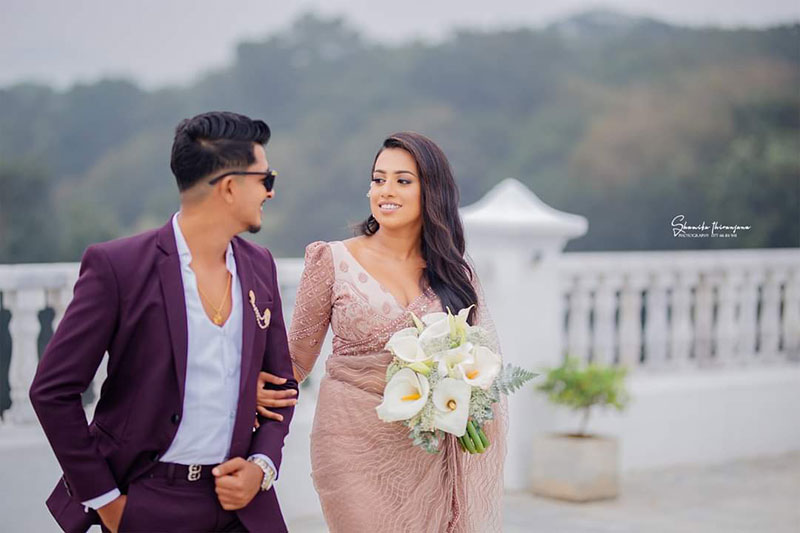
Envison your dream wedding day come to life at the Epitome Hotel, a prestigious city hotel in Kurunegala offering an unrivalled luxury rendors experience for weddings.
The venue is designed to embody opulence and luxury from all quarters for a spectacular wedding in kurunegala,Thier ballroom is the largest banquet facility in Sri Lanka It can be divided into six luxurious pillarless wedding halls on the ground floor and 25pax smaller banquet halls.
It can be easily named as a five star heaven in the heart of the city contributing to a myriad of immense experiences tailored to inspire and delight wedding experiences.
From opulent décor set up to exquisite table decor, lavish food, every detail is meticulously curated to spark your imagination and ignite creativity for a perfect wedding. The previous prestigious wedding shows season one and season two attracted large crowds
were unique events which gave the wedding vendors and potential clients had an opportunity to connect and interact with each other. Beyond being a showcase it was a chance for the wedding vendors to unite and contribute to the vibrancy of the wedding industry. The wedding show covered all area of the bridal industry providing a comprehensive variety of bridal supplies from Sri lanka and became the most popular bridal exhibitions in Kurunegala.This bridal exhibitions allowed brides and grooms to experience first hand the products and services available from suppliers in Sri Lanka
These wedding shows held at The Epitome created a benchmark and gave an opportunity for vendors to create connections to the utmost satisfaction said Harshan Lakshita Executive Director. of the magnificent Hotel
Our wedding shows featured experts and professionals in every field‘ It covered all areas of the bridal industry provided a comprehensive variety of bridal supplies from Sri lanka and became most popular bridal exhibition in this region.We are always open to everyone to join us at our wedding shows in the future. It is an opportunity to discover the incredible talent within our local wedding and bridal vendors to make meaningful relationships and plan thier special day at our breathtaking hotel The Epitome said General Manager Kavinda Caldera
The Epitome Hotel’s bridal show which will be held end of June will buzz with great ideas,advice and inspiration for all those who plan thier dream wedding
…….
The Hotel Epitome’s Wedding Season 3 will marked excellence, celebration and inspiration for those in the wedding industry. The exhibition halls will resonate with ideas on exquisite bridal wear to decor, florists , photography etc and showshowcase the rich tapestry of talent within the local wedding industry. .





US sports envoys to Lanka to champion youth development

Rahuman questions sudden cancellation of leave of CEB employees


