Sat Mag
George Floyd, African-Americans, and Sri Lanka’s Estate Tamils (Part II)

By Uditha Devapriya
Continued from last week…
The abolition of plantation slavery did not mark the end of plantations. Nor, for that matter, did it mark the end of slavery.
The unwillingness of indentured white servants to remain in the tropics, and the need to settle them on lands of their own, once their period of indenture was over, had earlier led the planters to dragoon permanent slave labour from Africa. The emancipation of these slaves in the 19th century, as George Beckford put it, “changed the scene drastically.” The newly emancipated slaves now sought to build settlements of their own.
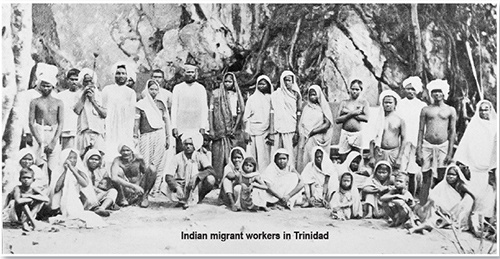
The planters, trying to mitigate the losses arising from this, began a sharecropping scheme. When even that failed to make up for their losses, the latter used their influence to secure indentured labour from the new colonies of Asia. The expansion of the British East India Company in Sri Lanka and of Dutch influence in South-East Asia thus soon necessitated the recruitment of Indian migrant workers: in Malaya as in Sri Lanka, it gradually took the place, or rather was made to take the place, of indigenous workers.
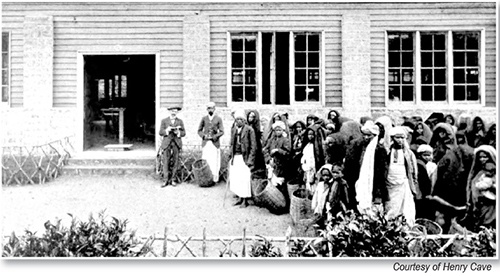

My contention is that we must draw a fine line between the capitalist facade and the pre-capitalist reality of the plantations of Asia here, because it has a bearing on the evolution of migrant Indian labour in Sri Lanka. It is vital to our understanding of the structures to which Indian Tamils found themselves tethered, and the insensitivity of Sinhalese and Tamil elites alike, after independence, to their exploitation by those structures.
There is little debate over the way the plantation economy developed in Sri Lanka. British officials in the island initially favoured the continuation of Dutch mercantilist policies. In his dispatches to the Governor, for instance, Henry Dundas, the Secretary of War, deplored the rising tide of laissez-faire sentiment in Britain. He clearly did not want laissez-faire to take root in the colonies either, at least not for some time.
Forty years later, though, owing to pressures exerted by aspiring planters who colluded with officials – who in turn, as the case of Edward Barnes and George Bird showed, themselves turned into plantation owners – a new economy system came into place.
The colonial State, as Bandarage (1982) has observed, completely identified with plantation development. In that scheme of things, land became paramount. The passage of the Crown Lands Encroachment Ordinance in 1840 hence paved the way for officials to take over uncultivated and unoccupied lands if locals failed to prove ownership.
Initially handed over as free grants, these were sold at five shillings an acre; according to Bandarage, in 1844 the minimum price was increased to £1. Their sales were swift: in one day in 1840, for instance, more than 13,275 acres were sold. The designations of their new owners indicate the link between the State and the emerging plantocracy: judges, road commissioners, surveyor-generals – even the Governor himself.

Surprisingly, Beckford’s conclusion here seems to be that “the invading Crown” moved into and took over peasant land “without seriously disrupting the settled or shifting agriculture of the indigenous people.” This implies, in other words, that the British could take over land in the Central Province without radically altering the agricultural patterns of those regions. History tells us otherwise, and we need to assess this thesis in-depth.
A corollary to the characterisation of plantations as capitalist is the assumption, shared widely, that migrant Indian labour was necessitated by the unwillingness of indigenous labour (Sinhalese peasants) to adjust to the plantation economy. This explains not just Mick Moore’s “Sinhalese peasant myth” thesis, itself a myth, but also continuing references to the laziness of Sinhalese Buddhist “natives” by rightwing academics.
Such Orientalist views are not unique to Sri Lanka. Nor are they the preserve of rightwing academics, who, during the previous regime, frequently used to churn them out. But they indicate, if not intellectual bankruptcy, then a failure to grasp history: a history free of ethnic and racial stereotypes, one conversant with facts and figures. It is that history which we, whether as readers or students of the social sciences, must privilege.
The truth is that the Sinhalese, as S. B. D. de Silva has clearly shown, did not always remove themselves from the plantation economy. When land needed to be cleared and trees felled to build estates, it was to the peasantry that the plantocracy went.
That in itself flatly contradicts the two most cited assumptions regarding their unwillingness to engage in labour at plantations: their lack of familiarity with a monetary economy, and their aversion to hard work. What these presume is that acceptance of money transactions and wage labour is predicated on prior acquaintance with monetary exchange, rather than the factors which facilitate the transition from a non-monetary to a monetary economy: “a veritable non-sequitur of bourgeois scholarship”, as de Silva wittily observed.
In fact, the wage labour that scholars practically accuse the Sinhalese peasants of avoiding, due to an innate laziness, hardly resembled wage labour under conditions of capitalism. Yet these same peasants were initially eager to seek employment at plantation enclaves, even outside their traditional activities. Dispatches by officials make it clear that the main if not the only reason why they rejected work at those enclaves later on were the low wages being offered – or delayed and forfeited, as was often the case – by their overseers.
When locals discovered that their wages were being denied to them and intermediaries, especially the kanganies whose hold over migrant Tamils have been recorded by scholars, negotiated on their behalf while lending to them sums of money which they would deduct from those wages, they refused to leave their land. A questionnaire put to the peasants of Walapane in the early 19th century, for instance, revealed that while they remained landless and seemed to be going “[n]owhere in particular”, they did not want to labour at the estates because, as they put it, “we never get anything for our work.”
Thus the burden of the position of the most discriminated community in the country fell eventually on the shoulders of migrant Indian Tamils. Forced to seek employment owing to a never-ending series of famines which swept across South India throughout the late 19th century, they came to comprise more than 70% of the plantation population in Sri Lanka; one account in 1998 records no fewer than 300,000 migrant Tamils working at tea estates, alongside a mere 50,000 Sinhalese, Moors, AND Malays.
Incidentally, it wasn’t only the Sinhalese peasants who shied away from employment: wage differentials between Jaffna and migrant Tamils in the Eastern Province, where both groups had been recruited to repair irrigation tanks, encouraged officials to hire more of the latter, releasing the former to other fields of activity, in particular agriculture. The difference, of course, was that land in Jaffna was never as fragmented and encroached upon by the British as land in the Kandyan provinces had been; thus could hardworking Tamils eke out a living in an otherwise barren north and east.
In any case, migrant Tamils whether in the northeast or the upcountry found themselves in a position, as with the blacks of America, that of neither indentured servants nor wage labourers. They were quasi-wage labourers: the blacks of Sri Lanka. The Sinhalese absorbed as captives in the estates soon became as culturally delinked as them; as Shanmugaratnam observed, “they began to speak Tamil and to their children it became the first language”, while their children “spoke their own language with a Tamil accent.”
Meanwhile, the Kandyan Sinhalese sought restitution for the loss of their livelihoods. It is notable that the first attempt at drawing up a federal administrative structure in Sri Lanka was made in the 1920s by Kandyan (not Tamil) representatives in the Legislative Council. The harsh truth is that by this point, the Sinhalese peasantry in the hill country had become a backward community; devolution, they thought, would address their grievances. This had nothing to do with their innate “laziness”, as rightwing and “Marxist” intellectuals see it, but rather the state of degradation a century of colonialism had led them to.


Far from attempting compensation, in fact, the ruling party proceeded to disenfranchise them for the sin of being a Left vote bank, and stripped them of their citizenship. Such actions amply proved, quoting Dayan Jayatilleka in Long War, Cold Peace, that “we never had a Nehru.” One could just as easily quip, given how our founding fathers schemed to condemn an entire minority into slavery in pursuit of political self-aggrandizement, that we never had an Abraham Lincoln either. But that’s another story.
In the final analysis, any attempt at comparing African-Americans with Sri Lanka must take into account the status of a dispossessed minority, reduced to quasi-wage slavery, detached from the rest of the country, denied the most basic amenities, and supervised under a semi-feudal setup. In Sri Lanka this position would be occupied by the plantation migrant Tamils. For a while the Sinhalese peasant fitted in, but as in Malaya, the colonial State preferred to replace them with a poverty-stricken community from elsewhere.
If we are to repudiate certain “Orientalist” views of our history, as we must, we should also repudiate arguments, such as Beckford’s, which imply the British Crown took over native land without disrupting local agricultural and social patterns. We should also reject notions, entertained by “Marxist” academics, that the British, by disrupting those patterns, paved the way for the destruction of feudalism and the flowering of capitalism. For capitalism, as its most perceptive critic Marx realised, involves more than enclave colonialism, which is what plantations amounted to; it involves the reinvestment of profits in industry, rather than their repatriation to an overseas metropolitan centre.
Pre-capitalist, semi-feudal, and primitive, the plantations of Sri Lanka thrived on the dispossession of the peasantry and the erasure of entire ways of life. Contrary to the views of “Marxist” scholars and activists, then, the colonial government did not and could not lay the foundation for a modern State (which nationalist leaders later supposedly “feudalised”). To assume such a thing is to insult the legacy, not just of the Kandyan Sinhalese who lost their livelihoods (and lives), but also of Indian Tamils “recruited” – a word which conceals the quasi-militarised setup under which they arrived here – to replace them.
The writer can be reached at udakdev1@gmail.com