
News
Genetics and the Aryan debate: New light from old bones

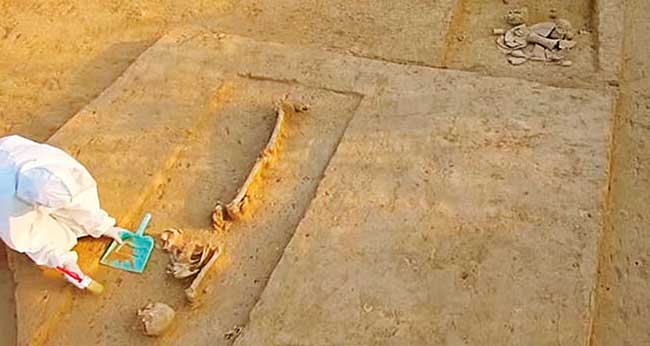
The Aryan migration debate is not about whether the ‘steppe people’ migrated into India or not but is a question really about the timing of the steppe migrations and whether Sanskrit and the Rigvedic culture were part of the baggage of these migrants, says a new study.
The study published in the Sawarajya Mag says that the Aryan Migration Theory AMT (the new edition of the older Aryan Invasion Theory AIT) postulates that the Harappans were pre-Aryan with a culture in terminal decline by 1900 BC well before the Aryans entered India.
“The Aryans must also have appeared on the scene well before the onset of the Iron Age around 1200 BC, as attested by their Bronze Age artifacts and by the Rig-Veda, which they are supposed to have composed in India. The Iron Age began earlier in India than elsewhere, and even if the evidence of ferrous metallurgy around 1800 BC remains confined to the Ganga Basin and the South, it is improbable that it did not reach Northern India 600 years later. Thus, the outer limits to the Aryan migration are 1900 BC and 1200 BC.
The attribution of the Rig-Veda to the Aryan immigrants imposes even stricter time-limits.
The Rig Veda is an Indian book. Its geography and ecology are entirely Indian, with rivers, mountains, flora and fauna existent only here, definitely not on the steppes or anywhere along possible routes from the steppes. It could have been composed only after the Aryans were established in India long enough to have quite forgotten any ancestral homeland or alien environment.
Its composition further must have occupied several centuries because its earlier books differ linguistically enough from the later for this evolution to have required a very long time. Since the Rig-Veda must have been completed by 1200 BC, the Aryans must have immigrated at least 300 years earlier. Thus, the Aryan migration must have occurred within the narrow window of time 1900-1500 BC.
The ancient DNA discovered in India proper is limited to that extracted from a single female buried around 2600 BC at Rakhigarhi on the banks of the ancient Drishadvati.
This woman’s DNA resembles that of 11 roughly contemporary individuals disinterred not in India, but well outside, 8 at Shahr-i-Sokhta in Iran and 3 at Gonur in the Bactria-Margiana Archaeological Complex (BMAC).
The geneticists Reich et al speculate that these 11 were travellers from the Indus-Saraswati region and that all 12 represent the genotype of the Harappans. None of the 12 show any traces of steppe lineage; so if they were Harappans, the latter must have differed sharply from the steppe pastoralists.
After the Rakhigarhi woman, the cupboard of ancient Indian DNA is bare for almost another 1500 years. The next bit of DNA harvested is from the Swat valley of Northwesternmost Pakistan where several individuals have been exhumed with radiocarbon burial dates ranging between 1000 BC and 800 BC, a few before 1000 BC and a couple soon after1200 BC.
These reflect the genetic profiles of the 12 supposed Harappans but also elements of a Steppe Pastoralist ancestry. The chronology doesn’t quite fit the interval requirements (1900 BC – 1500 BC) of the AMT.
However, if the steppe people entered the Swat valley between 1900 BC and 1500 BC and interbred with Harappan natives to create a ‘ghost population’ now untraceable, and if a generation is 28 years long, then random recombination of genes within this ghost population over the intervening generations would create a replica of the disinterred Swat valley population at the time it actually lived and died.
Does this allay the discomfort generated by the paucity of ancient DNA from the relevant time and place? Not quite.So the geneticists have marshalled an impressive array of DNA data from thousands of contemporary Indians.


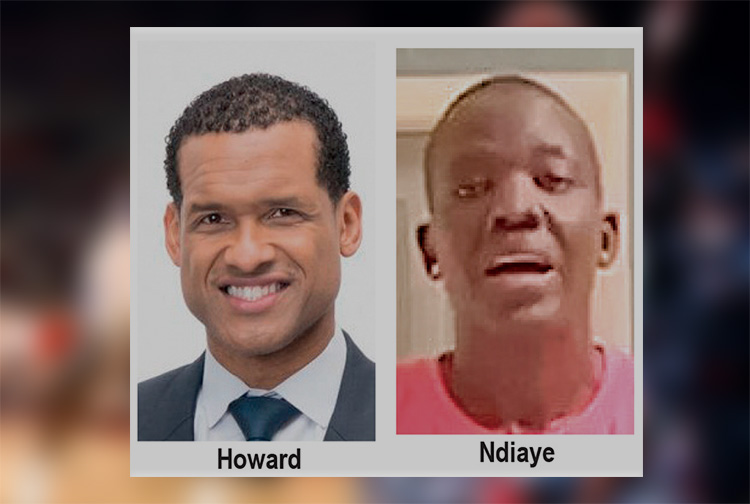
The U.S. Embassy in Colombo welcomed the U.S. Sports Envoys to Sri Lanka, former National Basketball Association (NBA) and Women’s National Basketball Association (WNBA) players Stephen Howard and Astou Ndiaye, from June 8 through 14.
The Public Diplomacy section of the U.S. Embassy said that it would launch a weeklong basketball program intended to harness the unifying power of sports, made possible through collaboration with Foundation of Goodness and IImpact Hoop Lab.
While in Sri Lanka, Howard and Ndiaye, both retired professional basketball players, will conduct a weeklong program, Hoops for Hope: Bridging Borders through Basketball. The Sports Envoys will lead basketball clinics and exhibition matches and engage in leadership sessions in Colombo and Southern Province for youth aged 14-18 from Northern, Uva, Eastern and Western Provinces, offering skills and leadership training both on and off the court. The U.S. Envoys will also share their expertise with the Sri Lanka Basketball Federation, national coaches, and players, furthering the development of basketball in the country. Beyond the clinics, they will collaborate with Sri Lankan schoolchildren to take part in a community service project in the Colombo area.
“We are so proud to welcome Stephen and Astou as our Sports Envoys to Sri Lanka, to build on the strong people-to-people connections between the United States and Sri Lanka,” said U.S. Ambassador Julie Chung. “The lessons that will be shared by our Sports Envoys – communication, teamwork, resilience, inclusion, and conflict resolution – are essential for leadership development, community building, equality, and peace. The U.S. Sports Envoy program is a testament to our belief that sports can be a powerful tool in promoting peace and unity.”
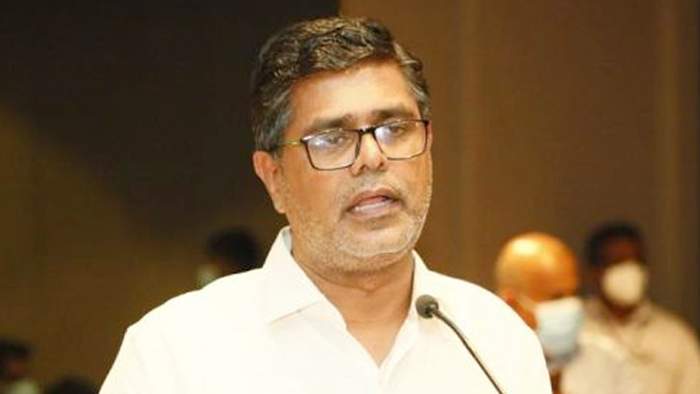
SJB Colombo District MP Mujibur Rahuman in parliament demanded to know from the government the reasons for CEB suspending the leave of all its employees until further notice from Thursday.
MP Rahuman said that the CEB has got an acting General Manager anew and the latter yesterday morning issued a circular suspending leave of all CEB employees with immediate effect until further notice.
“We demand that Minister Kanchana Wijesekera should explain this to the House. This circular was issued while this debate on the new Electricity Amendment Bill was pending. There are many who oppose this Bill. The Minister must tell parliament the reason for the urge to cancel the leave of CEB employees,” the MP said.However, Speaker Mahinda Yapa Abeywardena prevented Minister Wijesekera responding to the query and said that the matter raised by MP Rahuman was not relevant.
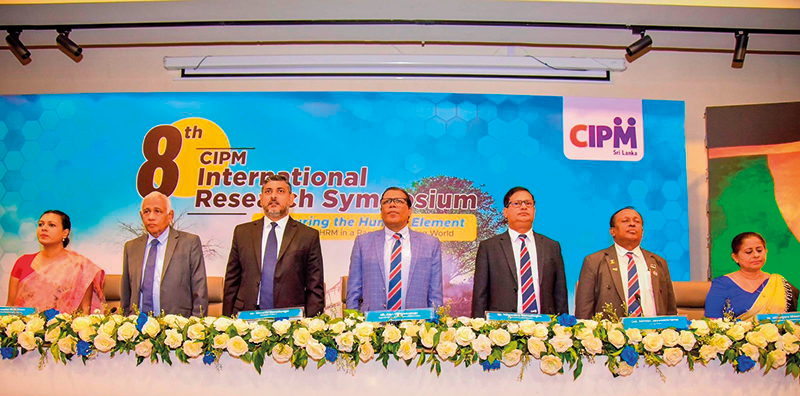
The Chartered Institute of Personnel Management (CIPM) successfully concluded the 8th Annual CIPM Symposium, which took place on 31st May 2024. Themed “Nurturing the Human Element—Redefining HRM in a Rapidly Changing World,” the symposium underscored the pivotal role of human resource management (HRM) in today’s dynamic global landscape. Since its inception in 1959, CIPM has been dedicated to advancing the HR profession through education, professional development, and advocacy, solidifying its position as Sri Lanka’s leading professional body for HRM.
Ken Vijayakumar, the President of the CIPM, graced the occasion as the chief guest. The symposium commenced with the welcome address by the Chairperson, Prof. Arosha Adikaram, followed by the Web Launch of the Symposium Proceedings and Abstract Book by the CIPM President. The event featured distinguished addresses, including a speech by Chief Guest Ken Vijayakumar, President of CIPM, and an address by Guest of Honor Shakthi Ranatunga, Chief Operating Officer of MAS Holdings Pvt. Ltd., Sri Lanka.
The symposium also featured an inspiring keynote address by Prof. Mario Fernando, Professor of Management and Director of the Centre for Cross Cultural Management (CCCM) at the University of Wollongong, Australia.
Vote of Thanks of the inauguration session was delivered by Dr. Dillanjani Weeratunga, Symposium Co-chair.
The symposium served as a comprehensive platform for researchers to present their findings across a wide range of critical topics in HRM. These included Cultural Diversity and Inclusion, Talent Development and Retention, Ethical Leadership and Corporate Social Responsibility, Adapting to Technological Advancements, Mental Health and Well-being at Work, Global Workforce Challenges, Employee Empowerment, and Reskilling and Upskilling.
The plenary session was led by Prof. Wasantha Rajapakse. Certificates were awarded to the best paper presenters during the valedictory session, followed by a vote of thanks delivered by Kamani Perera, Manager of Research and Development.
The annual symposium of CIPM was a truly inclusive event, attracting a diverse audience that spanned undergraduates, graduates, working professionals, research scholars and lecturers. This widespread interest highlights the symposium’s significance in the field of HRM, offering a unique opportunity for everyone to network and learn from scholarly brains.The CIPM International Research Symposium was sponsored by Hambantota International Port, Sri Lanka Institute of Information Technology (SLIIT), E B Creasy & Co. PLC, and Print Xcel Company.



US sports envoys to Lanka to champion youth development

Rahuman questions sudden cancellation of leave of CEB employees


