
News
General election: GTF discourages voters from backing major parties…

…warns of authoritarian rule
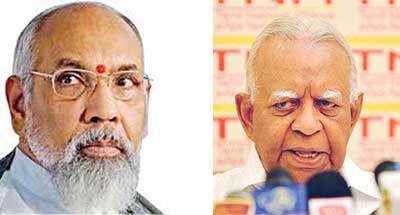
The UK headquartered Global Tamil Forum (GTF), which has been working closely with Tamil National Alliance (TNA), has urged the Tamils to vote for those only contesting the northern and eastern regions. In addition to the TNA, the Thamizhi Makkal Tesiya Kootani or the Tamil People’’s National Alliance led by former Northern Province CM C.V. Wigneswaran are in the fray in the former war zones.
The GTF, in a statement issued yesterday said: “First and foremost, ensure that people appreciate the significance of this election and the power of their vote – every vote matters. Second, no vote should be wasted on the multitude of independent groups and those representing countrywide parties, as these could only dilute the strength of the Tamil representation for future political engagements. Overly unrealistic agenda and an inward-looking insular political strategy is not the most suited in the present circumstances. The question for the Tamil voters is among the parties that represent Tamil national interest, which party and candidates are the best suited to navigate Tamil politics through the turbulent times ahead.”
The GTF urged all citizens of Sri Lanka, including those from Tamil and Muslim communities, to view the election with long-term perspective and exercise their franchise prudently and responsibly. Otherwise, the price of apathy could be too high.
The GTF alleged the election was being held amidst authoritarian presidential rule through decrees and task forces, key civilian functions entrusted to serving and retired military officers (some of whom credibly implicated in serious human rights violations), an atmosphere of intimidation and fear leading to media self-censorship and silencing of civil society activists, and insecurity among the minority communities.
The GTF said: “It is in this atmosphere that Rajapaksas are seeking 2/3rd majority to change the constitution, in particular, to abolish the 19th Amendment. It is not difficult to contemplate where this will lead to – executive power without checks and balances, marginalisation of Parliament and Judiciary, and key institutions made irrelevant. In such a quasi-democracy, rule of law and human rights will become expendable, and impunity will reign. The argument that a strong leader with unconstrained power is a must for development and prosperity is phony and self-serving.”
The GTF statement: “The last two attempts at constitution making (1972 and 1978), where the political parties that drove the process had 2/3rd majority, were disastrous, and their effects are still crippling the country. Democratic fundamentals and the multi-ethnic, multi-lingual, multi-religious character of the state were severely compromised to satisfy the power greed of the rulers. There is no indication that politics or statesmanship will be any different this time. In fact, if history is a guide, the outcome could be worse than what was achieved during the last two attempts. It is crucial, therefore, that all citizens should unite in denying the present rulers unfettered freedom for constitution making, rather ensure that only a widely consulted and compromised charter will be possible.
“While a functioning democracy with checks and balances are important for all citizens, it is so paramount for the minority communities. When the fangs of the majoritarian state unfairly target minority communities, even the theoretical possibility of legal recourse can be significant. So, it is vital that Tamil, Muslim and Christian communities study their electoral options and act wisely.
“Eleven years after the end of war, re-evaluating political circumstances and electoral possibilities is a must for the Tamil community. Gaining a respectable and secure status in the country is still a dream and there are many disappointments to contend with – no tangible outcomes on constitutional and accountability fronts, lack of momentum in returning to normalcy for the war-affected, and lingering concerns about protecting identity of the Tamil majority North-East. However, it is also undeniable that during the last five years there was notable relief for the Tamil people due to de-escalation of the military stranglehold in the North-East and people enjoyed some normalcy and freedom which included the right to memorialize the war-dead. How much of these could be lost due to the electoral outcomes is one important question to consider.
“The Tamil political leadership during the last decade has earned some positive marks on the national politics of the country – its role in the 2018 constitutional crisis being one notable example. A far-sighted political approach has somewhat weakened the apprehensions and animosities existed between the Tamil and other communities. Further, the Tamil nationalistic politics in Sri Lanka is viewed in the major capitals of the world as a far more progressive one than what it used to be. These fundamental building blocks are crucial for future political settlements, and need to be further strengthened, not weakened, as Tamil struggle moves on.
“Tamils in Sri Lanka is a significantly weakened community today – the population is relatively small with reduced electoral strength, and its educational and economic performances are among the worst in the country. Meeting political aspirations, though overwhelmingly the dominant issue for Tamils, is one of many objectives for the rest of the country. While the Tamil community should never take its eyes off from achieving political outcomes, it is no longer tenable that it be approached in a sequential manner, i.e. – ‘political resolution first, economic development later’. It is crucial that the Tamil political leadership become more cognizant of this reality and take necessary initiatives in this direction.
“The Sri Lankan political leadership’s intransigence in accommodating the legitimate aspirations of the Tamil community, made the Tamils look to the international community and India, with hope and expectation. While this is an integral part of the Tamil political struggle and need to be strengthened and leveraged to the maximum, this cannot substitute an effective political and civil society engagement with all communities in the country. This, too, needs to be a factor when Tamils consider their political choices.
“The Tamil community faces monumental challenges today. The Rajapaksas-led political ‘movement’ does not have many parallels in Sri Lanka’s history. It relies entirely on Sinhala-Buddhist vote and highly insensitive to the concerns and aspirations of the minority communities. No commitment to accountability and reconciliation (withdrew from co-sponsorship of UNHRC resolution), increased militarisation of civil functions (military officers for every village in the North-East), and the appointment of all-Sinhala task force to ‘preserve the historical heritage of Sri Lanka’ in the multi-ethnic Eastern Province are a few examples. More ominous is the possibility of losing some of the fundamental reforms such as power devolution under 13th Amendment and the parity status for Tamil language. A major economic contraction Sri Lanka is expected to undergo could lead to intensifying authoritarianism and militarisation, and in all likelihood the minority communities will be used as scapegoats for the wrong doings of the powerful.
“The period ahead will test the capability of the Tamil political leadership. Forming effective partnerships with the elected representatives from all minority communities and with those from the majority community with progressive views could be critical, so is fostering effective engagement strategies with the international community and India. If Rajapaksas are denied 2/3rd majority, such coalitions would be particularly powerful in preventing the constitution being amended on their own right. Perhaps the better strategy for the Tamil community could be protecting its hard-won gains, while exploring opportunities for furthering its community interests.
” Despite the fundamental weaknesses in Sri Lanka’s democracy, the country is often viewed favourably by the international community because it unfailingly conducts elections which are viewed largely as free and fair. In such circumstances, voting is fundamental and in fact the most powerful tool available to effect political, social and economic transformations in the country. The Global Tamil Forum (GTF) appeals to every citizen of Sri Lanka, and the Tamil people in particular, to cast their precious votes and cast it wisely, keeping the long-term interest of the country and their political, economic and democratic rights in mind.”



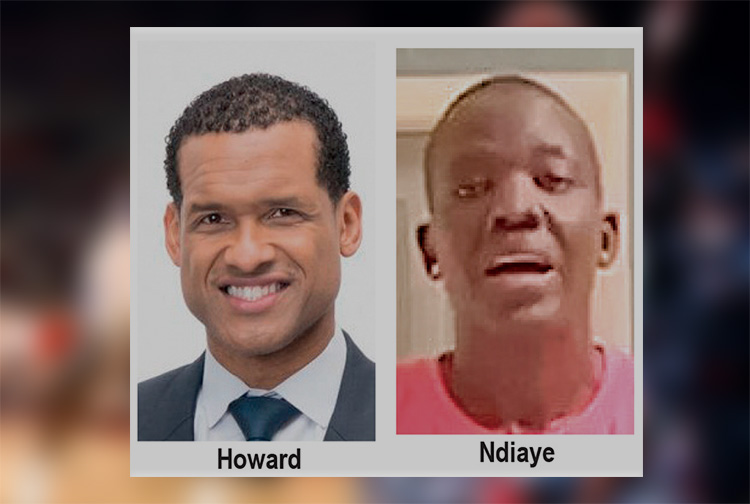
The U.S. Embassy in Colombo welcomed the U.S. Sports Envoys to Sri Lanka, former National Basketball Association (NBA) and Women’s National Basketball Association (WNBA) players Stephen Howard and Astou Ndiaye, from June 8 through 14.
The Public Diplomacy section of the U.S. Embassy said that it would launch a weeklong basketball program intended to harness the unifying power of sports, made possible through collaboration with Foundation of Goodness and IImpact Hoop Lab.
While in Sri Lanka, Howard and Ndiaye, both retired professional basketball players, will conduct a weeklong program, Hoops for Hope: Bridging Borders through Basketball. The Sports Envoys will lead basketball clinics and exhibition matches and engage in leadership sessions in Colombo and Southern Province for youth aged 14-18 from Northern, Uva, Eastern and Western Provinces, offering skills and leadership training both on and off the court. The U.S. Envoys will also share their expertise with the Sri Lanka Basketball Federation, national coaches, and players, furthering the development of basketball in the country. Beyond the clinics, they will collaborate with Sri Lankan schoolchildren to take part in a community service project in the Colombo area.
“We are so proud to welcome Stephen and Astou as our Sports Envoys to Sri Lanka, to build on the strong people-to-people connections between the United States and Sri Lanka,” said U.S. Ambassador Julie Chung. “The lessons that will be shared by our Sports Envoys – communication, teamwork, resilience, inclusion, and conflict resolution – are essential for leadership development, community building, equality, and peace. The U.S. Sports Envoy program is a testament to our belief that sports can be a powerful tool in promoting peace and unity.”
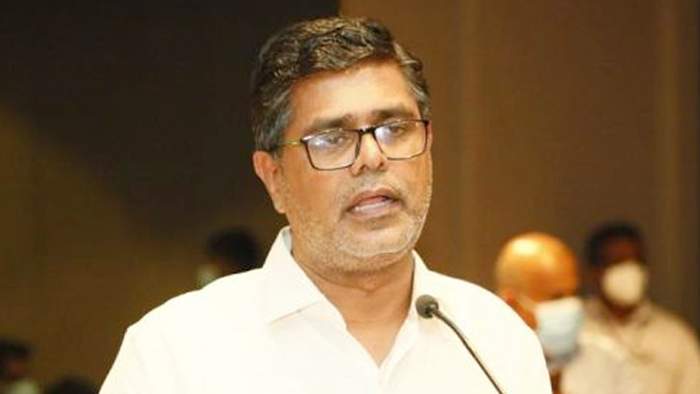
SJB Colombo District MP Mujibur Rahuman in parliament demanded to know from the government the reasons for CEB suspending the leave of all its employees until further notice from Thursday.
MP Rahuman said that the CEB has got an acting General Manager anew and the latter yesterday morning issued a circular suspending leave of all CEB employees with immediate effect until further notice.
“We demand that Minister Kanchana Wijesekera should explain this to the House. This circular was issued while this debate on the new Electricity Amendment Bill was pending. There are many who oppose this Bill. The Minister must tell parliament the reason for the urge to cancel the leave of CEB employees,” the MP said.However, Speaker Mahinda Yapa Abeywardena prevented Minister Wijesekera responding to the query and said that the matter raised by MP Rahuman was not relevant.
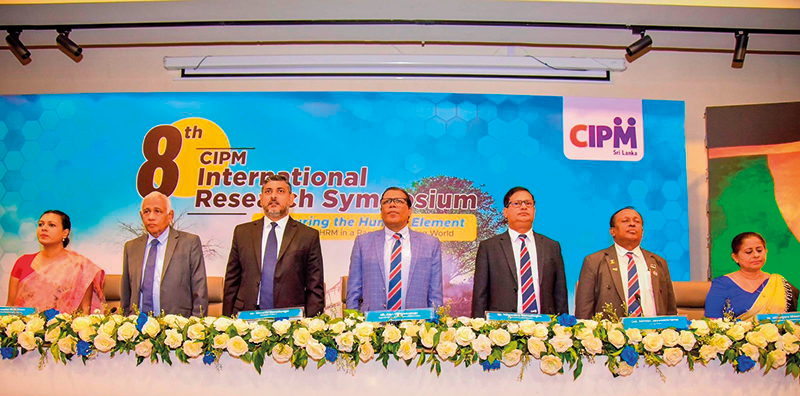
The Chartered Institute of Personnel Management (CIPM) successfully concluded the 8th Annual CIPM Symposium, which took place on 31st May 2024. Themed “Nurturing the Human Element—Redefining HRM in a Rapidly Changing World,” the symposium underscored the pivotal role of human resource management (HRM) in today’s dynamic global landscape. Since its inception in 1959, CIPM has been dedicated to advancing the HR profession through education, professional development, and advocacy, solidifying its position as Sri Lanka’s leading professional body for HRM.
Ken Vijayakumar, the President of the CIPM, graced the occasion as the chief guest. The symposium commenced with the welcome address by the Chairperson, Prof. Arosha Adikaram, followed by the Web Launch of the Symposium Proceedings and Abstract Book by the CIPM President. The event featured distinguished addresses, including a speech by Chief Guest Ken Vijayakumar, President of CIPM, and an address by Guest of Honor Shakthi Ranatunga, Chief Operating Officer of MAS Holdings Pvt. Ltd., Sri Lanka.
The symposium also featured an inspiring keynote address by Prof. Mario Fernando, Professor of Management and Director of the Centre for Cross Cultural Management (CCCM) at the University of Wollongong, Australia.
Vote of Thanks of the inauguration session was delivered by Dr. Dillanjani Weeratunga, Symposium Co-chair.
The symposium served as a comprehensive platform for researchers to present their findings across a wide range of critical topics in HRM. These included Cultural Diversity and Inclusion, Talent Development and Retention, Ethical Leadership and Corporate Social Responsibility, Adapting to Technological Advancements, Mental Health and Well-being at Work, Global Workforce Challenges, Employee Empowerment, and Reskilling and Upskilling.
The plenary session was led by Prof. Wasantha Rajapakse. Certificates were awarded to the best paper presenters during the valedictory session, followed by a vote of thanks delivered by Kamani Perera, Manager of Research and Development.
The annual symposium of CIPM was a truly inclusive event, attracting a diverse audience that spanned undergraduates, graduates, working professionals, research scholars and lecturers. This widespread interest highlights the symposium’s significance in the field of HRM, offering a unique opportunity for everyone to network and learn from scholarly brains.The CIPM International Research Symposium was sponsored by Hambantota International Port, Sri Lanka Institute of Information Technology (SLIIT), E B Creasy & Co. PLC, and Print Xcel Company.



US sports envoys to Lanka to champion youth development

Rahuman questions sudden cancellation of leave of CEB employees


