
News
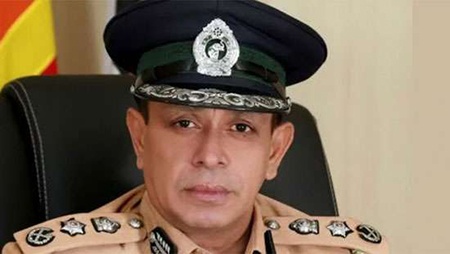
Former STF Commandant admits to transferring out its intelligence officers from East on his watch

by Rathindra Kuruwita
STF intelligence officers had stopped probing Islamic extremism in the East as a gazette issued in August 2017 entrusted them with dealing with organised crimes and drugs, former Commandant of the STF, M.R. Latheef, on Saturday, told the Presidential Commission of Inquiry (PCoI) probing the Easter Sunday attacks.
“Thereafter, we focussed on our new mandate. However, I expected that the STF too would be involved in dealing with rising Islamic extremism. In the past, the STF commandant and the head of STF intelligence took part in the weekly intelligence coordination committee meetings. When I became the head of the STF, I was informed that there was no need for the STF to attend those meetings.”
The chairman of the Commission then asked the witness whether by 2019, the focus of the STF had been completely shifted from eradicating terrorism to tackling organised crime. Latheef said that to deal with organised crimes, the STF had to assist the Police Narcotic Bureau, the Police Crimes Division and the Women and Children’s Bureau.
“We focused on these from 2018. Our main role was to assist the police. We were also asked by the Presidential Secretariat to look into environmental destruction,” he said.
Latheef was also asked if there had been transfers of STF intelligence officers deployed in the East on his watch. The witness said there had been 31 transfers. Some were sent for advanced training at the State Intelligence Service (SIS) and Directorate of Military Intelligence (DMI). There were 20 such transfers. There had been two transfers over misconduct, four based on appeals, and five had been removed over indiscipline, he said.
The Chairman: “The STF commandant before you, Ranjith Perera, attached these 30 intelligence officers to camps in the east. They were the ones who were transferred, weren’t they?”
“Yes,” Latheef said.
Chairman: “So these officers were removed and placed somewhere else?”
Latheef: “That had been done due to service needs and requests by commanders in various camps. We were also not asked to look at Islamic extremism and Community Police, who consisted of people from the same areas also found nothing.”
Chairman: “Why didn’t the SIS ask for your help?”
Latheef: “That’s a puzzle to me too.”
The Commission also questioned Latheef why he had not earlier submitted to the commission reports by STF intelligence officers warning of rising Islamic extremism in the East. During his first appearance at the PCoI in late September, Latheef said STF intelligence officers had never reported on the National Thowheed Jamaat (NTJ) leader Zahran Hashim. In his second appearance, earlier this month, Commissioners directed Latheef’s attention to a report sent by the STF intelligence officers to the Commanding Officer of the Kalawanchikudi STF camp on 24 March, 2018. This report referred to Zahran and the NTJ and Latheef acknowledged that the report referred to NTJ and Zahran.
Commissioners: “Why didn’t you include STF reports on Zahran and the NTJ in the documents you submitted to the Commission?”
SDIG Latheef: “I don’t know if the documents you have were received by the STF headquarters. Can you please request a report on this from the STF headquarters? These three reports were sent to STF regional camps. It should be checked whether they were referred to the headquarters and it should be ascertained whether any officer at the headquarters had inquired into them.”
On Saturday, this issue was taken up again, when the Attorney General’s Department official leading the evidence asked Latheef why he had not submitted two reports dated March 18, 2017 and March 24, 2017, warning of NTJ and Zahran, to the PCoI.
“I only presented reports after July 2017,” the witness said.
The AG’s Department official said: “None of these reports speak of NTJ or their involvement in a clash at the Aliyar Junction in Kattankudy. It is after this that Zahran and others left the area.”
“There was no specific reason and I wanted to show th 2019 reports,” the witness said.
At this point the Chairman of the PCoI stressed that the PCoI had asked him to submit all STF intelligence reports in his possession on Islamic Extremism since 2015. Letheef affirmed that it indeed was the case.
“The main reason why the STF was established was to combat terrorism, am I right?” the Chairman asked.
“Yes,” the witness said.
“At that time the STF had a strong intelligence wing, didn’t it?” the Chairman asked.
“A small team was trained to gather information,” Latheef said.
“If I say these men were given special training on gathering intelligence, would you accept?” the Chairman asked.
“Yes, in 2006 a team of Indian intelligence officials gave a training,” Latheef said.
“So, the STF had a strong intelligence network in the East. Why weren’t they able to detect what was brewing underneath?” the Chairman asked.
“We received a lot of support from Muslims during the war. But as I said earlier our focus shifted in 2017,” Latheef said.



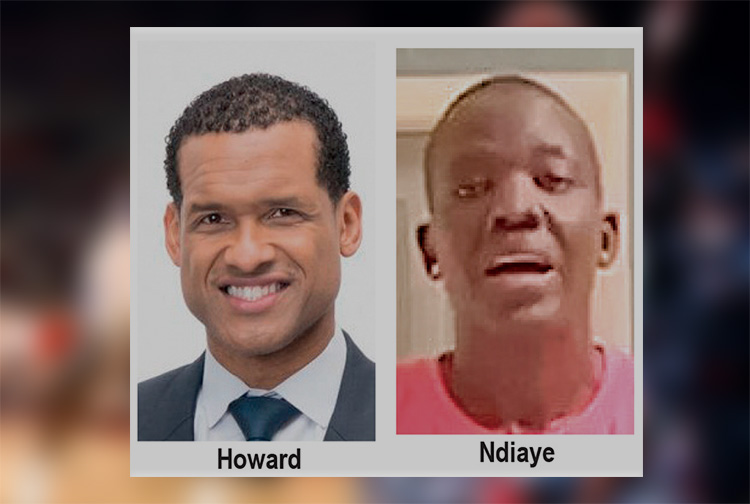
The U.S. Embassy in Colombo welcomed the U.S. Sports Envoys to Sri Lanka, former National Basketball Association (NBA) and Women’s National Basketball Association (WNBA) players Stephen Howard and Astou Ndiaye, from June 8 through 14.
The Public Diplomacy section of the U.S. Embassy said that it would launch a weeklong basketball program intended to harness the unifying power of sports, made possible through collaboration with Foundation of Goodness and IImpact Hoop Lab.
While in Sri Lanka, Howard and Ndiaye, both retired professional basketball players, will conduct a weeklong program, Hoops for Hope: Bridging Borders through Basketball. The Sports Envoys will lead basketball clinics and exhibition matches and engage in leadership sessions in Colombo and Southern Province for youth aged 14-18 from Northern, Uva, Eastern and Western Provinces, offering skills and leadership training both on and off the court. The U.S. Envoys will also share their expertise with the Sri Lanka Basketball Federation, national coaches, and players, furthering the development of basketball in the country. Beyond the clinics, they will collaborate with Sri Lankan schoolchildren to take part in a community service project in the Colombo area.
“We are so proud to welcome Stephen and Astou as our Sports Envoys to Sri Lanka, to build on the strong people-to-people connections between the United States and Sri Lanka,” said U.S. Ambassador Julie Chung. “The lessons that will be shared by our Sports Envoys – communication, teamwork, resilience, inclusion, and conflict resolution – are essential for leadership development, community building, equality, and peace. The U.S. Sports Envoy program is a testament to our belief that sports can be a powerful tool in promoting peace and unity.”
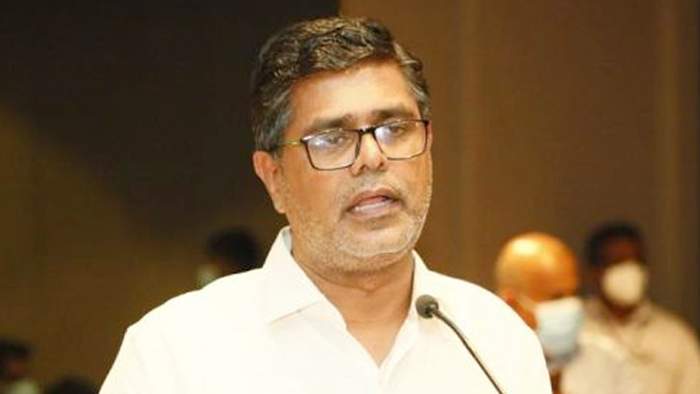
SJB Colombo District MP Mujibur Rahuman in parliament demanded to know from the government the reasons for CEB suspending the leave of all its employees until further notice from Thursday.
MP Rahuman said that the CEB has got an acting General Manager anew and the latter yesterday morning issued a circular suspending leave of all CEB employees with immediate effect until further notice.
“We demand that Minister Kanchana Wijesekera should explain this to the House. This circular was issued while this debate on the new Electricity Amendment Bill was pending. There are many who oppose this Bill. The Minister must tell parliament the reason for the urge to cancel the leave of CEB employees,” the MP said.However, Speaker Mahinda Yapa Abeywardena prevented Minister Wijesekera responding to the query and said that the matter raised by MP Rahuman was not relevant.
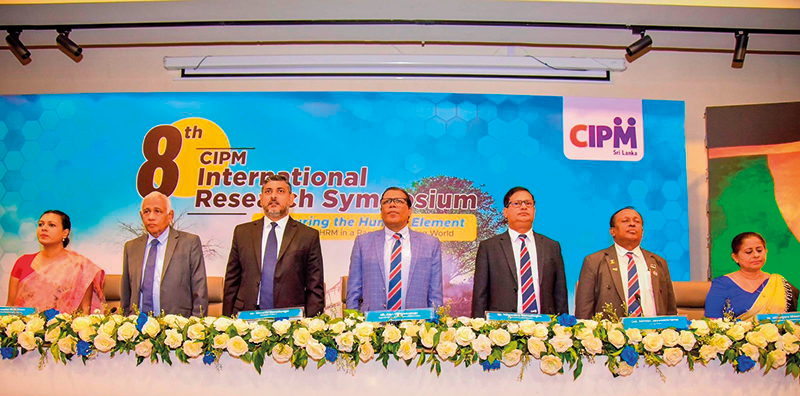
The Chartered Institute of Personnel Management (CIPM) successfully concluded the 8th Annual CIPM Symposium, which took place on 31st May 2024. Themed “Nurturing the Human Element—Redefining HRM in a Rapidly Changing World,” the symposium underscored the pivotal role of human resource management (HRM) in today’s dynamic global landscape. Since its inception in 1959, CIPM has been dedicated to advancing the HR profession through education, professional development, and advocacy, solidifying its position as Sri Lanka’s leading professional body for HRM.
Ken Vijayakumar, the President of the CIPM, graced the occasion as the chief guest. The symposium commenced with the welcome address by the Chairperson, Prof. Arosha Adikaram, followed by the Web Launch of the Symposium Proceedings and Abstract Book by the CIPM President. The event featured distinguished addresses, including a speech by Chief Guest Ken Vijayakumar, President of CIPM, and an address by Guest of Honor Shakthi Ranatunga, Chief Operating Officer of MAS Holdings Pvt. Ltd., Sri Lanka.
The symposium also featured an inspiring keynote address by Prof. Mario Fernando, Professor of Management and Director of the Centre for Cross Cultural Management (CCCM) at the University of Wollongong, Australia.
Vote of Thanks of the inauguration session was delivered by Dr. Dillanjani Weeratunga, Symposium Co-chair.
The symposium served as a comprehensive platform for researchers to present their findings across a wide range of critical topics in HRM. These included Cultural Diversity and Inclusion, Talent Development and Retention, Ethical Leadership and Corporate Social Responsibility, Adapting to Technological Advancements, Mental Health and Well-being at Work, Global Workforce Challenges, Employee Empowerment, and Reskilling and Upskilling.
The plenary session was led by Prof. Wasantha Rajapakse. Certificates were awarded to the best paper presenters during the valedictory session, followed by a vote of thanks delivered by Kamani Perera, Manager of Research and Development.
The annual symposium of CIPM was a truly inclusive event, attracting a diverse audience that spanned undergraduates, graduates, working professionals, research scholars and lecturers. This widespread interest highlights the symposium’s significance in the field of HRM, offering a unique opportunity for everyone to network and learn from scholarly brains.The CIPM International Research Symposium was sponsored by Hambantota International Port, Sri Lanka Institute of Information Technology (SLIIT), E B Creasy & Co. PLC, and Print Xcel Company.



US sports envoys to Lanka to champion youth development

Rahuman questions sudden cancellation of leave of CEB employees


