
News
Former Auditor General: Parliament has failed

‘Yahapalana Govt. paved way for 20A’
By Shamindra Ferdinandoa
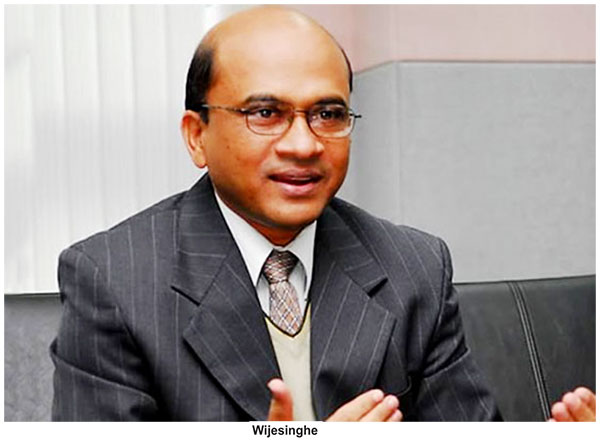
Former Auditor General Gamini Wijesinghe has presented an eight-point plan to restore democracy, good governance and accountability. He has declared that far reaching remedial measures are required as an utterly corrupt political party system, has caused irreparable damage to the country.
Wijesinghe’s proposals pertain to the Executive, the Legislature and the Judiciary. The country couldn’t be saved unless the Executive, the Legislature and the Judiciary were brought under the law, Wijesinghe has said, referreing to the 2015 and 2016 Treasury bond scams and USD 6.7 mn payment made to China last year for a consignment of carbonic fertiliser rejected by Sri Lanka to highlight the collapse of the accountability process.
Wijesinghe examined what he called a pathetic situation against the backdrop of developing economic crisis at a public meeting organised jointly by the election watchdog PAFFREL and the 12 March Movement. The former AG also called for abolition of all legal/constitutional protections for politicians, to subject political parties for State audit, restoration of financial discipline, safeguards for agriculture, support for local industries, creation of sub economy by way of implementation of CESS projects and finally constant update of laws.
Wijesinghe retired in April 2019 having served the public sector for over three decades.
Wijesinghe functioned as the Auditor General during yahapalana administration (2015-2019).
Alleging that the 20th Amendment to the Constitution enacted in Oct 2020 crippled the State auditing process, Wijesinghe questioned the integrity of Members of Parliament.
In one of the harshest criticism of the Sirisena-Wickremesinghe administration, Wijesinghe alleged that the then political leadership lacked the will to operationalise the Independent Commissions. The public got fed up with Independent Commissions because the then government crippled key outfits, Wijesinghe said. In fact, those who had enacted the 19th Amendment without its proper implementation paved the way for the dictatorial 20th Amendment, the former AG said.
Wijesinghe explained how successive governments exploited what they fondly called collective responsibility of the cabinet-of-ministers to their advantage. The retired public servant with an impeccable record said that lawmakers’ responsibility should be for those who voted for them not a selected group of persons-cabinet of ministers that pursued agendas, sometimes inimical to the country.
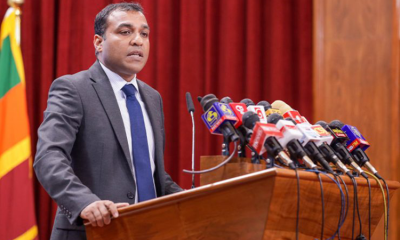
At the onset of the meeting organized to mark Sri Lanka receiving right to vote 90 years ago, at the Sri Lanka Foundation, Executive Director of PAFFREL and Co-convenor of the March 12 Movement Rohana Hettiarachchi said that except for a few, the Members of Parliament largely represented the interests of the business community, criminals, drug dealers, multinational companies and external powers.
Hettiarachchi asked whether the executive, the legislature, Provincial Councils and Local Governments addressed the grievances of the people. Pointing out that there were as many as 10,000 elected and nominated representatives at different levels-from the Executive to Local Government, Hettiarachchi explained how corrupt political party system plunged the country into crisis. They perpetrated corruption with impunity and facilitated waste, corruption and irregularities at every level, Hettiarachchi alleged.
Among those in the audience were heads of watchdog committees, Anura Priyadarshanaya Yapa of the Committee on Public Finance (COPF) and Prof. Tissa Vitharana of the Committee on Public Accounts (COPF).
Referring to the much criticized 20th Amendment and the recently endorsed Bill that provided for the Regulation of Processing of Personal Data, Hettiarachchci asked whether the laws were enacted for political reasons. Claiming that those so-called people’s representatives hadn’t been at least aware of public woes, Hettiarachchi said that the Parliament neglected its primary responsibilities, namely public finance and enactment of laws. The civil society activist declared that the parliamentary system had failed and the failure on the part of Parliament to cut down on waste and expenditure at a time the country was on the verge of economic calamity exposed the corrupt system in place.
Ex-AG Wijesinghe, in his well-received speech said that the Parliament had done everything except its primary tasks, namely ensuring transparency in public finance and enactment of laws. The political set up was in such a heinous state today some questioned whether Sri Lanka could cope up with universal franchise, Wijesinghe said, discussing how the ignorant electorate ended up creating a set of rogues whoever in power. Wijesinghe explained how political parties in their quest for power had destroyed existing laws in place. The former official questioned how the presidential pardon and the power enjoyed by the executive to dissolve the Parliament impacted the public.
Successive governments had taken massive loans over the past several decades today country was in a debt trap, Wijesinghe said. “The situation is so bad we do not know the total amount taken as loans.”
Referring to the recent set of proposals unveiled by an alternative group of the SLPP, the former AG said that such plans were irrelevant. Wijesinghe accused successive governments and even those within various administrations of pulling in different directions at the expense of political stability.
Political parties couldn’t be allowed to pursue agendas that were contrary to State policies any more, he emphasised.


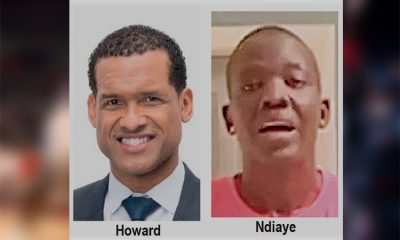





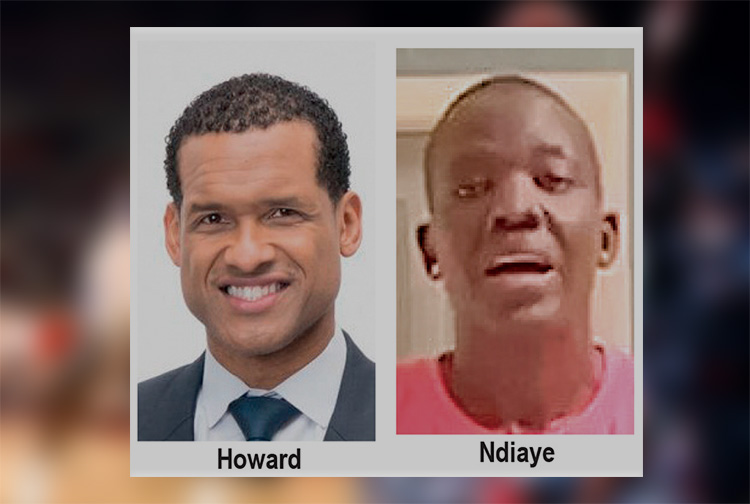
The U.S. Embassy in Colombo welcomed the U.S. Sports Envoys to Sri Lanka, former National Basketball Association (NBA) and Women’s National Basketball Association (WNBA) players Stephen Howard and Astou Ndiaye, from June 8 through 14.
The Public Diplomacy section of the U.S. Embassy said that it would launch a weeklong basketball program intended to harness the unifying power of sports, made possible through collaboration with Foundation of Goodness and IImpact Hoop Lab.
While in Sri Lanka, Howard and Ndiaye, both retired professional basketball players, will conduct a weeklong program, Hoops for Hope: Bridging Borders through Basketball. The Sports Envoys will lead basketball clinics and exhibition matches and engage in leadership sessions in Colombo and Southern Province for youth aged 14-18 from Northern, Uva, Eastern and Western Provinces, offering skills and leadership training both on and off the court. The U.S. Envoys will also share their expertise with the Sri Lanka Basketball Federation, national coaches, and players, furthering the development of basketball in the country. Beyond the clinics, they will collaborate with Sri Lankan schoolchildren to take part in a community service project in the Colombo area.
“We are so proud to welcome Stephen and Astou as our Sports Envoys to Sri Lanka, to build on the strong people-to-people connections between the United States and Sri Lanka,” said U.S. Ambassador Julie Chung. “The lessons that will be shared by our Sports Envoys – communication, teamwork, resilience, inclusion, and conflict resolution – are essential for leadership development, community building, equality, and peace. The U.S. Sports Envoy program is a testament to our belief that sports can be a powerful tool in promoting peace and unity.”
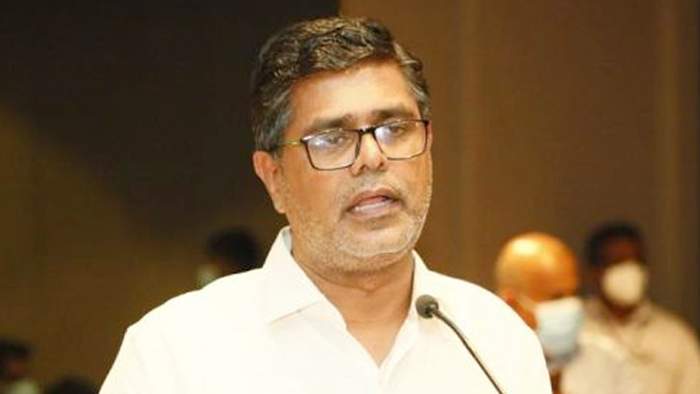
SJB Colombo District MP Mujibur Rahuman in parliament demanded to know from the government the reasons for CEB suspending the leave of all its employees until further notice from Thursday.
MP Rahuman said that the CEB has got an acting General Manager anew and the latter yesterday morning issued a circular suspending leave of all CEB employees with immediate effect until further notice.
“We demand that Minister Kanchana Wijesekera should explain this to the House. This circular was issued while this debate on the new Electricity Amendment Bill was pending. There are many who oppose this Bill. The Minister must tell parliament the reason for the urge to cancel the leave of CEB employees,” the MP said.However, Speaker Mahinda Yapa Abeywardena prevented Minister Wijesekera responding to the query and said that the matter raised by MP Rahuman was not relevant.
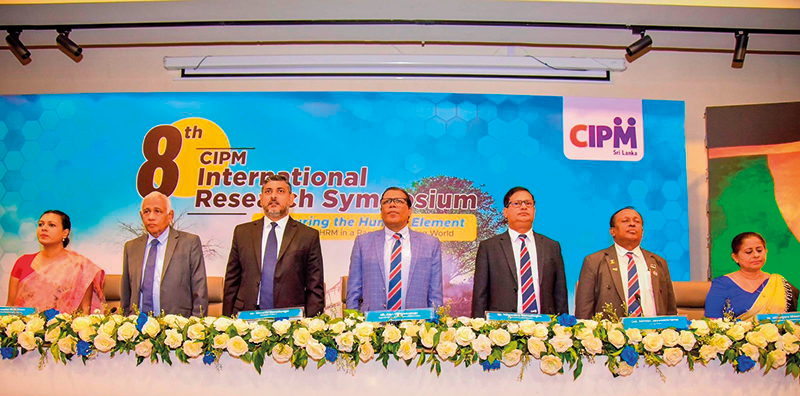
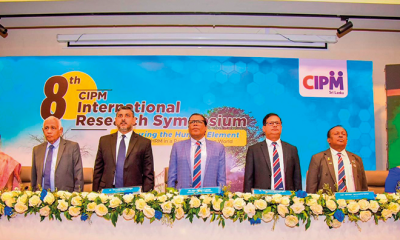
The Chartered Institute of Personnel Management (CIPM) successfully concluded the 8th Annual CIPM Symposium, which took place on 31st May 2024. Themed “Nurturing the Human Element—Redefining HRM in a Rapidly Changing World,” the symposium underscored the pivotal role of human resource management (HRM) in today’s dynamic global landscape. Since its inception in 1959, CIPM has been dedicated to advancing the HR profession through education, professional development, and advocacy, solidifying its position as Sri Lanka’s leading professional body for HRM.
Ken Vijayakumar, the President of the CIPM, graced the occasion as the chief guest. The symposium commenced with the welcome address by the Chairperson, Prof. Arosha Adikaram, followed by the Web Launch of the Symposium Proceedings and Abstract Book by the CIPM President. The event featured distinguished addresses, including a speech by Chief Guest Ken Vijayakumar, President of CIPM, and an address by Guest of Honor Shakthi Ranatunga, Chief Operating Officer of MAS Holdings Pvt. Ltd., Sri Lanka.
The symposium also featured an inspiring keynote address by Prof. Mario Fernando, Professor of Management and Director of the Centre for Cross Cultural Management (CCCM) at the University of Wollongong, Australia.
Vote of Thanks of the inauguration session was delivered by Dr. Dillanjani Weeratunga, Symposium Co-chair.
The symposium served as a comprehensive platform for researchers to present their findings across a wide range of critical topics in HRM. These included Cultural Diversity and Inclusion, Talent Development and Retention, Ethical Leadership and Corporate Social Responsibility, Adapting to Technological Advancements, Mental Health and Well-being at Work, Global Workforce Challenges, Employee Empowerment, and Reskilling and Upskilling.
The plenary session was led by Prof. Wasantha Rajapakse. Certificates were awarded to the best paper presenters during the valedictory session, followed by a vote of thanks delivered by Kamani Perera, Manager of Research and Development.
The annual symposium of CIPM was a truly inclusive event, attracting a diverse audience that spanned undergraduates, graduates, working professionals, research scholars and lecturers. This widespread interest highlights the symposium’s significance in the field of HRM, offering a unique opportunity for everyone to network and learn from scholarly brains.The CIPM International Research Symposium was sponsored by Hambantota International Port, Sri Lanka Institute of Information Technology (SLIIT), E B Creasy & Co. PLC, and Print Xcel Company.



US sports envoys to Lanka to champion youth development

Rahuman questions sudden cancellation of leave of CEB employees


