
News
First pygmy seahorse in Indian Ocean discovered

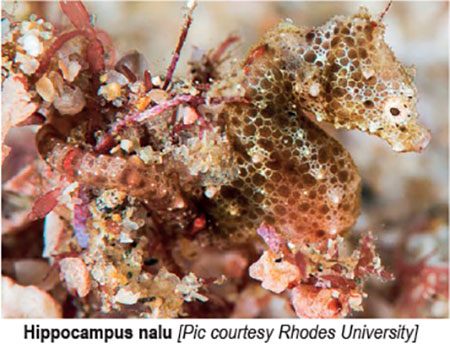
A pygmy seahorse about the size of a grain of rice has been first observed in the Indian oceans by a group of researchers including including Research Associate of Zoology and Entomology at Rhodes University, Professor Louw Claassens, Rhodes University said on its official web site yesterday.
Finding the new species in in the Indian ocean was very rare, the researchers stated.
“It’s like finding a kangaroo in Norway,” says Richard Smith, a marine biologist based in the United Kingdom and co-author of a new study on the species, known as the African or Sodwana Bay pygmy seahorse. The second name refers to the location where it was found, a popular scuba-diving spot close to the Mozambique border.
The finding shocked them because all seven species of pygmy seahorse, except for one in Japan, inhabit the Coral Triangle, a biodiverse region of more than two million square miles in the southwestern Pacific. This one lives 5,000 miles away, the first pygmy seahorse seen in all of the Indian Ocean and the continent of Africa.
The new species looks somewhat similar to other pygmy seahorses, except that it has one set of spines on its back that have sharp, incisor-like points on the tips, says co-author Graham Short, an ichthyologist at the California Academy of Sciences and the Australian Museum in Sydney. In contrast, the other similar pygmy seahorses have flat-tipped spines.
“We really don’t know what these spines are used for,” Short says. “Many species of seahorses in general are spiny, so their presence could be possibly due to sexual selection—the females may prefer spinier males.”
The surprising discovery, described in a study published May 19 in the journal ZooKeys, shows how little we know about the ocean, particularly when it comes to tiny creatures, the authors say—and that there are likely many more pygmy seahorse species to be identified.
Dive instructor Savannah Nalu Olivier first stumbled upon the creature in Sodwana Bay in 2017, while examining bits of algae on the seafloor. The bay is known for having many species of rare fish, sharks, and sea turtles.
She shared photographs of the fish with her colleagues, and in 2018 they made their way to Smith, who, with colleague and Research Associate of Zoology and Entomology at Rhodes University, Louw Claassens, collected several specimens of the animal at depths of 40 to 55 feet.
The researchers have named the new seahorse Hippocampus nalu, after Olivier, whose nickname is appropriately “Fish.” (She’s also a Pisces.) In the South African languages Xhosa and Zulu, “nalu” roughly translates to “here it is.”
“I told her that this was a gift from the sea,” says Louis Olivier, Savannah’s father, who owns a scuba diving outfit called Pisces Diving Sodwana Bay. He adds he’s “super stoked about her discovery.”
Smith sent several specimens of the new species to Short, who analyzed their genetics and body structures using a CT scanner.
His research revealed that, like other pygmy seahorses, the newly found animal has two wing-like structures on its back, rather than one, as in larger seahorses. These “wings” in general serve an unknown purpose for seahorses.
Also like other pygmy seahorses, the African species has only one gill slit on its upper back, instead of two below each side of the head, like larger seahorses—another mystery.
That would be “like having a nose on the back of your neck,” Short says.
But the new seahorse is unique from its tiny kin in that it was found living in turf-like algae, amid boulders and sand. Sodwana Bay has large swells, and the little seahorses appear to be comfortable being swept about, says Smith, who observed a pygmy seahorse get covered in sand and then wriggle its way out.
“They regularly get sand-blasted,” says Smith, who wrote a book about sea creatures called The World Beneath. Other pygmy seahorses, which stick to the calmer waters around coral reefs, “are more dainty. But this [species] is built of sturdier stuff.”
Like other pygmy seahorses, the African version is thought to eat tiny copepods and crustaceans. It also is well camouflaged to match its surroundings.
This finding “demonstrates that there are still many discoveries to be made in the oceans, even in shallow waters near the coast,” says Thomas Trnski, head of natural sciences at the Auckland Museum in New Zealand, who wasn’t involved in the study. Almost all pygmy seahorses have been discovered in just the last 20 years, he adds.
The only pygmy seahorse found outside the Coral Triangle is the Japanese pygmy seahorse, also known as the “Japan pig,” first described in August 2018.
Although populations of regular seahorses have fallen in many areas because of harvesting for use in traditional Chinese medicine and the aquarium trade, that’s not an issue for pygmy seahorses because they are difficult to find, Short says. That being said, some of these species have very low population densities, and there’s not enough data to get a good sense of how many there are, Smith adds.
These fish can spread only very short distances via the current. The study suggests that Hippocampus nalu diverged from the ancestors of all known pygmy seahorses species more than 12 million years ago.
“This means that it is extremely likely that there are many more species of pygmy seahorses yet to be discovered in the western Indian Ocean” and beyond, Short says.



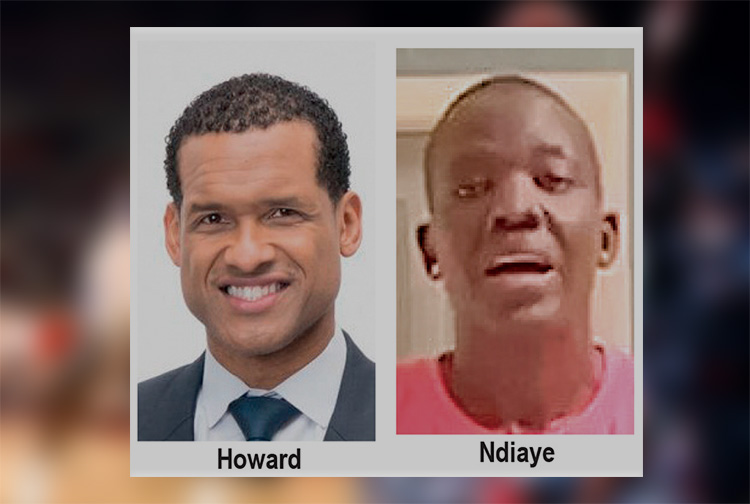
The U.S. Embassy in Colombo welcomed the U.S. Sports Envoys to Sri Lanka, former National Basketball Association (NBA) and Women’s National Basketball Association (WNBA) players Stephen Howard and Astou Ndiaye, from June 8 through 14.
The Public Diplomacy section of the U.S. Embassy said that it would launch a weeklong basketball program intended to harness the unifying power of sports, made possible through collaboration with Foundation of Goodness and IImpact Hoop Lab.
While in Sri Lanka, Howard and Ndiaye, both retired professional basketball players, will conduct a weeklong program, Hoops for Hope: Bridging Borders through Basketball. The Sports Envoys will lead basketball clinics and exhibition matches and engage in leadership sessions in Colombo and Southern Province for youth aged 14-18 from Northern, Uva, Eastern and Western Provinces, offering skills and leadership training both on and off the court. The U.S. Envoys will also share their expertise with the Sri Lanka Basketball Federation, national coaches, and players, furthering the development of basketball in the country. Beyond the clinics, they will collaborate with Sri Lankan schoolchildren to take part in a community service project in the Colombo area.
“We are so proud to welcome Stephen and Astou as our Sports Envoys to Sri Lanka, to build on the strong people-to-people connections between the United States and Sri Lanka,” said U.S. Ambassador Julie Chung. “The lessons that will be shared by our Sports Envoys – communication, teamwork, resilience, inclusion, and conflict resolution – are essential for leadership development, community building, equality, and peace. The U.S. Sports Envoy program is a testament to our belief that sports can be a powerful tool in promoting peace and unity.”
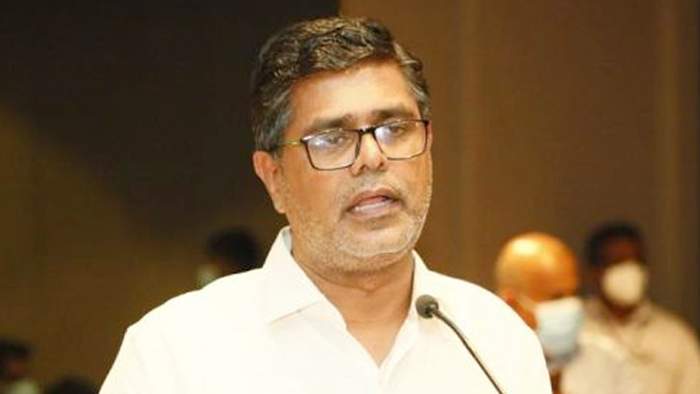
SJB Colombo District MP Mujibur Rahuman in parliament demanded to know from the government the reasons for CEB suspending the leave of all its employees until further notice from Thursday.
MP Rahuman said that the CEB has got an acting General Manager anew and the latter yesterday morning issued a circular suspending leave of all CEB employees with immediate effect until further notice.
“We demand that Minister Kanchana Wijesekera should explain this to the House. This circular was issued while this debate on the new Electricity Amendment Bill was pending. There are many who oppose this Bill. The Minister must tell parliament the reason for the urge to cancel the leave of CEB employees,” the MP said.However, Speaker Mahinda Yapa Abeywardena prevented Minister Wijesekera responding to the query and said that the matter raised by MP Rahuman was not relevant.
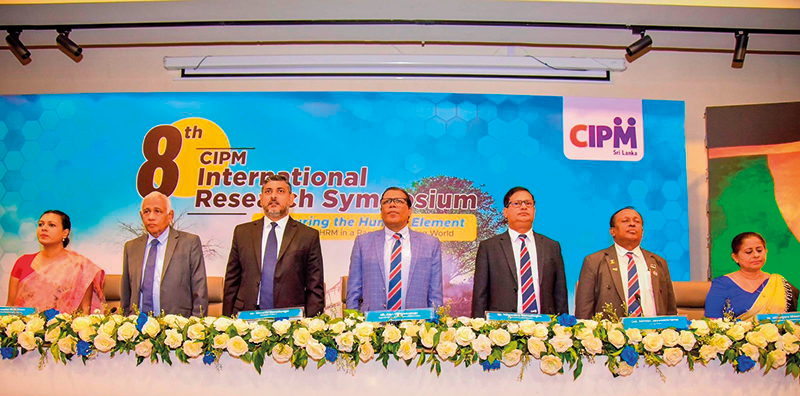
The Chartered Institute of Personnel Management (CIPM) successfully concluded the 8th Annual CIPM Symposium, which took place on 31st May 2024. Themed “Nurturing the Human Element—Redefining HRM in a Rapidly Changing World,” the symposium underscored the pivotal role of human resource management (HRM) in today’s dynamic global landscape. Since its inception in 1959, CIPM has been dedicated to advancing the HR profession through education, professional development, and advocacy, solidifying its position as Sri Lanka’s leading professional body for HRM.
Ken Vijayakumar, the President of the CIPM, graced the occasion as the chief guest. The symposium commenced with the welcome address by the Chairperson, Prof. Arosha Adikaram, followed by the Web Launch of the Symposium Proceedings and Abstract Book by the CIPM President. The event featured distinguished addresses, including a speech by Chief Guest Ken Vijayakumar, President of CIPM, and an address by Guest of Honor Shakthi Ranatunga, Chief Operating Officer of MAS Holdings Pvt. Ltd., Sri Lanka.
The symposium also featured an inspiring keynote address by Prof. Mario Fernando, Professor of Management and Director of the Centre for Cross Cultural Management (CCCM) at the University of Wollongong, Australia.
Vote of Thanks of the inauguration session was delivered by Dr. Dillanjani Weeratunga, Symposium Co-chair.
The symposium served as a comprehensive platform for researchers to present their findings across a wide range of critical topics in HRM. These included Cultural Diversity and Inclusion, Talent Development and Retention, Ethical Leadership and Corporate Social Responsibility, Adapting to Technological Advancements, Mental Health and Well-being at Work, Global Workforce Challenges, Employee Empowerment, and Reskilling and Upskilling.
The plenary session was led by Prof. Wasantha Rajapakse. Certificates were awarded to the best paper presenters during the valedictory session, followed by a vote of thanks delivered by Kamani Perera, Manager of Research and Development.
The annual symposium of CIPM was a truly inclusive event, attracting a diverse audience that spanned undergraduates, graduates, working professionals, research scholars and lecturers. This widespread interest highlights the symposium’s significance in the field of HRM, offering a unique opportunity for everyone to network and learn from scholarly brains.The CIPM International Research Symposium was sponsored by Hambantota International Port, Sri Lanka Institute of Information Technology (SLIIT), E B Creasy & Co. PLC, and Print Xcel Company.



US sports envoys to Lanka to champion youth development

Rahuman questions sudden cancellation of leave of CEB employees


