
News
Expert advises public, private sectors invest in modern technology as in HK, Taiwan, Singapore

Long-term solutions even after present pandemic
By Rathindra Kuruwita
The public and private sectors should invest in the latest technologies to prevent the spread of COVID-19 and remotely identify those who had contracted the virus to minimise disruptions to the economy, Pharmaceutical and healthcare management consultant Dr. Sanjaya Perera told The Island yesterday.
Dr. Perera said that since 2020 three lockdowns had been imposed, but the country had not benefited.
“We have also imposed lockdowns at the wrong times. We allowed people to party in April 2021. We also relaxed too fast when experts said we have the delta variant in Colombo. Everyone agrees that closing the country almost at regular intervals is bad, we have to take steps so that this doesn’t happen,” he said.
 Perera, who works as a consultant in East Asia and Europe said that investment in new technology and adhering to strict travel guidelines had helped many institutions to function without continuous disruptions. Last year, a number of institutions had introduced machines that could easily detect those with COVID-19 and protect those who worked in air conditioned environments, he said.
“For example there are new technologies like infrared thermal monitoring, which are widely used in Singapore, Taiwan and Hong Kong. High-performance infrared thermal cameras are set-up at airports or at entrances to offices to capture people’s thermal images in real time, easily identifying people with fever. There are new machines powered by artificial intelligence that can identify those who have 0.01 higher temperature. These machines can also work as an attendance register that can be accessed by HR officers from anywhere. I am glad that some top private firms have already set up these machines,” he said.
Perera said that Sri Lanka had kept its airports open for the most part of the pandemic and a number of COVID-19 infected people had come through without detection. Health sector unions had called for stricter measures but the government had cited inconveniences to passengers for not implementing tougher policies.
“Singapore Airport is now using a breath test to detect Covid-19 that gives accurate results within a minute. A person blows into a one-way valve mouthpiece, and compounds in the person’s breath – think of it as a breath signature – are compared by machine learning software against the sort of breath signature that would be expected from someone who’s Covid-positive. We can clear passengers in minutes. If the government wants to keep the airport open it should invest in these technologies,” he said.
Dr. Perera pointed out that SARS-CoV-2 could remain on various surfaces and that caused serious issues when schools, offices and factories were open. The virus could remain outside, especially in places that were not exposed to the sun and in air conditioned places.
In the past year researchers had looked at UV radiation, in particular UV-C to inactivate different viruses, including SARS-CoV-2, he added
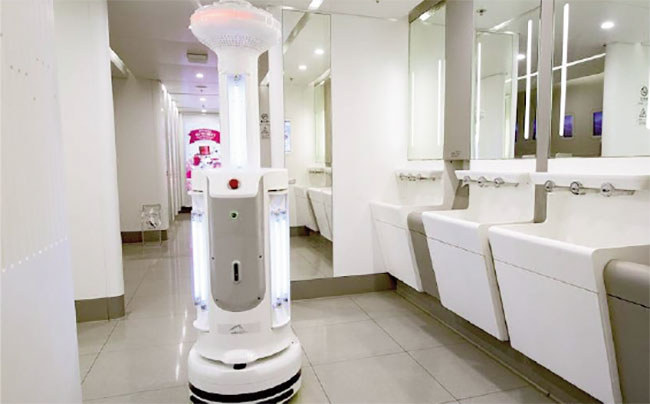
“With machines that emit UV-C radiation you can easily disinfect surfaces. If you place such a machine near an AC machine, it can kill most of the viruses there. There are also handheld devices that people can use to disinfect documents, pens, and other things that you touch. Another technology we can use is pathogen testing. We can place this unit at the office, and it will capture pathogens that people at work emit. At the end of the day, a lab can test and find out if a person there has contracted COVID-19. This way we don’t need to check everyone at work, we can just check the people who came on that day,” he said.
Dr. Perera said that while some of those technologies were expensive, investing on the long term solutions and protocols would benefit the economy greatly in the long term. Already the government spent large amounts of money on testing, quarantining and treating people and frequent lockdowns too had cost colossal sums, he said.
“Also these investments are not only for COVID-19. Even if COVID goes away, we can still use this equipment to make the office environment safer for the workers. A healthy workforce is good for business and both the private and public sector must understand this,” he said.



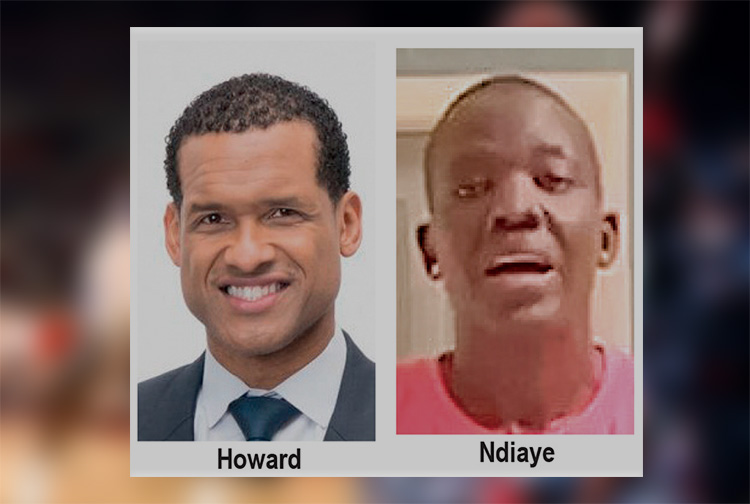
The U.S. Embassy in Colombo welcomed the U.S. Sports Envoys to Sri Lanka, former National Basketball Association (NBA) and Women’s National Basketball Association (WNBA) players Stephen Howard and Astou Ndiaye, from June 8 through 14.
The Public Diplomacy section of the U.S. Embassy said that it would launch a weeklong basketball program intended to harness the unifying power of sports, made possible through collaboration with Foundation of Goodness and IImpact Hoop Lab.
While in Sri Lanka, Howard and Ndiaye, both retired professional basketball players, will conduct a weeklong program, Hoops for Hope: Bridging Borders through Basketball. The Sports Envoys will lead basketball clinics and exhibition matches and engage in leadership sessions in Colombo and Southern Province for youth aged 14-18 from Northern, Uva, Eastern and Western Provinces, offering skills and leadership training both on and off the court. The U.S. Envoys will also share their expertise with the Sri Lanka Basketball Federation, national coaches, and players, furthering the development of basketball in the country. Beyond the clinics, they will collaborate with Sri Lankan schoolchildren to take part in a community service project in the Colombo area.
“We are so proud to welcome Stephen and Astou as our Sports Envoys to Sri Lanka, to build on the strong people-to-people connections between the United States and Sri Lanka,” said U.S. Ambassador Julie Chung. “The lessons that will be shared by our Sports Envoys – communication, teamwork, resilience, inclusion, and conflict resolution – are essential for leadership development, community building, equality, and peace. The U.S. Sports Envoy program is a testament to our belief that sports can be a powerful tool in promoting peace and unity.”
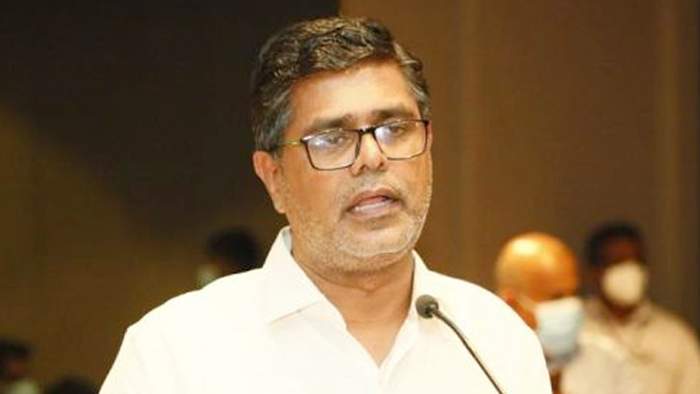
SJB Colombo District MP Mujibur Rahuman in parliament demanded to know from the government the reasons for CEB suspending the leave of all its employees until further notice from Thursday.
MP Rahuman said that the CEB has got an acting General Manager anew and the latter yesterday morning issued a circular suspending leave of all CEB employees with immediate effect until further notice.
“We demand that Minister Kanchana Wijesekera should explain this to the House. This circular was issued while this debate on the new Electricity Amendment Bill was pending. There are many who oppose this Bill. The Minister must tell parliament the reason for the urge to cancel the leave of CEB employees,” the MP said.However, Speaker Mahinda Yapa Abeywardena prevented Minister Wijesekera responding to the query and said that the matter raised by MP Rahuman was not relevant.
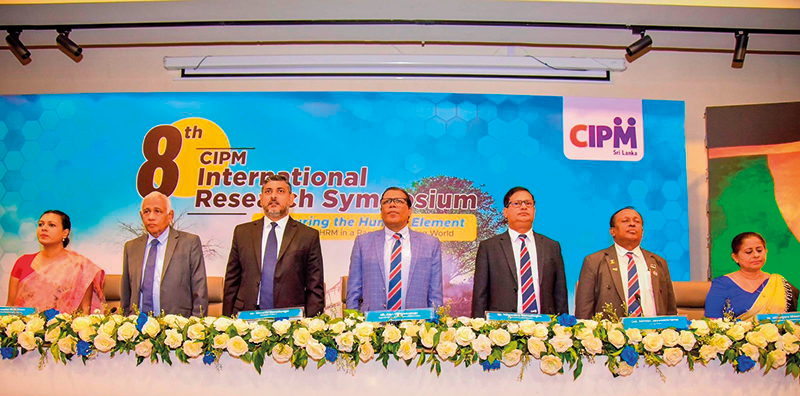
The Chartered Institute of Personnel Management (CIPM) successfully concluded the 8th Annual CIPM Symposium, which took place on 31st May 2024. Themed “Nurturing the Human Element—Redefining HRM in a Rapidly Changing World,” the symposium underscored the pivotal role of human resource management (HRM) in today’s dynamic global landscape. Since its inception in 1959, CIPM has been dedicated to advancing the HR profession through education, professional development, and advocacy, solidifying its position as Sri Lanka’s leading professional body for HRM.
Ken Vijayakumar, the President of the CIPM, graced the occasion as the chief guest. The symposium commenced with the welcome address by the Chairperson, Prof. Arosha Adikaram, followed by the Web Launch of the Symposium Proceedings and Abstract Book by the CIPM President. The event featured distinguished addresses, including a speech by Chief Guest Ken Vijayakumar, President of CIPM, and an address by Guest of Honor Shakthi Ranatunga, Chief Operating Officer of MAS Holdings Pvt. Ltd., Sri Lanka.
The symposium also featured an inspiring keynote address by Prof. Mario Fernando, Professor of Management and Director of the Centre for Cross Cultural Management (CCCM) at the University of Wollongong, Australia.
Vote of Thanks of the inauguration session was delivered by Dr. Dillanjani Weeratunga, Symposium Co-chair.
The symposium served as a comprehensive platform for researchers to present their findings across a wide range of critical topics in HRM. These included Cultural Diversity and Inclusion, Talent Development and Retention, Ethical Leadership and Corporate Social Responsibility, Adapting to Technological Advancements, Mental Health and Well-being at Work, Global Workforce Challenges, Employee Empowerment, and Reskilling and Upskilling.
The plenary session was led by Prof. Wasantha Rajapakse. Certificates were awarded to the best paper presenters during the valedictory session, followed by a vote of thanks delivered by Kamani Perera, Manager of Research and Development.
The annual symposium of CIPM was a truly inclusive event, attracting a diverse audience that spanned undergraduates, graduates, working professionals, research scholars and lecturers. This widespread interest highlights the symposium’s significance in the field of HRM, offering a unique opportunity for everyone to network and learn from scholarly brains.The CIPM International Research Symposium was sponsored by Hambantota International Port, Sri Lanka Institute of Information Technology (SLIIT), E B Creasy & Co. PLC, and Print Xcel Company.



US sports envoys to Lanka to champion youth development

Rahuman questions sudden cancellation of leave of CEB employees


