
News
Expect newer variants with rapid spread of COVID-19 in many parts of South Asia, medical experts say


The uncontrolled spread of COVID-19 in many parts of South Asia implies that newer variants will continue to emerge, a research paper titled ‘Stronger together: a new pandemic agenda for South Asia’ by top South Asian medical experts state.
Among the medical experts is Prof. Neelika Malavige of the Department of Immunology and Molecular Medicine, University of Sri Jayewardenepura.
The paper said that it is estimated that by 1 September 2021, approximately 1.4 million in South Asians will die due to COVID-19 alone. They also said the total number of excess deaths will be much higher—including non-COVID causes, as health systems are on the brink of collapse. With 33.4% of South Asians being extremely poor and the large-scale loss of livelihood being reported, the region faces a potentially catastrophic future for the ongoing decade.
“However, countries in South Asia continue to remain divisive. This differs from other geographic ‘blocs’ that frequently cooperate on mutual interest issues. Tensions in South Asia are shaped by complex domestic, bilateral, intra-regional and international geopolitical factors, despite the region’s obvious geographic, economic and cultural interdependence,” they claim.
A key lesson from the current pandemic is that countries need to share lessons and actively coordinate, complement, and supplement each other’s public health responses, especially between neighbours. The experts then presented a pragmatic ‘Stronger Together’ agenda on critical areas of concern for political, social, medical, and public health leaders in South Asia to consider and build on.
Given below the suggested action plan
“Cross-national surveillance for the
SARS-CoV-2 variants
“The uncontrolled spread of COVID-19 in many parts of South Asia implies that newer variants will continue to emerge. Some variants will inherently display increased transmissibility, infectivity and vaccine/antigenic escape capability, making it difficult for us to track and intelligently act on them. Rapidly scaling up capacity for genomics and rolling out countrywide surveillance systems require increased time and resources. Regional collaborative efforts within existing facilities and building a regional network similar to the Indian SARS-CoV-2 Genome Sequencing Consortia are feasible. The network can also build capacity within each country in the long run making countries self-sufficient to collect data and strengthen regional surveillance. Linking genomic data with clinical and public health data as well as enabling environmental surveillance will provide a more comprehensive picture of circulating SARS-CoV-2 variants. This is an investment, not only for the ongoing pandemic but also for other endemic pathogens and emerging infectious diseases.
“Interconnected and resilient health systems
“Health system capacity and human resources for health remain a major regional challenge. Healthcare worker density in the region is well below the suggested threshold of 44.5 healthcare workers per 10 000 population to achieve universal health coverage. National averages hide the disparities that exist across various geographic, demographic and socioeconomic population groups. The possibility of interconnected and collaborative health systems holds enormous potential, specifically for border areas. Setting up mechanisms for cross-border patient management (relaxed barriers or visa requirements on sharing medical documentation) and regional medical missions is essential from a humanitarian standpoint. Facilitating cross-border teleconsultation by designing more flexible mutually agreed upon regulations will also further boost capacity. At the minimum, peer support groups and tele-mentoring should be put into place. For this, mutual recognition of medical licenses and healthcare qualifications is essential. While close collaborations will be needed for the pandemic response, forming functional mechanisms of public health networking between countries under a long-term regional strategy will be required for developing a shared resilience and preparedness plan.
“Addressing COVID-19 supplies shortage
“There is a dependency on aid from the diaspora and from bilateral, multinational and humanitarian aid agencies to secure COVID-19 supplies during the current surge. This is neither sustainable, nor secure, nor without consequences. South Asian countries need to jointly invest in the augmentation of dedicated production capacities of essential medicines and other supplies. Much has been said about India’s tremendous capacity as the ‘pharmacy of the world’, not recognising manufacturing capacity in Bangladesh, Sri Lanka, Pakistan, Nepal and other countries in the region. Nationalistic policies and hoarding of active pharmaceutical ingredients by high-income countries (HICs) impede access and scale-up. However, such power imbalances can be mitigated to an extent if South Asia acts as a ‘bloc’. Production augmentation alone would not be sufficient—there is a need to agree on shared technology ownership/transfer and an equity-based regional distribution model based on priority groups defined based on assessment of risks and vulnerability.
“COVID-19 vaccines specifically remain a crucial challenge for South Asia. In the short term, South Asian countries must act as a bloc to request excess vaccines from HICs, using a collective needs assessment and a diplomatic approach. In the long term, there is a need to re-invent global health mechanisms such as COVID-19 Vaccines Global Access (COVAX). Equity—the defining purpose of COVAX—has been subverted by HICs who had brought vaccines directly from manufacturers and built stockpiles. The South Asian bloc, together with others, needs to shift COVAX from a neo-colonial purchase-donate model to a model with regional manufacturing hubs. Access to vaccines or essential medicines, a vital component of the right to health, should not be dependent on charitable inclinations, economic or political interests of HICs, or private corporations—a regional effort is required to change the status quo.
“Cooperation between scientific, professional organisations and associations
“Clinical providers (e.g., doctors, nurses), scientists and public health professionals in South Asia must recognise that there is much context-specific knowledge to be learnt from one another and that collaboration is valuable. Shared challenges include low value, irrational clinical care, unregulated home-grown medical solutions and medical misinformation. Many South Asian countries do not develop their own clinical practice guidelines or the ones that are developed are not of high-quality. There is an urgent need for medical associations to collaboratively develop contextually relevant clinical practice guidelines at par with global standards. Advocacy for more significant investments in health and health workers is needed. The social conscience needs to realise that pathogens do not understand nationalism, populism or respect borders. There is also an urgent need to fight against irrationality and anti-science in the region. Drawing on the diverse experiences of countries regarding public health responses, vaccine roll-out, diagnosis and treatment capacity would be highly advantageous in designing effective pandemic responses both immediately and for the long term.
“The way forward
“Focusing on a ‘Stronger Together’ future is a necessary step for tackling health security challenges beyond COVID-19, such as the climate crisis. The longer COVID-19 stays uncontrolled, even in a single country in South Asia, all other countries will be in immediate danger from novel variants and other social, economic and political consequences. Beyond the immediate benefits of addressing the pandemic, a collective regional approach, with global knowledge-exchange collaborations, will be vital for re-imagining the global health structure with equity at its centre.”




The U.S. Embassy in Colombo welcomed the U.S. Sports Envoys to Sri Lanka, former National Basketball Association (NBA) and Women’s National Basketball Association (WNBA) players Stephen Howard and Astou Ndiaye, from June 8 through 14.
The Public Diplomacy section of the U.S. Embassy said that it would launch a weeklong basketball program intended to harness the unifying power of sports, made possible through collaboration with Foundation of Goodness and IImpact Hoop Lab.
While in Sri Lanka, Howard and Ndiaye, both retired professional basketball players, will conduct a weeklong program, Hoops for Hope: Bridging Borders through Basketball. The Sports Envoys will lead basketball clinics and exhibition matches and engage in leadership sessions in Colombo and Southern Province for youth aged 14-18 from Northern, Uva, Eastern and Western Provinces, offering skills and leadership training both on and off the court. The U.S. Envoys will also share their expertise with the Sri Lanka Basketball Federation, national coaches, and players, furthering the development of basketball in the country. Beyond the clinics, they will collaborate with Sri Lankan schoolchildren to take part in a community service project in the Colombo area.
“We are so proud to welcome Stephen and Astou as our Sports Envoys to Sri Lanka, to build on the strong people-to-people connections between the United States and Sri Lanka,” said U.S. Ambassador Julie Chung. “The lessons that will be shared by our Sports Envoys – communication, teamwork, resilience, inclusion, and conflict resolution – are essential for leadership development, community building, equality, and peace. The U.S. Sports Envoy program is a testament to our belief that sports can be a powerful tool in promoting peace and unity.”
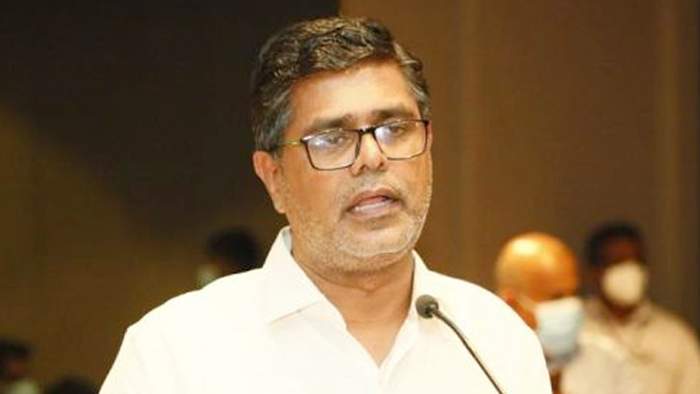
SJB Colombo District MP Mujibur Rahuman in parliament demanded to know from the government the reasons for CEB suspending the leave of all its employees until further notice from Thursday.
MP Rahuman said that the CEB has got an acting General Manager anew and the latter yesterday morning issued a circular suspending leave of all CEB employees with immediate effect until further notice.
“We demand that Minister Kanchana Wijesekera should explain this to the House. This circular was issued while this debate on the new Electricity Amendment Bill was pending. There are many who oppose this Bill. The Minister must tell parliament the reason for the urge to cancel the leave of CEB employees,” the MP said.However, Speaker Mahinda Yapa Abeywardena prevented Minister Wijesekera responding to the query and said that the matter raised by MP Rahuman was not relevant.
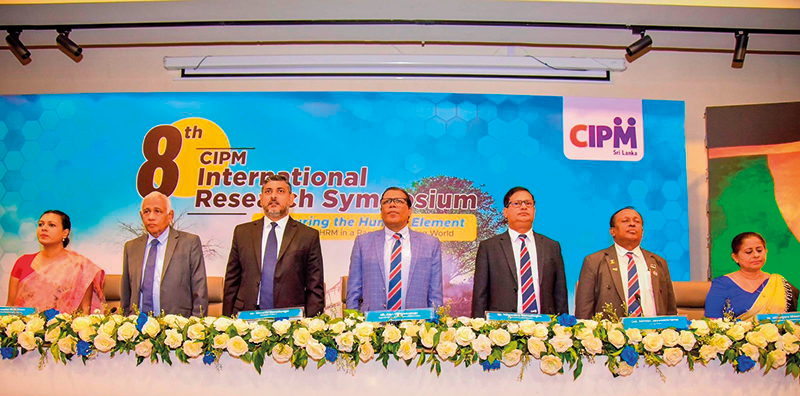
The Chartered Institute of Personnel Management (CIPM) successfully concluded the 8th Annual CIPM Symposium, which took place on 31st May 2024. Themed “Nurturing the Human Element—Redefining HRM in a Rapidly Changing World,” the symposium underscored the pivotal role of human resource management (HRM) in today’s dynamic global landscape. Since its inception in 1959, CIPM has been dedicated to advancing the HR profession through education, professional development, and advocacy, solidifying its position as Sri Lanka’s leading professional body for HRM.
Ken Vijayakumar, the President of the CIPM, graced the occasion as the chief guest. The symposium commenced with the welcome address by the Chairperson, Prof. Arosha Adikaram, followed by the Web Launch of the Symposium Proceedings and Abstract Book by the CIPM President. The event featured distinguished addresses, including a speech by Chief Guest Ken Vijayakumar, President of CIPM, and an address by Guest of Honor Shakthi Ranatunga, Chief Operating Officer of MAS Holdings Pvt. Ltd., Sri Lanka.
The symposium also featured an inspiring keynote address by Prof. Mario Fernando, Professor of Management and Director of the Centre for Cross Cultural Management (CCCM) at the University of Wollongong, Australia.
Vote of Thanks of the inauguration session was delivered by Dr. Dillanjani Weeratunga, Symposium Co-chair.
The symposium served as a comprehensive platform for researchers to present their findings across a wide range of critical topics in HRM. These included Cultural Diversity and Inclusion, Talent Development and Retention, Ethical Leadership and Corporate Social Responsibility, Adapting to Technological Advancements, Mental Health and Well-being at Work, Global Workforce Challenges, Employee Empowerment, and Reskilling and Upskilling.
The plenary session was led by Prof. Wasantha Rajapakse. Certificates were awarded to the best paper presenters during the valedictory session, followed by a vote of thanks delivered by Kamani Perera, Manager of Research and Development.
The annual symposium of CIPM was a truly inclusive event, attracting a diverse audience that spanned undergraduates, graduates, working professionals, research scholars and lecturers. This widespread interest highlights the symposium’s significance in the field of HRM, offering a unique opportunity for everyone to network and learn from scholarly brains.The CIPM International Research Symposium was sponsored by Hambantota International Port, Sri Lanka Institute of Information Technology (SLIIT), E B Creasy & Co. PLC, and Print Xcel Company.



US sports envoys to Lanka to champion youth development

Rahuman questions sudden cancellation of leave of CEB employees


