News
Environmentalists want road constructions and cattle grazing stopped in Flood Plains National Park

Seeks President’s intervention
by Ifham Nizam
Some environmental and science based organizations have sought President Gotabaya Rajapaksa’s intervention to halt road constructions and the practice of allowing cattle to graze in the Flood Plains National Park as it could aggravate the human-elephant conflict.
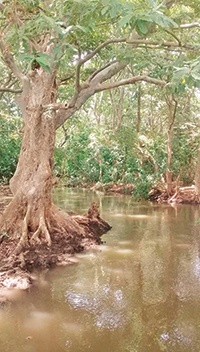
Flood Plains National Park is situated in the flood plain of the Mahaweli river and is one of the four national parks designated under the Mahaweli river development project.
Situated 222 kilometers from Colombo, the park is a rich feeding ground for elephants and also serves as an elephant corridor for the grey giants migrating between Wasgamuwa national park and the Somawathiya national park.

He said that by allowing cattle to graze on vital nutrients at the parks, elephants will be forced to raid crops.
“If this trend continues, it would be disastrous”, he warned.
There are moves to promote agricultural and other cultivation projects in the surrounding areas, he noted.
He urged President Rajapaksa to put an end to the proposed road development as it would destroy the Flood Plains National Park.
The Flood Valley National Park was declared on August 7, 1984, with the protection of the floodplain of the Mahaweli River, a unique ecosystem created by the Mahaweli, the longest river in Sri Lanka, as its main objective.
Another objective is to provide a habitat for many wildlife species, including wild elephants, which lost their traditional habitats due to the Mahaweli Development Scheme.
Covering an area of 17,350 hectares, the national park is home to beautiful landscapes and ecosystems. It provides prey for a large animal community.
According to renowned environment lawyer, Dr. Jagath Gunawardena, the area was declared a National Park under Section 2, subsection 1 of the Flora and Fauna Protection Ordinance (FFPO).
Therefore, any area declared under this section can have state land and land other than that of the state. According to Section 5, no person can enter or remain within a nature reserve except under the authority and in accordance with the conditions of a permit issued by the prescribed officer on payment of the prescribed fee. Section 6 refers to acts that are prohibited within a Strict Natural Reserve, National Park and other protected areas, he said.
Therefore, nobody will be allowed to destroy the land, make any forest clearings, clear or break up any land for cultivation, mining or any other purposes, fell, girdle, tap, burn or in any way damage or destroy any plant or take, collect or remove any plant, Gunawardena explained.
There are clear violations set out in Sections 5 and 6. If Section 6 is violated, a perpetrator could be arrested without a warrant and it is a non-bailable offense, he continued.
Public Service Trade Union Federation, Chairman W. H. Piyadasa said that Forest Department repossessed the land on court orders after reporting the construction of an illegal road from Manepitiya to Yakkugar through the Polonnaruwa Floodplain National Park and the illegal cultivation in the wildlife reserve.
Centre for Justice, Executive Director, Hematha Withanage has also taken up the matter with the President.