
News
Ending gender-based violence in a world of 8 billion

How a new term, reproductive violence, helps confront an old problem
UNITED NATIONS, New York (UNFPA) – Whether to have children or not is one of the most life-altering decisions a person can make.But as UNFPA’s 2022 State of World Population report shows, people around the world – especially women and members of marginalized groups – are frequently denied any choice in the matter, with partners, relatives, health care providers and even governments making or strongly influencing these decisions.
“Men have greater decision-making power [regarding contraception]. Women may have to act secretly/discreetly to get contraception services,” a man in India told report authors.
“Men hold the ultimate decision-making power. It is common practice for providers to ask for the husband’s consent,” a woman in Sudan said.
Though women’s reproductive decisions have been subject to interference for centuries, it’s only in the last decade that researchers have begun to recognize and explore this concept. They call it reproductive violence.
What does reproductive violence look like?
Reproductive violence includes any form of abuse, coercion, discrimination, exploitation or violence that compromises a person’s reproductive autonomy.
This form of gender-based violence can be committed by individuals such as partners, relatives and health care providers, or by entire communities, as social norms influence societies’ ideas of who should or should not be a parent. Meanwhile governments often exert this form of violence through laws and institutions, by preventing access to contraceptives or even conducting forced sterilization campaigns, for instance.
At the interpersonal level, reproductive violence might look like a partner hiding, destroying or even forcefully removing their partner’s birth control, or involve “stealthing” – the practice of removing a condom during sex without consent.
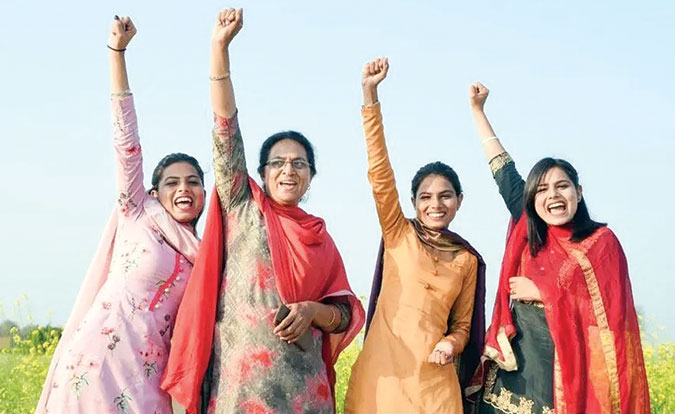
For others, reproductive violence follows the news of a pregnancy, with some women compelled against their will into motherhood and others, to terminate.It was the latter action that 58-year-old Jasbeer Kaur from Rajasthan, India, told UNFPA in 2020 that her husband’s family tried to force on her after learning Jasbeer was pregnant with triplets – all girls.
“No daughter had been born in my husband’s family in the last three generations. They told me, we won’t allow three daughters to be born in the house at the same time. They gave me an ultimatum: Get an abortion or leave,” Kaur said.
In demanding this of her, Kaur’s in-laws were perpetuating harmful social and gender norms that assign higher value to boys’ lives than those of girls. Members of Kaur’s community reinforced this discriminatory perspective, calling Kaur “poor thing” for not having any sons.
“Here, people still think … as a mother, you haven’t done your bit until you’ve given birth to a son,” one of Kaur’s neighbours told UNFPA.
But Kaur stood up to these norms and practices. She chose to leave her husband and his family and to keep her pregnancy. Today, her triplets Mandeep, Sandeep and Pardeep are all in their mid-twenties, building careers across the arts, business and health care.
“Today, people know us as Jasbeer Kaur’s daughters. We want to make something of our lives,” Sandeep said.
Seeing the problem to solve it
Although reproductive violence often involves partners and family members, as in Kaur’s case, they are not the only perpetrators. Governments and institutions also commit acts of reproductive violence through coercive laws and policies, some of which aim to control national-level fertility.
With the global population now eclipsing 8 billion people, countries’ population policies have entered the spotlight. And evidence has begun to emerge, especially, of countries seeking to boost fertility through problematic means, including by limiting access to abortion and cutting sex education from school.
UNFPA has warned that these efforts to engineer population size typically have little impact on fertility in the short term, and in the long term, risk causing major problems.
“Focusing on numbers alone treats people as commodities, stripping them of their rights and humanity,” UNFPA Executive Director Dr. Natalia Kanem said on 14 November in an op-ed for TIME. “We have too often seen leaders setting targets for population size or fertility rates, and the grievous human rights abuses that result.”
“Let’s be clear: When we talk about the ‘problem’ with fertility rates or an ‘ideal’ population size, we are really talking about controlling people’s bodies. We are talking about asserting power over their capacity for reproduction, whether by influence or by force, from policies where families are paid to have more children, to egregious violations like forced sterilization, often suffered by ethnic minorities, indigenous peoples, and people with disabilities.”
Today, many women are unable to exert control over their reproductive lives. UNFPA reports that across 64 countries, more than 8 per cent of women lack the power to decide on contraception, and nearly a quarter of women lack the power to say no to sex.
Specifically regarding reproductive violence, UNFPA is currently working on a technical paper and developing a measurement tool to help health care practitioners, researchers, institutions and governments identify where, when and how these violations occur. It’s a critical step towards helping societies address this issue and safeguard people’s rights and choices.
“A resilient world of 8 billion, a world that upholds individual rights and choices, offers infinite possibilities – possibilities for people, societies and our shared planet to thrive and prosper,” said Dr. Kanem.


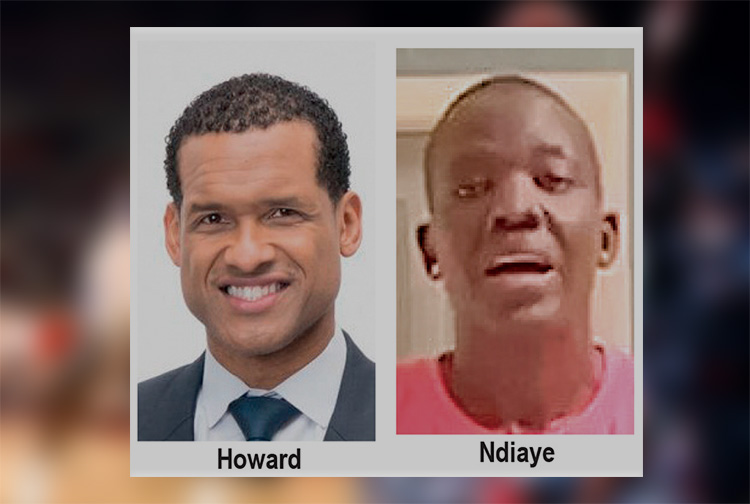
The U.S. Embassy in Colombo welcomed the U.S. Sports Envoys to Sri Lanka, former National Basketball Association (NBA) and Women’s National Basketball Association (WNBA) players Stephen Howard and Astou Ndiaye, from June 8 through 14.
The Public Diplomacy section of the U.S. Embassy said that it would launch a weeklong basketball program intended to harness the unifying power of sports, made possible through collaboration with Foundation of Goodness and IImpact Hoop Lab.
While in Sri Lanka, Howard and Ndiaye, both retired professional basketball players, will conduct a weeklong program, Hoops for Hope: Bridging Borders through Basketball. The Sports Envoys will lead basketball clinics and exhibition matches and engage in leadership sessions in Colombo and Southern Province for youth aged 14-18 from Northern, Uva, Eastern and Western Provinces, offering skills and leadership training both on and off the court. The U.S. Envoys will also share their expertise with the Sri Lanka Basketball Federation, national coaches, and players, furthering the development of basketball in the country. Beyond the clinics, they will collaborate with Sri Lankan schoolchildren to take part in a community service project in the Colombo area.
“We are so proud to welcome Stephen and Astou as our Sports Envoys to Sri Lanka, to build on the strong people-to-people connections between the United States and Sri Lanka,” said U.S. Ambassador Julie Chung. “The lessons that will be shared by our Sports Envoys – communication, teamwork, resilience, inclusion, and conflict resolution – are essential for leadership development, community building, equality, and peace. The U.S. Sports Envoy program is a testament to our belief that sports can be a powerful tool in promoting peace and unity.”
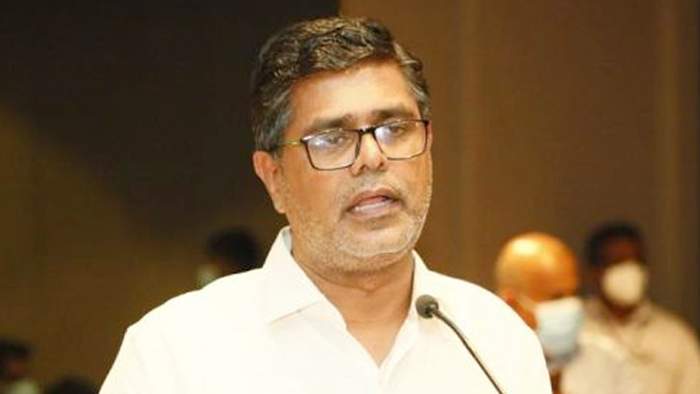
SJB Colombo District MP Mujibur Rahuman in parliament demanded to know from the government the reasons for CEB suspending the leave of all its employees until further notice from Thursday.
MP Rahuman said that the CEB has got an acting General Manager anew and the latter yesterday morning issued a circular suspending leave of all CEB employees with immediate effect until further notice.
“We demand that Minister Kanchana Wijesekera should explain this to the House. This circular was issued while this debate on the new Electricity Amendment Bill was pending. There are many who oppose this Bill. The Minister must tell parliament the reason for the urge to cancel the leave of CEB employees,” the MP said.However, Speaker Mahinda Yapa Abeywardena prevented Minister Wijesekera responding to the query and said that the matter raised by MP Rahuman was not relevant.
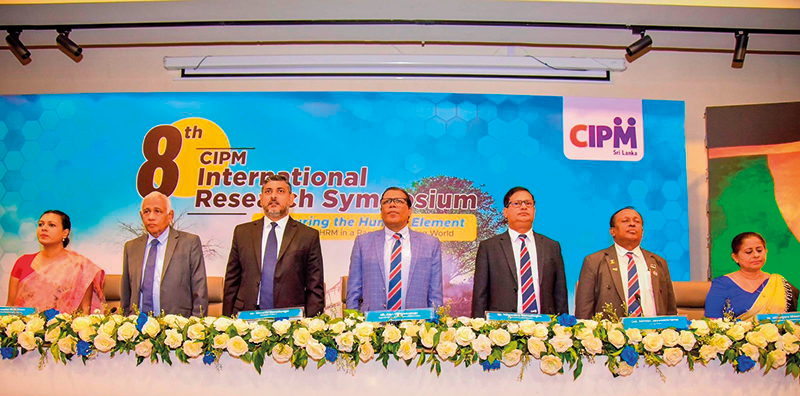
The Chartered Institute of Personnel Management (CIPM) successfully concluded the 8th Annual CIPM Symposium, which took place on 31st May 2024. Themed “Nurturing the Human Element—Redefining HRM in a Rapidly Changing World,” the symposium underscored the pivotal role of human resource management (HRM) in today’s dynamic global landscape. Since its inception in 1959, CIPM has been dedicated to advancing the HR profession through education, professional development, and advocacy, solidifying its position as Sri Lanka’s leading professional body for HRM.
Ken Vijayakumar, the President of the CIPM, graced the occasion as the chief guest. The symposium commenced with the welcome address by the Chairperson, Prof. Arosha Adikaram, followed by the Web Launch of the Symposium Proceedings and Abstract Book by the CIPM President. The event featured distinguished addresses, including a speech by Chief Guest Ken Vijayakumar, President of CIPM, and an address by Guest of Honor Shakthi Ranatunga, Chief Operating Officer of MAS Holdings Pvt. Ltd., Sri Lanka.
The symposium also featured an inspiring keynote address by Prof. Mario Fernando, Professor of Management and Director of the Centre for Cross Cultural Management (CCCM) at the University of Wollongong, Australia.
Vote of Thanks of the inauguration session was delivered by Dr. Dillanjani Weeratunga, Symposium Co-chair.
The symposium served as a comprehensive platform for researchers to present their findings across a wide range of critical topics in HRM. These included Cultural Diversity and Inclusion, Talent Development and Retention, Ethical Leadership and Corporate Social Responsibility, Adapting to Technological Advancements, Mental Health and Well-being at Work, Global Workforce Challenges, Employee Empowerment, and Reskilling and Upskilling.
The plenary session was led by Prof. Wasantha Rajapakse. Certificates were awarded to the best paper presenters during the valedictory session, followed by a vote of thanks delivered by Kamani Perera, Manager of Research and Development.
The annual symposium of CIPM was a truly inclusive event, attracting a diverse audience that spanned undergraduates, graduates, working professionals, research scholars and lecturers. This widespread interest highlights the symposium’s significance in the field of HRM, offering a unique opportunity for everyone to network and learn from scholarly brains.The CIPM International Research Symposium was sponsored by Hambantota International Port, Sri Lanka Institute of Information Technology (SLIIT), E B Creasy & Co. PLC, and Print Xcel Company.



US sports envoys to Lanka to champion youth development

Rahuman questions sudden cancellation of leave of CEB employees


