Features
Eat right to reduce the cancer risk

The recently held seminar on ‘Food and Cancers- Truths and Myths,’ organized by the Sri Lanka Medical Association, unraveled that many cancers can be prevented with the correct diet. The expert clinicians who spoke at the event also pointed out that the ‘Mediterranean Diet’ which the modern research confirms to be one of best cancer preventive diets, shares so much in common with the traditional Sri Lankan diet, which we all need to re-embrace urgently.
by Randima Attygalle
While the West is increasingly revisiting the oriental food habits, we are sadly moving towards the unhealthy western food culture. The increased incidence of breast and colorectal cancer in Sri Lanka, two types of cancers which have a direct bearing on the unhealthy diet and common in the West, best manifests this trend, pointed out Dr. Jayantha Balawardane, Senior Consultant Oncologist and the Head of the Department of Oncology, Faculty of Medicine, Kotelawala Defence University.
“Many epidemiology studies have shown that 30% of the human cancers are often related to food and nutrition. From about 3,000 to 4,000 annual cases in the late 80s, today we find more than 20,000 cancer patients reported in a year here at home,” remarked the Oncologist who cited the Japanese experience as the ‘strongest historical evidence’ supporting the cancer-food relationship. After the end of the Second World War many Japanese settled in the West. A population that was notable for very low prevalence of colorectal and breast cancer owing to their healthy Japanese diet, turned out to be “as bad as the West” within about a decade of their migration. The new food habits they acquired, he explained, were found to be the main triggers.


Calorie-restriction has a powerful anti-cancer effect, explained the physician who also cited refined carbs and increased fat consumption (largely animal fat) to be adding to the calorie intake. Carcinogens in cooked red meats such as beef, pork and lamb can promote cancer, he said. Methods of cooking too has a bearing on cancer, noted the Oncologist who warned that repeated use of cooking oil termed as ‘thermal abuse’ can release ‘very potent carcinogens’.
Food additives which are used to alter the colour, taste, texture and stability of food can also trigger cancers. The US Food and Drug Administration (FDA) recently banned seven such carcinogenic chemicals which were used in making of ice cream, beverages and chewing gum. Daily consumption of 500 gms of vegetables and fruits can reduce the incidence of certain cancers by 25%. This is made possible by the fibres, vitamins, minerals and other biologically active components, he explained. He went on to note that regular consumption of salted, pickled and smoked food such as bacon, salami and ham can cause stomach and colorectal cancers. “Alcohol which provides what is known as ‘empty calories’ and certain types of spicy food and very hot beverages can also increase the cancer risk,” remarked Dr. Balawardane. Unhealthy eating is compounded by sedentary lifestyle, added the physician adding “today we find more grass in playgrounds than children!”
The Cancer Registry of 2014 identifies top ten cancers here at home: breast, lip and oral, cervix, ovary, thyroid, colon, oesophagus, prostrate, lung and uterus. “Excess calories from any source leads to weight gain and increased risk of multiple cancers,” said Dr. Renuka Jayatissa, Head of the Department of Nutrition at the Medical Research Institute (MRI) and President of the Sri Lanka Medical Nutrition Association (SLMNA). Citing MRI findings, the Clinical Consultant Nutritionist went on to note that except in a very dew districts, overweight and obesity among local women and adolescents (10-14 years) is more than 40%.
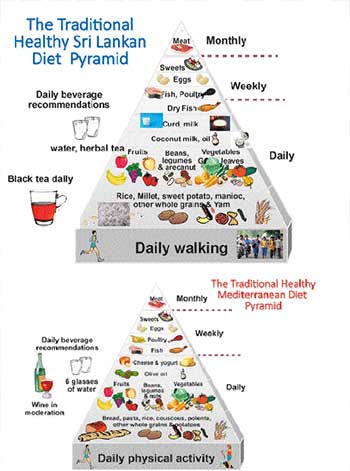

“Today the Mediterranean diet with a high intake of fruits, vegetables, nuts and legumes is a highly sought cancer-preventive diet. The 2020 American Cancer Society’s recommended diet promotes more vegetables and fruits, whole grains, low or zero red meats, processed food and refines grains. All these diets share a lot in common with our own traditional diet and we need to seriously think of going back in time in terms of our food patterns.” Although countries like the US are now on a reverse gear with their food, it is too late for them, where as we still can afford to go back, pointed out Dr. Jayatissa.
Patients with diabetes have a two-fold risk of cancers in the liver, pancreas, and endometrium. The WHO- recommended ceiling of six teaspoons of sugar per day from all food sources is grossly neglected today. “Gone are the times when sweetmeats were limited to festive seasons. Today sweets, biscuits, flavoured milk packets and fizzy drinks have become everyday food together with fatty fast food,” observed the Nutritionist who warned that the fat intake in childhood and adolescence carries a greater risk than its intake during adulthood.
Following recommendations were made by Dr. Jayatissa to keep those extra calories at bay and thereby reduce the risk of cancer which has become an epidemic in the country today:
=Be lean as much as possible without being underweight
=Avoid sugary drinks and sugary food
=Limit high fat and processed food such as bacon, salami, ham, hot dogs
=Eat a variety of vegetables and fruits and limit fried and starchy vegetables
=Eat more unpolished rice and less refined flour – include pulses in the diet. This improves gut health and reduces the risk of colon cancer. To prevent constipation, use our local remedies such as aralu.
=Reduce alcohol
=Don’t use supplements to protect against cancer, instead count on healthy food
=Add antioxidant rich food to the diet
Traditional fruits of ours such as madan, uguressa, maha karamba, himbutu are highly recommended.
= Consume more fish
There is an inverse relationship between fish intake and rectal and colon cancer. Small fish such as sudaya, hurulla, salaya, keeramin are rich in omega fatty acids and can reduce the risk of these cancers.
=Maintain proper dietary patterns with minimum ultra-processed foods
(ex: mass produced packaged bread, packaged snacks, sodas, instant soups, frozen meals.

