
Life style
Dosa : wholesome fast food obsession

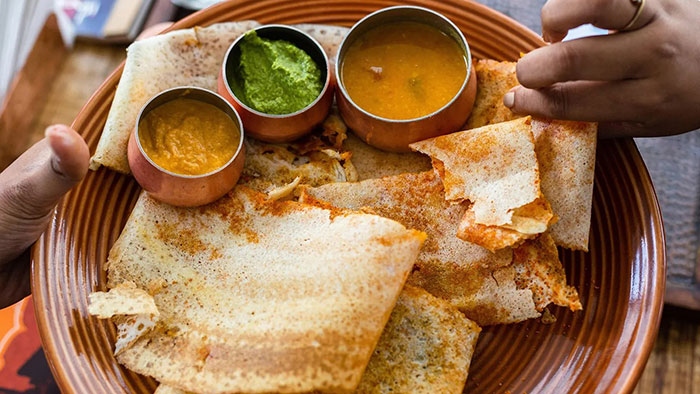
While South Indians have eaten this go-to breakfast food for thosands of years, it has evolved into a fast food item to be eaten at just about any time, day and night.
It was time for Sunday breakfast, and I sprinkled a few water droplets onto a hot griddle to check if they would sizzle. Perfect. Quickly, I poured a ladleful of pale batter onto the pan’s centre, gently spiralling it outwards. Then, raising the heat, I added a generous spoonful of ghee (clarified butter) around the newly formed disc, which soon began to rise slightly and curl at the edges. Now it was time to flip it and cook the other side.
The traditional dosai dates back at least two millennia
Although the glistening, golden-brown circle might have looked like a French crepe or a Russian blini, it was neither. It was a dosai, a thin South Indian pancake made from a fermented batter of soaked rice and black gram, a 2,000-year-old dish beloved by millions of Indians that can now be found in almost every part of the planet, from Parry’s Corner in Chennai to Paris’ La Chapelle neighbourhood (also known as “Tamil Town” or “Little Jaffna”).
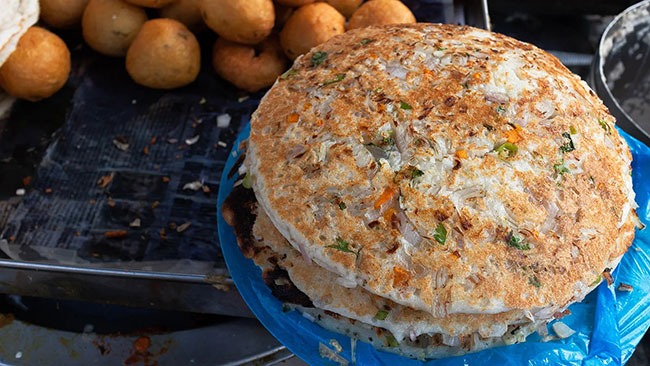
With no time for admiration, I carefully slid a spatula under the hot pancake and plated it alongside a small heap of idli podi, a spicy lentil-based powder. After making a slight crater in the heap, I filled it with gingelly (sesame) oil and mixed them together. Finally, I tore a piece off the crispy dosai, dabbed it in the mixture and popped it into my mouth, enjoying a pleasant burst of tart and spicy flavours followed by an earthy aftertaste of sesame.
This is how millions of South Indians eat this wholesome and satisfying vegetarian dish every morning, sometimes opting for a side of chutney and sambhar (a tangy lentil-based broth) over the idli podi. However, over time, the dosai – also known as thosai, dose or attlu, depending on the Indian region, and as the anglicised “dosa” around the world – has evolved to include different ingredients and fillings such as spicy potatoes as in the globally ubiquitous masala dosa.
The traditional dosai dates back at least two millennia, being documented in ancient literature and passed down through the generations, with the South Indian states of Tamil Nadu and Karnataka both claiming it as their own. In his book The Story of Our Food, food historian K T Achaya says that King Someshwara III (who ruled parts of the present-day Karnataka state) mentions dosai as “dosaka” in the 12th-Century Sanskrit literary work Manasollasa. However, ancestors of the dosai such as mell adai (a pancake made of lentils and rice) and appam (a rice pancake soaked in coconut milk) were being consumed in the Tamil region much earlier.
“Appam and mell adai do find a mention in Madhuraikanchi, a Sangam age literary work from the 3rd or 4th Century,” said Jayakumar S, a researcher of South Indian history and founder of . “But, the actual term “dosai” seems to have been added much later into the lexicon.” He further explained that Senthan Divakaram, an ancient Tamil lexicon (some ascribe it to the 10th Century) attributes dosai to one of the varieties of appam that’s often eaten with the coconut milk on the side.
Despite any debate over who owns the dosai, chefs from the Udupi region in Karnataka were credited with the crispy version we know now somewhere in the 19th Century. Until then, the dosai was more of a soft, fluffy and lacy crepe. And to this day, institutions like (opened in 1924) and (opened in 1943) in Karnataka’s capital Bengaluru have been dishing out delectable dosai for decades. By the early 20th Century, however, many Udupi chefs had migrated to larger Indian towns and cities, popularising the dosai – especially the masala dosa – across India as an affordable breakfast item given its humble and widely available ingredients.
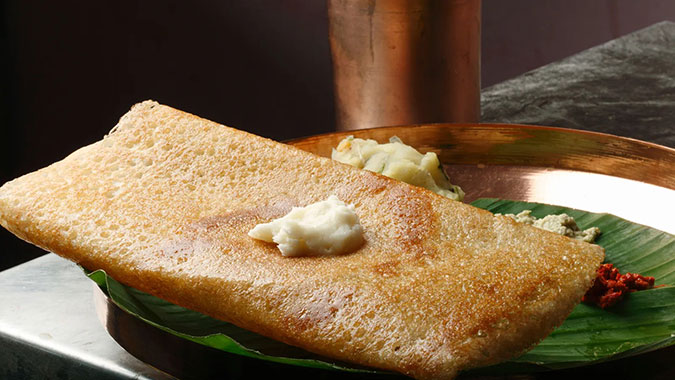
In 2003, the Chennai-based chain took things to the next level by opening South Indian restaurants in various countries, starting in Dubai. And the dosai has continued to grow in popularity around the world, mainly due to the large Indian diaspora who regularly devour the dish and its many variations – including US Senator and current vice presidential candidate Kamala Harris, whose video of took Twitter by storm last November.
The dosai has also recently become trendy in health and wellness circles in India, as it’s considered due to the probiotic qualities that come from its fermentation process. The soaked triad of rice, black gram and a few fenugreek seeds (which impart a distinctive nutty flavour and bitter undertones) is ground with some water and then transferred to a vessel to ferment naturally for seven to eight hours. A few spoonfuls of salt are added after grinding to accelerate the fermentation process.
“The final fermented batter, owing to the action of lactic acid bacteria and yeasts, has increased levels of essential amino acids. This aids in the reduction of anti-nutrients (such as phytic acid) and enzyme inhibitors, thus making it an extremely nutritious food to consume,” explained microbiologist Dr Navaneetha T.
The dosai, termed “dosaka” in ancient Ayurveda texts, is also used by Ayurveda experts in bespoke treatment menus.
“Dosa and idli
[a savoury rice cake made with the same batter as dosai] are part of the diet to treat muscle wasting, constipation and debility,” said Dr Sreelakshmi, a senior wellness consultant in Delhi.
We can dish out almost 70 varieties of dosas at any given time
For most Indians though, dosai is a go-to breakfast food that has evolved into a fast food item to be eaten at just about any time, day and night. Owing to its popularity, affordability of its ingredients and the ease with which the batter ferments in a tropical region like India, dosa outlets can be now found in every corner of the country and beyond.
“Over the years, the batter’s flexibility to be dished out in many variations has aided and lent itself to dosa’s evolution as comfort food,” said chef Thirugnanasambantham K, principal of Welcomgroup Graduate School of Hotel Administration in Manipal. And while the dosai is usually eaten plain (sans fillings), food trends, ingredient availability and convenience factors have resulted in many alternative dosai varieties, both filled and non-filled.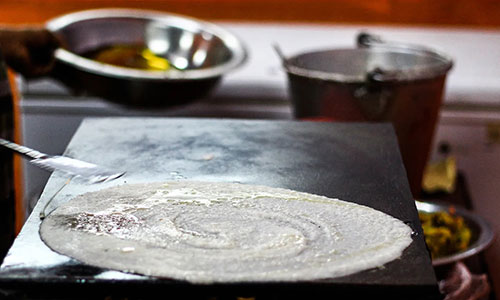
For example, in households across Tamil Nadu, when the fermented batter turns overtly sour from too much fermentation, it gets transformed into uthappam (a thicker dosai with chopped or sliced vegetables); while coconut milk is used instead of black gram in the delicious appam. And new varieties are being created all the time. From Szechuan dosa, hailing from India’s Chinese culinary influence, to the North Indian-inspired paneer butter masala dosa, there is no dearth of dosas churned out by food ventures across India. Even McDonald’s capitalised on this culinary obsession by introducing its in December 2019.
Brothers Ritesh Bhattad, 31, and Ygesh Bhattad, 33, are second-generation businessmen who have flourished by swirling the humble dosai batter. “We can dish out almost 70 varieties of dosas at any given time,” said Ritesh. “However, our signature RBS dosa [filled with grated paneer and onions mixed with peanut chutney and spices] easily sells close to 5,000 pieces every month.” The duo’s successful family-run fast food and catering enterprise, in Hyderabad, has been a hit with college students and office workers, allowing them to open outlets at three more locations across the city.
According to , the masala dosa has been the most-ordered vegetarian dish across India during the pandemic. A whopping 331,423 masala dosas have been delivered by India’s food delivery company, , since lockdown began in the last week of March. This version of dosai has become synonymous with South Indian cooking around the world, although it wasn’t part of India’s culinary history until the Dutch and Portuguese introduced potatoes to India in the 17th Century.
However, in South India, the dosai remains more sacred than a mere breakfast or fast food item, and forms part of the edible offerings to god categorised as “temple cuisine”, which follows closely guarded recipes and sometimes old temple inscriptions.
Azahagar Kovil temple in Madurai, for example, makes a thick and fluffy dosai spiced with cumin seeds and crushed black pepper that is deep-fried in ghee as a divine offering, which is then eaten by devotees. In the town of Kanchipuram in Tamil Nadu, a dosai recipe is depicted on the walls of Varadaraja Perumal Temple. “We have an interesting 16th-Century inscription on the walls… mentioning the preparation of dosai (both savoury and sweet) during Ekadasi processions [religious events conducted on the 11th day after the full moon, and on the 11th day after the new moon],” said Jayakumar S. “This confirms that dosai has been part of the Indian temple cuisine for a long time.”
Whether made at a temple, on the streets or at home, the dosai in its many variations is a divinely tasting food that is deeply embedded into Indian culture.In my family, the dosai isn’t just another food; it’s more like an emotion that cannot be replicated – only experienced in the moment. These words of wisdom came from my grandma, who, a few years back, let me in on an age-old secret shared in turn by her grandma: that no two people can swirl a dosai the same way, no matter how much one tries.
– BBC



Institute of Hospitality Sri Lanka
 The 32nd Annual General Meeting (AGM) of the UK-based Institute of Hospitality’s Sri Lanka Chapter was held recently at the Ramada Hotel Colombo,.The event provided an evening of camaraderie , reflection of the past and present achievements,setting new benchmarks for the future
The AGM had the presence of two distinguished guests, the Chief Guest Opposition Leader Sajith Premadasa, and the Guest of Honour British High Commissioner to Sri Lanka, Andrew Patrick. Their inspiring speeches were lauded by all hoteliers who were present at the occasion
A special thanks was extended to Robert Richardson, CEO of the Institute of Hospitality UK, along with his team, sponsors, committee members, and all attendees for making the event memorable.
Dr. Harsha Jayasingh, Past President of the Institute of Hospitality (UK) Sri Lanka Chapter, emphasised the Institute’s longstanding history and the strength of its Sri Lankan branch. “The Institute of Hospitality (IH) UK has a history of 86 years, and we are proud to be the Sri Lanka Branch. IH Sri Lanka is much stronger now with many members from all areas of the hospitality industry,” he stated.
Dr. Jayasingh highlighted the significant role of tourism in Sri Lanka’s economy,. He said tourism it is the third-largest source of revenue for the country. “Tourism accounts for about 13.3% of total foreign exchange earnings and employs 450,000 people directly and indirectly. The hospitality industry in this island of pearl holds tremendous potential for economic growth, job creations, and cultural exchange,” he added.
He also pointed out more women should be attracted to the industry and advocated for the use of technology in hospitality sector to attract the younger generation.
The newly appointed Chairman Ramesh Dassanayake spoke about the challenges faced by the industry, including the reluctance of youth to join the sector. . Dassanayake expressed concerns over the migration of staff between hotels and the overall ‘brain drain’ in the sector. ” We must maintain high standards in the hotel We must try to attract tourists to Sri Lanka, we must have with many facilities Hence, hotel schools and other professional institutions involved in skills development mustincrease their intakes,” he pointed out.
Chief Guest Sajith Premadasa emphasised the importance of eco tourism and said “We need to have an environmental policy related to tourism in place,” . .
The 32nd AGM of the Institute of Hospitality UK, Sri Lanka Chapter, was a testament to the strength and potential of Sri Lanka’s hospitality industry. The insights and commitments shared during the event set a new benchmark for the future.(ZC)


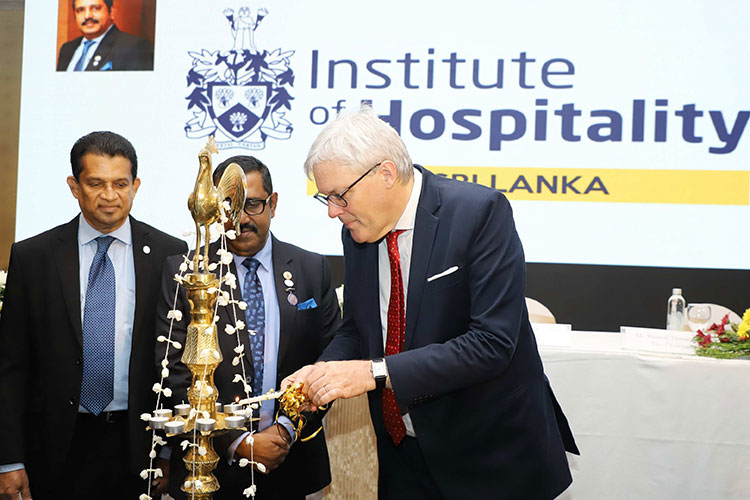
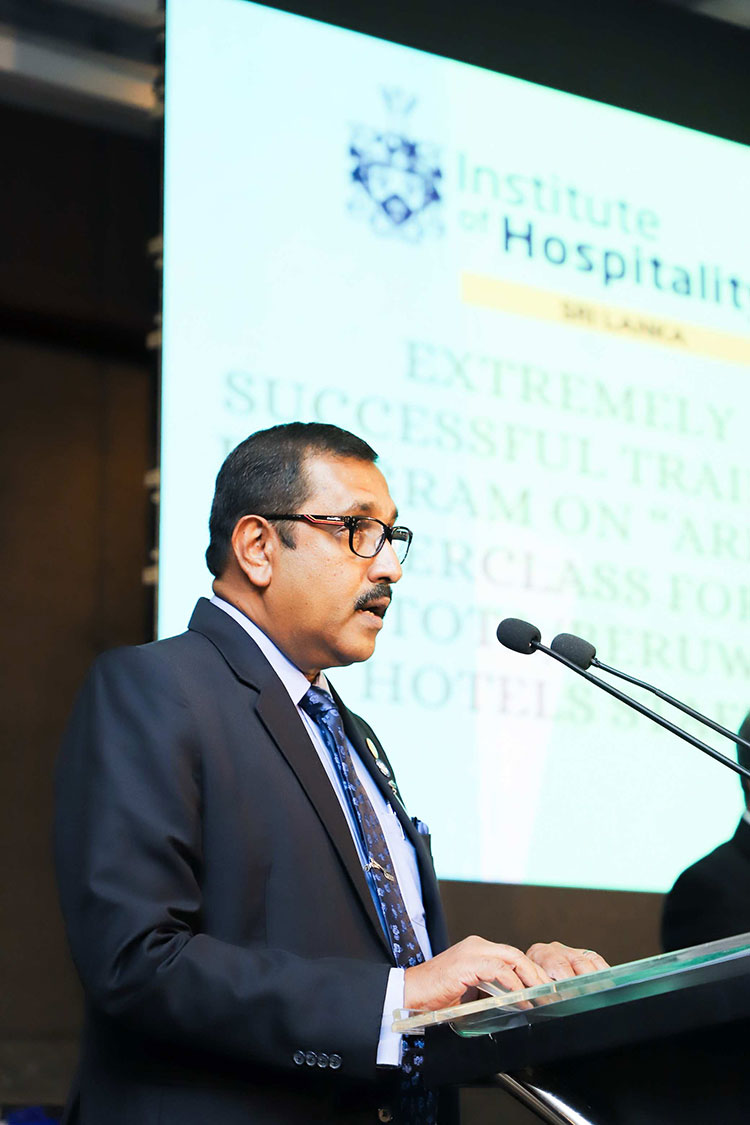

Pix by Thushara Attapathu
Life style
He recognizes human identity beyond boundaries of gender, race, nationality and religion.
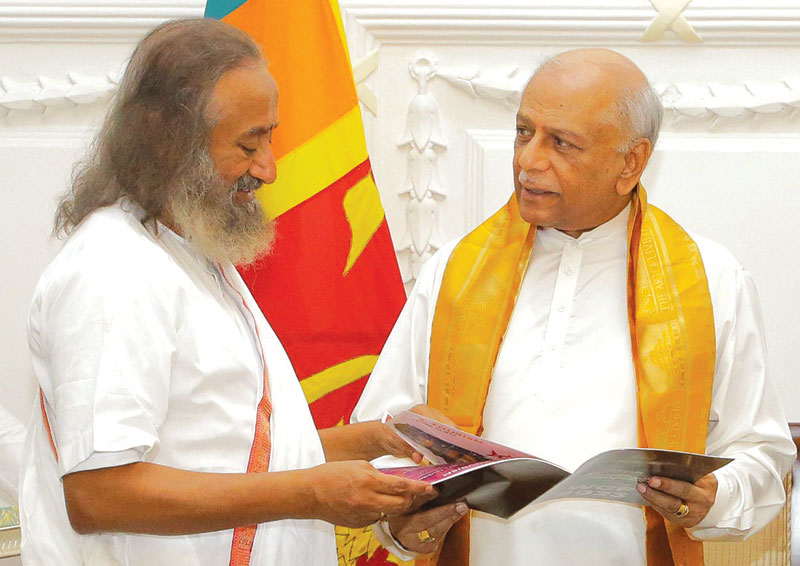
Visit of Sri Gurudev to Sri Lanka
Humanitarian, spiritual leader and Global Ambassador of Peace Gurudev Sri Sri Ravi Shankar (Sri Gurudev) was in Sri Lanka on a three day tour on the invitation of the Prime Minister of Sri Lanka Dinesh Gunewardene. Gurudev who inspired a wave of volunteerism and service to moot one of the largest volunteer-based organisations in the world – The Art of Living – visited the various projects under the aegis of the foundation and launched twelve vocational and technical centers around the island. He was accompanied by thousands of followers from Sri Lanka and around the world.
Gurudev who visited Sri Lanka for the sixth time also had a first day cover launched in honour of his visit. He is a strong proponent of spreading happiness, using the unique Sudarshan Kriya, yoga, meditation and practical wisdom to unite people, empower individuals and transform communities. His programmes provide techniques and tools to live a deeper, more joyous life, while his non-profit organisations recognize the human identity beyond the boundaries of gender, race, nationality and religion.
The Art of Living which has more than 30,000 teachers and over one million volunteers across 180 countries has touched in excess of five hundred million people around the world. CNN called it “Life Changing” and The Washington Post headlined it, “Fresh air to millions”.
In Trincomalee, Gurudev met with war victims and had a heartwarming engagement with the children from the children’s homes run by the Foundation. He also visited the Koneswara Temple in Trincomalee and graced the Kumbhabhishekam at Seetha ecogPnize the human identity beyond the boundaries of gender, race, nationality and religion. Amman temple at Nuwara Eliya. He held discussions with the trustees on the progress of the foundation’s social service projects, while also holding a special event – Ekamuthuwa – attended by a large number of dignitaries and his devotees from around the world.
His time with the Prime Minister was spent discussing the prospects of unity in diversity and uniting Sri Lanka by adding happiness into the formula of living. In addition he had discussions with the Speaker of the Parliament of Sri Lanka Mahinda Yapa Abeywardena, prominent business stewards and civil society leaders.
by Zanita Careem
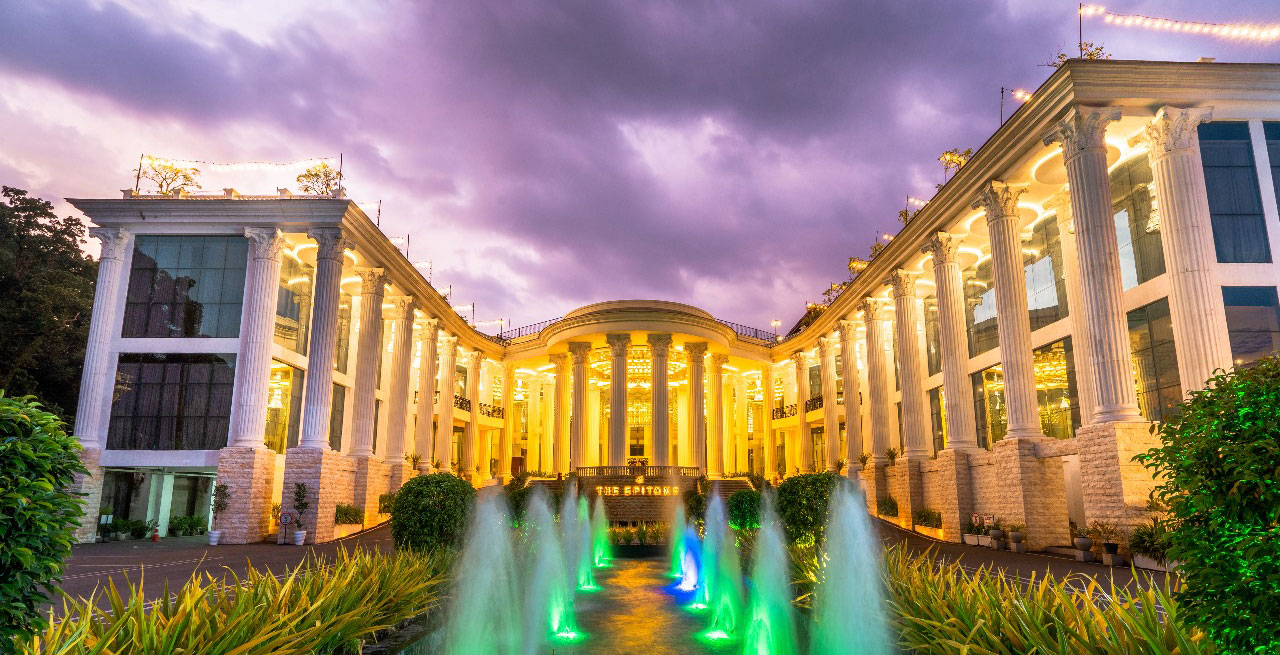
Envison your dream wedding day come to life at the Epitome Hotel, a prestigious city hotel in Kurunegala offering an unrivalled luxury rendors experience for weddings.
The venue is designed to embody opulence and luxury from all quarters for a spectacular wedding in kurunegala,Thier ballroom is the largest banquet facility in Sri Lanka It can be divided into six luxurious pillarless wedding halls on the ground floor and 25pax smaller banquet halls.
It can be easily named as a five star heaven in the heart of the city contributing to a myriad of immense experiences tailored to inspire and delight wedding experiences.
From opulent décor set up to exquisite table decor, lavish food, every detail is meticulously curated to spark your imagination and ignite creativity for a perfect wedding. The previous prestigious wedding shows season one and season two attracted large crowds
were unique events which gave the wedding vendors and potential clients had an opportunity to connect and interact with each other. Beyond being a showcase it was a chance for the wedding vendors to unite and contribute to the vibrancy of the wedding industry. The wedding show covered all area of the bridal industry providing a comprehensive variety of bridal supplies from Sri lanka and became the most popular bridal exhibitions in Kurunegala.This bridal exhibitions allowed brides and grooms to experience first hand the products and services available from suppliers in Sri Lanka
These wedding shows held at The Epitome created a benchmark and gave an opportunity for vendors to create connections to the utmost satisfaction said Harshan Lakshita Executive Director. of the magnificent Hotel
Our wedding shows featured experts and professionals in every field‘ It covered all areas of the bridal industry provided a comprehensive variety of bridal supplies from Sri lanka and became most popular bridal exhibition in this region.We are always open to everyone to join us at our wedding shows in the future. It is an opportunity to discover the incredible talent within our local wedding and bridal vendors to make meaningful relationships and plan thier special day at our breathtaking hotel The Epitome said General Manager Kavinda Caldera
The Epitome Hotel’s bridal show which will be held end of June will buzz with great ideas,advice and inspiration for all those who plan thier dream wedding
…….
The Hotel Epitome’s Wedding Season 3 will marked excellence, celebration and inspiration for those in the wedding industry. The exhibition halls will resonate with ideas on exquisite bridal wear to decor, florists , photography etc and showshowcase the rich tapestry of talent within the local wedding industry. .






US sports envoys to Lanka to champion youth development

Rahuman questions sudden cancellation of leave of CEB employees


