Features
Digital literacy and senior citizen – A Sri Lankan perspective

The International Day of Older Persons fell on October 1 on the theme ‘Digital Equity for All Ages’
By Randima Attygalle
Chandrani Senanayake (name changed) an educationist and one-time principal of a leading school in Colombo in her mid-60s says that the digital technology has been a blessing to revive her much loved teaching career. “Now that I’m retired from government service, virtual teaching has helped me revive my passion and as a consultant to a university today, I enjoy organizing webinars to assist students to develop their personality, soft skills etc. Digital platforms have helped me adapt my teaching methods to suit the evolving times,” she says.
Senanayake notes that especially during the pandemic, such interventions not only keep her professionally fulfilled but personally too, connecting her with her children and grandchildren. “I enjoy watching video clips my granddaughter shares with me on Whatsapp. Although I’m a lover of print material, I have now got used to reading newspapers and other content on line, especially during the lockdown, and this kept me really engaged.”
Milton Liyanage or Milton Uncle as he is fondly called is a vegetable vendor from Thalawathugoda. He drives his three-wheeler in his spare time to earn an extra buck. Milton, 75, now owns a smartphone but its use is limited to making and answering calls. “My children bought me this phone although I find it very complicated,” he says with a smile. Having done his vegetable business for decades with minimum or no technology, he finds digital devices overwhelming. “Sometimes my grandchildren help me maneuver the smartphone, they talk of face book and internet which I do not find that fascinating.” An avid newspaper reader, he still trusts the good old printed word as his credible source of information and rejects the Facebook.


A senior professor of Humanities who asked not to be named notes that digital interventions such as the Zoom and WhatsApp are extremely useful to him for sharing his knowledge with friends and the public. The additional features of recording the proceedings and even mixing with You Tube are very useful, he adds. “Digital media is of immense use in this global pandemic as it enables cashless transactions and spares us of the hassle of traveling to pay bills and do grocery shopping,” says the professor.
Now nearing his 80s, he does online shopping and also arranges for home delivery of groceries and pays his utility bills with a mobile apps. “It makes life a lot easier, remaining at home than maintaining social distancing in public,” he says. An avid reader, he prefers to read his newspapers online. “Since I can enlarge the letters on the screen, I need not struggle reading small print.” The digital evolution has made lives of senior citizens easier with less dependence on others says the scholar adding that it also helps avoid more risky actions including driving. It helps senior citizens to obtain medical consultations and even medicines home delivered, he says.
The International Day of Older Persons which fell on October 1 on the theme ‘Digital Equity for All Ages’ affirms the need for access and meaningful participation in the digital world by older persons. “Ever since the United Nations declared the International Day for Older Persons in 1990, every year the day had been dedicated to a topical theme with the objective of making communities, families, decision makers and service providers aware of certain needs of the older people and thereby contribute towards meeting them qualitatively and quantitatively. Last year WHO declared 2020 to 2030 as ‘The Decade of Healthy Ageing’. The 2021 theme of ‘Digital Equity’ becomes very valid in the pandemic-hit world where connectivity is of importance despite physical distancing,” Dr. Shiromi Maduwage, Consultant Community Physician from the Youth, Elderly and Disability Unit of the Ministry of Health told the Sunday Island.
The 2021 theme targets many goals: to create awareness of the importance of digital inclusion of older persons while tackling stereotypes, prejudice and discrimination associated with digitalization. These take into account socio-cultural norms and the right to autonomy to highlight policies to leverage digital technologies for full achievement of the sustainable development goals (SDGs) and to address public and private interests, in the areas of availability, connectivity, design, affordability, capacity building, infrastructure and innovation.
Other areas covered include exploring the role of policies and legal frameworks to ensure privacy and safety of older persons in the digital world and to highlight the need for a legally binding instrument on the rights of older persons and an intersectional person-centered human rights approach for a society for all ages.
The ‘digital divide’ as the United Nations points out, ‘still persists between more and less connected countries, communities, and people.’ It further notes that ‘enabling all the world’s people to access and use digital technologies and closing digital divides remains a challenge that needs to be addressed if the world community is to achieve the United Nations Sustainable Development Goals ( ) by 2030.
The number of older persons worldwide is projected to more than double, reaching more than 1.5 billion persons in 2050. According to UN data, while all regions will see an increase in the size of the older population between 2019 and 2050, the largest increase (312 million) is projected to occur in Eastern and South-Eastern Asia, growing from 261 million in 2019 to 573 million in 2050.
“The whole world is now ageing and Sri Lanka is not spared. Today there is around a billion elderly world over (those over 60 years) and according to our Census of Population and Housing 2012, out of our total population 12.4% belong to the elderly category. Of this, female adult population is more. It is estimated that Sri Lankan elderly population would be 16% of the total at our next census in 2022 and this is a sizeable percentage for a country in the South East Asian region,” observed Dr. Maduwage. With the increasing elderly population, a country will have to face health, social and economic challenges. “However, as policy makers and programme planners, we always attempt to convert older persons into assets or resources despite challenges,” pointed out this senior health official.
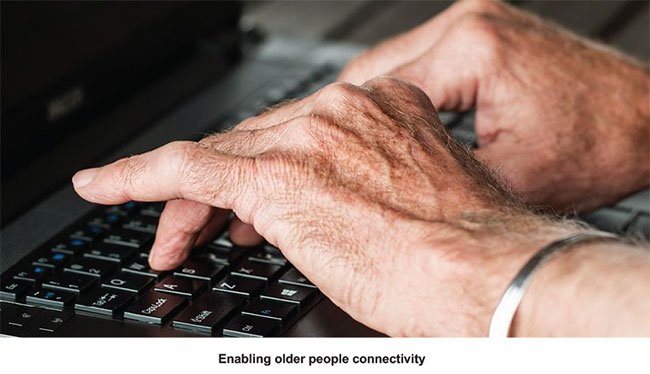

The fact-finding exercise carried out by the Youth, Elderly and Disability Unit of the Ministry of Health, on the impact of the digital culture on Sri Lankan elders was an attempt to study the relevance of this year’s theme of The International Day of Older Persons. The initiative under the banner, ‘Hello Project’ was carried out by a group of young people under 24 years and they were provided technical support by the Youth, Elderly and Disability Unit, Ministry of Health. The survey in form of telephone conversations was done in August this year.
“The elders were categorized into three groups as ‘young – old’ (60 to 69 years), ‘middle -old’ (70 to 79 years) and ‘old-old’ (over 80 years) and were interviewed to find out about their adaptability to the digital world, their thinking patterns and the gaps,” explained Dr. Maduwage. The findings revealed that while some elders were not digital-savvy due to lack of devices, others had to depend on children or grandchildren to handle them. “Vision problems, physical discomfort in handling devices were some of the common problems found among those between ‘middle old’ and ‘old-old’ group of elders . The use of devices was found to be minimal or zero among the ‘old- old’ age group,” she explained.
The issues some had encountered with merchants when ordering their groceries online and through other mobile applications were also found to discourage older people from trusting digital platforms. “Some said they had been played out and wrong goods had been sent. Some of their bill payments have not been updated discouraging them from using such facilities. This is where we need policies and regulations to make older consumers lives easier, especially during a pandemic situation such as this,” the health official noted.
Another cross section of older people was found to completely reject any advanced digital platforms on the grounds of ‘no faith’. “Certain family or environmental factors such as seeing the ill effects of addiction to such devices by younger family members and reports of cyber crimes have driven these elders to completely reject smartphones, websites etc.”
Loneliness among the elderly is a challenging situation in the community. In 2012, the Census of Population and Housing revealed that one in every three older women were widowed in Sri Lanka. Thus, digital inclusion provides better solutions for issues like loneliness. Digital inclusion on the whole can add colour to the lives of the elderly, especially during a pandemic situation and advancements can improve their quality of life as well, Dr.Maduwage remarked.
“Policy makers and other stakeholders should also strive to create an enabling environment for the elders in terms of offering incentives such as special phone packages, awareness of digital culture and its benefits through concepts such as ‘Silver Economy’ (the system of production, distribution and consumption of goods and services aimed at using the purchasing potential of older and ageing people and satisfying their consumption, living and health needs). Digital inclusion is also an effective means of bridging the generation gap as it enables connectivity between the young and the old,” she noted.